Solar panels have become one of the most sought-after home improvements in the UK, with hundreds of thousands of households generating their own electricity and reducing their dependence on grid energy. Yet one of the most frequently overlooked decisions in the entire process is not which brand of panel to choose or which inverter to buy, it is where those panels are physically going to go. For many homeowners, the roof is simply assumed to be the answer, but for a growing number of properties across the UK, the ground is the smarter option.
For most UK homes, roof-mounted solar panels are the more affordable starting point, costing between £7,000 and £9,000 for a 4kW system compared to £9,000 to £14,000 for a ground-mounted equivalent. However, ground-mounted systems are the better choice when a roof is unsuitable due to poor orientation, significant shading, structural limitations, or a complex layout. All installations using MCS-certified installers qualify for the Smart Export Guarantee. This allows homeowners to earn between 4p and 15p per kWh for surplus electricity exported to the grid. The single most important step before deciding is a professional site assessment from at least 3 MCS-certified installers who can evaluate both your roof and your available land.
- Get 3 quotes from MCS-certified installers before choosing between ground-mounted and roof-mounted solar, as costs and site assessments vary significantly.
- Budget approximately £7,000 to £9,000 for a standard 4kW roof-mounted system and £9,000 to £14,000 for a ground-mounted equivalent including groundworks and cabling.
- Check your roof's orientation first — a south-facing pitch with less than 20% shading will outperform most ground installations on a purely cost-per-kWh basis.
- Apply for the Smart Export Guarantee (SEG) through your energy supplier after installation to receive payment for surplus electricity exported to the grid.
- Ground-mounted systems in England typically require permitted development rights confirmation — check with your local planning authority before installation if your land exceeds 9 square metres of array.
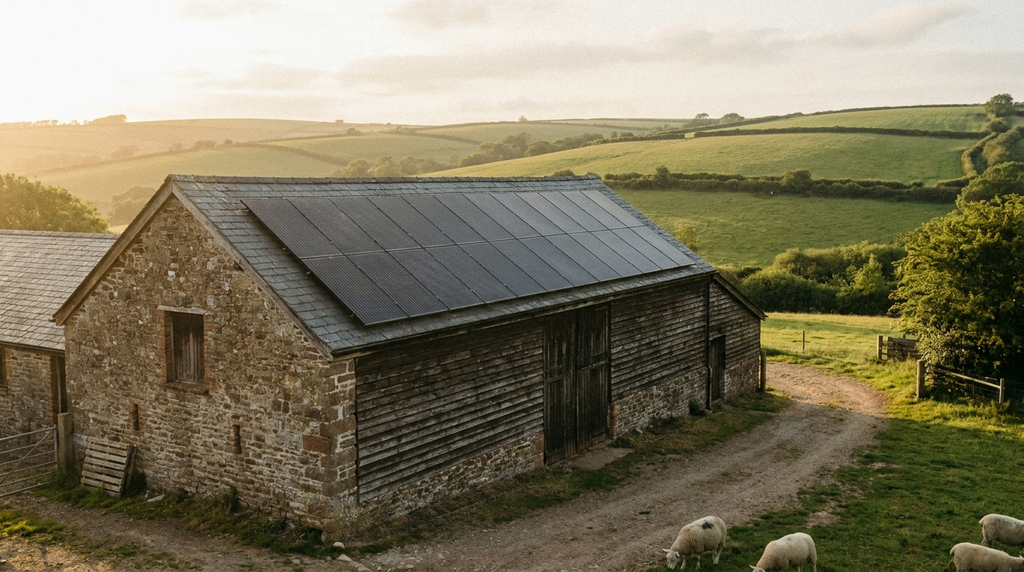
- Choose ground-mounted if your roof is north-facing, heavily shaded, structurally weak, or covered in tiles such as slate that make safe penetration difficult or costly.
- Factor in the cost of an underground armoured cable run from the panel array to your consumer unit — this can add £500 to £2,000 depending on the distance across your plot.
- Understanding Ground-Mounted and Roof-Mounted Solar Panels
- Which Type of Solar Panel System Is Right for Your Home
- How Each System Works and What Affects Their Efficiency
- Ground-Mounted Solar Panels vs Roof, A Cost Comparison for 2026
- Planning Permission and Permitted Development Rules in 2026
- Available Grants and Financial Support for Solar Panels in 2026
- How to Choose Between Ground-Mounted and Roof-Mounted Solar, A Step-by-Step Guide
- Structural and Property Considerations Worth Knowing About
- Verifying Your Solar Installer's Credentials
When comparing ground-mounted solar panels versus roof-mounted systems, roof-mounted panels are the most common and cost-effective starting point for most UK homes, but ground-mounted systems are the superior choice when a roof is unsuitable due to orientation, shading, structural condition, or complex angles. The right decision depends on five key factors, available land, roof suitability, budget, planning permission requirements, and long-term maintenance preferences, and this article walks you through every one of them using 2026 UK costs, regulations, and grant information.
Understanding Ground-Mounted and Roof-Mounted Solar Panels
Both system types generate electricity in the same fundamental way, but where and how the panels are physically supported makes a significant difference to cost, planning, and performance. Before comparing the two, it helps to understand exactly what each system involves.
Ground-mounted solar panels are freestanding photovoltaic systems, photovoltaic meaning they convert sunlight directly into electricity, installed on metal frames that are fixed directly into a property’s land, completely separate from the home’s structure. The frames can be anchored using screw piles driven into the ground or concrete foundations, depending on ground conditions. The panels themselves are identical to those used on roofs; what differs is the support structure and the installation process.
Roof-mounted solar panels are the standard installation type across the UK, where panels are secured to an existing roof structure using brackets and rails. There are two main approaches within this category. On-roof systems sit on top of existing tiles, raised slightly on rails to allow air to circulate beneath them. In-roof systems (sometimes called integrated or building-integrated systems) replace sections of the roof surface itself, sitting flush with the surrounding tiles for a neater visual finish. On-roof systems are more common because they are generally less expensive and easier to retrofit.
This article focuses specifically on residential properties in the UK in 2026, including detached homes, semi-detached houses, bungalows, and properties with usable garden or land space. It does not cover commercial or agricultural solar installations, which involve different planning frameworks and funding routes.
Practical tip: Before doing anything else, find out which direction your roof faces using a compass app on your smartphone. This single piece of information will already tell you a great deal about whether your roof is a strong candidate for solar panels.
Which Type of Solar Panel System Is Right for Your Home
For the majority of UK homeowners, roof-mounted panels are the right starting point, they cost less to install, typically fall under permitted development rights, and make efficient use of existing structure. However, ground-mounted systems are genuinely the better option in several clearly defined scenarios, and dismissing them without consideration could mean choosing a less effective and less economical system.
Here is a straightforward way to think about it. If your roof faces broadly south to south-west, sits at a pitch of around 30 to 45 degrees, is largely free of shading from trees, chimneys, or neighbouring buildings, and is in good structural condition, a roof-mounted system is almost certainly the right place to begin your planning. In that scenario, ground-mounted panels would add cost and complication without delivering a meaningful performance advantage.
If, however, any of those conditions are not met, your roof faces north or north-east, it is heavily shaded during peak daylight hours, it has an unusual or complex shape, or it has known structural issues, then ground-mounted panels deserve serious consideration, provided you have the land space to accommodate them. Ground-mounted systems allow installers to position and angle the array precisely for maximum output, entirely independent of what the roof happens to be doing.
The key decision factors in plain terms are these five things.
- Available land, Do you have at least 20 to 25 square metres of reasonably open, unshaded ground for a typical 4-kilowatt-peak system?
- Roof condition and orientation, Is your roof south-facing, in good repair, and structurally sound?
- Budget, Can you stretch to the 20 to 40 per cent additional cost that a ground-mounted system typically involves?
- Planning permission, Are you in a conservation area, national park, or listed building where additional restrictions apply?
- Maintenance preferences, Are you comfortable with periodic ground maintenance beneath a mounted array, or would you prefer the relative simplicity of a rooftop system?
Practical tip: Use Google Maps in satellite view to get a rough sense of your roof’s orientation and any obvious shading obstacles before speaking to an installer, it saves time and helps you ask better questions.
How Each System Works and What Affects Their Efficiency
The efficiency of any solar panel system in the UK is determined largely by three things, orientation, tilt angle, and shading, and the two installation types handle each of these factors very differently.
According to the Energy Saving Trust, south-facing solar panels installed at a tilt of 30 to 40 degrees from horizontal perform best in Britain’s climate and latitude. This angle captures the maximum amount of solar radiation across the full year, balancing summer and winter performance. Panels pointing due south at this pitch will consistently outperform those facing south-east or south-west, though the difference is relatively modest, a system facing south-east or south-west at the optimal pitch typically produces around 85 to 90 per cent of what a due-south system would generate.
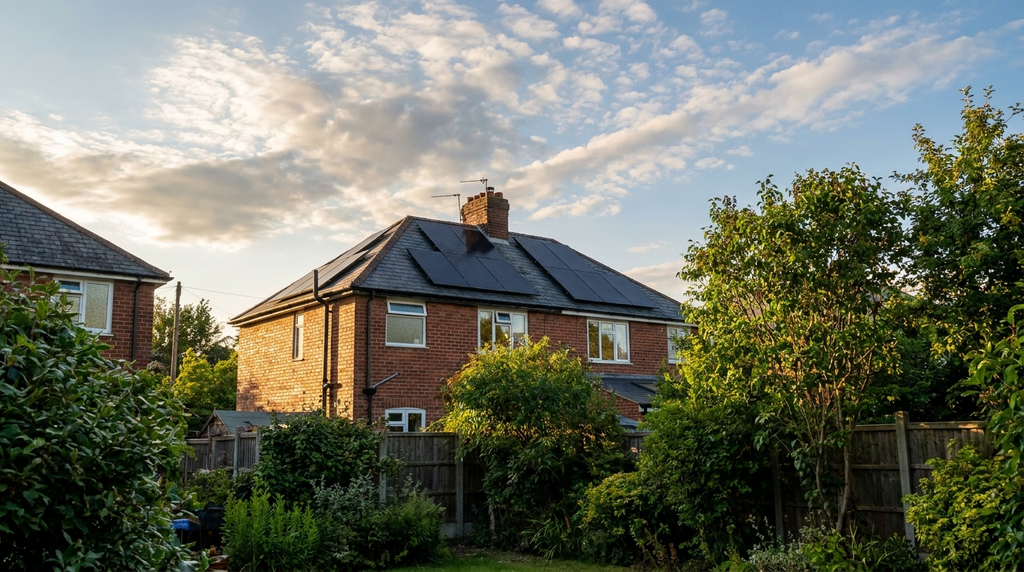
Roof-mounted panels are constrained by whatever pitch and orientation the existing roof provides. In a typical UK terrace or semi-detached house, you may have panels on the front and rear slopes, which commonly face north and south respectively. The south-facing slope is productive; the north-facing slope, if panels were placed there, would generate very little. On bungalows with hipped roofs, the angles can be more complex still. Installers working with roof-mounted systems cannot change these fundamental parameters, they work with what the roof gives them.
Ground-mounted systems, by contrast, allow the installer to set both the compass bearing and the tilt angle to whatever combination produces the best output for that specific location. This flexibility is particularly valuable if your property sits in a valley, faces an unusual direction, or has significant localised shading.
Shading is worth dwelling on. Even partial shading on a small section of a panel can significantly reduce the output of an entire string of panels, depending on how the system is wired and whether optimisers or microinverters are used. Roof panels are often affected by chimneys, dormers, satellite dishes, and the shadows cast by neighbouring buildings, especially in urban and suburban settings. A ground-mounted array can frequently be sited to avoid these problems entirely, either by moving the array to a clearer part of the garden or by raising it above low-level obstructions.
There is also a modest thermal advantage to ground-mounted systems. Photovoltaic panels lose efficiency as they heat up, a fact that surprises many homeowners. Ground-mounted frames allow better natural air circulation beneath the panels, which helps keep operating temperatures slightly lower and can marginally improve year-round performance compared with panels that sit close to a warm roof surface.
Practical tip: Ask any installer quoting you to provide an estimated annual output in kilowatt-hours alongside the system cost. This figure, not the panel’s peak wattage rating, is the most useful number for calculating your return on investment.
Ground-Mounted Solar Panels vs Roof, A Cost Comparison for 2026
Cost is one of the most significant factors for most homeowners, and the difference between the two system types is substantial enough to deserve careful consideration. The additional expense of a ground-mounted system is real, but it may be entirely justified if it enables you to generate significantly more electricity from a better-positioned array.
A typical 4-kilowatt-peak roof-mounted solar panel system costs between £6,000 and £9,000 fully installed in 2026, based on quotes from MCS-registered installers. This range reflects regional variation, the quality of components chosen, and whether scaffolding is needed for safe roof access. A 4kWp system is a common size for a three-bedroom home and typically generates between 3,400 and 3,800 kilowatt-hours of electricity per year in southern England, with slightly lower figures in Scotland and northern England.
An equivalent ground-mounted system, same panel capacity, same inverter quality, typically costs 20 to 40 per cent more. The additional expense comes from several sources: groundwork preparation, concrete or screw-pile foundations, significantly more extensive metal framework, and the cost of cable runs back to the property’s consumer unit, which can be longer and more complex than on a roof installation.
| System Type | Typical 4kWp Installed Cost (2026) | Additional Hardware Costs | Estimated Annual Savings on Bills | Approximate Payback Period | Planning Permission Usually Required |
|---|---|---|---|---|---|
| Roof-mounted (on-roof) | £6,000 to £9,000 | Scaffolding (£500 to £1,200 if needed) | £700 to £1,100 per year | 7 to 12 years | No (permitted development in most cases) |
| Roof-mounted (in-roof integrated) | £8,000 to £12,000 | Replacement roofing materials included | £700 to £1,100 per year | 9 to 14 years | No (permitted development in most cases) |
| Ground-mounted | £8,500 to £13,000 | Foundations, cabling, ground clearance | £700 to £1,100 per year (potentially higher if better orientation achieved) | 10 to 16 years | Often yes, depending on size and location |
Ongoing costs also differ between the two types. Ground-mounted systems may require periodic management of vegetation growing beneath and around the frame, grass and weeds can shade the lower edge of panels and require regular cutting. Roof-mounted systems are largely self-cleaning through rainfall but may need periodic checks for loose fixings, especially after severe weather, or inspection of roof tiles disturbed during installation.
These savings figures will vary based on your home’s actual energy consumption, the proportion of solar electricity you use directly rather than export, and your electricity tariff. Homes with higher daytime electricity usage, for example, those running a heat pump or electric vehicle charger, will benefit considerably more from a solar installation than those that are empty during daylight hours. how to maximise solar self-consumption with battery storage
Practical tip: Always get at least three quotes and ensure each one specifies the exact number and wattage of panels, the inverter brand and model, the estimated annual kilowatt-hour output, and what groundworks or scaffolding are included in the price.
Planning Permission and Permitted Development Rules in 2026
One of the most practically important differences between roof-mounted and ground-mounted solar systems in the UK is how planning permission applies to each. Getting this wrong can cause significant delays and unexpected costs.
In England, roof-mounted solar panels on standard domestic properties generally fall under permitted development rights, meaning you do not need to submit a full planning application. However, permitted development comes with conditions. Panels must not protrude more than 200 millimetres beyond the plane of the roof when viewed from the front, and they must not be installed on a chimney, wall, or flat roof at the front of a building where that elevation faces a highway. When panels are removed, the roof must be returned to its original condition.
Ground-mounted solar arrays face stricter scrutiny. In England, a ground-mounted system on domestic land can fall under permitted development if it meets all of the following conditions, the array must cover no more than 9 square metres of ground projection, stand no higher than 4 metres, be positioned at least 5 metres from the property boundary, and not be installed within the curtilage of a listed building or in a designated area such as a conservation area, national park, or Area of Outstanding Natural Beauty. In practice, a 4kWp ground-mounted system often exceeds the 9 square metre limit, which means full planning permission may be required.
If your property is in a conservation area, national park, or Area of Outstanding Natural Beauty, or if your home is a listed building, additional restrictions apply to both system types. Local planning authorities in these areas may require that installations are not visible from a public highway, or may refuse permission entirely for ground-mounted systems in prominent positions. Always seek pre-application advice from your local authority before commissioning any work on a restricted property.
Planning rules differ across the four UK nations. Scotland, Wales, and Northern Ireland each have their own permitted development frameworks, and the specifics vary. Homeowners in Scotland should consult their local council and the relevant Scottish Government planning guidance; those in Wales should refer to Planning Policy Wales and the Technical Advice Notes; Northern Ireland homeowners should contact the relevant Department for Infrastructure. guide to solar planning permission in Scotland, Wales and Northern Ireland
Practical tip: Before paying for any surveys or installer visits, use the Planning Portal at planningportal.co.uk to check whether your proposed installation type and size falls within permitted development, it takes around fifteen minutes and could save you significant time and money.
Available Grants and Financial Support for Solar Panels in 2026
Understanding what financial support is available, and what is not, is essential before committing to any solar installation. There is some genuine support available to eligible households, but there are also common misconceptions worth clearing up.
The ECO4 scheme (Energy Company Obligation) is a government-funded programme delivered through energy suppliers that provides energy efficiency improvements at no or low cost to eligible households. To qualify, you generally need to be on a low income, receiving certain means-tested benefits, or living in a property with a low Energy Performance Certificate rating. Solar panels can be included in an ECO4 package as part of a broader set of measures, though eligibility is assessed on a household-by-household basis. Contact your energy supplier or visit the government’s ECO4 information pages to check eligibility.
The Great British Insulation Scheme is primarily focused on insulation measures such as loft insulation and cavity wall insulation, but it is worth checking as part of a whole-home energy upgrade conversation with your energy supplier. Some households qualifying under the broader eligibility criteria may be able to access linked solar support as part of a wider package, depending on their supplier’s programme design.
The Smart Export Guarantee is not a grant, but it is an important financial benefit for every homeowner with a solar installation. Under this scheme, all licensed electricity suppliers with more than 150,000 customers are required by law to offer an export tariff, meaning you are paid for surplus electricity that your panels generate and you do not use yourself, which is then exported to the National Grid. Export tariff rates vary by supplier and change over time. Ofgem provides guidance on comparing SEG tariffs, and it is worth reviewing current rates from multiple suppliers before your installation is complete, as some tariffs require the system to be registered before switching suppliers.
The Boiler Upgrade Scheme provides £7,500 towards the cost of an air source heat pump or £7,500 towards a ground source heat pump for eligible properties in England and Wales. It does not apply to solar PV panels directly, and this is a source of genuine confusion for homeowners who have read about multiple government energy schemes. If you are considering both solar panels and a heat pump as part of a broader home energy upgrade, these two technologies can work very well together, but the grant applies only to the heat pump element. combining solar panels with a heat pump for maximum efficiency
Practical tip: Contact your energy supplier directly to ask about ECO4 eligibility, do not rely solely on comparison websites, as some suppliers run their own enhanced programmes that may not be reflected elsewhere.
How to Choose Between Ground-Mounted and Roof-Mounted Solar, A Step-by-Step Guide
Working through this decision methodically will give you the clearest picture of which system type suits your property and your circumstances. Here is a practical process to follow.
- Assess your roof’s suitability, Check the orientation using a compass, estimate the pitch angle, and assess how much of the south-facing roof surface is free from shading by chimneys, dormer windows, trees, and neighbouring buildings. For older properties or those with any known roof issues, commission a structural survey before proceeding, a typical 4kWp system adds approximately 280 to 320 kilograms to a roof, which most modern roofs handle comfortably but which can be a concern for older structures.
- Evaluate your available land, Measure usable garden or plot space away from trees, outbuildings, and boundary lines. A 4kWp ground-mounted system typically requires at least 20 to 25 square metres of clear, reasonably level ground. Note the direction the land faces, the presence of shadows from buildings or hedgerows at different times of year, and the distance from the property to where the cable would need to run.
- Check planning permission requirements, Contact your local planning authority or use the Planning Portal to understand whether permitted development applies to your property and your chosen system type. If you are in a designated area or a listed building, request a pre-application meeting with the planning team before spending money on installer surveys.
- Get at least three quotes from MCS-registered installers, The Microgeneration Certification Scheme is the industry certification standard for small-scale renewable energy installations in the UK. Only MCS-certified installers can provide installations that qualify for the Smart Export Guarantee. Verify any installer’s MCS status at mcscertified.com before accepting a quote. Each quote should specify the system type, panel brand and wattage, inverter specification, estimated annual output in kilowatt-hours, and whether scaffolding or groundworks are included in the price.
- Calculate your financial return, Use the Energy Saving Trust’s solar energy calculator to estimate savings and payback period based on your location, system size, and current energy usage. Factor in SEG export income as well as savings from direct self-consumption. Be cautious about projected savings that seem very high, savings depend significantly on how much of the solar electricity you actually use yourself during daylight hours.
- Consider future flexibility, Think about whether you plan to add battery storage, an electric vehicle charger, or a heat pump within the next five to ten years. Both system types can be integrated with these technologies, but the wiring routes and potential for future expansion differ. A ground-mounted array in a large garden may offer easier cabling options for an outbuilding or EV charging point; a roof system may integrate more naturally with a battery stored in a loft or utility room. Home battery storage for solar panels, what UK homeowners need to know
Practical tip: When comparing installer quotes, ask each one what happens if a panel is damaged or underperforms after five years, the answer will tell you a great deal about the quality of the company and the warranties they stand behind.
Structural and Property Considerations Worth Knowing About
Beyond the headline cost and planning questions, there are several structural and property-related factors that can have a meaningful impact on your installation experience and long-term satisfaction, and that are easy to overlook in the initial excitement of exploring solar energy.
For roof-mounted systems, the key structural question is whether the existing roof structure can comfortably carry the additional weight of the panels and fixings. A typical 4kWp system weighs approximately 280 to 320 kilograms, spread across the roof structure via multiple fixing points. Most post-war UK roofs are engineered to carry loads well in excess of this, but older properties, particularly those with known roof deterioration, sagging rafters, or significant previous repair work, should have a structural engineer’s assessment before installation. Your installer should flag any concerns during their survey, but commissioning an independent structural assessment is reasonable if you have any doubts.
For ground-mounted systems, the foundational work involves either screw piles driven into the ground or poured concrete footings, depending on ground conditions and the installer’s preferred method. Before any groundwork begins, you should check for underground services, gas pipes, water mains, drainage runs, and buried electrical cables can all be present in a domestic garden, and striking any of them during groundwork could be dangerous and expensive. Your installer should carry out a utility check, but you can also request a search through services such as Linesearch Before U Dig (linesearchbeforeudig.co.uk) as an additional precaution.
Both system types have implications for your property’s value and saleability. The evidence on roof-mounted solar panels and UK property values is broadly reassuring, the consensus among estate agents and property researchers is that panels have a neutral to modestly positive effect on sale prices for most UK buyers, particularly as energy bills have remained elevated. Ground-mounted systems in prominent positions may give some prospective buyers or mortgage lenders pause, particularly if the array occupies a large portion of the usable garden. It is worth thinking about how the installation will look and how much of the garden it will occupy before committing.
Finally, notify your home insurer before and after installation. Both roof-mounted and ground-mounted systems add value to your property and introduce new risks, particularly around water ingress for roof installations and liability for ground installations. Many standard buildings insurance policies will cover solar panels automatically up to a certain value, but you should confirm this with your insurer in writing and upgrade your coverage if necessary.
Practical tip: Ask your installer to provide written confirmation that their roof fixings are watertight and carry a warranty, roof penetration points are one of the most common sources of post-installation problems, and a quality installer will be happy to document their flashing and sealing work.
Verifying Your Solar Installer’s Credentials
Choosing the right installer is every bit as important as choosing the right system. The solar industry has, unfortunately, attracted its share of poorly qualified traders and high-pressure sales operations over the years, and spending time on due diligence before signing anything will protect both your money and your home.
The single most important credential to check is MCS certification. The Microgeneration Certification Scheme is the industry-wide standard for small-scale renewable energy installations in the UK. Any installer fitting solar panels on a domestic property must hold current MCS certification for the work to qualify for the Smart Export Guarantee, without it, you lose the right to be paid for electricity you export to the grid, which is a significant financial loss over the lifetime of the system. Verify any installer’s current MCS status at mcscertified.com before agreeing to anything.
TrustMark is a government-endorsed quality scheme that applies to all tradespeople working in and around UK homes, including solar installers. TrustMark-registered businesses have been independently vetted and are required to meet defined quality standards, carry appropriate insurance, and operate a complaints resolution process. Look for the TrustMark logo on installer websites and verify registration at trustmark.org.uk.
Membership of Solar Energy UK, the sector’s main trade association, is a further positive indicator. Member companies are expected to adhere to a code of conduct and professional standards, and the association provides a mechanism for escalating complaints if something goes wrong.
Be cautious of any company that contacts you via unsolicited doorstep approaches, cold calls, or text messages claiming you are entitled to free solar panels. Legitimate solar installers do not typically operate this way, and high-pressure sales tactics, particularly those involving same-day signing of contracts, are a warning sign. You have a legal right to a 14-day cooling-off period on any contract signed in your home under the Consumer Contracts Regulations, but the best approach is to take your time, compare multiple quotes, and never feel pressured into a decision.
| Credential or Membership | What It Covers | Why It Matters | Where to Verify |
|---|---|---|---|
| MCS Certification | Solar PV installation quality and standards | Required for Smart Export Guarantee eligibility | mcscertified.com |
| TrustMark Registration | General quality, insurance, and consumer protection | Government-endorsed vetting for all home improvement trades | trustmark.org.uk |
| Solar Energy UK Membership | Solar-specific code of conduct and professional standards | Sector-level accountability and complaints route | solarenergyuk.org |
| NICEIC or NAPIT Registration | Electrical installation competence | Solar systems involve electrical work that must meet Part P building regulations | niceic.com or napit.org.uk |
It is also worth noting that the electrical connection work involved in a solar installation, connecting the system to your home’s consumer unit, constitutes notifiable electrical work under Part P of the Building Regulations in England and Wales. This work should be carried out by or supervised by an electrician registered with a competent person scheme such as NICEIC or NAPIT. In practice, most MCS-certified solar installers employ qualified electricians and include the notification as part of their service, but it is worth asking explicitly to confirm. what to ask a solar panel installer before you sign anything
Practical tip: Before your installation begins, ask the installer to walk you through the commissioning process, how the system will be tested, how you will be shown the monitoring app or display, and what documentation you will receive including MCS certificate, electrical installation certificate, and any warranties. A professional installer will welcome the question.
Frequently Asked Questions
A ground-mounted solar system for a typical UK home costs between £9,000 and £14,000 for a 4kW array in 2026, including the metal frame structure, concrete or screw-pile foundations, and cable trench to the house. This is roughly £2,000 to £5,000 more than an equivalent roof-mounted system due to additional groundworks and labour. Larger systems of 6kW to 10kW typically range from £14,000 to £22,000 fully installed.
In England, ground-mounted solar panels may fall under permitted development rights if the array covers no more than 9 square metres and does not exceed 4 metres in height, among other conditions — but this does not apply in conservation areas, National Parks, or on listed buildings where full planning permission is required. Scotland and Wales have their own permitted development rules, so always check with your local planning authority before ordering equipment. A planning application typically costs £234 in England and takes 8 to 13 weeks to determine.
Ground-mounted panels are not inherently more efficient in terms of the panels themselves, but a ground-mounted system can be optimally angled and oriented regardless of the existing roof pitch, which can yield 10 to 20 percent more annual generation than a poorly oriented roof installation. Ground-mounted frames also allow for better natural airflow beneath the panels, which keeps operating temperatures lower and marginally improves output. For a south-facing roof pitched at 30 to 40 degrees with minimal shading, a roof system will perform comparably.
All homeowners with an MCS-certified installation can register for the Smart Export Guarantee and receive between 4p and 15p per kWh for electricity exported to the grid, depending on the supplier. Solar installations also remain zero-rated for VAT at 0 percent.
The main disadvantages of ground-mounted solar are higher upfront costs of roughly £2,000 to £5,000 more than roof systems, the requirement for sufficient usable land clear of shading, and the more complex planning permission rules that may apply depending on array size and location. Ground-mounted systems also require a trenched armoured cable to connect to the home, adding £500 to £2,000 to installation costs. Regular mowing or vegetation management beneath and around the array is also necessary to prevent shading losses over time.