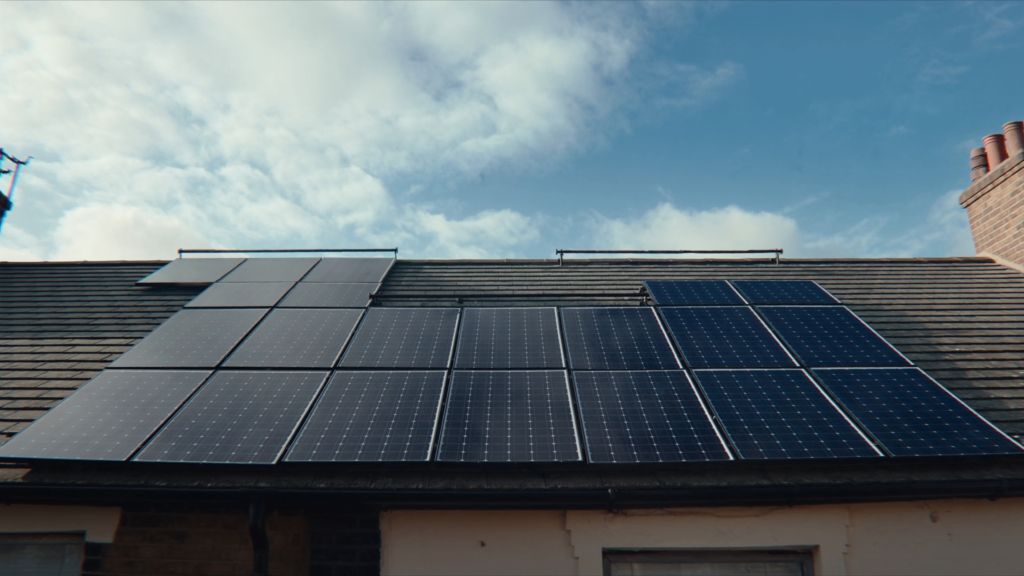
Solar panels still generate some electricity with snow on them, but output drops significantly, by over 90% in heavy cover (Energy Saving Trust, 2026). Light dustings have minimal impact, but thick, wet snow can block all light and stop generation entirely.
The key variable is the snow’s thickness and consistency. Dry, powdery snow slides off tilted panels quickly, while wet snow sticks and forms an opaque layer. Panels mounted at a steeper angle, 30 degrees or more, shed snow faster. Solar panels are also slightly warm during operation, which can melt thin snow, but this effect is slow in freezing conditions.
Snow melts faster on dark solar panels
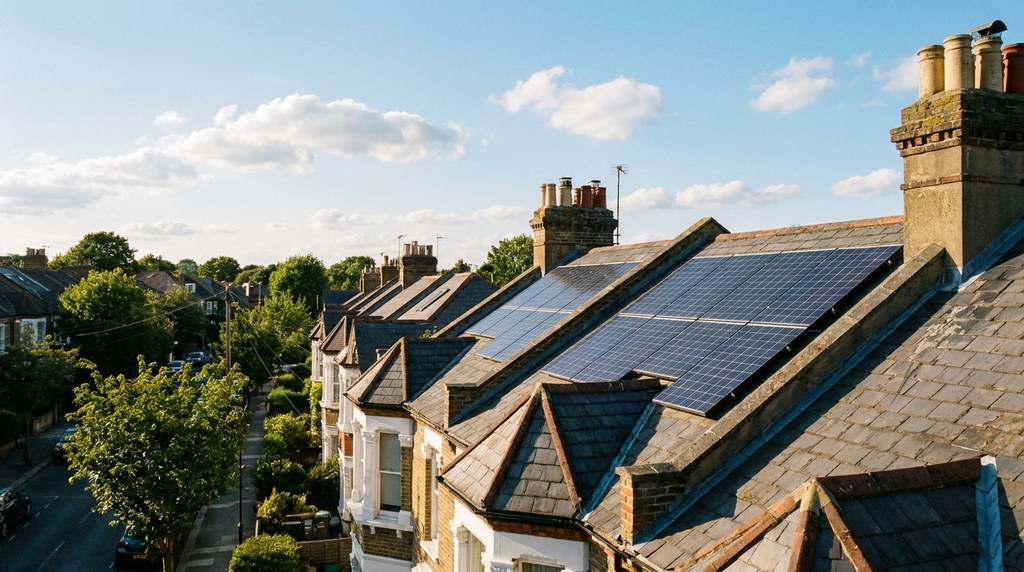
Solar panels are dark blue or black, so they absorb sunlight and warm up faster than a white roof. The Energy Saving Trust notes that tilted panels above 15 degrees typically shed snow within a few hours of sun exposure (Energy Saving Trust, 2026). The glass surface is smooth, which helps dry snow slide away. In the UK’s mild winters, heavy snow is rare and usually melts within a day. Panels on south-facing roofs at 30–40 degrees clear fastest. If snow persists, generation is zero until the surface is exposed.
Do not attempt to remove snow yourself
Clearing snow from panels risks damaging the glass, voiding the warranty, or causing personal injury from slipping on a wet roof. The Microgeneration Certification Scheme advises against any DIY snow removal (MCS, 2026). Standing water or ice can also create electrical hazards if panels are damaged. In most UK winters, natural melting is sufficient. Only consider professional removal if panels are inaccessible and snow persists for more than a week, which is extremely rare in southern England. For most homes, waiting is the safest and most practical option.
Snow on panels rarely affects annual generation
UK winters are mild, with an average of only 5–10 days of lying snow per year in most regions (ONS, 2026). Even if panels are covered for a few days, the lost generation is small, typically less than 1% of annual output. The Energy Saving Trust says a typical 3kWp system generates around 2,650 kWh per year, so losing a day or two of winter sun costs 5–10 kWh at most (Energy Saving Trust, 2026). Snow on panels is not a practical concern for most UK homeowners. The bigger winter issue is shorter daylight hours, not snow cover.
A worked example
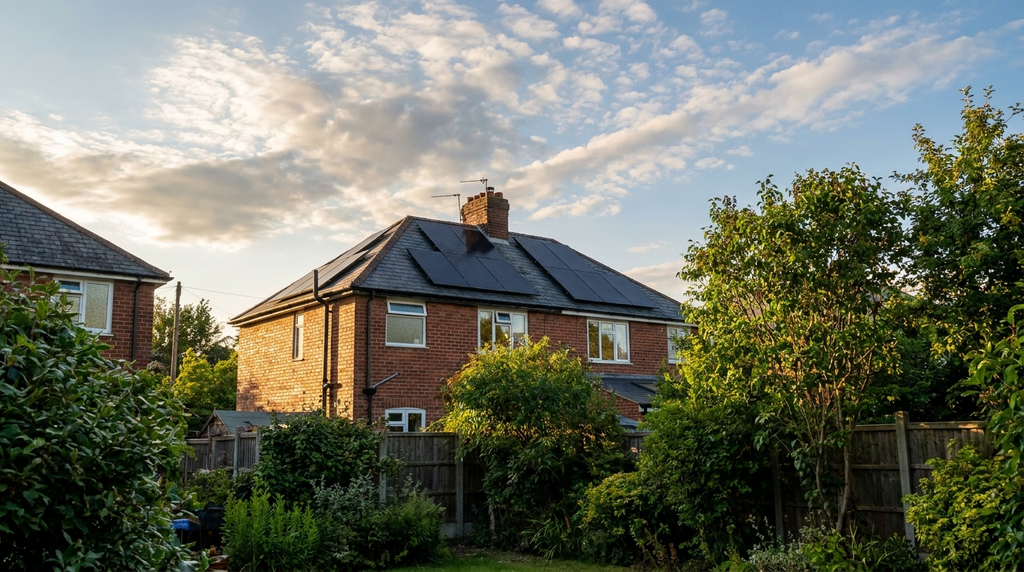
A typical 3-bedroom 1930s semi-detached house in Manchester with a 4 kW solar panel system (10 panels, south-facing at 35 degrees) could see generation drop by over 90% during a heavy snow event, but a light dusting might only reduce daily output by 5–10%. Based on Energy Saving Trust data, a 4 kW system in the North West generates roughly 3,400 kWh per year, saving around £560 on electricity bills at current price cap rates. With the 0% VAT extension until March 2027 and no direct government solar grant for most households, the upfront cost is typically £6,000–£8,000. However, if you are eligible for ECO4 (e.g., on certain benefits), a partial grant may cover up to 100% of installation. Snow cover for one day in a typical UK winter might cost you less than £2 in lost generation. The real loss is minimal over a year.
| Item | Figure |
|---|---|
| Upfront cost after grants | £7,000 |
| Yearly savings | £560 |
| Payback period | 12.5 years |
| 25-year lifetime savings | £14,000 |
What homeowners often get wrong
The most common mistake is thinking snow completely stops all generation for days, when in fact UK panels shed snow quickly. Here are three misunderstandings that can cost you money or void your warranty.
- Assuming heavy snow means zero power for a week In reality, UK winters are mild and panels at 30–40 degrees usually clear within hours of sun exposure. A day of heavy cover might lose you only £1–£2 in generation, not the £50 some people imagine.
- Trying to remove snow with a brush or hose This risks scratching the glass or cracking the panel, which voids the manufacturer warranty and can cost £1,000+ to replace. The Energy Saving Trust advises letting panels self-clear, as they are designed for it.
- Believing snow means no electricity at all Thin snow lets some light through, and panels still produce 5–10% of normal output. On a bright day with a light dusting, you might still power your fridge and lights without drawing from the grid.
Quick reference
- Snow cover reduces solar generation by over 90% when thick and opaque, but panels at 30–40 degrees shed snow within hours of sun exposure.
- A 4 kW system in the UK loses roughly £1–£2 in generation per day of heavy snow, based on Energy Saving Trust savings figures.
- You are not eligible for the BUS grant for solar panels alone, but ECO4 may cover full installation if you receive qualifying benefits.
- Do not remove snow yourself, it voids the panel warranty and risks injury from falls or broken glass.
- Panels produce about 5–10% of normal output under thin snow, enough to run essential appliances like a fridge or lights.
Frequently Asked Questions
Yes, but output drops over 90% in heavy cover. Light dustings have minimal impact and clear quickly on tilted panels.
Tilted panels above 15 degrees typically shed snow within a few hours of sun exposure, per the Energy Saving Trust. In UK mild winters, heavy snow usually melts within a day.
No, the Microgeneration Certification Scheme advises against DIY snow removal. It risks damaging the glass, voiding the warranty, or causing personal injury.