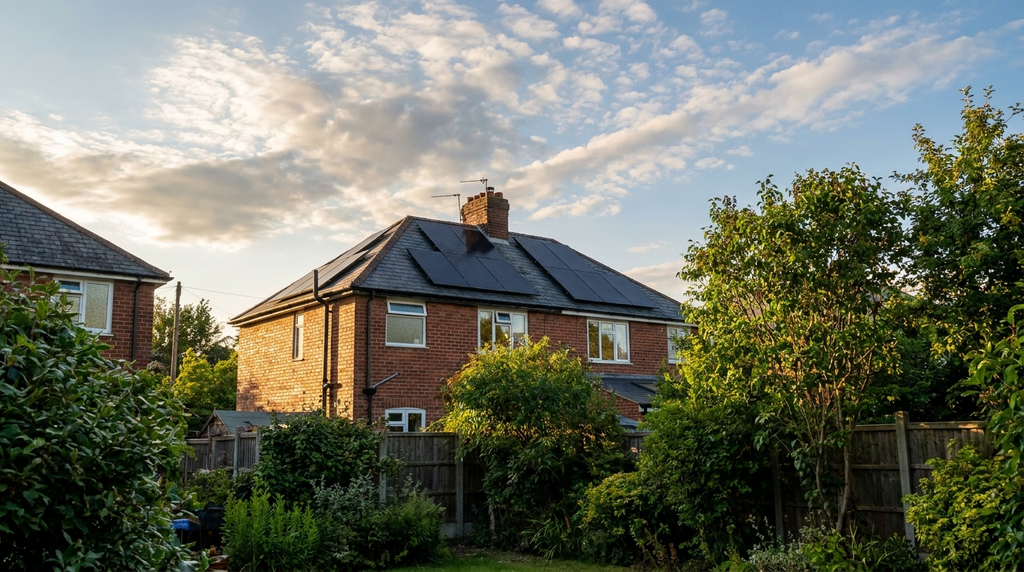
Installing solar panels is a big financial decision, and the upfront cost can be daunting. However, you can significantly reduce your solar installation costs by making informed choices about system design, timing, and how you purchase.
The most effective way to cut solar installation costs is to install a system sized to match your actual household electricity usage, avoiding oversizing which can add £1,000–£2,000 unnecessarily. Combining a solar panel purchase with a battery storage system in a single installation also reduces labour and scaffolding costs, typically saving £500–£1,000 compared to adding a battery later.
What matters when you choose a cost-cutting strategy is balancing your initial spend against long-term savings. A cheaper system that is too small won’t pay back, while an oversized one wastes money. Focus on strategies that lower your per-panel cost without compromising performance or warranty.
| Strategy | Typical saving (£) | Impact on payback period | Source |
|---|---|---|---|
| Right-size system to usage | £1,000–£2,000 | Reduces by 2–4 years | Energy Saving Trust, 2026 |
| Install battery at same time | £500–£1,000 | Reduces by 1–2 years | Energy Saving Trust, 2026 |
| Use roof-integrated panels | £300–£600 | Reduces by 1–2 years | MCS, 2026 |
| Buy via group-buy scheme | £800–£1,500 | Reduces by 2–3 years | GOV.UK, 2026 |
| Apply for Smart Export Guarantee | £100–£200 per year | Reduces by 1–2 years | Ofgem, 2026 |
| Install on a south-facing roof | 20–30% more output | Reduces by 1–3 years | Energy Saving Trust, 2026 |
| Compare at least three quotes | £1,000–£2,000 | Reduces by 2–4 years | TrustMark, 2026 |
| Use a certified MCS installer | Eligibility for SEG/grants | Ensures payback scheme access | MCS, 2026 |
| Choose a correctly sized inverter | £200–£400 | Reduces by 0.5–1 year | Energy Saving Trust, 2026 |
| Claim VAT relief (0% rate) | £800–£1,200 on typical system | Reduces by 1–2 years | GOV.UK, 2026 |
1. Match system size to usage
The single biggest way to cut solar installation costs is to avoid oversizing your system. A typical 3.5kWp system can save a household around £400–£600 a year on electricity bills, but adding extra panels beyond what you actually use pushes up the upfront cost by £1,000–£2,000 with no proportional return (Energy Saving Trust, 2026). To find the right size, look at your annual electricity usage from your bills or smart meter data. A system that covers 80–90% of your usage gives the best balance of cost and savings, without paying for surplus generation you cannot use or store.
- Review your annual kWh usage from your energy bills before buying
- Ask installers for a system sized to 80–90% of your annual consumption
- Avoid adding extra panels solely for future electric vehicle charging unless you have firm plans
How to calculate your solar panel system size
2. Install battery at the same time
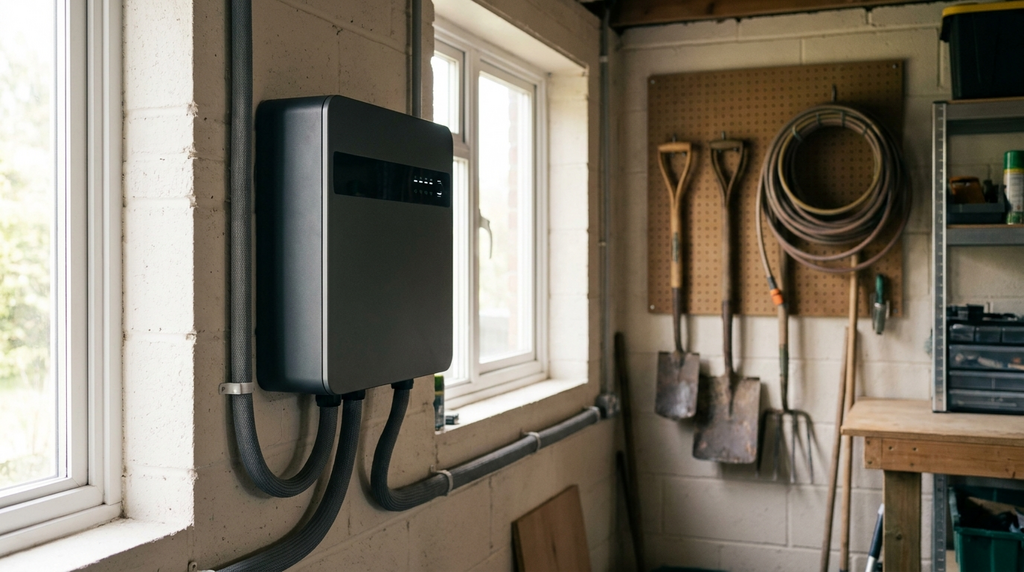
Adding a battery storage system later is significantly more expensive because it requires separate labour, scaffolding, and electrical work. Installing a battery alongside your solar panels in a single job typically saves £500–£1,000 compared to retrofitting it later (Energy Saving Trust, 2026). A combined installation also means you can use a single inverter, which is cheaper and more efficient. If you plan to store excess electricity for evening use, doing it all in one go is the most cost-effective approach.
- Include a battery in your initial quote to avoid separate labour costs
- Check if the installer offers a discount for a combined solar-plus-storage package
- Ensure the battery capacity matches your daily usage, not your panel output
3. Choose roof-integrated panels
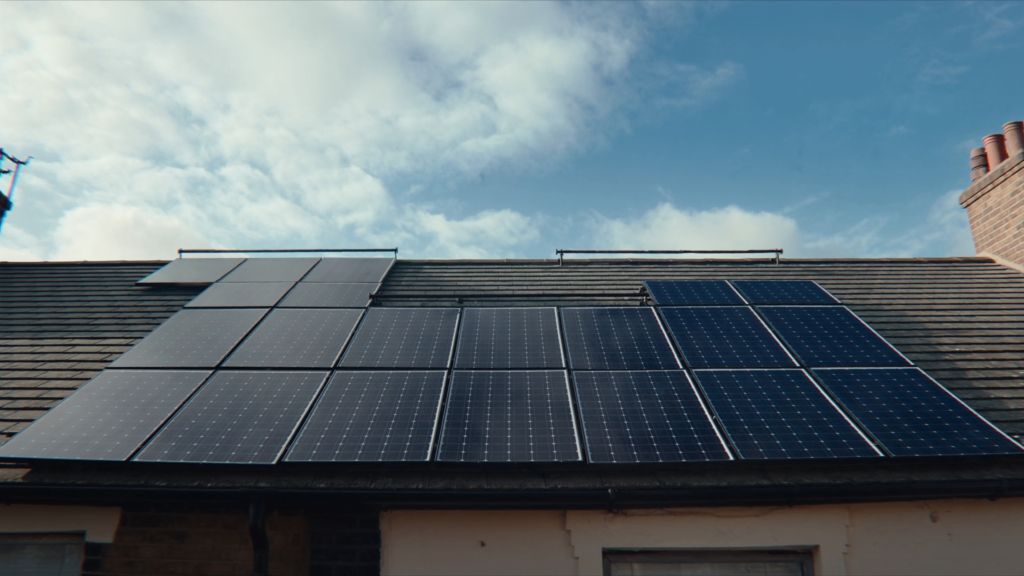
Roof-integrated solar panels replace existing roof tiles, rather than sitting on top of them. This avoids the cost of removing and replacing tiles, and often reduces scaffolding requirements. You can save £300–£600 compared to a standard on-roof installation (MCS, 2026). Integrated panels also look neater and can improve roof weatherproofing, but they must be fitted during a roof replacement or new build to avoid additional structural work.
- Only choose integrated panels if your roof is being replaced or is in good condition
- Ask your installer for a separate quote for on-roof vs integrated to compare savings
- Check that the integrated system is certified under MCS standards for warranty cover
4. Join a group-buy scheme
Group-buy schemes, such as those run by local councils through Solar Together or community energy groups, let you purchase solar panels at a discounted price by aggregating demand. These schemes typically reduce the cost by 20–30%, which can mean savings of £800–£1,500 on a typical system (GOV.UK, 2026). The process is simple: you register interest, receive a personalised quote from a pre-vetted installer, and can opt out if the price is not competitive. You still get the same quality panels and warranty as a private purchase.
- Check if your local council runs a Solar Together or similar scheme
- Register early as group-buy windows are often limited to a few weeks
- Compare the group-buy quote with at least one independent installer to confirm the saving
Solar panel grants and funding schemes in 2026
5. Apply for the Smart Export Guarantee
The Smart Export Guarantee (SEG) pays you for electricity you export back to the grid. Rates vary by supplier but typically range from 5p to 10p per kWh (Ofgem, 2026). On a typical 3.5kWp system, this can add £100–£200 a year to your savings, cutting your payback period by 1–2 years. To qualify, you must use an MCS-certified installer and have a smart meter that can measure export. The SEG is not a grant, but it directly reduces the effective cost of your installation over time.
- Choose an MCS-certified installer to be eligible for SEG payments
- Compare SEG rates from different suppliers using Ofgem’s list of licensed providers
- Ensure your smart meter is installed and capable of half-hourly export readings
6. Install on a south-facing roof
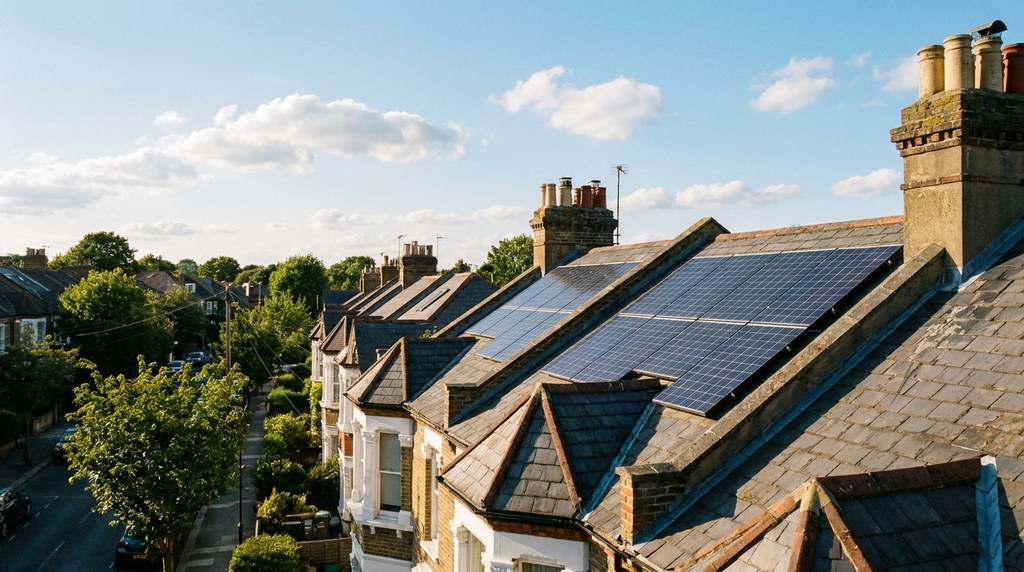
South-facing panels produce 20–30% more electricity than east or west-facing panels, which means you get more energy per panel and a lower cost per kWh generated (Energy Saving Trust, 2026). This higher output reduces the number of panels you need to meet your energy needs, directly cutting installation costs. If your roof faces south, you can achieve the same annual generation with a smaller, cheaper system. If your roof faces east or west, you may need more panels, raising the upfront cost.
- Use an online solar calculator to estimate generation for your roof orientation
- If your roof is not south-facing, plan for a slightly larger system to compensate
- Ask your installer to model output for different orientations before buying
7. Compare at least three quotes
Solar panel prices vary by up to 40% between installers for the same system size and quality. Getting at least three quotes can save you £1,000–£2,000 on a typical installation (TrustMark, 2026). Do not simply choose the cheapest option. Compare the panel brand, inverter type, warranty length, and installer certification. A slightly higher quote from a well-reviewed MCS-certified installer may offer better long-term value than a cut-price deal from an uncertified company.
- Use TrustMark or MCS directories to find reputable installers in your area
- Request itemised quotes showing panel model, inverter, and labour separately
- Ask each installer for references from recent similar installations
8. Use a certified MCS installer
MCS certification is not optional if you want to access the Smart Export Guarantee or any government grants. Uncertified installers may offer lower upfront prices, but you will lose out on SEG payments worth £100–£200 a year and void any grant eligibility (MCS, 2026). MCS certification also ensures the installation meets industry standards for safety and performance, protecting your investment. The cost difference between MCS and non-MCS installers is usually small, and the long-term savings from SEG outweigh any initial saving.
- Check the MCS website for a list of certified installers in your area
- Ask for the installer’s MCS certificate number before agreeing to any work
- Do not use an uncertified installer even if they offer a significant discount
9. Consider a smaller inverter
Inverters are often oversized relative to the panel capacity, which adds £200–£400 to the installation cost with no performance benefit. A correctly sized inverter at around 90% of your panel’s total capacity is sufficient and more efficient (Energy Saving Trust, 2026). Oversizing can also reduce the inverter’s lifespan because it runs at lower efficiency. Ask your installer to specify the inverter size and explain why it matches your panel array. A smaller, correctly rated inverter saves money upfront and runs more efficiently over its lifetime.
- Ask your installer to justify the inverter size in your quote
- Check that the inverter’s maximum input rating matches your panel array
- Consider microinverters for complex roof shapes, but compare costs carefully
10. Check for VAT relief
Solar panel installations for homes that are more than two years old are zero-rated for VAT. This means you pay 0% instead of 20%, saving £800–£1,200 on a typical system costing £5,000–£6,000 (GOV.UK, 2026). This relief applies to the panels, inverter, battery, and installation labour. You do not need to claim it back. The installer should apply the zero rate automatically if the installation meets the criteria. Confirm this in writing before you pay the deposit, and make sure the installation address is a residential property over two years old.
- Confirm with your installer that they will apply 0% VAT on the invoice
- Check that your home is more than two years old at the time of installation
- Keep a copy of the invoice showing zero VAT for your records
Cutting solar installation costs is about making informed choices, not just chasing the cheapest quote. By right-sizing your system, combining a battery purchase, and using group-buy schemes, you can reduce your upfront cost by thousands of pounds while still getting a high-quality, certified installation that pays back faster.
Frequently Asked Questions
The biggest saving is right-sizing your system to your actual usage, which avoids £1,000–£2,000 in unnecessary costs. According to the Energy Saving Trust, combining solar panels with a battery in one install also saves £500–£1,000.
Using a group-buy scheme can save £800–£1,500, as reported by GOV.UK in 2026. Getting at least three quotes from MCS-certified installers typically saves £1,000–£2,000.
A typical 3.5kWp system costs £5,000–£7,000 after VAT relief, according to the Energy Saving Trust. Costs vary by system size, roof type, and installer.
No, but you can reduce costs significantly: the 0% VAT rate saves £800–£1,200 on a typical system, per GOV.UK. The Smart Export Guarantee also pays you £100–£200 per year for exported electricity, helping offset upfront costs.
The Smart Export Guarantee pays you for excess solar electricity exported to the grid, typically £100–£200 per year. Ofgem reports this can reduce your payback period by 1–2 years.