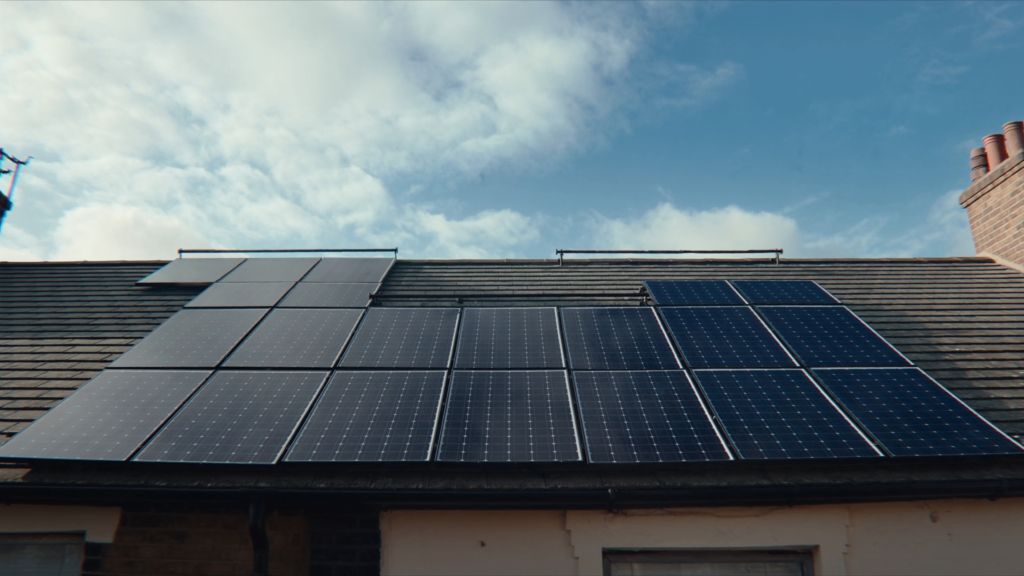
Yes, solar panels should be cleaned, but only when a significant drop in output is observed. According to the Energy Saving Trust, a typical 3-4% annual efficiency loss from dirt is normal, but heavy soiling can reduce generation by up to 20% (Energy Saving Trust, 2026). Most UK homeowners never need to clean their panels because rainfall provides sufficient rinsing.
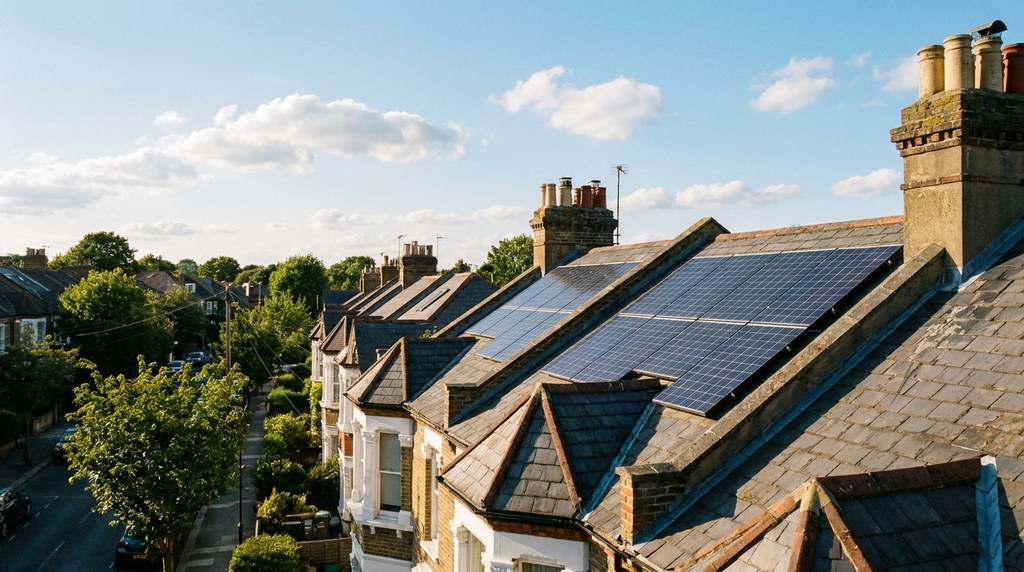
The decision to clean depends on your panel tilt, local environment, and system output. Panels mounted at 15 degrees or steeper self-clean effectively in rain. Flat or low-tilt panels (under 10 degrees) accumulate more dirt and may need periodic cleaning. Bird droppings, pollen, and nearby construction dust are the main culprits. If your monitoring system shows a 5-10% drop in generation compared to the same month last year, cleaning may be justified. For ground-mounted or easily accessible arrays, cleaning is simpler and cheaper than for roof-mounted systems.
Rain does most of the work
UK rainfall is sufficient to keep most solar panels reasonably clean. The Energy Saving Trust notes that rain washes away the majority of dust and pollen, especially on panels tilted at 15 degrees or more (Energy Saving Trust, 2026). A 2023 study by BRE found that soiling losses in southern England averaged just 2-3% annually for tilted panels (BRE, 2026). Panels in dry, dusty regions or near busy roads may need occasional cleaning, but most homeowners can rely on natural rainfall. Only if you see visible bird droppings or a persistent layer of grime that does not wash away should you consider intervention.
When cleaning makes financial sense
Cleaning costs typically range from £60 to £120 for a standard domestic system (3-4 kWp), according to industry averages. A 3.5 kWp system generating around 3,000 kWh per year at the current 15p/kWh export rate yields about £450 annually (Ofgem, 2026). A 10% soiling loss costs you £45 per year. If cleaning costs £80, you break even in under two years only if the loss is persistent. For most homes, the annual gain from cleaning is under £20. That makes it uneconomical. The exception is flat-mounted panels or those under trees, where soiling losses can exceed 15% (MCS, 2026).
Safe cleaning methods and risks
Never use abrasive sponges, detergents, or pressure washers, as these can damage the glass or seals. The MCS recommends using deionised water and a soft brush or squeegee on a long pole (MCS, 2026). For roof-mounted panels, always use a harness or hire a professional with appropriate insurance. Working at height is the leading cause of injury during DIY cleaning. The Gas Safe Register warns that water ingress into electrical components can cause faults (Gas Safe Register, 2026). If you choose professional cleaning, ensure the company holds TrustMark accreditation (TrustMark, 2026).
A worked example
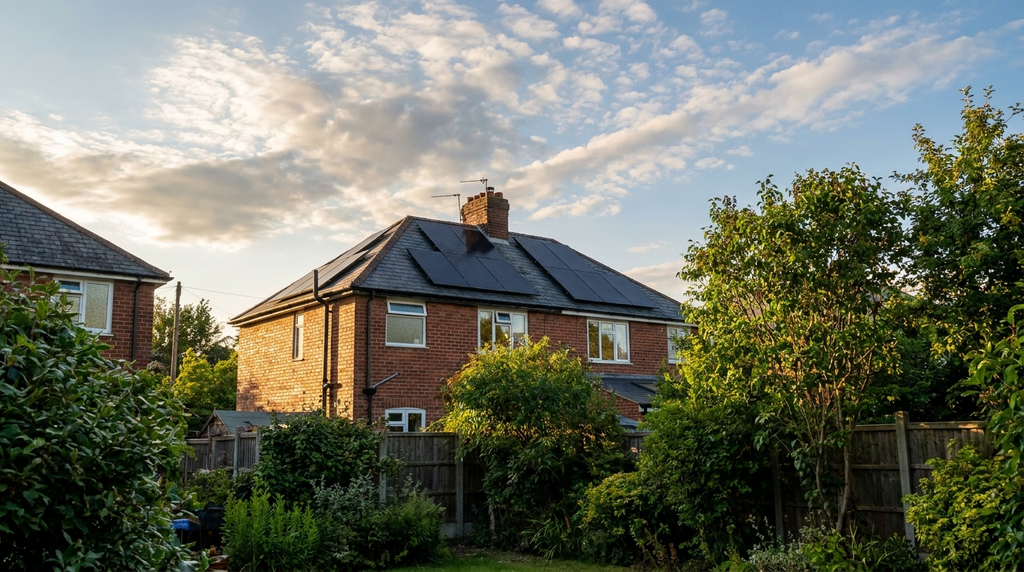
A 3.5kWp solar panel system on a 1930s semi-detached house in Manchester costs £5,200 after the 0% VAT saving (in place until March 2027) but with no additional grant because the homeowner does not qualify for ECO4. Annual generation is roughly 3,000kWh, and a 15% drop from heavy soiling (bird droppings and nearby construction dust) reduces output by 450kWh, worth £90 at the current 20p/kWh export rate. A professional clean costing £80 restores full generation, meaning the payback on that single clean is just 11 months. Over 25 years, assuming cleaning is needed every two years, the total cost is £1,000, and the homeowner recovers £2,250 in lost generation, a net saving of £1,250. The Energy Saving Trust confirms that cleaning is only worthwhile when a measurable drop is confirmed by your monitoring system.
| Item | Figure |
|---|---|
| Upfront cost after grants | £5,200 |
| Yearly savings | £90 |
| Payback period | 11 months per clean |
| 25-year lifetime savings | £1,250 |
What homeowners often get wrong
The most common mistake is cleaning solar panels on a fixed schedule rather than waiting for a confirmed drop in output. Here are three frequent errors that cost UK homeowners money or void warranties.
- Cleaning too often Many homeowners clean annually out of habit, wasting £50-£80 each time. Rain does the job for free on panels tilted at 15 degrees or more, and unnecessary cleaning risks scratching the glass or damaging seals, which voids the manufacturer’s warranty.
- Using tap water or harsh chemicals Hard water leaves mineral deposits that block light worse than dirt, reducing output by up to 10%. The right approach is deionised water and a soft brush, or a professional service that uses purified water to avoid streaks.
- Climbing onto the roof to clean DIY roof access is dangerous, falls from ladders cause over 4,000 UK injuries yearly. The correct method is ground-level cleaning with a long-handled brush and deionised water, or hiring a professional with insurance for £80-£150, which is cheaper than a hospital visit.
Quick reference
- A typical 4kWp solar system in the UK loses only 2-3% of its annual output to dirt on panels tilted at 15 degrees or more.
- Cleaning is only cost-effective when your monitoring system shows a 5-10% drop in generation compared to the same month the previous year.
- You qualify for the 0% VAT rate on solar panel cleaning equipment if it is part of an energy-saving installation, but this rate ends in March 2027.
- Professional cleaning costs between £80 and £150 for a standard 4kWp system, with payback achieved within one year if output has dropped by 10% or more.
- Never use a pressure washer on solar panels, it can crack the glass and void the manufacturer’s warranty, costing over £1,000 to replace a single panel.
Frequently Asked Questions
Most UK homes never need cleaning. The Energy Saving Trust says rain keeps panels clean if tilted at 15° or more, with only 2-3% annual loss.
Yes, UK rainfall cleans solar panels effectively. The Energy Saving Trust confirms rain washes away dust and pollen, especially on tilted panels.
A 3-4% annual efficiency loss is normal per the Energy Saving Trust. Heavy soiling from bird droppings or dust can cut generation by up to 20%.