1. Match output to annual usage
Your starting point for solar system sizing is your household’s actual electricity consumption. Without this, any estimate is guesswork. Obtain 12 months of electricity bills and look for the kWh figures, not the cost in pounds. Divide your total annual kWh by 1200, which is the typical annual kWh output per kWp of solar panels in the UK. This gives you the system size in kWp you need. For example, if you use 3600 kWh a year, you need a system around 3 kWp.
- Use actual kWh from bills, not estimated readings.
- The 1200 kWh per kWp factor is a UK average, not a guarantee.
- Source: Ofgem typical household consumption data.
2. Account for roof orientation and pitch
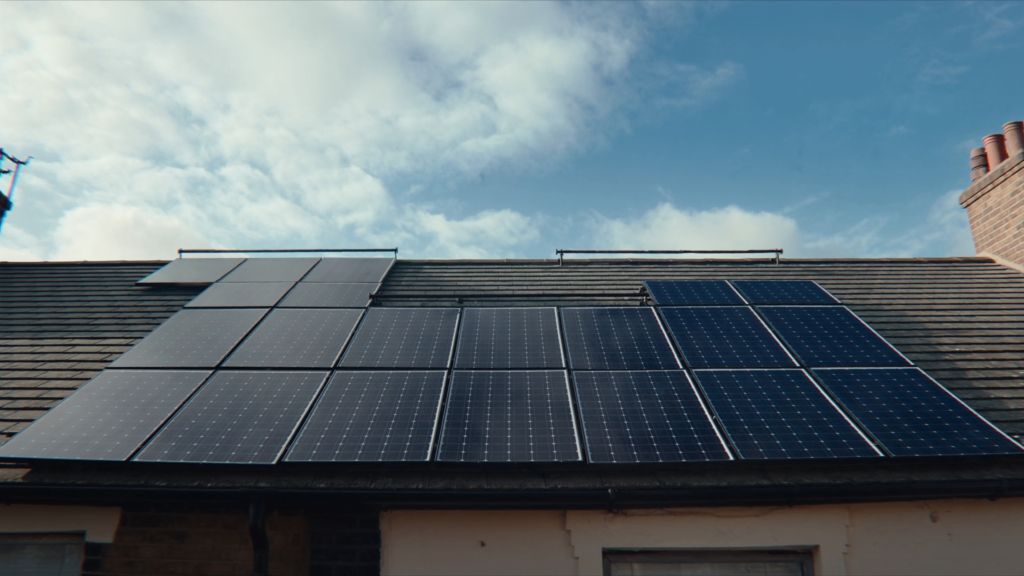
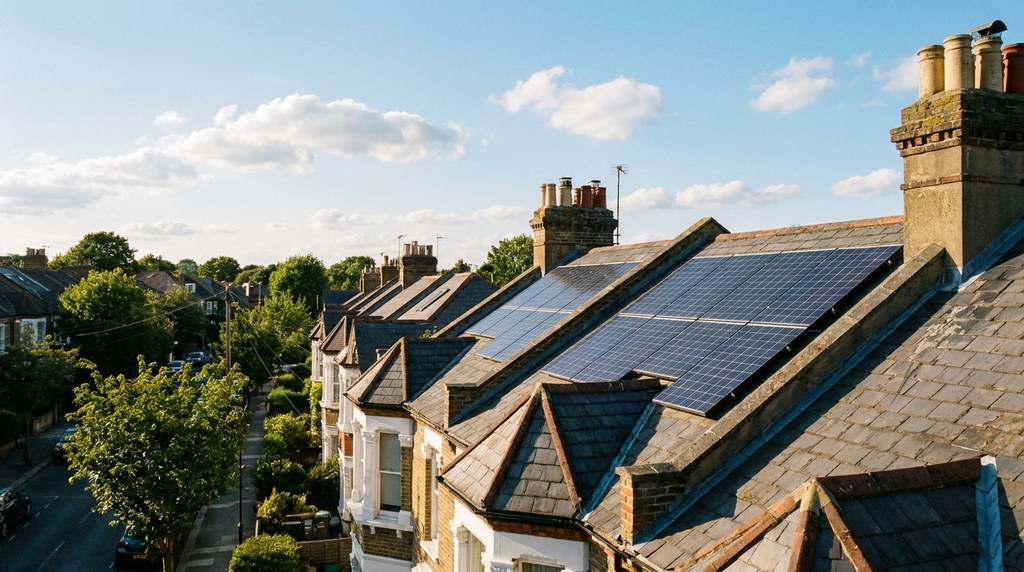
South-facing roofs at a 30-40 degree pitch capture the most sunlight in the UK. If your roof faces east or west, you lose about 15-20% of potential output. The Energy Saving Trust provides a free online solar calculator that adjusts for your specific roof orientation and pitch. Multiply your initial system kWp by the location-specific factor from that tool to get a realistic output figure.
- South-facing is optimal; east-west splits can still work but reduce output.
- Flat roofs need angled mounting frames, which add cost.
- Source: Energy Saving Trust solar calculator.
3. Check local shading patterns
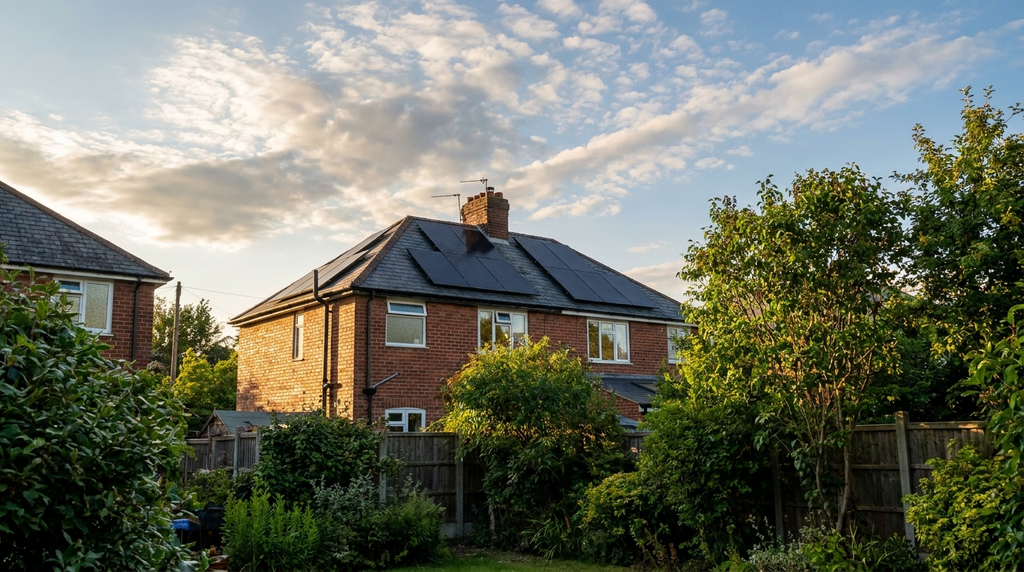
Shading from trees, chimneys, or neighbouring buildings can cut solar generation significantly. Use a solar pathfinder or a shading analysis app to measure how many hours of direct sunlight your roof loses each day. The Microgeneration Certification Scheme (MCS) installation standards recommend reducing expected output by 1% for every 1% of annual shading. Even partial shading on one panel can reduce the output of the whole string.
- Measure shading at different times of year, not just summer.
- Microinverters or power optimisers can mitigate shading losses.
- Source: MCS installation standards.
4. Factor in inverter sizing
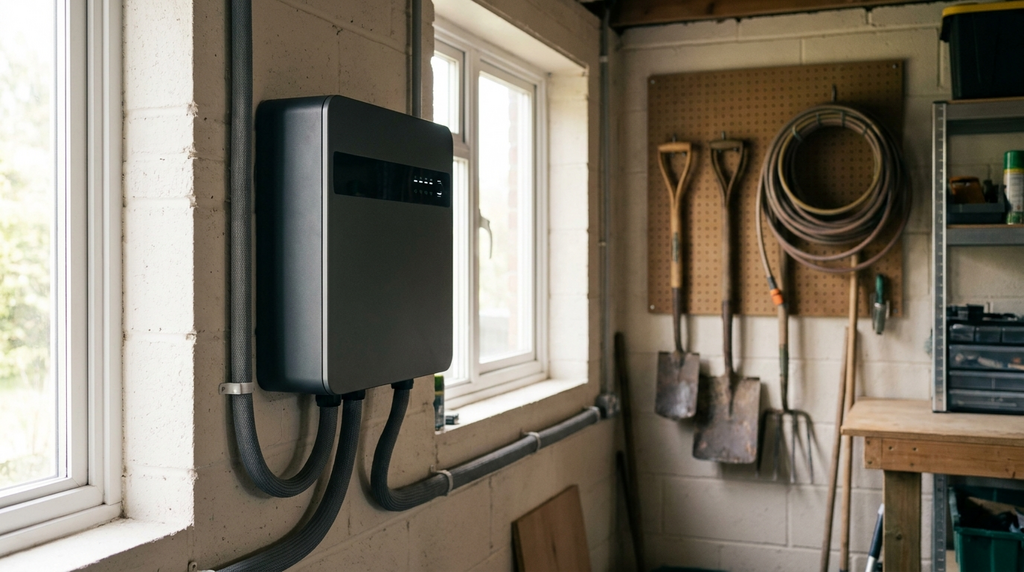
The inverter converts DC power from the panels into AC power for your home. It should be sized to 100-125% of the solar array’s peak DC capacity. Oversizing the inverter above 125% can reduce efficiency and may invalidate the warranty. Undersizing means you lose power on sunny days when the panels produce more than the inverter can handle.
- Match inverter capacity to your array size, not your roof area.
- String inverters are cheaper; microinverters handle shading better.
- Source: MCS technical guidance.
5. Allow for future battery storage
If you plan to add a battery later, choose a hybrid inverter or an AC-coupled system now. A battery typically adds 3-5 kWh of usable storage per day to your solar system sizing. Without accounting for storage, you might undersize the inverter or miss the right wiring setup. The Energy Saving Trust advises sizing your panels to cover both daytime use and battery charging.
- Hybrid inverters allow battery addition without replacing the inverter.
- Battery storage shifts surplus generation to evening hours.
- Source: Energy Saving Trust battery storage advice.
6. Consider seasonal generation variation
UK solar panels generate about 70% of their annual output between April and September. In winter, daily generation can drop to 10-20% of the summer peak. If you want to charge an electric vehicle or heat water with solar power, size for summer surplus. That means a system that produces more than you use in summer, so the excess can go to those high-demand loads.
- Winter output is low; rely on grid or battery storage during dark months.
- Oversizing for summer may mean exporting more to the grid.
- Source: Energy Saving Trust seasonal generation data.
7. Use the MCS online calculator
The MCS online calculator provides a standardised output estimate for your postcode. It factors in local irradiance, roof pitch, and orientation. This tool is used by certified installers to produce consistent quotes. Enter your roof details and the calculator gives a realistic annual kWh figure, which you can compare against your bills.
- Free to use and no registration needed.
- Results are based on 20 years of UK weather data.
- Source: MCS online calculator.
8. Check roof structural capacity
Solar panels weigh about 15-20 kg each. A standard pitched roof with timber rafters can usually take the load without reinforcement. But older roofs, flat roofs, or those with modified structures may need a structural engineer’s report. TrustMark accredited installers can arrange this check as part of their site survey.
- Panels add roughly 10-15 kg per square metre of roof.
- Structural reinforcement can add £500-£1000 to the installation cost.
- Source: TrustMark accredited installers.
9. Review export tariff eligibility
The Smart Export Guarantee (SEG) pays you for surplus electricity you export to the grid. Rates vary by supplier, typically 3-15p per kWh. Oversizing your system purely to maximise export income is rarely cost-effective without a battery, because you export at low rates and buy back at higher rates. Check current SEG tariffs before finalising your system size.
- SEG payments are tax-free for most households.
- Export rates are set by suppliers, not fixed by government.
- Source: Ofgem Smart Export Guarantee.
10. Get a professional site survey
A qualified MCS-certified installer will measure your roof dimensions, check shading, inspect wiring, and confirm the final system size. Their report ensures compliance with building regulations and the MCS standards. Without a site survey, you risk sizing errors that lead to poor performance or rejected warranty claims.
- Survey results include a final system kWp and expected annual output.
- Installers must be MCS-certified for you to claim SEG payments.
- Source: MCS certified installers.
What matters when you choose
Sizing a solar system correctly is about balancing your home’s actual energy use with the physical limits of your roof and local weather. The key factors are your annual electricity consumption in kWh, the orientation and pitch of your roof, and any shading from trees or nearby buildings. Using a certified installer and a standardised calculator like the MCS tool ensures your system will perform as expected without costly over- or undersizing.
| Sizing Method | Data Required | Typical Accuracy | Best For |
|---|---|---|---|
| Annual bill review | 12 months of kWh usage | High | Most homes |
| Roof-space calculation | Roof area, pitch, orientation | Medium | Limited roof space |
| Off-grid load analysis | Daily appliance watt-hours | Very high | Off-grid systems |
| MCS online calculator | Postcode, roof details | High | Standardised quotes |
| Shading analysis | Shade hours per day | Medium | Shaded roofs |
| Inverter sizing check | Array peak DC capacity | High | All grid-tied systems |
| Battery-ready sizing | Future storage plans | Medium | Homes planning battery |
| Seasonal variation check | Summer vs winter usage | Medium | EV or heat pump users |
| Structural assessment | Roof condition and age | High | Older or modified roofs |
| Professional site survey | Full roof inspection | Very high | Final installation |
Sizing your solar system correctly starts with your actual electricity bills and ends with a professional site survey. Use the MCS calculator as a cross-check, and always account for shading, roof orientation, and future battery plans. <a href="https://axiomecohomes.co.uk/solar-panels-guide/solar-panel-installation/">solar panel installation</a> costs battery storage sizing guide Smart Export Guarantee rates 2026
Frequently Asked Questions
Divide your annual kWh usage by 1200, the typical UK output per kWp. For a 3600 kWh home, you need around 3 kWp. Use actual bills, not estimates, per Ofgem data.
A 3-bed semi typically uses 3000-4000 kWh per year, so a 2.5-3.5 kWp system works. The Energy Saving Trust calculator confirms based on your roof orientation and pitch.
Yes, east or west roofs lose 15-20% output vs south-facing. You may need a larger system to compensate. Use the Energy Saving Trust tool to adjust sizing.
Shading cuts generation significantly. MCS standards say reduce output by 1% per 1% annual shading. Microinverters or optimisers can help, but you may need a larger array.
Inverter sizing should match 80-125% of total panel capacity. For a 3 kWp system, choose a 2.5-3.75 kW inverter. Oversizing can waste energy; undersizing clips output.