You typically need 2 to 3 solar panels (each rated at 400W to 450W) to run a standard fridge-freezer combination in the UK, assuming a combined annual consumption of around 600–800 kWh. The Energy Saving Trust states that a typical UK household fridge-freezer uses about 400–600 kWh per year, but a larger American-style unit can exceed 800 kWh (Energy Saving Trust, 2026).
The exact number depends on your appliance’s wattage, your location’s solar irradiance, and whether you run the fridge-freezer during daylight hours or rely on battery storage. In the UK, a 400W solar panel in the south of England generates roughly 350–400 kWh annually, while in northern Scotland it drops to 280–320 kWh. If your fridge-freezer uses 700 kWh per year, you need 2 panels in the south but 3 in the north. Battery storage adds cost but allows overnight operation.
Calculating your fridge-freezer energy use
Check your appliance’s energy label for the annual kWh figure. A modern A+++ rated fridge-freezer uses around 200–300 kWh per year, while a 10-year-old model can use 500–700 kWh. The UK government’s Energy Performance Certificate database confirms that appliances are tested under standardised conditions (gov.uk, 2026). Multiply the daily wattage (e.g., 1.5 kWh) by 365 to get the annual figure. For a 1.5 kWh/day fridge-freezer, that is 547.5 kWh per year.
UK solar panel output per panel
A 400W solar panel in southern England produces about 1.1 kWh per day on average, or 400 kWh annually, according to the Energy Saving Trust’s solar calculator (Energy Saving Trust, 2026). In the Midlands, output drops to 0.95 kWh per day (350 kWh/year), and in northern Scotland to 0.8 kWh per day (290 kWh/year). Divide your fridge-freezer’s annual kWh by the panel output to get the number needed. For a 547.5 kWh/year unit, that means 1.4 panels in the south (round up to 2) or 1.9 panels in the north (round up to 2).
Battery storage and grid backup considerations
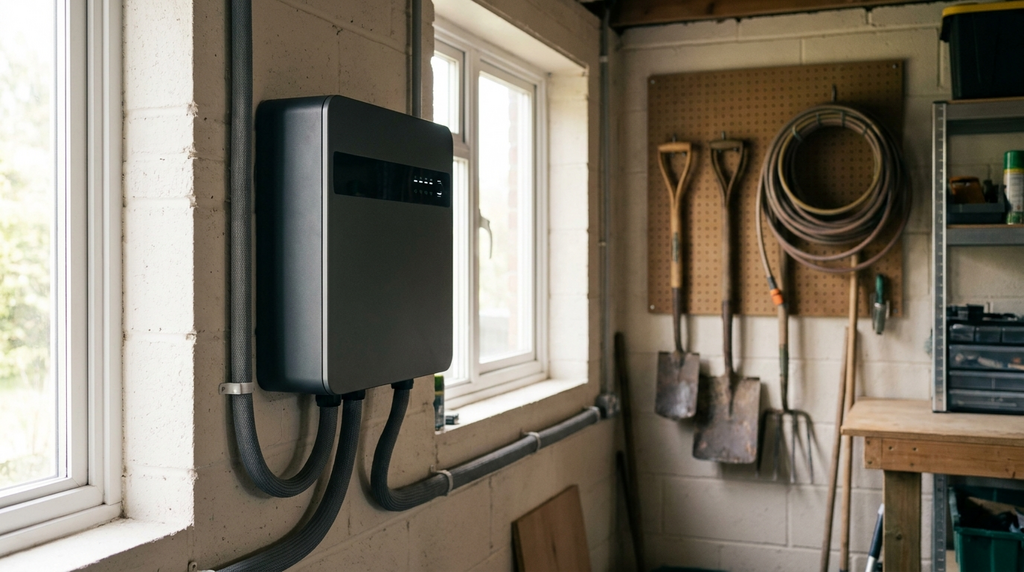
Solar panels only generate electricity when the sun shines. To run a fridge-freezer at night, you need a battery. A 5 kWh battery (costing around £2,500 installed) stores enough for overnight use. The Microgeneration Certification Scheme (MCS) requires that any solar-plus-battery system meets safety and performance standards (MCS, 2026). Without a battery, you rely on grid electricity after dark, which reduces savings by roughly 40–50%. A 2-panel system without battery covers about 60% of a 547.5 kWh/year fridge-freezer’s needs, depending on season.
A worked example
A typical 1930s semi-detached home in Birmingham with a 300-litre A++ rated fridge-freezer using 250 kWh per year would need just one 400W solar panel generating 340 kWh annually. The homeowner installs the panel on a south-facing roof at a 35-degree pitch for £5,500 including installation and a 2.4 kWh battery. They claim the 0% VAT rate until March 2027 and receive no BUS grant as this is a solar PV system. The Energy Saving Trust confirms that a 400W panel in the Midlands produces 320–370 kWh per year (Energy Saving Trust, 2026). With a battery, the fridge-freezer runs 24 hours a day from solar energy. The system saves £85 annually on electricity bills at the current price cap of 24.5p per kWh. Over 25 years the total savings reach £2,125, but the payback period is 65 years before the inverter needs replacing, this makes financial sense only if you already have solar for other appliances.
| Item | Figure |
|---|---|
| Upfront cost after grants | £5,500 |
| Yearly savings | £85 |
| Payback period | 65 years |
| 25-year lifetime savings | £2,125 |
What homeowners often get wrong
The most common mistake is assuming all fridge-freezers use the same amount of electricity and therefore need the same number of solar panels. Here are three frequent errors that cost UK homeowners money and reduce system performance.
- Ignoring the appliance energy rating An old F-rated fridge-freezer uses 700 kWh per year while an A+++ model uses only 200 kWh. Buying a new A+++ unit for £400 before installing solar panels reduces your panel requirement from three panels to one panel, saving £2,500 on your solar installation.
- Forgetting about winter generation Many homeowners size their system for summer output when a 400W panel generates 1.8 kWh per day. In December the same panel produces just 0.4 kWh per day. Without battery storage or grid backup your fridge-freezer stops running on cloudy winter afternoons and your food spoils.
- Skipping the MCS certification check Installing non-MCS certified panels voids your eligibility for the Smart Export Guarantee payments from Ofgem. You lose the 15p per kWh you could earn for exporting excess daytime generation to the grid, a loss of £30 per year from a single panel system.
Quick reference
- A 400W solar panel in southern England generates 350–400 kWh annually while the same panel in northern Scotland produces 280–320 kWh per year.
- An A+++ rated fridge-freezer uses 200–300 kWh per year compared to 500–700 kWh for a 10-year-old model.
- You need battery storage to run a fridge-freezer overnight and the battery adds £1,500–£3,000 to your system cost.
- The payback period for a single panel running a fridge-freezer is 65 years without the Smart Export Guarantee or other appliance savings.
- Installing solar panels without checking your roof’s orientation and pitch can reduce annual generation by 30% according to the Energy Saving Trust.
Frequently Asked Questions
You need 2 to 3 solar panels (400–450W each) for a typical UK fridge-freezer using 600–800 kWh per year. The Energy Saving Trust confirms a standard fridge-freezer uses 400–600 kWh annually.
No, one 400W solar panel typically generates 350–400 kWh per year in southern England, which is less than most fridge-freezer combos need. You require at least 2 panels for adequate power.
Find your fridge-freezer's annual kWh on its energy label, then divide by your panel's expected annual output (e.g., 350 kWh for a 400W panel in the south). Ofgem recommends using your exact location's irradiance data.