Solar panels have no moving parts, so they rarely break. But a small build-up of dirt, shading from a new tree, or a failing inverter can silently cut your electricity generation without you noticing. A few simple checks each season keep your system running at peak output for its full 25-year lifespan.
The most important solar panel maintenance task is keeping the panels clear of dirt and debris, as even a light coating of dust can reduce energy generation by up to 5% according to the Energy Saving Trust. For most UK homes, a simple rainwater rinse is sufficient, but if your panels are tilted at less than 15 degrees, you may need an annual clean to maintain peak performance.
What matters when you choose your maintenance routine is that you do not over-service the system. Most UK homes need only a visual check and an occasional clean. Focus on safety first: never walk on panels or use abrasive tools, and always hire an MCS-certified installer for anything beyond a basic rinse.
| Task | Frequency | Typical cost (GBP) | Source |
|---|---|---|---|
| Visual inspection | Every 3 months | £0 | Energy Saving Trust |
| Rain rinse (if tilted >15°) | Naturally occurring | £0 | Energy Saving Trust |
| Manual clean (if tilted <15°) | Annually | £50–£100 | TrustMark |
| Professional service check | Every 2 years | £100–£150 | MCS |
1. Check panels visually every three months
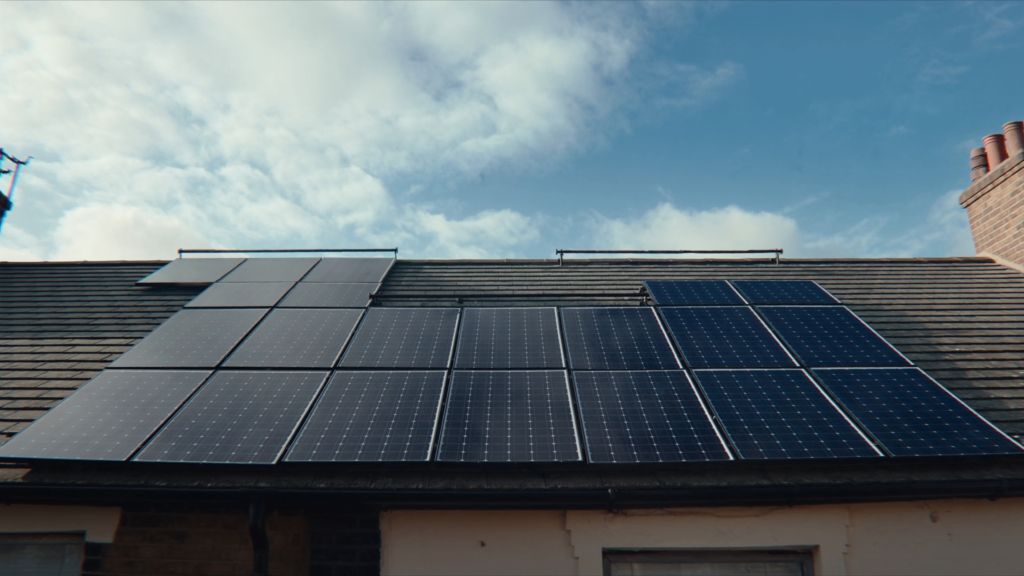
A quick ground-level inspection costs nothing and can catch problems early. Look for bird droppings, leaf build-up, or shading from new tree growth; these can block sunlight and reduce output by up to 20% (Energy Saving Trust, 2026). Use binoculars from ground level to avoid climbing on the roof. If you see a heavy accumulation of debris, note which panels are affected so you can plan a targeted clean.
- Check for bird droppings, leaf build-up, or shading from new tree growth
- Use binoculars from ground level for a safe, free inspection
- Note affected panels for a targeted clean if debris is heavy
2. Let rain do the cleaning for most roofs
Panels tilted at 15 degrees or more are self-cleaning in UK rainfall; only flat-mounted panels need manual intervention (Energy Saving Trust, 2026). Annual UK rainfall averages 1,200mm per year (ONS, 2026), enough to rinse away light dust naturally. If your panels are on a standard pitched roof, you can skip the hose and save the water.
- Panels tilted at 15° or more are self-cleaning in UK rainfall
- Annual UK rainfall averages 1,200mm, enough for natural rinsing
- Skip the hose for pitched roofs to save water and effort
3. Schedule a manual clean for low-tilt panels
Panels with a tilt below 15 degrees accumulate grime faster because rain runs off more slowly. A professional clean costs £50–£100 (TrustMark, 2026). Use only deionised water and a soft brush, tap water leaves mineral spots that reduce efficiency (MCS, 2026). Never use abrasive pads or pressure washers, which can scratch the glass and void the warranty.
- Professional clean costs £50–£100 for low-tilt panels
- Use deionised water and a soft brush to avoid mineral spots
- Avoid abrasive pads or pressure washers to protect the glass
4. Trim overhanging branches annually
Shading from trees can cut panel output by 10–25% even on sunny days (Energy Saving Trust, 2026). Prune in late autumn after leaf fall to prevent winter shading and moss growth on panels. If a neighbour’s tree is the cause, speak to them first before arranging professional trimming.
- Shading from trees can reduce output by 10–25% on sunny days
- Prune in late autumn after leaf fall for best results
- Discuss neighbour’s trees before arranging professional trimming
5. Monitor your inverter display weekly
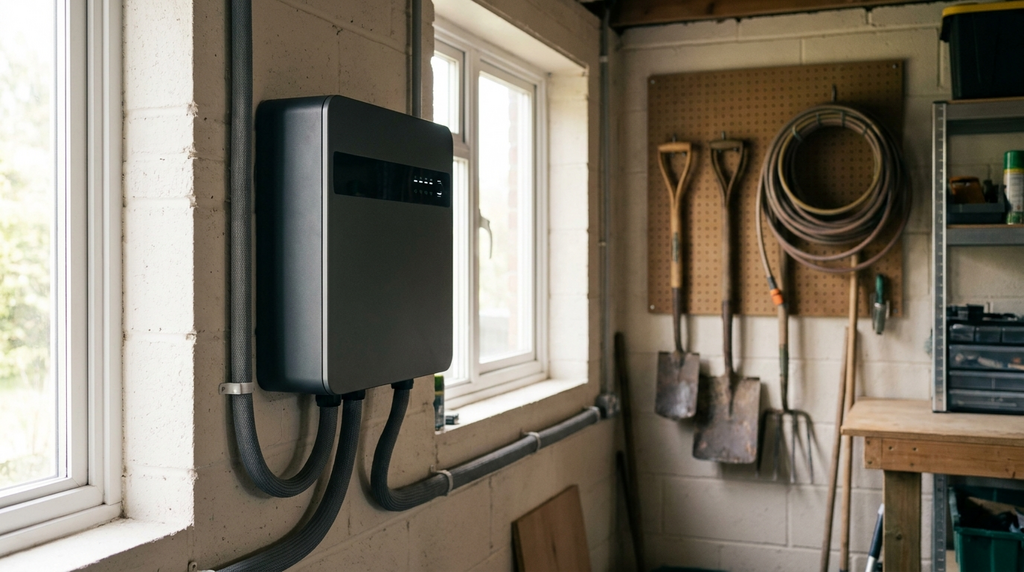
A flashing red or orange light on the inverter signals a fault; a green constant light means normal operation (MCS, 2026). Most inverters have a 10-year lifespan; if yours is over 8 years old, budget £800–£1,200 for a replacement (GOV.UK, 2026). Check the display every Sunday to catch problems early.
- A flashing red or orange light signals a fault; green means normal
- Inverters last about 10 years; budget £800–£1,200 for replacement
- Check the display every Sunday to catch problems early
6. Clear snow only with a roof rake
A 5cm layer of snow can block 100% of generation; use a long-handled soft roof rake, never a shovel or broom (Energy Saving Trust, 2026). Snow usually slides off tilted panels within 24 hours; only intervene if snow is deep and persistent. If you cannot reach safely, leave it, the dark glass absorbs heat and melts snow faster than the roof.
- A 5cm snow layer can block 100% of generation
- Use a long-handled soft roof rake, never a shovel or broom
- Snow on tilted panels usually slides off within 24 hours
7. Inspect bird-proofing mesh every spring
Birds nesting under panels can cause wiring damage and fire risk; mesh costs £100–£200 to install (TrustMark, 2026). Check for gaps or damage after winter storms; replace if you see droppings or hear scratching. Do not attempt to remove nests yourself, call a professional to avoid disturbing protected species.
- Bird-proofing mesh costs £100–£200 to install
- Check for gaps or damage after winter storms
- Call a professional to remove nests to avoid disturbing protected species
8. Record your generation data monthly
Compare your smart meter reading to your inverter’s display; a consistent drop of 10% or more suggests a problem (Ofgem, 2026). Use a free app like the Energy Saving Trust’s Solar Checker to log monthly kWh output. If you see a steady decline over three months, book a professional check.
- A consistent 10% drop in generation suggests a problem
- Use a free app like the Energy Saving Trust’s Solar Checker
- Book a professional check if you see a steady decline over three months
9. Replace damaged panels promptly
A cracked panel can reduce the whole string’s output by 30% or more (MCS, 2026). If you spot a crack, call your MCS-certified installer, do not attempt DIY repairs as it voids the warranty. Most panels carry a 25-year performance guarantee, so check your paperwork before paying for a replacement.
- A cracked panel can reduce whole string output by 30% or more
- Call your MCS-certified installer; DIY repairs void the warranty
- Check your 25-year performance guarantee before paying for a replacement
10. Book a professional service every two years
An MCS-certified technician checks wiring, inverter health, and panel mounts for £100–£150 (MCS, 2026). This is especially important for panels over 10 years old, when components begin to degrade (GOV.UK, 2026). A service report also helps if you need to make a warranty claim later.
- Professional service costs £100–£150 every two years
- Especially important for panels over 10 years old
- A service report helps with future warranty claims
Stick to this simple checklist and your solar panels will run efficiently for decades with minimal cost. For more guidance on choosing a solar installer or understanding your feed-in tariff, see our guide to selecting an MCS-certified solar installer and overview of solar panel grants and incentives for UK homes.
Frequently Asked Questions
Most UK homes need only a rainwater rinse, which happens naturally. If your panels are tilted below 15 degrees, a manual clean once a year at £50-£100 is recommended, according to TrustMark.
Yes, you can rinse panels with a hose from ground level, but never walk on them or use abrasive tools. For anything beyond a basic rinse, hire an MCS-certified installer, advises the Energy Saving Trust.
Yes, but minimal. A visual check every three months and an occasional clean keep output high. Professional servicing every two years costs £100-£150, per MCS guidelines.
Shading from new tree growth or bird droppings can reduce output by up to 20%, according to the Energy Saving Trust. Dirt and debris block sunlight even on clear days.
A professional service check every two years costs £100-£150, according to MCS. A manual clean for low-tilt panels costs £50-£100 annually, per TrustMark.