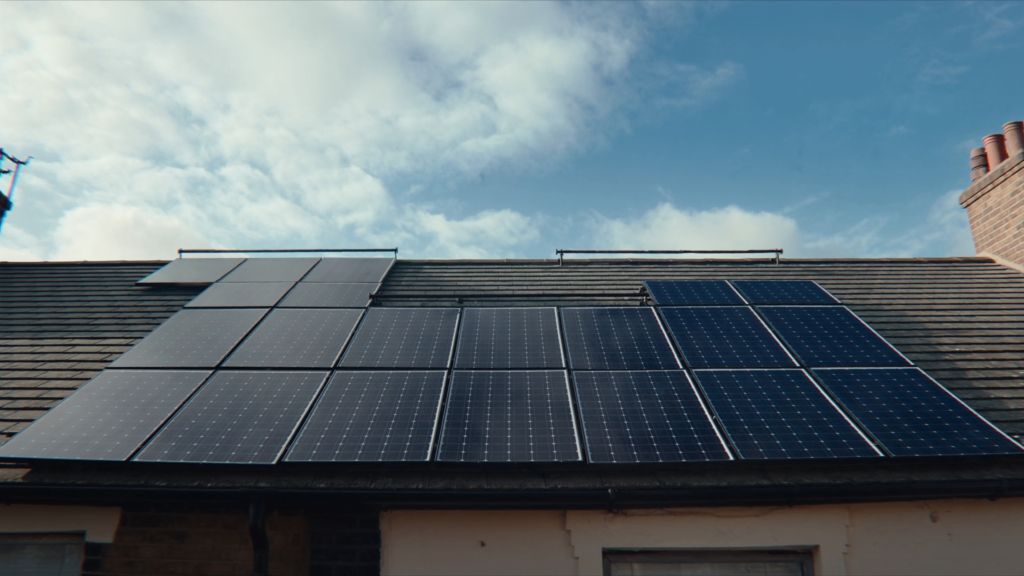
Solar panel myths in the UK what matters when you choose
When you are considering solar panels for your home, separating fact from fiction is essential to making a sound investment. The UK solar market is mature, with over a million installations and clear data from government and industry bodies, but myths persist that can lead to hesitation or poor decisions. This listicle uses published UK data to debunk the ten most common misconceptions, helping you focus on what actually matters: system size, orientation, local irradiance, and financial returns.
The most persistent myth is that solar panels do not work in the UK’s cloudy climate, but modern panels generate electricity from diffuse light, with the UK’s average annual irradiance still sufficient to produce a typical 4kW system yield of around 3,800kWh per year.
What matters when you choose is understanding that solar panel performance depends on real-world data, not outdated beliefs. The UK has a mature solar market, and published figures from government and industry bodies show that a well-sited system can deliver strong returns even in our climate.
| Myth | Reality | Key Data (Source) |
|---|---|---|
| Panels don’t work in cloudy UK | Panels generate from diffuse light | 3,800kWh/yr average yield (Energy Saving Trust, 2026) |
| Panels need direct sunlight only | Panels work on overcast days | 10–25% of peak output in cloud (Energy Saving Trust, 2026) |
| UK is too far north | UK irradiance is comparable to Germany | Germany installed 60GW+ solar (GOV.UK, 2026) |
| Panels cause roof damage | Properly installed panels protect the roof | 25-year lifespan typical (MCS, 2026) |
| You need planning permission | Most domestic systems are permitted development | Permitted development rights (GOV.UK, 2026) |
| Panels are too expensive | Costs have fallen 80% in a decade | 4kW system ~£5,000–£7,000 (Energy Saving Trust, 2026) |
| You can’t sell power back | Smart Export Guarantee pays for exports | SEG rates ~5–15p/kWh (Ofgem, 2026) |
| Panels need constant cleaning | Rain cleans most grime | Minimal maintenance needed (Energy Saving Trust, 2026) |
| Batteries are always necessary | You can use grid export instead | No battery needed for SEG (Ofgem, 2026) |
| Panels will make your house unsellable | Solar can increase property value | Buyer surveys show positive value (Energy Saving Trust, 2026) |
1. Solar panels work in the UK
The idea that the UK is too cloudy for solar panels is the most widespread myth, but it is not supported by the data. Modern photovoltaic cells generate electricity from diffuse light, not just direct sunlight. The UK’s average annual irradiance is comparable to that of northern Germany, which has over 60GW of installed solar capacity. A typical 4kW system in the UK produces around 3,800kWh per year (Energy Saving Trust, 2026). That is enough to cover a significant portion of an average household’s annual electricity use.
- Modern panels convert diffuse light efficiently.
- UK irradiance is similar to Germany’s.
- Average yield supports real energy savings.
2. Cloudy days still produce power
Even under thick cloud cover, solar panels continue to generate electricity. They produce around 10 to 25 percent of their peak output on overcast days (Energy Saving Trust, 2026). The UK’s climate, with frequent cloud cover, still delivers usable generation year-round. This is why total annual yield, not just sunny day output, is the metric that matters for your investment.
- Output drops but does not stop in cloud.
- Annual yield is the key figure.
- UK climate supports consistent generation.
3. UK latitude is not a barrier
The UK sits at a similar latitude to Germany, which leads Europe in solar adoption with over 60GW of installed capacity (GOV.UK, 2026). Latitude affects the angle of the sun, not the total available light. The UK’s solar resource is comparable to many successful solar markets. Daylight hours in summer are long, which compensates for shorter winter days. Read our guide on how solar panels perform across UK regions
- Germany proves solar works at UK latitudes.
- Long summer days boost annual output.
- Latitude is not a limiting factor.
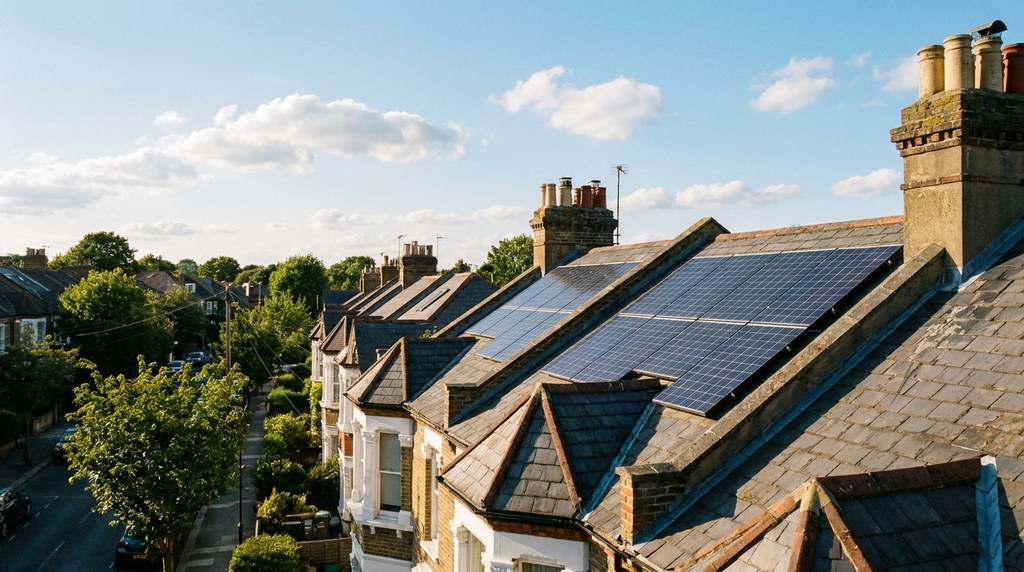
4. Proper installation protects your roof
Concerns about roof damage are understandable, but a correctly installed solar system does not cause leaks or structural harm. Panels are mounted on rails that distribute weight evenly and avoid penetrating the roof membrane when installed by an MCS-certified professional (MCS, 2026). Flashings and seals prevent water ingress, and the panels themselves can shield the roof from weather, extending its lifespan.
- Rails distribute weight without roof damage.
- MCS-certified installers use proper flashings.
- Panels can protect the roof from weather.
5. Planning permission is rarely needed
Most domestic rooftop solar installations are classed as permitted development, meaning you do not need planning permission. This applies to homes that are not listed or in conservation areas (GOV.UK, 2026). You should still check with your local authority if you have any doubts, but for the vast majority of UK homeowners, the process is straightforward.
- Permitted development covers most homes.
- Listed buildings and conservation areas are exceptions.
- Check with your local authority if unsure.
6. Costs have dropped dramatically
The price of solar panels has fallen by around 80 percent over the past decade. A typical 4kW system now costs between £5,000 and £7,000, including installation (Energy Saving Trust, 2026). Payback periods are typically 8 to 12 years, after which the electricity you generate is essentially free. With rising energy prices, the financial case is stronger than ever. Read our guide on solar panel payback periods and savings
- 4kW system costs £5,000–£7,000.
- Payback period is 8–12 years.
- Savings increase as energy prices rise.
7. You can sell excess electricity
The Smart Export Guarantee (SEG) requires licensed energy suppliers to pay you for electricity you export to the grid. Typical SEG rates range from 5p to 15p per kWh (Ofgem, 2026). This provides an ongoing income stream that can shorten your payback period. You do not need a battery to benefit from the SEG.
- SEG pays for exported electricity.
- Rates range from 5p to 15p per kWh.
- No battery required to sell power.
8. Rain keeps panels clean
UK rainfall is sufficient to wash away most dust and pollen from solar panels. Manual cleaning is rarely needed for sloped panels, which naturally shed debris and water (Energy Saving Trust, 2026). In most cases, a good rain shower is all that is required to maintain performance. Only in very dry, dusty areas might occasional cleaning be beneficial.
- Rain cleans panels effectively.
- Sloped panels shed debris naturally.
- Manual cleaning is rarely needed.
9. Batteries are optional, not required
You can export surplus power to the grid under the SEG without a home battery. Adding a battery can increase your self-consumption and reduce reliance on the grid, but it is not essential for a viable system (Ofgem, 2026). Many homeowners start with panels alone and add a battery later if they want to store more of their own energy.
- SEG works without a battery.
- Batteries increase self-consumption but are optional.
- You can add a battery later.
10. Solar panels can boost property value
Surveys show that energy-efficient features, including solar panels, are increasingly valued by homebuyers. A well-installed system with a transferable warranty can make a property more attractive and potentially increase its value (Energy Saving Trust, 2026). Lower running costs and a greener footprint are selling points that resonate with modern buyers. Read our guide on how solar panels affect home insurance
- Energy efficiency is valued by buyers.
- Transferable warranties add appeal.
- Lower running costs attract buyers.
The evidence is clear: solar panels work well in the UK, costs have fallen dramatically, and the financial returns are supported by government schemes like the Smart Export Guarantee. By focusing on published data rather than persistent myths, you can make an informed decision about whether solar is right for your home.
Frequently Asked Questions
Yes, modern solar panels generate electricity from diffuse light on overcast days. The Energy Saving Trust says a typical 4kW system yields around 3,800kWh per year in the UK.
Most domestic solar panel installations are permitted development and do not require planning permission. Check GOV.UK for any local restrictions or listed building rules.
A typical 4kW solar panel system costs £5,000 to £7,000 installed, according to the Energy Saving Trust. Prices have fallen around 80% over the past decade.
Yes, the Smart Export Guarantee (SEG) pays you for excess electricity exported to the grid. Ofgem states typical SEG rates range from 5 to 15p per kWh.
No, properly installed solar panels protect the roof from weather and can last 25 years. MCS-certified installers ensure no damage occurs during fitting.