10 things to know about the Smart Export Guarantee
The Smart Export Guarantee (SEG) pays you for surplus electricity your solar panels send back to the grid. It replaced the Feed-in Tariff and is now the main way households earn from solar exports. Your most important move is to find the highest SEG tariff rate available in your area, as rates vary by supplier and can significantly affect your annual savings.
When you choose a SEG tariff, focus on the export rate per kilowatt-hour (p/kWh), the payment term (fixed or variable), and whether you can switch supplier without penalty. These factors determine how much you earn over the lifetime of your solar panels.
| Supplier | Tariff name | Export rate (p/kWh) | Payment term |
|---|---|---|---|
| Octopus Energy | Outgoing Fixed 15M | 15.0p/kWh | Fixed for 12 months |
| EDF | Solar Export | 6.0p/kWh | Variable |
| British Gas | Smart Export | 5.0p/kWh | Variable |
| E.ON Next | Solar Export Plus | 5.0p/kWh | Fixed for 12 months |
| Scottish Power | Solar Export | 4.0p/kWh | Variable |
| OVO Energy | Solar Export | 4.0p/kWh | Variable |
| Utility Warehouse | Solar Export | 3.5p/kWh | Variable |
| Tesla Energy | Export Plan | 7.0p/kWh | Fixed for 12 months |
| So Energy | Solar Export | 3.0p/kWh | Variable |
| Shell Energy | Solar Export | 4.5p/kWh | Fixed for 12 months |
1. Compare SEG tariff rates regularly
SEG rates are set by individual suppliers, not fixed by government. This means rates can differ by 10p/kWh or more between suppliers. Checking rates every 6–12 months can increase your annual income by £50–£150, depending on your system size. Use comparison sites or the Energy Saving Trust’s SEG tool to see current offers across all licensed suppliers.
- Rates range from 3.0p/kWh to 15.0p/kWh as of April 2026 (Ofgem, 2026).
- Switching to a higher rate can add £60–£120 a year for a typical 4kW system.
- Suppliers must publish their SEG rates on their website, making comparison straightforward.
2. You need an export meter
A smart meter or a dedicated generation meter is required to measure the electricity you export to the grid. Without one, your supplier cannot calculate your SEG payments. Most new solar installations include a smart meter, but if you have an older system, you may need to request one from your energy supplier.
- Smart meters record export data automatically and send it to your supplier (Energy Saving Trust, 2026).
- Generation meters are an alternative if a smart meter is not feasible, but they require manual readings.
- Check with your installer whether your system includes a compatible meter before signing a SEG contract.
3. Eligibility depends on your installer
To qualify for SEG, your solar panel system must be installed by an MCS-certified installer. This certification ensures the system meets industry standards and is eligible for export payments. If you installed panels yourself or used an uncertified installer, you cannot join a SEG tariff.
- MCS certification covers both the installer and the solar panel system (MCS, 2026).
- Ask your installer for their MCS certificate number before work begins.
- Retrospective certification is sometimes possible, but it is simpler to use an MCS-approved installer from the start.
4. SEG payments are tax-free
Income from the Smart Export Guarantee is exempt from income tax for most households. This means you keep the full export payment without reporting it to HMRC. The tax exemption applies as long as your total income from the scheme does not exceed £1,000 per year, which covers almost all domestic solar systems.
- Tax-free status is confirmed by HMRC for domestic SEG payments (GOV.UK, 2026).
- If you have a large system and earn over £1,000 annually, you may need to register for self-assessment.
- No VAT is charged on SEG payments, so you receive the full rate quoted by your supplier.
5. Tariffs can be fixed or variable
Fixed-rate SEG tariffs lock in a set price per kWh for a defined period, usually 12 months. Variable tariffs can change at any time, with suppliers typically giving 30 days’ notice. Fixed rates offer predictable income, while variable rates may start lower but could rise if market conditions improve.
- Fixed tariffs provide stability but may have lower initial rates than some variable offers (Ofgem, 2026).
- Variable tariffs often have no exit fees, making switching easier.
- Check the contract terms for any notice period or penalties before signing a fixed deal.
6. You can switch SEG suppliers
You are not tied to your electricity supplier for SEG. You can choose any licensed supplier that offers an export tariff, even if they do not supply your household electricity. This means you can shop around for the best rate without changing your main energy provider.
- Switching SEG suppliers is free and takes a few weeks (Energy Saving Trust, 2026).
- Some suppliers offer dual-fuel and SEG bundles, which may simplify billing.
- Compare exit fees before switching, especially if you are on a fixed-term contract.
7. Export rate is not guaranteed
Suppliers can change their SEG rates with notice, typically 30 days for variable tariffs. Fixed-rate tariffs guarantee the rate for the contract period, but after that, the rate may reset to a lower level. Always read the terms carefully to understand how and when rates can change.
- Variable rates can drop if wholesale electricity prices fall (Ofgem, 2026).
- Fixed-rate contracts protect you from rate drops during the term, but you may miss out on rises.
- Set a reminder to review your tariff at least once a year to avoid being stuck on a low rate.
8. SEG payments are per kWh exported
You are paid for every unit of electricity you send back to the grid, not for total generation. This means payments depend on how much surplus energy your panels produce after meeting your household demand. A typical 4kW system exports around 50–60% of its generation, but this varies by usage patterns.
- Payments are calculated based on metered export data, not estimated generation (GOV.UK, 2026).
- If you use more electricity during the day, you export less and earn less from SEG.
- Installing a battery can reduce exports but may increase self-consumption savings.
9. Battery storage can affect exports
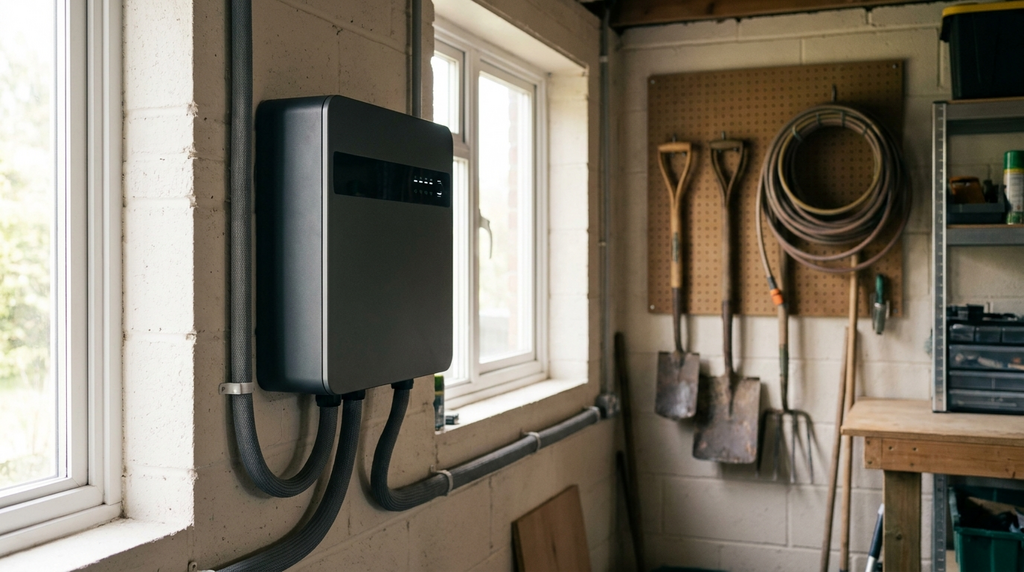
A battery lets you store excess solar power for later use, reducing the amount you export to the grid. While this lowers your SEG income, it can save you more money by replacing expensive grid electricity you would otherwise buy in the evening. The net benefit depends on your electricity tariff and battery size.
- Batteries typically store 5–10 kWh, enough to cover evening usage for most homes (Energy Saving Trust, 2026).
- Pairing a battery with a time-of-use tariff can boost savings further.
- You can still export some electricity if your battery is full, so SEG income is not eliminated entirely.
10. SEG lasts for the system’s lifetime
Once you sign up for a SEG tariff, the payment term is specified in your contract, typically up to 20 years. After the term ends, you can usually renew or switch to another supplier. The scheme itself has no end date, so your solar panels can generate export income for their entire operational life.
- SEG contracts are offered for 1 to 20 years, depending on the supplier (MCS, 2026).
- If you move house, the new owner can take over the SEG contract if they meet eligibility criteria.
- Solar panels typically last 25–30 years, so SEG income can continue for decades after installation.
Choosing the right SEG tariff is a straightforward way to boost your solar panel returns. Compare rates every year and switch to the highest available tariff to maximise your export income over the system’s lifetime. Learn more about solar panel payback periods Compare <a href="https://axiomecohomes.co.uk/solar-panels-guide/solar-panel-battery-storage/">solar battery storage</a> options
Frequently Asked Questions
The Smart Export Guarantee (SEG) pays you for surplus solar electricity sent to the grid. Ofgem requires all licensed suppliers with over 150,000 customers to offer a SEG tariff.
SEG rates vary by supplier from 3.0p/kWh to 15.0p/kWh as of April 2026. Octopus Energy pays the highest rate at 15.0p/kWh fixed for 12 months.
Yes, you can switch SEG suppliers without penalty. The Energy Saving Trust recommends comparing rates every 6–12 months to maximise your earnings.
Yes, you need a smart meter or a dedicated generation meter to measure exported electricity. Without one, your supplier cannot calculate your SEG payments.
Octopus Energy's Outgoing Fixed 15M offers the highest rate at 15.0p/kWh fixed for 12 months. Compare all supplier rates using the Energy Saving Trust's SEG tool.