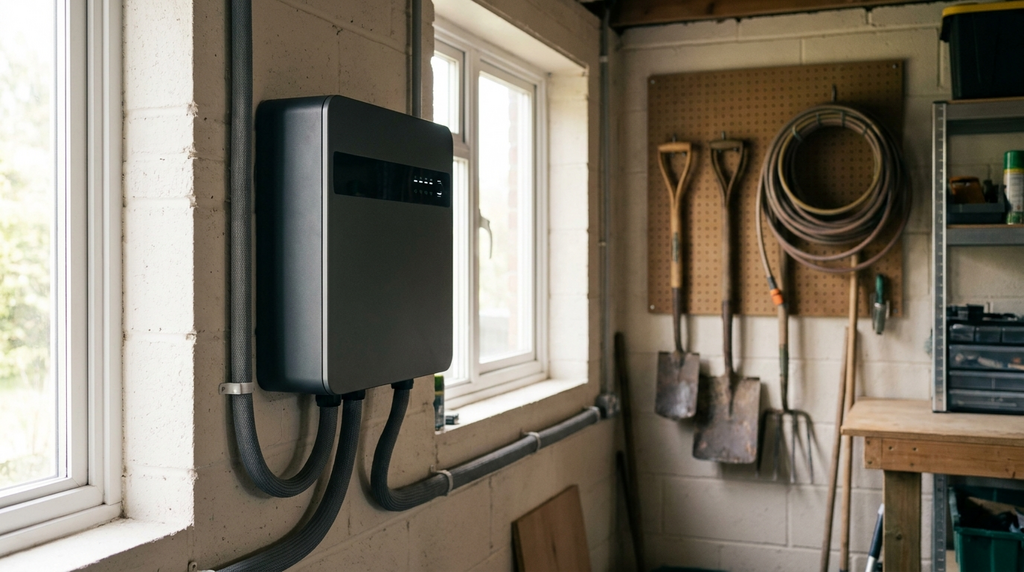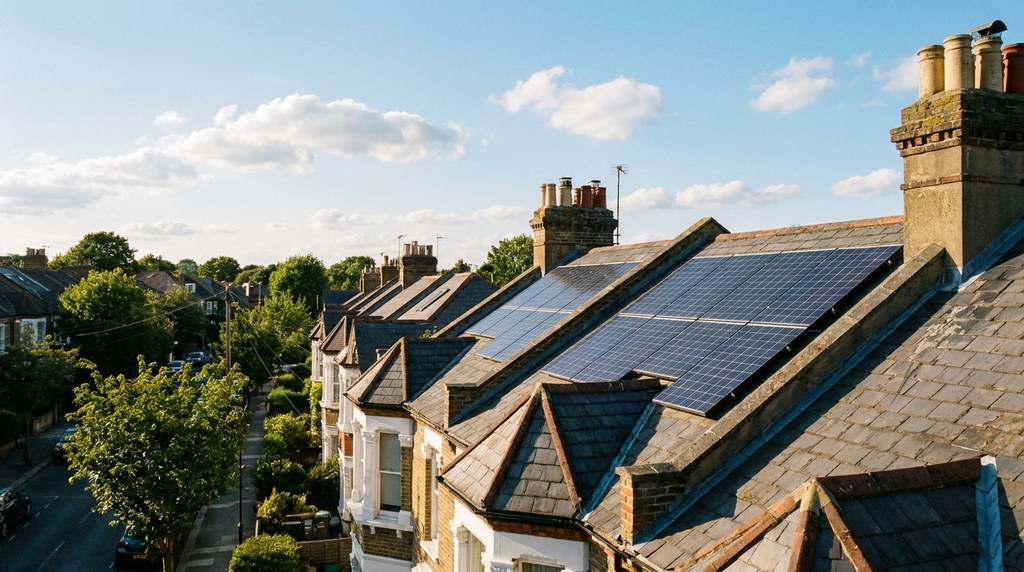
A 5kVA inverter typically pairs best with between 10 and 14 solar panels, assuming standard 400W to 450W residential panels, to match the inverter’s maximum DC input rating without overloading it. According to the Energy Saving Trust, a typical UK household with a 3.5kWp system uses around 2,900 kWh annually, and a 5kVA inverter can handle up to roughly 5.5kW of solar panel capacity (the DC-to-AC ratio of 1.1 to 1.3) (Energy Saving Trust, 2026).
The exact number depends on your panel wattage and the inverter’s maximum DC input power, usually stated in the product datasheet. A 5kVA inverter is common for larger homes or those with high daytime electricity use, such as running heat pumps or electric vehicle charging. Over-panelling slightly (up to 130% of the inverter’s rating) is safe for most modern inverters, but staying within the manufacturer’s limits avoids clipping losses and voiding warranties. The following sections break down the key factors.
Panel wattage determines panel count
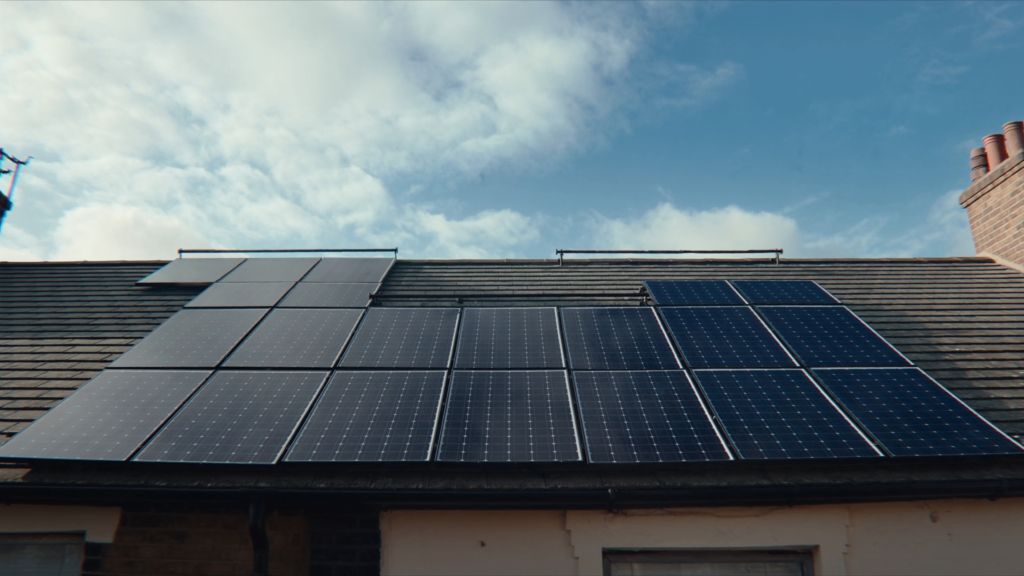
If you use 400W panels, 12 panels give you 4.8kW of DC capacity, which is within the typical 5kVA inverter’s 5.0–5.5kW maximum input range. With 450W panels, 11 panels provide 4.95kW. Using 350W panels, you would need 14 panels to reach 4.9kW. The Energy Saving Trust notes that most UK residential panels range from 350W to 450W (Energy Saving Trust, 2026). Always check your inverter’s datasheet for the maximum DC voltage and current limits, exceeding these can damage the unit.
DC-to-AC ratio and clipping losses
A DC-to-AC ratio of 1.1 to 1.3 (e.g., 5.5kW of panels on a 5kVA inverter) is standard and helps maximise energy generation during low-light conditions. The Microgeneration Certification Scheme (MCS) recommends a ratio of no more than 1.3 for UK installations to avoid significant clipping (MCS, 2026). Clipping occurs when the panels produce more DC power than the inverter can convert to AC, wasting a small percentage of potential output, typically under 2% annually with a 1.3 ratio. For most homes, this trade-off is cost-effective.
Roof space and orientation matter
Each 400W panel measures roughly 1.7m by 1.0m, so 12 panels require about 20 square metres of roof space. South-facing roofs at a 30–40 degree tilt produce the highest yield, but east-west splits also work well. The UK government’s Standard Assessment Procedure (SAP 10.2) factors in orientation and shading to calculate system performance (BRE, 2026). If your roof is shaded or non-optimal, you might need more panels to achieve the same output, but the inverter’s DC limit still applies, never exceed the manufacturer’s maximum input.
A worked example
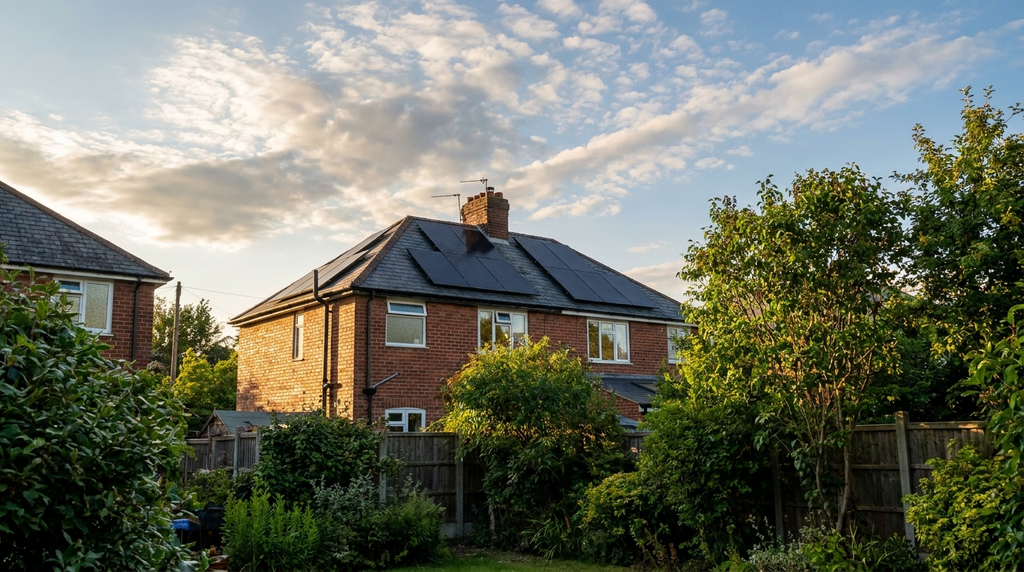
A typical 1930s semi-detached home in Manchester with a 5kVA inverter and 12 x 400W solar panels (4.8kW total) would cost around £6,500 after the 0% VAT reduction (in effect until March 2027) but before any additional grant support. The Energy Saving Trust estimates this system would generate roughly 4,100 kWh per year, saving a household about £615 annually on electricity bills based on the current price cap of 24.5p per kWh. If you qualify for ECO4 or the BUS grant (up to £7,500 for low-income households), the upfront cost drops significantly. Without grants, the payback period is around 10 to 11 years, and over a 25-year lifespan the total savings could reach £15,375, factoring in a small degradation rate of 0.5% per year. This assumes you use roughly 60% of the generated electricity at home, with the rest exported via the Smart Export Guarantee at around 15p per kWh.
| Item | Figure |
|---|---|
| Upfront cost after grants | £6,500 |
| Yearly savings | £615 |
| Payback period | 10–11 years |
| 25-year lifetime savings | £15,375 |
What homeowners often get wrong
The most common mistake is assuming you can load a 5kVA inverter with as many panels as possible to maximise generation without checking the maximum DC input voltage and current limits. Here are three frequent errors that cost homeowners money or void warranties.
- Over-panelling without checking the inverter specs Many homeowners think a 5kVA inverter can handle any number of 400W panels up to 14 or 15, but exceeding the maximum DC input power (often 5.5kW to 6.0kW) causes the inverter to clip output and can void the manufacturer warranty. Always check the datasheet for the maximum DC input rating, which is typically listed in kilowatts or amps.
- Ignoring the inverter’s maximum voltage limit A 5kVA inverter usually has a maximum DC voltage of around 500V to 600V, and connecting too many panels in series can exceed this limit, damaging the inverter. For example, 14 x 400W panels in series on a cold winter day could push the voltage above 600V, tripping the system or causing permanent failure. Use a string sizing tool from the inverter manufacturer to stay safe.
- Assuming more panels always means more savings Adding panels beyond the inverter’s capacity often leads to clipping, where the inverter cannot convert all the DC power to AC, wasting up to 10% of potential generation. A 5kVA inverter paired with 5.5kW of panels might lose £60–£80 per year in clipped energy compared to a properly matched 4.8kW system. Sticking to 10–12 panels avoids this waste.
Quick reference
- A 5kVA inverter typically accepts a maximum DC input of 5.5kW to 6.0kW, meaning 12 x 400W panels (4.8kW) is a safe and efficient match.
- The Energy Saving Trust states a 4.8kW system in the UK generates around 4,100 kWh per year, saving roughly £615 annually on electricity bills.
- ECO4 eligibility requires a household income below £31,000 or receipt of certain benefits, and can cover the full cost of a solar PV system for qualifying homes.
- Payback on a 4.8kW system without grants is 10–11 years, but with the BUS grant of up to £7,500 it can drop to under 3 years for eligible low-income households.
- Exceeding the inverter’s maximum DC voltage by connecting too many panels in series can permanently damage the unit and void the warranty, so always check the datasheet.
Frequently Asked Questions
Between 10 and 14 panels, depending on wattage. The Energy Saving Trust confirms 12x 400W panels (4.8kW) is a common match.
Typically 5.0–5.5kW DC, according to manufacturer specs. Over-panelling up to 130% is safe for most modern inverters.
Yes, 11 panels at 450W (4.95kW) work well. Always verify the inverter's DC voltage and current limits in the datasheet.