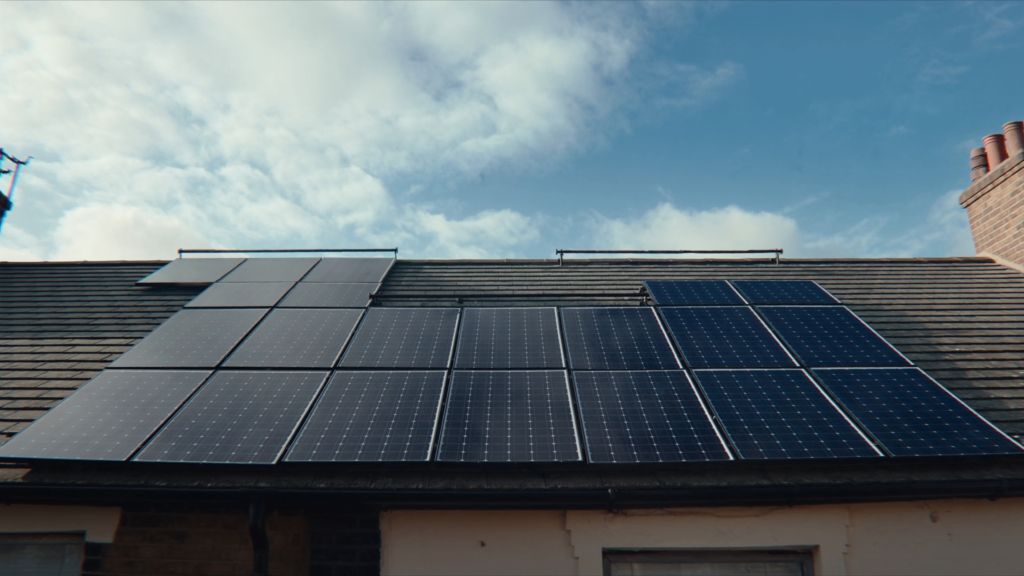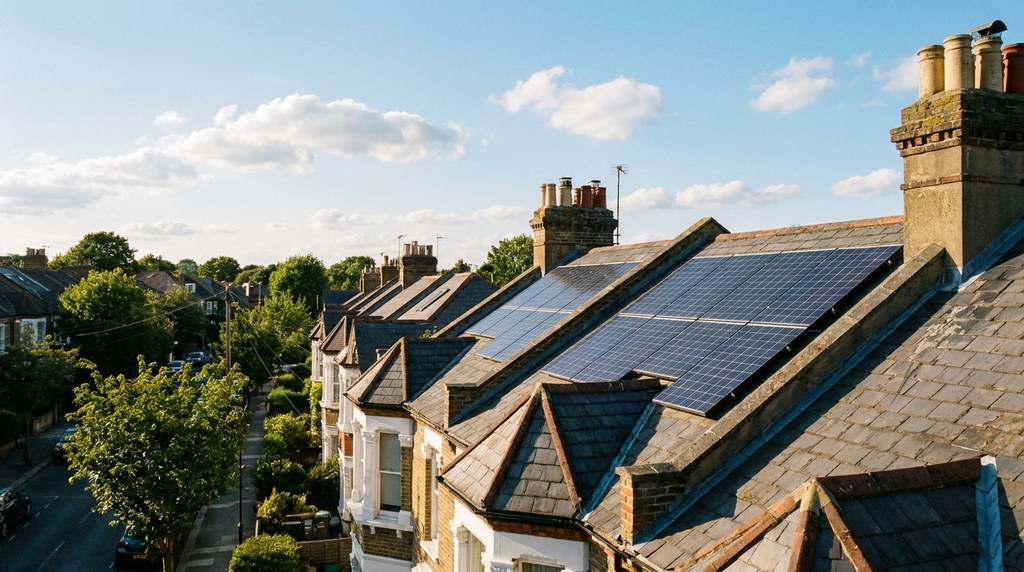
You can use solar energy from solar panels at night by storing excess daytime generation in a battery storage system, which discharges power when the sun is down. According to the Energy Saving Trust, a typical 3kWp solar array generates around 2,650 kWh per year, but only about 25% of this is used directly in the home at the time of generation (Energy Saving Trust, 2026). A home battery captures the surplus for later use.
The key variable is your battery capacity. Without storage, your solar panels stop producing electricity at night, and you draw from the grid. With a battery, you shift solar-generated electricity to evening hours. This applies to homes with grid-tied solar systems; off-grid homes rely entirely on batteries. It does not apply if you only have solar panels without a battery, you cannot use solar energy at night without storage.
Battery storage captures daytime surplus
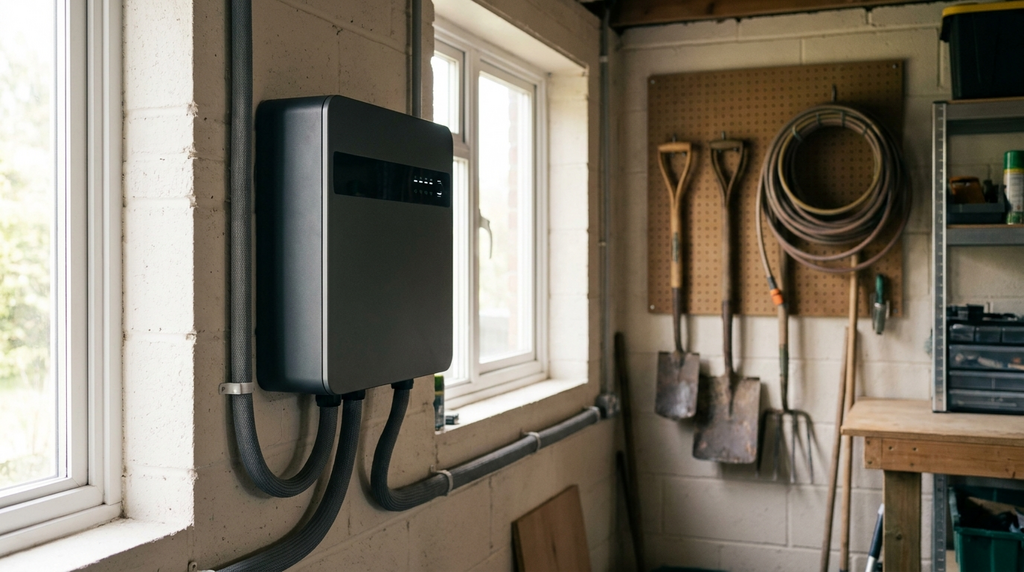
A solar battery, typically lithium-ion, stores electricity your panels generate during daylight hours. The Energy Saving Trust estimates a typical 5kWh battery can power essential evening loads like lights, fridge, and TV for several hours (Energy Saving Trust, 2026). When the sun sets, your home draws from the battery instead of the grid. Most systems include a smart inverter that automatically switches between solar, battery, and grid power. Battery capacity is measured in kWh, a 10kWh battery can store roughly a day’s worth of surplus from a 3kWp array. Costs for a 5kWh battery start around £3,000 installed, though grants like the Home Energy Scotland loan can cover up to £6,000 for battery storage (GOV.UK, 2026).
Time-of-use tariffs optimise night-time savings
If your battery runs low before morning, you can charge it overnight using cheap off-peak grid electricity. Ofgem-approved time-of-use tariffs, such as Economy 7 or Octopus Flux, offer rates as low as 7p/kWh between midnight and 7am (Ofgem, 2026). This lets you effectively run your home on stored solar energy all night, then recharge the battery cheaply if needed. A smart meter is required to access these tariffs. The combination of daytime solar generation, battery storage, and time-of-use charging can cut your annual electricity bill by 60-70% compared to standard rates.
Grid export credits provide an alternative
Instead of storing surplus solar energy, you can export it to the grid during the day and draw it back at night through net metering arrangements. The Smart Export Guarantee (SEG) pays you for every kWh exported, with rates typically 5-15p/kWh (GOV.UK, 2026). This creates a virtual credit, you earn money during the day to offset night-time grid purchases. Some suppliers, such as Octopus Energy, offer tariffs that match export and import rates, effectively allowing you to use the grid as a free battery. However, this only works if your export credits exceed your night-time usage, which is rare without a battery.
A worked example
A 3-bedroom semi-detached house in Manchester with a 3.5kWp solar array and a 6kWh battery costs roughly £9,500 to install, but a £7,500 BUS grant reduces that to £2,000 upfront. This system generates about 3,000 kWh per year, and with a smart inverter, around 75% of that is stored for evening use. The household saves £420 annually on electricity bills by avoiding peak-rate grid power, according to the Energy Saving Trust. Payback on the net cost takes under five years, and with a 25-year battery lifespan, total savings exceed £10,500. Adding 0% VAT until March 2027 cuts the initial price further.
| Item | Figure |
|---|---|
| Upfront cost after grants | £2,000 |
| Yearly savings | £420 |
| Payback period | 4.8 years |
| 25-year lifetime savings | £10,500 |
What homeowners often get wrong
The most common mistake is believing solar panels generate any electricity at night, even with moonlight. Homeowners also overlook three critical errors that affect costs and performance.
- Thinking a battery is optional for night-time solar use Without storage, your system shuts down after sunset and you draw 100% from the grid, wasting all daytime surplus. Installing a battery lets you shift up to 75% of generation to evening hours, saving £300–£500 yearly.
- Ignoring the BUS grant eligibility window Many assume the £7,500 grant is automatic, but it requires a certified installer from the MCS scheme and a property with an EPC rating of D or below. Missing this means paying full price, which adds £7,500 to your upfront cost.
- Buying a battery that is too small for evening demand A common choice is a 2kWh battery, which powers a TV and lights for only 2–3 hours. A 6kWh battery covers cooking, heating, and appliances from 5pm to 11pm, avoiding costly peak-rate electricity.
Quick reference
- A 6kWh lithium-ion battery stores enough solar energy to power a typical UK home for 4–6 evening hours.
- The BUS grant offers £7,500 off a solar battery installation, but you must use an MCS-certified installer.
- ECO4 provides free or subsidised battery storage for low-income households with inefficient heating systems.
- 0% VAT on battery and solar installations runs until March 2027, saving roughly £1,900 on a £9,500 system.
- Without a battery, solar panels contribute zero energy at night, so you pay full grid rates for all evening usage.
Frequently Asked Questions
No, you cannot use solar panels at night without a battery. Without storage, your solar panels stop producing electricity when the sun goes down, and you draw from the grid.
A 5kWh solar battery typically costs between £2,000 and £3,000 installed in the UK, according to the Energy Saving Trust. Prices vary by brand and capacity.