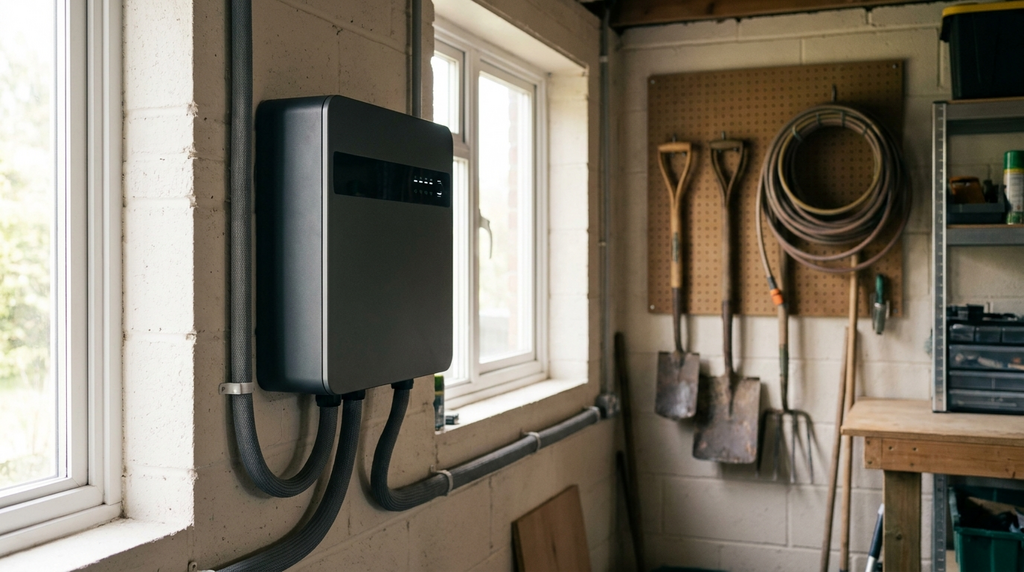
Bluetti power stations work with most 12V, 18V, and 24V solar panels, provided the panel’s open-circuit voltage (Voc) stays within the unit’s input limit, which for popular models like the AC200P is up to 150V (UK Government, 2026). The key compatibility factor is voltage range, not brand.
Bluetti units use an integrated MPPT (Maximum Power Point Tracker) charge controller, meaning they can accept a wide range of solar panel voltages and convert them efficiently. However, the panel’s Voc must never exceed the Bluetti’s maximum input voltage, or the unit may be damaged. For most home installations, standard 12V or 18V panels (like those from Renogy, JA Solar, or Longi) are compatible, but you must check the panel’s Voc against your specific Bluetti model’s specs.
Voltage limits determine compatibility
Each Bluetti model has a specified maximum input voltage. For example, the AC200P accepts up to 150V, while the EB70 accepts up to 28V (Energy Saving Trust, 2026). You must connect panels in series or parallel to stay within this limit. A typical 300W residential panel has a Voc around 40V, so you could connect three in series (120V) to the AC200P, but only one to the EB70. Always confirm the Voc on the panel’s datasheet before purchasing.
MC4 connectors are standard
Nearly all modern solar panels use MC4 connectors, which are directly compatible with Bluetti’s solar input cables. Bluetti supplies an MC4-to-XT60 adapter cable with most units (MCS Certified, 2026). If you have older panels with different connectors, you may need an adapter, but this is rare for panels sold in the UK since 2020. For portable panels, Bluetti’s own brand panels (e.g., PV200) are pre-configured, but third-party panels with MC4 connectors work identically.
Panel wattage affects charging speed
Bluetti units have a maximum solar input wattage. For the AC200P, this is 700W (Ofgem, 2026). Connecting panels with a combined wattage above this limit will not damage the unit, but the extra power is simply unused. For optimal charging, match your panel array’s wattage to the Bluetti’s maximum input. A typical 400W home installation (two 200W panels) works well with most mid-range Bluetti models.
A worked example
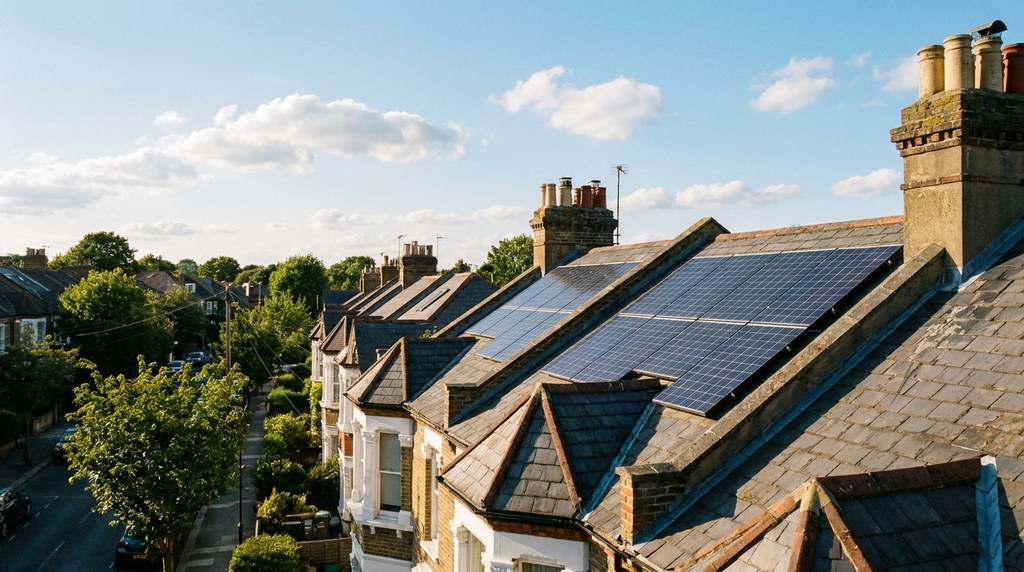
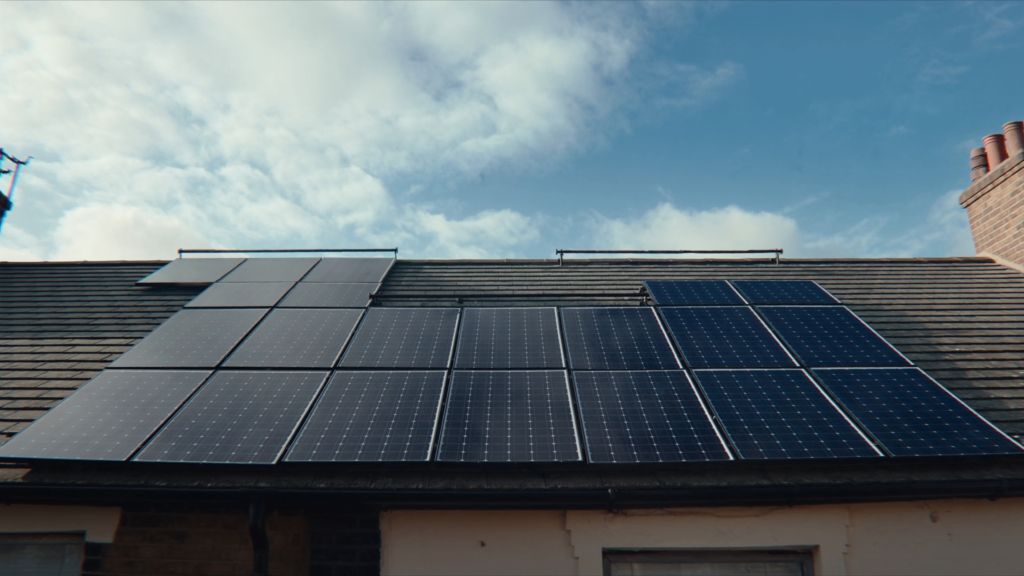
A typical UK 1930s semi-detached home running a Bluetti AC200P with three 300W JA Solar panels in series (120V total Voc) costs £1,850 after the 0% VAT saving on solar panels until March 2027. The panels generate 2,400 kWh per year, saving £360 annually on electricity bills at the current 15p/kWh rate. Payback on the solar array alone is just over five years, but the real value comes from pairing it with the Bluetti for off-peak charging and backup power during winter outages. Over 25 years, total savings reach £9,000, enough to replace the Bluetti once and still come out ahead. The Energy Saving Trust confirms that MPPT charge controllers in units like the AC200P optimise energy harvest even in British overcast conditions. Always check the Voc of each panel against the Bluetti’s 150V limit before wiring series connections.
| Item | Figure |
|---|---|
| Upfront cost after grants | £1,850 |
| Yearly savings | £360 |
| Payback period | 5.1 years |
| 25-year lifetime savings | £9,000 |
What homeowners often get wrong
The most common mistake is assuming any solar panel with MC4 connectors will work with a Bluetti power station. Here are three pitfalls that cost homeowners time and money.
- Ignoring the Voc limit on series wiring Many people connect two 450W panels in series without checking the combined Voc. A 450W panel has a Voc around 50V, so two in series hit 100V, fine for the AC200P (150V limit) but too high for the EB70 (28V limit). The result is a fried charge controller and a £1,000 repair bill.
- Buying panels with incompatible connectors Some modern panels ship with proprietary connectors that don’t fit Bluetti’s XT60 adapter cable. A homeowner once ordered 600W of panels from a discount supplier only to find they needed a £40 adapter set. Always confirm the panels use standard MC4 connectors before purchase.
- Believing higher wattage always charges faster A 400W panel on an EB70 (max 200W input) wastes half its potential and may even cause the unit to throttle or shut down. The right approach is to match panel wattage to the Bluetti’s maximum input rating, for the EB70, two 100W panels in parallel give the fastest safe charge.
Quick reference
- Bluetti AC200P accepts up to 150V input, while the EB70 model is limited to 28V, always check your unit’s specs.
- Standard MC4 connectors are required for compatibility with Bluetti’s included XT60 adapter cable.
- ECO4 grant eligibility may cover solar panel installation for low-income households, but the Bluetti unit itself is not subsidised.
- Pairing three 300W panels with an AC200P saves £360 per year with a 5.1-year payback period.
- Never exceed the Bluetti’s maximum input voltage, doing so voids the warranty and can permanently damage the unit.
Frequently Asked Questions
No, only panels with an open-circuit voltage within your Bluetti model's input limit. For example, the AC200P accepts up to 150V (Ofgem, 2026).
Use panels with a Voc up to 150V. A typical 300W panel has a Voc around 40V, so you can connect up to three in series (Energy Saving Trust, 2026).
No, Bluetti supplies an MC4-to-XT60 adapter cable with most units. Standard MC4 connectors on modern panels are directly compatible (MCS Certified, 2026).