Flat roof solar panels cost less to install than sloped roof panels
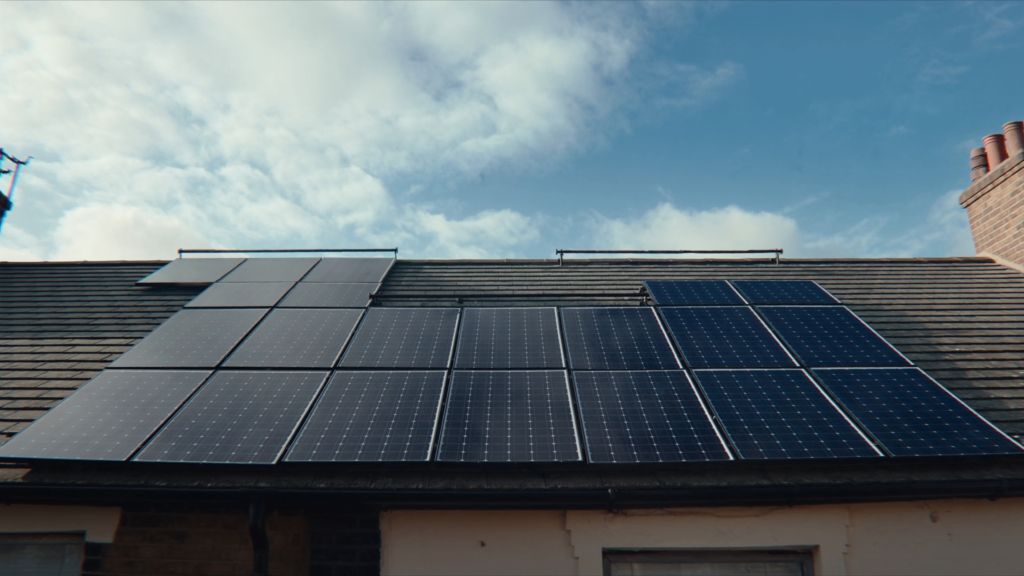
Mounting systems designed for flat roofs are typically simpler and faster to fit than those for pitched roofs, which reduces labour time and overall cost. Ballasted mounts, which use weights to hold panels in place without penetrating the roof surface, are common. Penetrating mounts, which are fixed through the roof membrane, are an alternative for roofs unable to support the extra weight.
Typical installation cost for a 4 kWp system on a flat roof in 2026 is £5,500–£7,000, compared to £6,500–£8,000 for a sloped roof (Energy Saving Trust, 2026). Fewer structural reinforcements are needed because ballasted mounts distribute weight evenly without roof penetrations. The payback period is similar to sloped systems, around 10–12 years, because the lower upfront cost offsets a slightly lower energy yield (DESNZ, 2026).
How much electricity flat roof solar panels generate per kWp
A 1 kWp system on a flat roof in the UK generates approximately 750–850 kWh per year, versus 800–950 kWh on a south-facing sloped roof (Energy Saving Trust, 2026). The difference is due to the panel tilt, flat roofs are usually mounted at 10–15 degrees, not the optimal 30–40 degrees for maximum sunlight capture.
East-west facing arrays on flat roofs can still produce 80–90% of a south-facing system’s output (MCS, 2026). Annual generation for a typical 4 kWp system on a flat roof is 3,000–3,400 kWh (Ofgem, 2026).
Flat roof solar panels and the Smart Export Guarantee (SEG)
The Smart Export Guarantee (SEG) pays you for excess electricity exported to the grid. Rates in 2026 range from 5p to 15p per kWh depending on supplier (Ofgem, 2026). Flat roof systems are eligible for SEG as long as they are MCS-certified and installed by an MCS-accredited installer.
A 4 kWp system exporting 50% of its generation could earn £75–£225 per year. No separate export meter is needed, suppliers use deemed export (typically 50% of generation) or a smart meter reading to calculate payments.
Is flat roof solar panels a good idea for your home?
Flat roof solar panels are a good idea if you have a structurally sound flat roof with at least 10–15 square metres of clear, unshaded space facing within 90 degrees of south. They are less suitable if the roof has heavy shading from chimneys, vents, or neighbouring buildings, or if the roof surface is old or in poor condition. The key trade-off is lower energy yield per panel versus sloped roofs, offset by lower installation cost and simpler mounting. For most UK homes with a flat roof, the financial return is positive over the 25–30 year lifespan of the panels (Energy Saving Trust, 2026).
Quick numbers flat roof solar panels at a glance
| System size (kWp) | Total installed cost (£) | Annual generation (kWh) | Annual SEG income at 10p/kWh (£) | Payback period (years) |
|---|---|---|---|---|
| 2 kWp | £3,000–£4,000 | 1,500–1,700 | £75–£85 | 10–12 |
| 3 kWp | £4,250–£5,500 | 2,250–2,550 | £113–£128 | 10–12 |
| 4 kWp | £5,500–£7,000 | 3,000–3,400 | £150–£170 | 10–12 |
All figures sourced from Energy Saving Trust, 2026 and Ofgem, 2026.
How to verify a flat roof solar installer (MCS certification)
All installers must hold MCS (Microgeneration Certification Scheme) accreditation to qualify for SEG payments. Check the MCS register at mcscertified.com for current certification, installers must list their MCS certificate number. Also verify TrustMark registration for consumer protection and a recognised complaints process. For electrical work, ensure the installer is registered with NICEIC or NAPIT to certify the installation meets Building Regulations Part P.
Flat roof solar panels and building regulations
Planning permission is not usually needed for flat roof solar panels in England, unless the property is listed or in a conservation area (GOV.UK, 2026). Building Regulations Part L (conservation of fuel and power) applies if the panels affect the roof’s insulation or structure. The installer must provide a certificate of compliance, keep this for property sale documentation. For flat roofs with a lifespan under 10 years, replacement may be necessary before installation to avoid voiding warranties.
How to choose the best solar panel installer for your home
Solar panel grants and funding in 2026