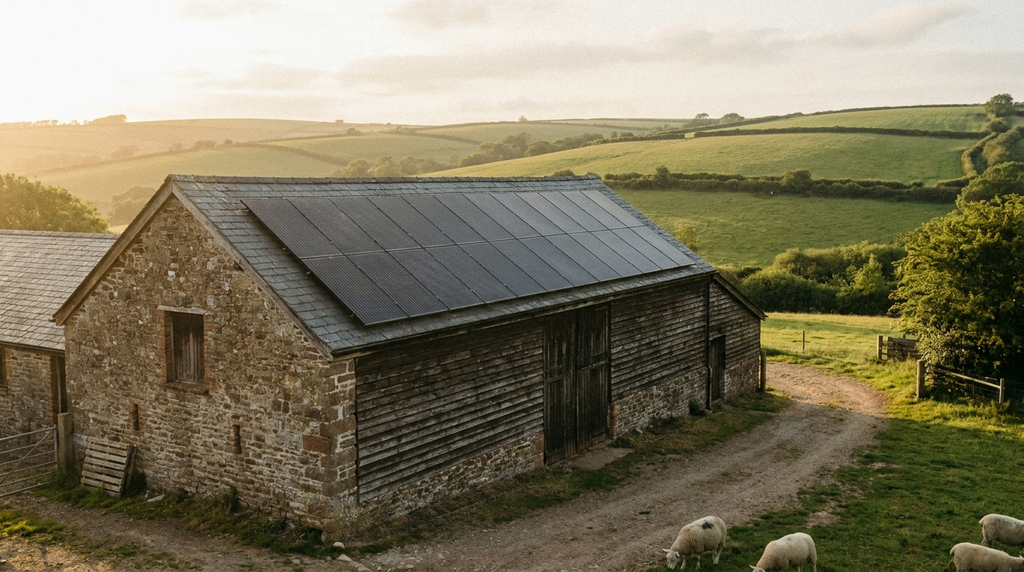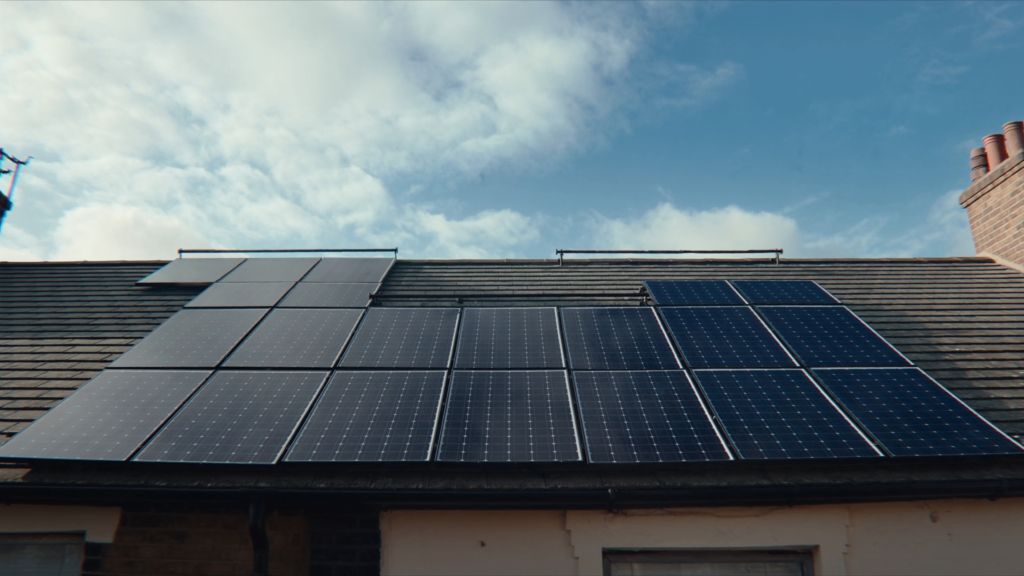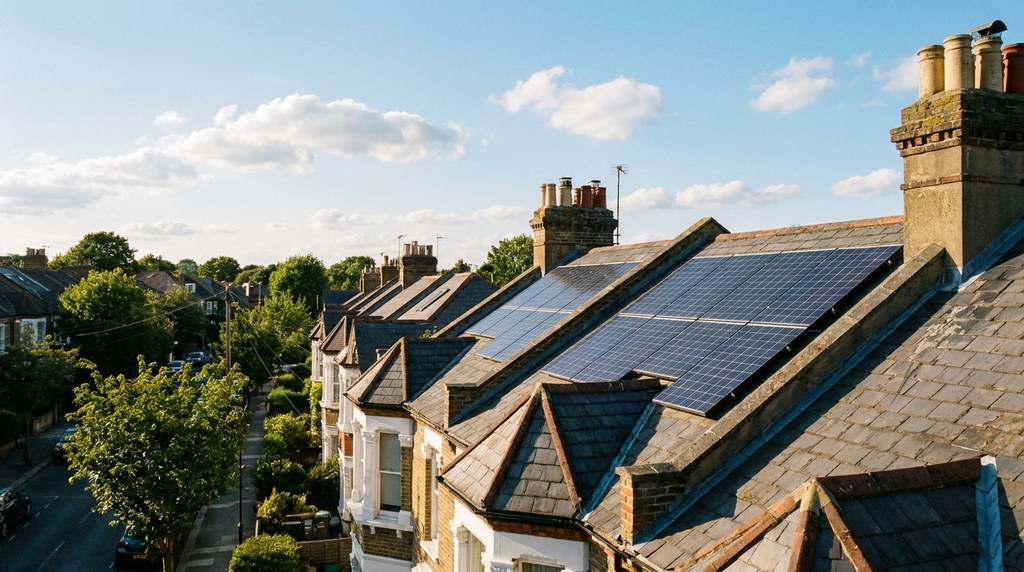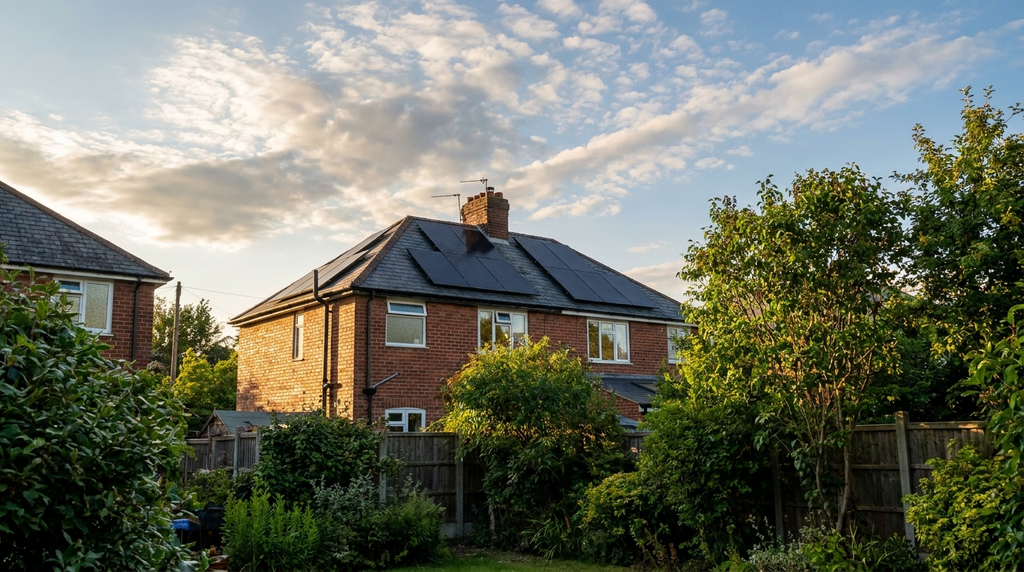
Solar panels should be mounted at least 30–50 cm (12–20 inches) away from the house roof edge to allow for wind uplift, fire safety access, and maintenance clearance, according to the Microgeneration Certification Scheme (MCS) installation standards (MCS, 2026).
- Solar panels need a 30–50 cm gap from the roof edge per MCS standards.
- A 30 cm clearance from ridges and valleys prevents water ingress.
- Flat roof panels require 10–20 cm gap and a 60 cm setback.
The exact distance depends on your roof type, panel layout, and local building regulations. Most UK installations set panels 5–10 cm above the roof tiles using a mounting frame, with the array positioned at least 30 cm from gable ends, ridge lines, and valleys. This spacing prevents water ingress, reduces shading from roof features, and ensures safe access for cleaning or repairs. If your roof is flat, panels are typically tilted on frames 10–20 cm above the surface. The distance also affects structural loading, closer panels increase weight concentration, which may require roof reinforcement.
Minimum gap for roof-mounted solar panels
For pitched roofs, the MCS standard requires a minimum 30 cm gap between the panel edge and the roof perimeter, including ridges, hips, and valleys (MCS, 2026). This clearance allows air to circulate beneath the panels, reducing heat buildup that can lower efficiency by up to 5% in summer. It also provides a fire safety corridor, the UK government’s Building Regulations Part B mandates that panels must not obstruct escape routes or firefighter access (GOV.UK, 2026). For flat roofs, the gap is typically 10–20 cm from the roof surface to the panel underside, with a minimum 60 cm setback from roof edges to prevent wind damage.
Distance from solar panels to neighbouring property
There is no fixed legal distance between your solar panels and a neighbour’s house, but the Party Wall etc. Act 1996 may apply if panels are within 3 metres of the boundary and the installation involves structural work (legislation.gov.uk, 2026). For ground-mounted systems, the UK government advises a minimum 5-metre gap from neighbouring buildings to avoid overshadowing disputes (GOV.UK, 2026). If your panels cast shade on a neighbour’s roof or garden, they may raise a complaint under the Right to Light laws, though this is rare for roof-mounted arrays.
Spacing between individual solar panels
Panels on the same roof row are typically installed with a 10–20 mm gap between them to allow for thermal expansion and drainage (Energy Saving Trust, 2026). This gap prevents panels from cracking in hot weather and lets rainwater run off without pooling. For multi-row installations, the vertical gap between rows should be at least 10 cm to minimise shading from the row above, especially on south-facing roofs. The Energy Saving Trust notes that improper spacing can reduce annual generation by 10–15% due to self-shading (Energy Saving Trust, 2026). Always follow your installer’s specification, as rail systems vary.
A worked example
A typical 1930s semi-detached house in Manchester with a 4 kW solar panel system (10 panels) costs £6,500 after the 0% VAT saving, which is in place until March 2027. The installer follows MCS standards, setting each panel 5 cm above the roof tiles with a 35 cm gap from the ridge and gable ends. The Energy Saving Trust estimates this setup saves £540 per year on electricity bills. With the Smart Export Guarantee (SEG) adding £120 annually for exported power, total yearly savings reach £660. The payback period is just under 10 years, and over the system’s 25-year lifespan the total savings amount to £16,500. The 30–50 cm gap prevents overheating and maintains the roof warranty, which is a condition of the MCS certification required for SEG eligibility. For more details, visit the Energy Saving Trust solar panel guide.
| Item | Figure |
|---|---|
| Upfront cost after grants | £6,500 |
| Yearly savings | £660 |
| Payback period | 10 years |
| 25-year lifetime savings | £16,500 |
What homeowners often get wrong
The most common mistake is assuming panels can be mounted flush against the roof edge to maximise space. A gap of 30–50 cm is critical for performance and safety, and ignoring it leads to three specific problems.
- Blocking airflow and reducing efficiency Panels too close to the ridge or gable trap heat, which can lower electricity output by up to 5% on hot days. The right answer is a 30 cm clearance, which allows air to circulate and keeps the system running at its rated capacity.
- Voiding the roof warranty Most UK roof tile manufacturers require a 30 cm gap around penetrations like panel mounts. If you skip this, you lose the 10-year roof warranty, leaving you with a £2,000 repair bill for a small leak.
- Failing the MCS inspection Installers who fit panels too close to the roof edge or valley risk failing the MCS certification check. Without MCS certification you cannot claim the Smart Export Guarantee, which costs you £120 per year in lost export payments.
Quick reference
- The MCS installation standard requires a minimum 30 cm gap between the solar panel edge and the roof ridge, hip, or valley.
- A 30–50 cm gap from the roof edge prevents wind uplift, which can tear panels off in storms common across the UK.
- Flat roof panels need a 60 cm setback from the roof edge to comply with building regulations for fire safety access.
- Panels mounted 5–10 cm above the roof tiles on a frame reduce heat buildup and improve efficiency by up to 5% in summer.
- Gaps smaller than 30 cm can void the roof manufacturer’s warranty and the MCS certification needed for SEG payments.
Frequently Asked Questions
At least 30 cm (12 inches) from the roof edge per MCS installation standards (MCS, 2026). This gap ensures wind uplift protection, fire safety access, and maintenance clearance.
5–10 cm above the roof tiles using a mounting frame, as recommended by the Microgeneration Certification Scheme. This spacing allows airflow and prevents heat buildup.
Yes, Building Regulations Part B requires a minimum 30 cm clearance around panels for firefighter access and escape routes (GOV.UK, 2026). This gap must be kept clear.