Solar panels are among the most hands-off home improvements a UK homeowner can make, but “low maintenance” does not mean “no maintenance.” A system left entirely unchecked can quietly lose efficiency year on year, and because generation losses are gradual, many homeowners only notice the problem when their electricity bills begin creeping back up or their Smart Export Guarantee payments start to shrink.
Solar panel maintenance for UK homeowners involves four core tasks, a visual check each spring, a professional inspection every one to two years costing roughly £100 to £200, occasional cleaning at around £50 to £100 per visit, and monthly monitoring app checks to confirm normal output. The single most important thing to know is that efficiency losses are gradual and easy to miss, so a monthly glance at your inverter data is often the earliest warning sign that something needs attention. Budget separately for inverter replacement at the 10 to 15 year mark, which typically costs £500 to £1,500 fitted. There are currently no government grants specifically for solar maintenance, but keeping your system in good condition protects your Smart Export Guarantee income and the long-term return on your original installation investment.
- Carry out a visual inspection of your panels, mounting frame, and inverter every spring to catch damage or debris early.
- Book a professional solar PV service every one to two years — expect to pay between £100 and £200 for a full inspection from an MCS-accredited engineer.
- Check your monitoring app or inverter display monthly and compare output against the same period from the previous month to spot quiet efficiency losses.
- Clean panels yourself from ground level using a soft brush and pure water, or hire a specialist solar cleaning company for around £50 to £100 — never use abrasive materials or a pressure washer.
- String inverters typically need replacing after 10 to 15 years at a cost of £500 to £1,500 fitted; budget for this as part of your long-term ownership costs.
- Trim any trees or plants that are beginning to shade your panels, as even partial shading can significantly reduce whole-string output on systems without optimisers.
- If your Smart Export Guarantee payments are falling without an obvious seasonal reason, treat it as a prompt to arrange a professional inspection rather than waiting for the issue to worsen.
- Understanding Solar Panel Maintenance and Why It Matters
- How Much Maintenance Do Solar Panels Actually Need
- How to Clean Your Solar Panels Safely at Home
- Checking Your Inverter and Monitoring System Regularly
- What a Professional Solar Panel Inspection Covers
- Solar Panel Maintenance Costs in 2026
- Grants and Support Available to Help With Solar Costs in 2026
- How to Choose a Solar Panel Maintenance Company
- Warning Signs Your Solar System Needs Attention Now
For most UK homeowners, solar panel maintenance involves four straightforward activities: a visual check each spring, an annual professional inspection, occasional cleaning when rainfall alone is not sufficient, and a monthly glance at your monitoring app to confirm normal output. This solar panel maintenance guide covers everything you need to know, from safe DIY cleaning to inverter lifespan, warning signs, and what a professional service actually includes, so you can protect your investment and keep your system performing as it should throughout its 25-year life.
Understanding Solar Panel Maintenance and Why It Matters
Solar PV maintenance covers more than simply wiping down the panels. A complete picture includes the panels themselves, the inverter, the mounting frame, the wiring, and the monitoring software, all of which play a role in keeping your system generating at its rated capacity.
The most persistent misconception about residential solar is that it is genuinely “fit and forget” technology. Manufacturers and installers understandably emphasise how little day-to-day attention panels need, and in relative terms they are right, you will not be up on the roof every weekend. But neglected systems do silently lose performance. Dirt, bird droppings, lichen, and partial shading from overgrown trees all reduce the amount of sunlight reaching the photovoltaic cells, and because generation falls gradually, the drop rarely triggers any obvious alarm. According to the Energy Saving Trust, dirty or shaded panels can meaningfully reduce output, with the financial impact compounding over time as lost generation means both higher imported electricity costs and reduced export payments.
The stakes are higher than many homeowners realise. Most quality solar PV systems installed in 2026 carry a 25-year performance warranty, typically guaranteeing at least 80 per cent of rated output at year 25. What is less widely understood is that those warranties frequently include a requirement for reasonable maintenance and regular inspection. A warranty claim made on a system with no inspection history can be complicated or refused by the manufacturer. Keeping a simple maintenance log, dates of inspections, cleaning visits, and any fault codes observed, is a small effort that could matter significantly if you ever need to invoke a warranty.
Practical tip, start a maintenance log today, even if your system has been running for several years. A simple spreadsheet recording inspection dates, generation readings, and any issues observed is enough to satisfy most warranty conditions.
How Much Maintenance Do Solar Panels Actually Need
For the vast majority of UK homeowners with a roof-mounted system installed at an angle of 15 degrees or more, meaningful maintenance amounts to very little, an annual professional inspection and occasional cleaning, with a monthly monitoring check taking no more than a few minutes.
The UK’s relatively wet climate does a surprisingly effective job of keeping panels clean on its own. Rain falling on panels pitched at 15 degrees or steeper will wash most accumulated dust and debris down and off the glass surface. This is why solar panels in the UK typically require far less cleaning than comparable systems in drier climates such as southern Europe or the Middle East. For a typical 3-bedroom semi-detached home in a suburban location with panels at a conventional roof pitch, a single professional clean per year, or sometimes none at all, is often sufficient.
A sensible annual maintenance calendar for a UK homeowner looks roughly like this:
- Spring (March to April), Walk around the property and cast your eyes over the panels for any visible damage, heavy soiling, or signs of nesting activity; check the inverter display or app for any stored fault codes over winter
- Summer (May to August), Your peak generation months; check your monitoring data weekly and compare output against the previous year’s figures for the same period
- Autumn (September to October), Schedule your annual professional inspection before the worst of the winter weather; clear any leaf debris accumulating around panel edges
- Monthly throughout the year, A two-minute check of your monitoring app to confirm the system is generating and that no fault codes are showing
Flat or very low-pitch installations are a different matter. Without sufficient angle for rainfall to self-clean effectively, dust and organic matter accumulate much more quickly, and these systems typically need professional cleaning two or three times per year. The same applies to systems near busy roads (exhaust particulates), farmland (agricultural dust and spray residue), or overhanging trees (sap, leaf debris, and bird activity).
Practical tip, if you are unsure whether your panels are self-cleaning adequately, photograph them after a dry spell of two weeks or more; if you can see a visible grey film or streaking on the glass, it is time for a clean.
How to Clean Your Solar Panels Safely at Home
Safe, effective DIY panel cleaning is possible for panels that can be reached from the ground using a telescopic soft brush and a garden hose, and for most single-storey extensions or low-profile ground-mounted systems, this is a perfectly reasonable approach.
The method is straightforward. Use lukewarm water, not hot, for reasons explained below, and a soft-bristled brush designed for the purpose (widely available from solar equipment retailers for around £20 to £40). Work from one side to the other, rinsing thoroughly afterwards. Avoid any abrasive pads, scouring cloths, or harsh chemical cleaners, all of which can permanently scratch the anti-reflective coating on the panel glass. That coating is specifically engineered to maximise the amount of light entering the cell, and once scratched it cannot be restored.
The Health and Safety Executive (HSE) is explicit that working at height carries serious risk, and the guidance for homeowners is equally clear, do not go onto your roof to clean your panels. Falls from domestic roofs are among the most common causes of serious injury in home improvement accidents in the UK. If your panels are on a pitched roof and cannot be reached safely from the ground, hire a professional with the appropriate access equipment and training.
Timing matters more than most homeowners expect. The best time to clean panels is early morning or in the evening, on a cool, overcast day if possible. There are two reasons for this. First, cold water hitting panels that have been heating in direct sunlight all day can cause thermal shock, a sudden temperature change that, over time, can stress the glass and junction areas. Second, on a hot sunny day water evaporates quickly and leaves mineral deposits and streaks behind, which can actually reduce rather than improve light transmission. Early morning cleaning on a mild day allows the panels to rinse and dry gradually.
There are circumstances where DIY cleaning is not enough and you should call a professional. Bird dropping hotspots, where one or two droppings are baked onto the glass and resisting rinsing, can cause hotspots, which is a condition where a small shaded area of a panel forces the cell to work against the rest of the string, generating heat rather than electricity and potentially causing permanent cell damage. Heavy lichen or moss growth, any cracked or visibly damaged glass, and signs of delamination (a bubbling or peeling separation of the panel’s layers) all require professional assessment rather than DIY cleaning.
Practical tip, invest in a dedicated solar panel cleaning brush with a soft, rubber-edged head rather than repurposing a general-purpose squeegee; the purpose-made tools are safer on the anti-reflective coating and tend to produce better results.
Checking Your Inverter and Monitoring System Regularly
Your inverter is arguably the most important piece of equipment in your solar system after the panels themselves, and it deserves more attention than most homeowners give it.
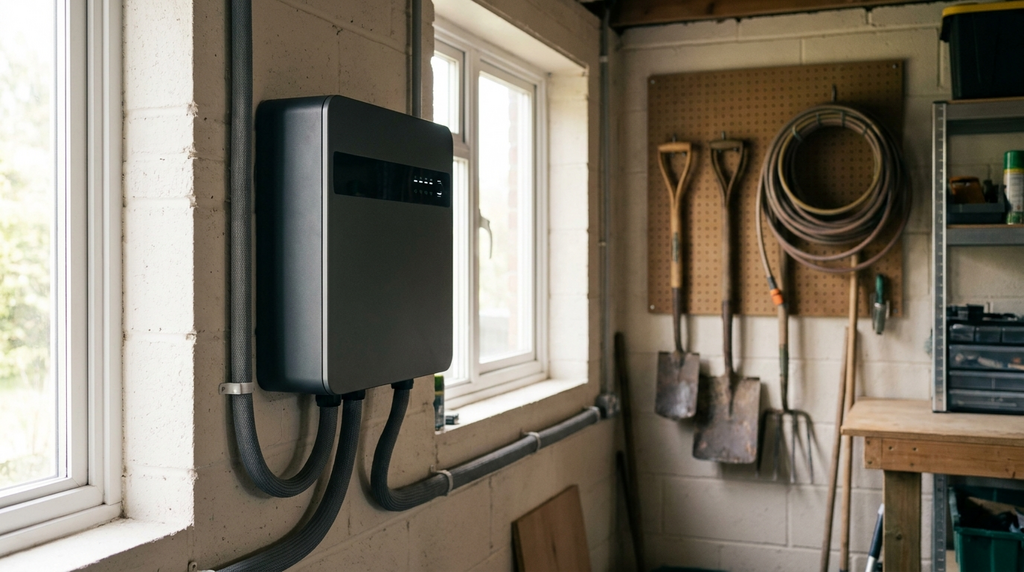
An inverter is the device that converts the direct current (DC) electricity generated by your solar panels into the alternating current (AC) electricity used by appliances throughout your home. Without a functioning inverter, your panels may be generating power but your household cannot use it. Modern inverters also perform a range of protective functions, disconnecting the system from the grid in fault conditions and continuously monitoring individual panel output in more sophisticated setups.
The monthly check every homeowner should carry out is simple. Look at your inverter’s status display or LED indicator, most will show a solid green light or a display reading confirming normal operation. Any persistent amber or red indicator, or a fault code on the screen, should be noted and investigated. Most inverter manuals include a fault code index, and many manufacturers offer online lookup tools. If a fault code persists after a restart, contact a qualified engineer.
Most modern inverters installed in 2026 include app-based monitoring platforms, SolarEdge, Enphase, and Fronius are among the most widely used brands in the UK residential market. These apps display generation in real time and allow you to view historical output by day, week, or month. Learning to read your generation graph is genuinely useful. A healthy system on a clear summer day in the south of England might generate 20 to 30 kilowatt-hours across the day, with output rising from zero at dawn, peaking at solar noon, and falling back to zero at dusk. An unusual dip in that smooth bell curve, particularly one that repeats consistently and cannot be explained by cloud cover, can indicate shading from a new obstruction, a fault in a specific panel string, or a developing inverter issue.
One important planning consideration that is often overlooked is inverter lifespan. While solar panels themselves are warranted for 25 years and routinely last longer, inverters typically have a functional lifespan of 10 to 15 years. This means most homeowners will need at least one inverter replacement over the life of their system. Budgeting for this in advance avoids an unpleasant surprise, replacement costs are covered in the costs section below.
Practical tip, set a recurring monthly calendar reminder to open your monitoring app and compare this month’s total generation against the same month last year; a sustained drop of more than 10 per cent that cannot be explained by weather warrants a professional check.
What a Professional Solar Panel Inspection Covers
A thorough annual inspection by a qualified engineer goes well beyond what any homeowner can assess from the ground, and the findings can protect both your system’s performance and your warranty position.
A professional inspection should cover all of the following areas. Panel condition is assessed visually for cracks, delamination, discolouration, and soiling. The mounting frame and fixings are checked for corrosion, loosening, or movement, important given the UK’s wind loading conditions. Wiring and junction boxes are inspected for signs of water ingress, deterioration, or rodent damage. Roof penetrations and flashings around the mounting points are examined to confirm they remain watertight, as a failing flashing can cause water damage entirely unrelated to the panels themselves but attributable to the installation. The inverter’s performance data is reviewed, and a generation history check is typically included.
Beyond visual inspection, reputable maintenance engineers may offer a thermal imaging survey or an IV curve test. A thermal imaging survey uses an infrared camera to identify areas of unusual heat generation within a panel, hotspots caused by cell damage, soiling, or manufacturing defects that are entirely invisible to the naked eye. An IV curve test measures the electrical characteristics of a panel or string against its rated specification, identifying underperforming units before they cause broader system losses. These tests add cost but provide a genuinely detailed picture of system health.
Many installer companies and specialist solar maintenance firms now offer annual service plans combining an inspection visit with a cleaning service. These plans typically range from £150 to £300 per year and can represent reasonable value if your system requires regular professional attention. An annual inspection is particularly valuable in the first twelve months after a new installation, when any installation defects are most likely to manifest, and again as your system approaches the 10-year mark and inverter replacement becomes a near-term consideration.
Practical tip, ask your maintenance engineer for a written inspection report after every visit; a professional company will provide this as standard, and it forms part of the maintenance record that supports your warranty.
Solar Panel Maintenance Costs in 2026
Understanding the realistic costs of solar panel maintenance helps homeowners plan sensibly over the long term, rather than facing unexpected bills that feel disproportionate relative to the system’s ongoing running costs.
| Service | Typical UK Cost in 2026 |
|---|---|
| Professional annual inspection (single-storey) | £80 to £150 |
| Professional annual inspection (two-storey or complex roof) | £150 to £250 |
| Professional panel cleaning (per visit, 10 to 16 panels) | £60 to £120 |
| Inverter replacement (string inverter, supply and fit) | £800 to £1,500 |
| Inverter replacement (hybrid or battery-compatible inverter, supply and fit) | £1,200 to £2,500 |
| Cracked panel replacement (single panel, supply and fit) | £300 to £600 |
| Annual service plan (inspection plus cleaning) | £150 to £300 per year |
These figures reflect typical UK market rates in 2026 and will vary based on your region, the accessibility of your roof, the size of your system, and the individual contractor. Costs in London and the South East tend to be at the higher end of these ranges; rural areas where fewer solar specialists operate may also see higher prices due to travel time. Always obtain at least three written quotes for any work above a routine cleaning visit.
The single most significant planned expenditure over a solar system’s life is almost certainly inverter replacement. If your system was installed between 2011 and 2016, during the peak of the Feed-in Tariff era, there is a good chance your original inverter is approaching or has passed its expected service life. Budgeting for replacement in the £1,000 to £1,500 range for a standard string inverter is prudent financial planning rather than pessimism.
It is also worth reviewing your home insurance policy carefully. Some standard home insurance products cover solar panel damage caused by storm, impact, or fire, and a number of policies now include inverter failure as a covered event. This is not universal, and coverage limits vary considerably, so read the policy wording rather than assuming you are covered.
Practical tip, when renewing your home insurance, specifically ask whether your solar PV system (including the inverter) is covered and at what value; if it is not included, a specialist solar panel insurance add-on is available from several UK providers at modest annual cost.
Grants and Support Available to Help With Solar Costs in 2026
There are currently no dedicated UK government grants specifically for routine solar panel maintenance in 2026, but several related schemes and financial mechanisms are worth understanding.
The ECO4 scheme, the fourth phase of the Energy Company Obligation, provides funding through energy suppliers for insulation and low-carbon heating measures in eligible low-income and fuel-poor households. ECO4 can fund the installation of solar PV as part of a broader package of measures for qualifying homes, but it does not cover ongoing maintenance costs for systems already installed. If you believe you may be eligible, the Energy Saving Trust’s helpline and GOV.UK are the most reliable starting points for an eligibility check.
The Great British Insulation Scheme closed on 31 March 2026. It funded insulation measures only and never covered windows or glazing.
The Smart Export Guarantee (SEG) is not a grant but deserves mention here in a maintenance context. The SEG is a government-mandated scheme requiring licensed electricity suppliers to pay homeowners for surplus solar electricity exported to the grid. If your system is performing below its potential due to dirty panels, a failing inverter, or unaddressed faults, your SEG income is directly reduced. The financial return on a professional service visit, even at £150 to £200, can be recovered relatively quickly through restored generation and export income if the visit identifies and resolves an efficiency problem.
For larger planned expenditure such as inverter replacement, green home improvement loans from regulated financial providers offer a way to spread the cost without relying on a grant. The Energy Saving Trust and the MCS website are the most reliable places to find up-to-date guidance on current financing options, as product availability in this market changes frequently.
Practical tip, if your SEG payments have been declining year on year without an obvious explanation in your generation data, raise this with your energy supplier and cross-reference it against your monitoring app; a drop in export income is one of the more financially tangible signals that your system needs attention.
How to Choose a Solar Panel Maintenance Company
Selecting the right company to maintain your solar system is important, both to ensure the work is done properly and to protect your warranty and insurance position. Follow these steps to find a qualified, trustworthy contractor.
- Check for MCS certification, The Microgeneration Certification Scheme (MCS) is the UK’s quality standard for companies installing and maintaining solar PV, heat pumps, and other microgeneration technologies. Any company working on your solar system should hold MCS accreditation. Verify this independently at mcscertified.com rather than simply taking a company’s word for it.
- Look for TrustMark registration, TrustMark is the government-endorsed quality scheme for home improvement tradespeople. Businesses registered with TrustMark have agreed to meet defined standards of workmanship, customer service, and consumer protection. Check registration at trustmark.org.uk.
- Confirm public liability insurance, Before any engineer accesses your property, ask to see evidence of the company’s public liability insurance. A legitimate, professional operation will provide this immediately and without hesitation. This protects you if anything goes wrong during the visit.
- Request a detailed written quote, A professional quote should specify exactly what the service includes, what access equipment will be used, how long the visit will take, what happens if a fault is identified during the inspection, and how the engineer will report their findings to you. Vague verbal quotes are a warning sign.
- Check reviews on independent platforms, Look at Trustpilot, Which? Trusted Traders, and Google Reviews, but focus specifically on reviews relating to solar work rather than general electrical or roof services. A company with five years of positive solar-specific feedback provides considerably more reassurance than a general electrician who occasionally services panels.
- Ask about their reporting process, A good maintenance engineer should provide a written inspection report at the end of every visit, documenting the condition of each component, any issues found, and the recommended course of action. A company that offers only a verbal “all looks fine” summary is not providing the level of documentation your warranty may require.
article on how to find a MCS-certified solar installer in the UK
Practical tip, if your original installer is still trading, contact them first for maintenance; they will already have your system documentation, installation records, and may offer preferential rates to existing customers.
Warning Signs Your Solar System Needs Attention Now
Knowing what to look and listen for means you can act quickly when something goes wrong, rather than discovering a problem months later through a creeping rise in electricity bills.
Unexplained drop in generation output is the most common indicator that something needs attention. If your monitoring app shows that output has fallen noticeably compared with the same period last year. This allows for differences in weather, do not assume it is simply a less sunny period. Sustained underperformance relative to your historical data warrants a professional investigation. guide to reading and interpreting your solar monitoring data
Inverter fault codes or warning lights should never be ignored. Any persistent red or amber indicator on your inverter display is telling you something is wrong. Look up the specific code in your inverter manual, most manufacturers also have online code lookup tools, and if the fault does not clear after following the manual’s guidance, contact your installer or a qualified engineer promptly.
Visible physical damage to panels requires immediate professional assessment. Cracked glass is the most obvious sign, but delamination, a condition where the protective layers of the panel begin to separate and bubble, and unusual discolouration, particularly yellowing of the cell area, are equally serious. A damaged panel is an efficiency problem, but cracked glass can also admit moisture and create electrical safety risks.
Unusual noises or a burning smell from the inverter are urgent warning signs requiring immediate action. A buzzing or clicking sound from an inverter operating normally is not unusual, but persistent humming, rattling, or any smell of burning should be treated seriously. If it is safe to do so, isolate the system using the AC and DC isolator switches (usually located near the inverter and in your consumer unit), and contact a qualified engineer without delay. Do not attempt to open the inverter casing yourself.
Birds nesting under the panels is a surprisingly common UK problem that many homeowners do not anticipate. Pigeons in particular are drawn to the warm, sheltered gap between panels and the roof surface. Nesting material is a fire risk in dry conditions, bird droppings concentrated in one area of the array cause persistent hotspot damage, and nests can block the ventilation gap that panels rely on to prevent overheating. Anti-pigeon mesh, installed by a professional around the perimeter of the array, is an effective and long-lasting solution. guide to bird proofing solar panels
article on what affects solar panel output in the UK
| Warning Sign | Likely Cause | Urgency | Recommended Action |
|---|---|---|---|
| Generation drop of over 10 per cent compared with same period previously | Soiling, shading, panel fault, or inverter issue | Moderate | Check monitoring data and book a professional inspection |
| Persistent inverter fault code or warning light | Inverter fault, grid voltage issue, or wiring problem | High | Consult manual; contact qualified engineer if fault persists |
| Cracked panel glass or visible delamination | Impact damage, thermal stress, or manufacturing defect | High | Do not clean; contact a qualified engineer for assessment |
| Burning smell or unusual noise from inverter | Internal electrical fault or component failure | Urgent | Isolate system if safe; contact engineer immediately |
| Birds nesting under panels | Accessible gap between panels and roof surface | Low to moderate | Arrange professional anti-pigeon mesh installation |
Practical tip, save your inverter manufacturer’s support number and your installer’s contact details in your phone now, before you need them; in an urgent situation, having those details to hand avoids time-wasting searches at a stressful moment.
Keeping on top of your solar panel system does not require technical knowledge or significant time. The combination of a monthly monitoring check, a spring visual inspection, an annual professional service, and prompt attention to the warning signs described above is genuinely sufficient for the vast majority of UK homeowners. The reward for that modest effort is a system that performs as designed for decades, keeps your energy bills as low as possible, and remains in good standing under its manufacturer’s warranty. complete guide to solar panels for UK homeowners
Frequently Asked Questions
For most UK homes, rainfall keeps panels reasonably clean and a thorough clean once or twice a year is sufficient. Homes in rural areas near farmland, under flight paths, or with heavy bird activity may need cleaning three or four times a year. A professional solar panel clean typically costs between £50 and £100 depending on system size and roof access.
Most installers and the MCS recommend a professional inspection every one to two years, though annual checks are advisable for older systems or those on complex roofs. A professional solar PV service in the UK costs roughly £100 to £200 and typically covers panel condition, inverter performance, wiring integrity, and mounting fixings. Some installers include one or two services within their initial warranty package, so check your installation paperwork.
String inverters generally last 10 to 15 years, meaning most homeowners will need at least one replacement within their system's 25-year lifespan. Replacement costs in the UK typically range from £500 to £1,500 fully fitted, depending on system size and inverter type. Microinverters and power optimisers often carry longer warranties of 20 to 25 years and may reduce this long-term cost.
DIY cleaning is possible if you can reach the panels safely from ground level or a fixed ladder, using a soft brush or squeegee with pure or deionised water and no detergents. Working at height on a roof is not recommended without proper equipment and training, and using a pressure washer can void panel warranties. A professional clean costs around £50 to £100 and eliminates both safety risk and the chance of accidental damage.
Standard panel warranties of 25 years and performance guarantees remain valid provided maintenance has not caused physical damage, such as that caused by pressure washing or abrasive cleaning. Using non-MCS engineers for servicing does not automatically void warranties, but keeping records of any professional visits is strongly advisable. The MCS Workmanship Warranty Scheme covers installation defects for two years, after which ongoing maintenance responsibility passes fully to the homeowner.