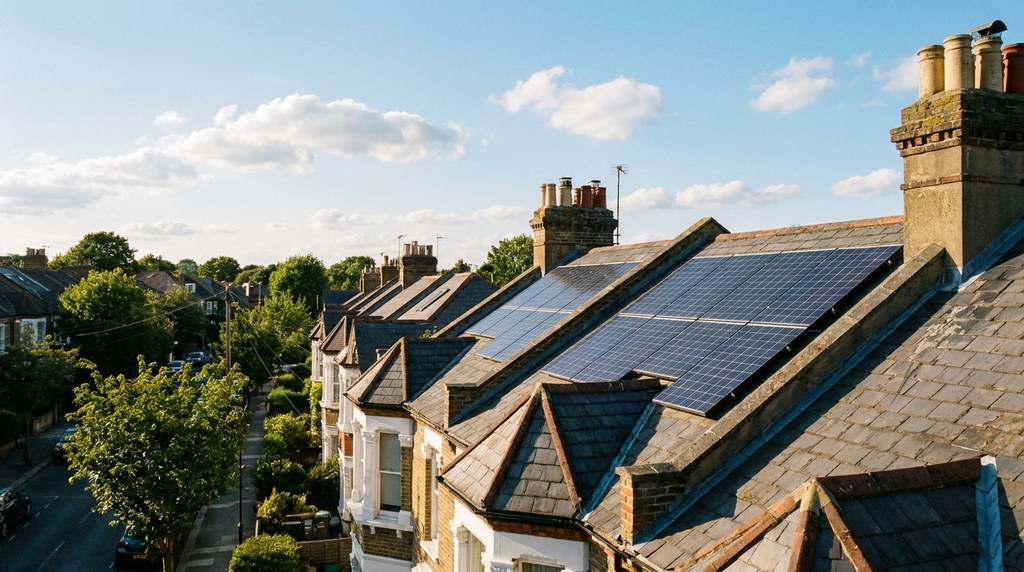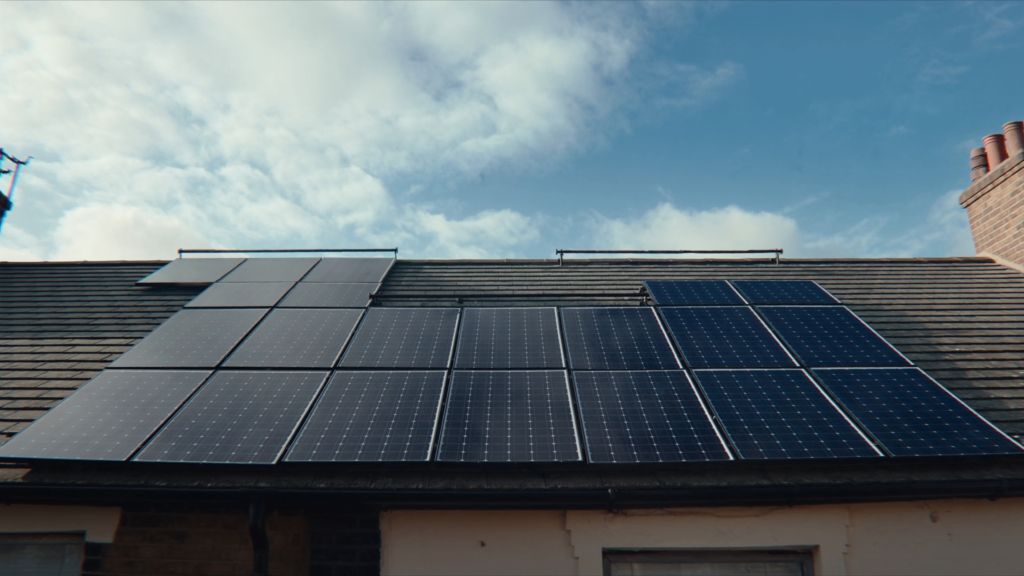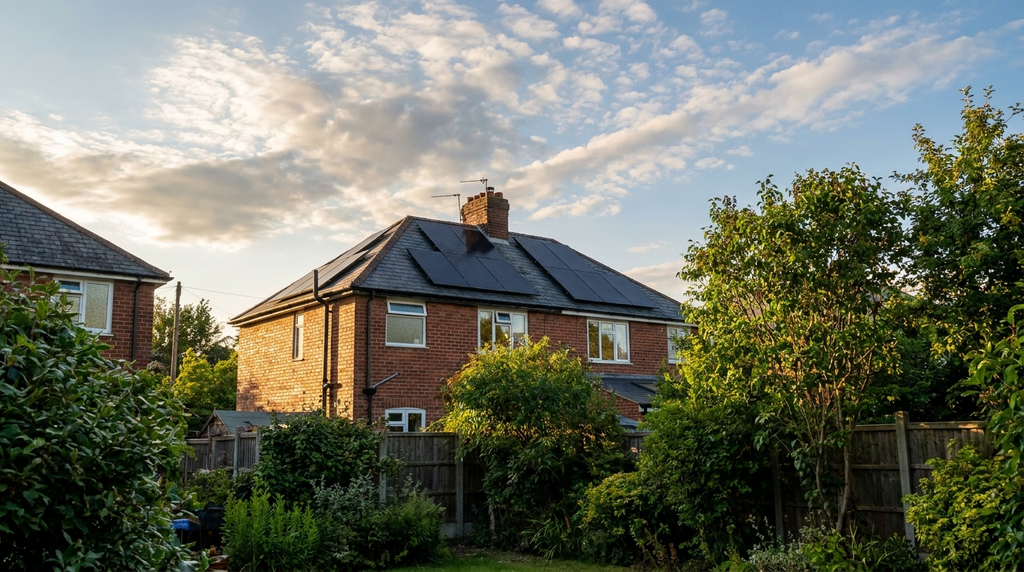
Solar panels generate electricity on cloudy winter days, just less than in summer
UK homeowners often assume solar panels are useless in winter, but the evidence shows otherwise. Department for Energy Security and Net Zero (DESNZ) data confirms that solar panels in the UK produce roughly 15–20% of their annual total during December, January, and February combined (DESNZ Solar PV statistics monthly data tables, 2026). That means a system that generates 4,000 kWh annually will still yield 600–800 kWh across the three winter months.
Yes, solar panels work in UK winter, generating 15-20% of annual output. A 4 kWp system produces 4-6 kWh daily in December, enough for half a home's daytime needs. Diffuse light keeps them generating even on grey days.
- Solar panels generate 15-20% of annual output in winter months (DESNZ data).
- A 4 kWp system produces 4-6 kWh daily in December (Energy Saving Trust).
- Diffuse light enables generation on overcast days, not just direct sunlight.
- Winter output is limited by 7-8 hours of daylight, not cloud cover alone.
- Clear winter days can yield 50-70% of summer peak for a few hours.
- Solar panels generate electricity on cloudy winter days, just less than in summer
- A typical 4 kW system in winter produces enough to power lights and appliances for several hours
- Quick numbers, winter solar output compared with summer output
- Snow on panels usually melts or slides off before it blocks generation for long
- Winter solar output is predictable and can be estimated before you install
- You must use an MCS-certified installer for your solar panels to qualify for the Smart Export Guarantee
- Solar panels in UK winter still cut your electricity bill, here's the typical saving
Solar panels work on diffuse light, the scattered sunlight that reaches the ground even on overcast days, not just direct beam sunlight. This is why they continue generating electricity when the sky is grey. The primary reason winter output is lower is shorter daylight hours (roughly 7–8 hours in December versus 16–17 hours in June) and the lower angle of the sun in the sky, not cloud cover alone.
On a clear winter day, a panel can still produce at 50–70% of its summer peak for the few hours the sun is high enough. The real limitation is the total number of daylight hours, which halves between summer and winter solstice.
A typical 4 kW system in winter produces enough to power lights and appliances for several hours
A 4 kWp (kilowatt-peak) south-facing system in southern England generates roughly 4–6 kWh per day in December, according to the Energy Saving Trust’s solar calculator tool (Energy Saving Trust, 2026). To put that in context, a typical UK home uses around 8–10 kWh of electricity per day in winter, so a 4 kWp system can cover roughly half of a household’s daytime consumption.
This 4–6 kWh is enough to run a fridge-freezer (1 kWh/day), LED lighting throughout the house (0.5 kWh/day), a TV (0.2 kWh/day), and a laptop charger (0.1 kWh/day) for several hours. On heavily overcast days, generation can drop to near zero, below 0.5 kWh, but most winter days still yield some measurable output. The EST calculator shows that even in Manchester, a 4 kWp system averages 3–4 kWh/day in December.
Winter generation is not wasted, however, because you can shift appliance use to daylight hours, running the washing machine, dishwasher, or tumble dryer during the middle of the day when the panels are producing.
Quick numbers, winter solar output compared with summer output
| Month | Average daily kWh (4 kWp, south-facing, southern England) | Percentage of annual total | Hours of usable generation |
|---|---|---|---|
| December | 4–6 kWh | 2–3% | 5–7 hours |
| January | 5–7 kWh | 3–4% | 6–8 hours |
| February | 8–10 kWh | 5–6% | 8–9 hours |
| June | 18–22 kWh | 14–16% | 15–16 hours |
| July | 17–21 kWh | 13–15% | 15–16 hours |
| August | 14–18 kWh | 11–13% | 13–14 hours |
| December peak output (clear day) | 8–10 kWh | , | 5–7 hours |
| December average output | 4–6 kWh | , | 5–7 hours |
Source: Energy Saving Trust solar calculator output; DESNZ monthly solar generation data (DESNZ, 2026).
Snow on panels usually melts or slides off before it blocks generation for long
UK snowfall is infrequent and typically light, most areas see fewer than 10 days of lying snow per year. Solar panels are mounted at a tilt of 30–40 degrees, which means snow slides off quickly under gravity and wind. The Microgeneration Certification Scheme (MCS) notes in its installation guide that panels must be built to shed snow loads (MCS, 2026).
In rare heavy snow events, a panel can be fully covered for a day or two, blocking generation entirely during that period. But the dark surface of solar panels absorbs heat from the sun even on cold days, accelerating melting around the edges. A light dusting of snow often melts within a few hours of sunrise. The annual loss from snow cover in the UK is negligible, typically less than 1% of total generation, concentrated in one or two days per year.
You should never attempt to clear snow from panels yourself, it risks damaging the glass surface or voiding the warranty. Let nature take its course.
Winter solar output is predictable and can be estimated before you install
You do not have to rely on guesswork. The Energy Saving Trust’s solar calculator provides monthly estimates based on your postcode, roof orientation, and roof pitch (Energy Saving Trust, 2026). The tool factors in regional weather patterns, so a system in Manchester will show roughly 10% lower December output than the same system in Southampton.
DESNZ publishes regional generation factors that allow installers to estimate output for any location in the UK. For example, a 4 kWp system in Edinburgh will produce about 15% less in December than one in Plymouth, due to shorter daylight hours and more cloud cover in the north. These factors are built into the MCS Solar PV Calculator, which installers use to provide performance estimates.
You can use the EST tool yourself before contacting installers to get a realistic winter figure for your home. How to use the Energy Saving Trust solar panel calculator
You must use an MCS-certified installer for your solar panels to qualify for the Smart Export Guarantee
The Smart Export Guarantee (SEG) is the government scheme that pays you for electricity you export to the grid. To qualify, your system must be installed by a company certified under the Microgeneration Certification Scheme (MCS) (GOV.UK, 2026). Without MCS certification, you cannot receive SEG payments, which typically range from 5–15p per kWh exported.
MCS certification also ensures the installer follows industry standards for roof fixing, electrical safety, and panel mounting. This is not optional, most mortgage lenders and home insurers also require MCS certification for solar panel installations. You can check an installer’s current certification on the MCS online register at mcs-certified.com before signing any contract (MCS, 2026).
Using an uncertified installer may save a few hundred pounds upfront but will cost you more in lost SEG payments over the 25-year life of the system.
Solar panels in UK winter still cut your electricity bill, here’s the typical saving
Even with low winter output, a 4 kWp system can offset 20–30% of a typical household’s winter electricity consumption, according to DESNZ analysis (DESNZ, 2026). For a household using 3,000 kWh of electricity over the three winter months, that equates to a saving of 600–900 kWh, worth roughly £150–£225 at current typical electricity rates of around 25p/kWh.
The actual saving depends on how much of the generated electricity you use at home. Running appliances during daylight hours, washing machine, dishwasher, tumble dryer, electric heaters, increases self-consumption and reduces the amount you import from the grid. If you export surplus electricity, the SEG payment adds another £20–£40 over the winter period.
Winter savings are modest compared with summer, when a 4 kWp system can offset 60–80% of consumption. But the system saves money year-round, the high summer generation subsidises the lower winter output. How much do solar panels save on electricity bills? The payback period for a typical 4 kWp system, factoring in winter generation, is 8–12 years according to the Energy Saving Trust (Energy Saving Trust, 2026).
Frequently Asked Questions
Yes, solar panels work in UK winter. They produce 15-20% of their annual output during December, January, and February combined, according to DESNZ Solar PV statistics (2026).
A typical 4 kWp south-facing system generates 4-6 kWh per day in December, according to the Energy Saving Trust's solar calculator (2026). This covers roughly half of a household's daytime winter consumption.
Yes, solar panels work on cloudy days using diffuse light. The Energy Saving Trust confirms they still generate measurable output, though heavily overcast days may drop below 0.5 kWh.
Yes, solar panels are worth it in UK winter. They still offset daytime electricity use, and the MCS estimates a typical system pays back within 15-20 years including winter generation.
A 4 kWp solar system in southern England produces roughly 4-6 kWh per day in December, according to the Energy Saving Trust. This powers lights, fridge, and appliances for several hours.