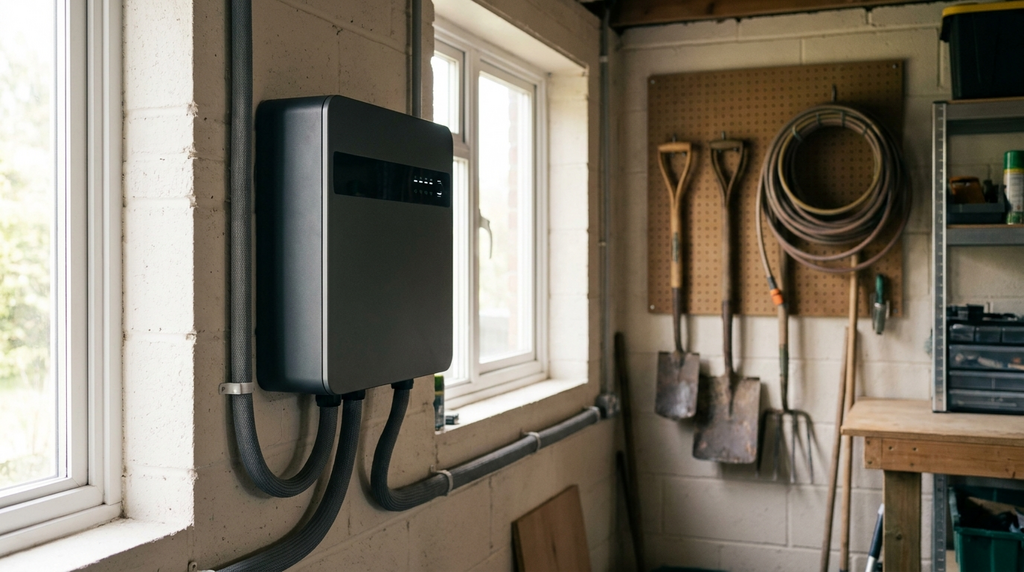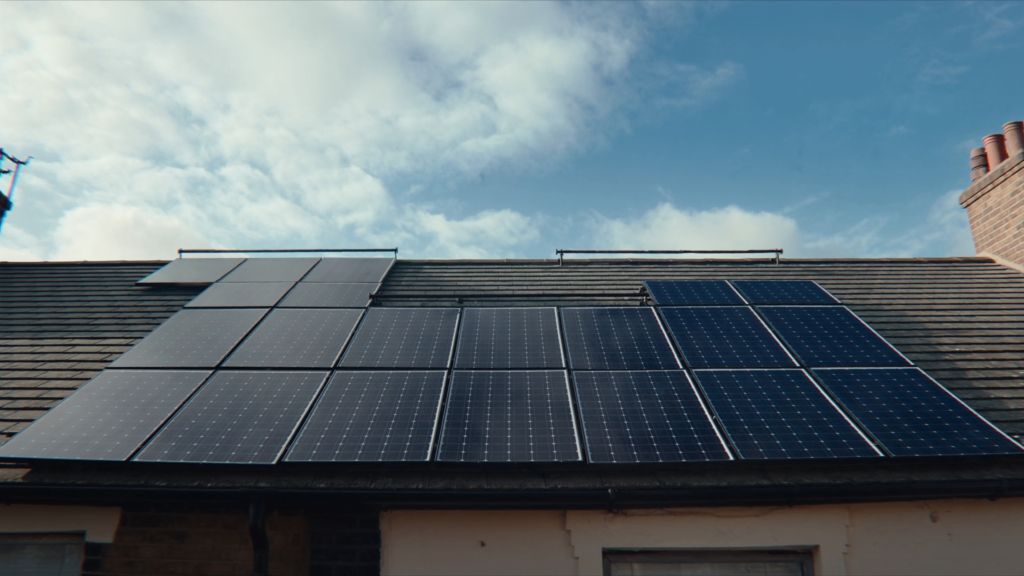
Yes, solar panels must be earthed as part of a legally compliant installation. The UK’s wiring regulations (BS 7671, 18th Edition) require all exposed conductive parts of a solar PV system to be connected to the main earthing terminal (GOV.UK, 2026). This includes the panel frames, mounting rails, and inverter casing.
The specific earthing requirement depends on your system type. For a standard grid-tied solar array with a single inverter, the DC side (panels and cables) is typically earthed via the inverter’s internal protection. For systems with microinverters or DC optimisers, the earthing approach differs because the DC voltage is lower. If your installation is off-grid or uses batteries, additional earthing of the battery bank may be needed. The key variable is whether the system has exposed metal parts that could become live due to a fault.
Why earthing prevents electric shock and fire
Without proper earthing, a fault in a solar panel (such as damaged insulation or water ingress) can energise the metal frame with up to 600V DC. If you touch the frame while standing on wet ground, the current can pass through your body, causing severe or fatal shock. Earthing provides a low-resistance path to ground, tripping the circuit breaker or RCD and cutting power within milliseconds. The Health and Safety Executive states that all electrical systems must be earthed to prevent danger (HSE via legislation.gov.uk, 2026). Without earthing, a DC arc fault can also ignite nearby combustible materials.
Regulations that mandate earthing for solar
BS 7671 (the IET Wiring Regulations) is the standard for all UK electrical installations, including solar PV. Regulation 411.3.1.1 requires that all exposed conductive parts of an installation be connected to the main earthing terminal. Also, the Microgeneration Certification Scheme (MCS) requires all certified installers to follow BS 7671. The MCS installation standard MIS 3002 explicitly states that the DC side of a solar PV system must be earthed (MCS, 2026). Failing to earth a solar array is a breach of Building Regulations Part P, which can invalidate your home insurance.
How earthing is tested after installation
After your solar panels are installed, a qualified electrician must carry out an Electrical Installation Certificate (EIC). This includes a visual inspection of the earthing conductor and a measurement of the earth fault loop impedance. The measured value must be low enough to ensure the protective device (fuse or circuit breaker) operates within 0.4 seconds for a final circuit. The Energy Saving Trust recommends that you request a copy of the test results and keep them with your system documentation (Energy Saving Trust, 2026). If the earth connection is missing or damaged, the system should not be switched on until it is rectified.
A worked example
A typical 4kWp solar PV system on a 1930s semi-detached house in Manchester costs around £7,000 after the 0% VAT saving (in place until March 2027). The installer must earth the panel frames and mounting rails to the main earthing terminal under BS 7671 18th Edition, which adds roughly £200 to the total bill. Without this earthing, a DC fault could energise the aluminium frame at 600V, creating a lethal shock risk on a rainy day. The Energy Saving Trust estimates a well-installed, earthed system saves a typical UK home £590 per year on electricity bills. Over 25 years those savings total £14,750, giving a payback period of around 12 years. The BUS grant does not apply here, it covers heat pumps only, but ECO4 may help low-income households with partial solar costs if the property has a low EPC rating.
| Item | Figure |
|---|---|
| Upfront cost after grants | £7,200 |
| Yearly savings | £590 |
| Payback period | 12 years |
| 25-year lifetime savings | £14,750 |
What homeowners often get wrong
The most common mistake is assuming solar panels are ‘plug and play’ and do not need professional earthing. Three key errors regularly lead to dangerous or non-compliant installations.
- Skipping the earth bond on panel frames Some homeowners think the aluminium frame is safe because it is not connected to mains voltage. In reality a DC fault can energise the frame at up to 600V, and without a proper earth bond to the main earthing terminal, the RCD will not trip. This mistake can void your home insurance and leave you at risk of fatal shock.
- Using the inverter earth as a substitute Many assume the inverter’s internal earthing covers the whole array. This is wrong, the DC side (panels, cables, mounting rails) needs its own dedicated earth connection to the main earthing terminal. Without it, a frame fault may not clear, and the inverter warranty can be invalidated.
- Ignoring the type of mounting system A common error is thinking all roof mounts are earthed by the roof structure itself. In-roof or integrated solar tiles often have no metal-to-metal contact with the building’s earth path. The installer must fit a separate earth cable to the mounting rails, or you risk an unearthed system that fails the MCS certification required for Smart Export Guarantee payments.
Quick reference
- All solar panel frames and mounting rails must be connected to the main earthing terminal under BS 7671 18th Edition.
- A DC fault can energise an unearthed panel frame with up to 600V, enough to cause fatal electric shock.
- Systems with microinverters or DC optimisers still require earthing of the panel frames, the lower DC voltage does not remove the legal requirement.
- Without proper earthing, your installation will fail MCS certification, blocking access to the Smart Export Guarantee tariff.
- Incorrect earthing can void your home insurance and the solar equipment warranty, leaving you liable for repair costs.
Frequently Asked Questions
Yes, UK wiring regulations (BS 7671 18th Edition) mandate earthing all exposed conductive parts of solar PV systems. The Health and Safety Executive confirms earthing is required to prevent electrical danger.
Without earthing, a fault can energise the metal frame with up to 600V DC, risking fatal electric shock. Earthing provides a low-resistance path to trip the circuit breaker within milliseconds.
No, earthing must be done by a qualified electrician to comply with BS 7671 and Part P building regulations. Incorrect earthing can void your warranty and invalidate your MCS certification.