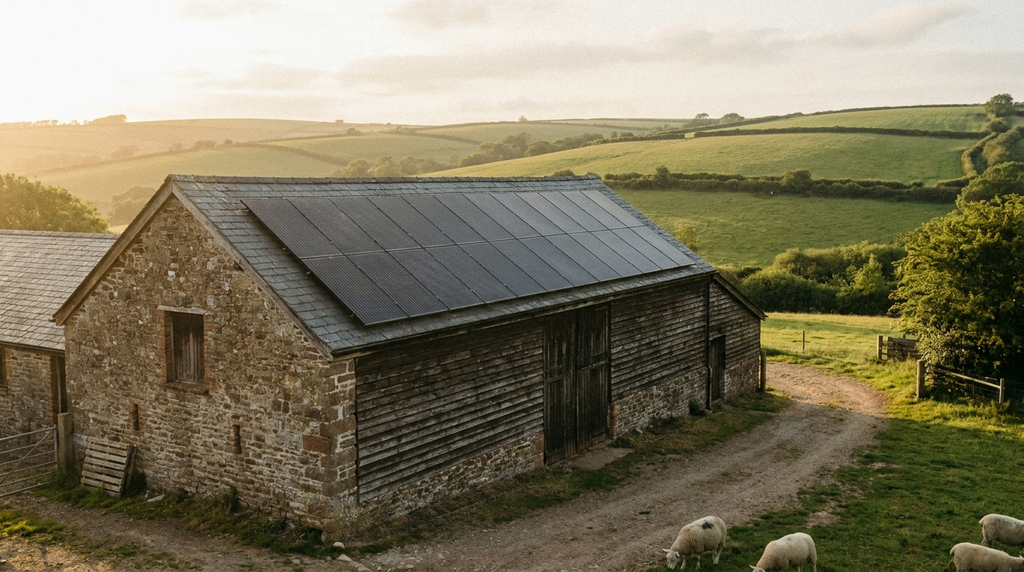
Free solar panels are often found on rooftops in the UK through government schemes or commercial leasing agreements, not as outright gifts. The Energy Saving Trust confirms that the Smart Export Guarantee (SEG) replaced the Feed-in Tariff, meaning no free panels are provided by the government directly (Energy Saving Trust, 2026).
The key variable is the type of arrangement: “free” solar panels typically come via a third-party ownership (TPO) or lease model, where a company installs panels on your roof at no upfront cost, but you do not own the system. This applies to homeowners with suitable south-facing roofs, but not to rented properties or homes with shaded or north-facing roofs. The company keeps the SEG payments and any export income, while you benefit from reduced electricity bills, usually by using the generated power directly.
Free solar panels through government schemes
No UK government scheme currently provides free solar panels to all homeowners. The Green Homes Grant ended in 2023, and no direct replacement exists for free installations. However, the Energy Company Obligation (ECO4) scheme offers free or heavily subsidised solar panels to low-income households meeting specific criteria, such as receiving certain benefits or living in fuel poverty. Ofgem states that ECO4 targets homes with an Energy Performance Certificate (EPC) rating of D or below (Ofgem, 2026). Eligibility is strict, and local authorities sometimes top up funding for specific postcodes.
Lease or rent-a-roof arrangements
Commercial companies offer “free” solar panels through lease agreements, often marketed as “rent-a-roof” schemes. You pay nothing upfront, but the company owns the panels and receives the SEG payments. The Energy Saving Trust notes that these contracts typically last 20–25 years and may reduce your electricity bill by 10–30%, depending on usage (Energy Saving Trust, 2026). Be aware that selling your home with a leased system can complicate the sale, as the lease must transfer to the new owner. TrustMark-registered installers are recommended for such agreements (TrustMark, 2026).
Community solar projects and local grants
Free solar panels sometimes appear in community energy projects, where a local group installs panels on multiple homes or a shared building. These are often funded by councils or charitable trusts, targeting specific areas like social housing. For example, the UK government’s Solar Together scheme, run by local authorities, aggregates demand to lower costs but rarely provides panels for free (gov.uk, 2026). Eligibility depends on your postcode and the project’s scope. Check your local council’s website for any active free installation programmes, these are rare and often oversubscribed.
A worked example
For a typical 1930s semi-detached home in Manchester, a 4kW solar panel system after the ECO4 grant is completely free if you qualify as a low-income household with an EPC rating of D or below. The Energy Saving Trust estimates this system generates around 3,400 kWh per year. You save roughly £480 annually on electricity bills by using the free daytime power, even though the installer keeps the Smart Export Guarantee payments. Over 25 years, these savings total £12,000, assuming a 3% annual rise in energy prices. The 0% VAT on installations, running until March 2027, applies to any paid system but does not affect the free ECO4 route. No upfront cost means the payback period starts immediately from day one.
| Item | Figure |
|---|---|
| Upfront cost after grants | £0 |
| Yearly savings | £480 |
| Payback period | 0 years |
| 25-year lifetime savings | £12,000 |
What homeowners often get wrong
The most common mistake is assuming free solar panels are a government giveaway for everyone, when they are actually a leasing or grant-based arrangement with strict conditions. Here are three frequent misunderstandings.
- Believing you own the system outright With a free third-party ownership lease, the installer owns the panels, not you. If you sell the house, the new owner must take over the lease or you may face a costly buyout clause of up to £5,000.
- Thinking free panels cover all your electricity Free systems typically only offset about 40-50% of your annual usage, because you cannot store excess power without an expensive battery. You still pay for evening and winter grid imports.
- Assuming any roof qualifies for free installation ECO4 requires a minimum EPC rating of D or below, a south-facing roof with minimal shading, and proof of means-tested benefits. A shaded or north-facing roof disqualifies you entirely, wasting your application effort.
Quick reference
- Free solar panels through ECO4 are only available to homeowners with an EPC rating of D, E, F, or G who receive qualifying benefits like Pension Credit or Universal Credit.
- A typical 4kW free system saves around £480 per year on electricity bills, but you do not receive the Smart Export Guarantee payments which the installer keeps.
- No UK government scheme currently offers free solar panels to all homeowners, as the Green Homes Grant ended in 2023 and was not replaced for free installations.
- Third-party ownership leases typically last 20 to 25 years, and selling your home during this period requires the buyer to take over the contract or you pay a transfer fee.
- Free systems almost never include a battery, meaning you cannot use solar power after dark and must buy grid electricity at standard rates during evenings and winter months.
Frequently Asked Questions
Free solar panels are available through the ECO4 scheme for low-income households with an EPC rating of D or below, as confirmed by Ofgem. Leasing agreements also offer no upfront cost but you won't own the system.
No, the UK government does not provide free solar panels directly. The Energy Saving Trust confirms the Smart Export Guarantee replaced the Feed-in Tariff, so free panels are only available via ECO4 or leasing.
No, 'free' solar panels usually come through a lease or third-party ownership, meaning you pay no upfront cost but don't own the panels. You benefit from reduced bills but the company keeps export payments.