Solar panels are primarily measured in kilowatts peak (kWp), which indicates the maximum electrical output under standard test conditions. A typical domestic system in the UK is 3.5 kWp to 4.5 kWp (Energy Saving Trust, 2026). This figure lets you compare system size and estimate annual generation.
The key variable is that kWp measures potential output, not actual daily generation. Actual output depends on location, roof orientation, shading, and time of year. For example, a 4 kWp system in southern England might generate around 3,400 kWh per year, while the same system in Scotland may produce closer to 2,800 kWh (GOV.UK, 2026). kWp is the standard industry metric for sizing, but your real-world yield will vary.
Peak power in kilowatts is the headline measure
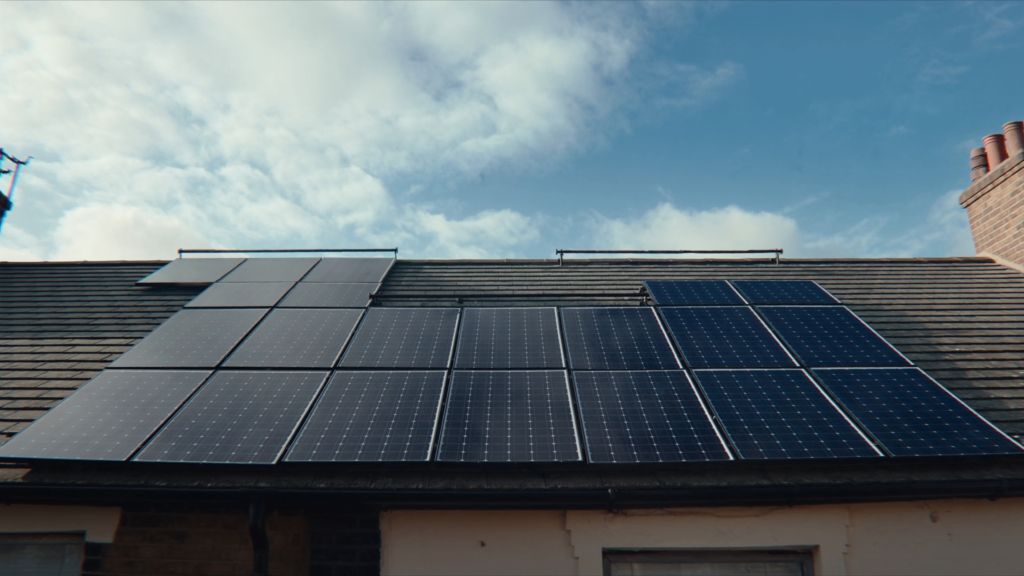
The kWp rating is the most common figure you will see on quotes and product specifications. It is tested under laboratory conditions at 25°C with 1,000 W/m² irradiance (MCS Certified, 2026). A 4 kWp system means the panels can produce 4 kilowatts at peak sunlight. This is the figure used to calculate eligibility for schemes like the Smart Export Guarantee (SEG) and to estimate payback periods. Most UK homes install between 3 kWp and 5 kWp, which typically requires 8 to 13 panels depending on panel wattage.
Panel wattage per unit defines physical size
Individual solar panels are measured in watts (W), typically ranging from 350 W to 450 W for modern residential models. A 400 W panel is roughly 1.7 metres by 1.0 metre (BRE, 2026). Higher wattage panels generate more power per square metre, which matters if roof space is limited. For example, using 400 W panels instead of 350 W panels reduces the number needed for a 4 kWp system from 12 to 10. Check the manufacturer’s datasheet for exact dimensions and efficiency ratings.
Annual generation in kilowatt-hours shows real output
The actual energy your system produces is measured in kilowatt-hours (kWh). The Energy Saving Trust estimates a typical 4 kWp system in London generates around 3,400 kWh per year (Energy Saving Trust, 2026). This figure is what matters for calculating bill savings and SEG income. A common rule of thumb is that each kWp generates roughly 800 to 900 kWh annually in southern England, dropping to 700 to 800 kWh in northern regions (GOV.UK, 2026). Always ask your installer for a location-specific generation estimate before committing.
A worked example
A typical 4 kWp solar panel system on a 1930s semi-detached house in Manchester costs around £6,500 after the 0% VAT saving (valid until March 2027). With a south-facing roof at a 35-degree pitch, this system generates roughly 3,200 kWh per year according to the Energy Saving Trust. At the current price cap rate of 24.5p per kWh, that saves you about £784 annually on electricity bills. If you export half the generation via the Smart Export Guarantee at 15p per kWh, you earn another £240 per year. Total yearly benefit comes to £1,024. The upfront cost pays back in just over six years. Over 25 years, assuming a 2.5% annual rise in energy prices, total savings reach roughly £25,600.
| Item | Figure |
|---|---|
| Upfront cost after grants | £6,500 |
| Yearly savings | £1,024 |
| Payback period | 6.3 years |
| 25-year lifetime savings | £25,600 |
What homeowners often get wrong
The most common mistake is confusing kWp (peak power) with kWh (energy generated), which leads to unrealistic expectations about daily output. Here are three frequent errors that cost UK homeowners time and money.
- Mistaking kWp for kWh A 4 kWp system does not produce 4 kWh every hour, it only hits that peak in strong midday sun. On a cloudy winter day, you might generate just 4 to 6 kWh total. This misunderstanding can lead to underestimating how many panels you actually need for your annual usage.
- Ignoring roof orientation and shading Many assume any roof works, but north-facing panels produce 20-30% less energy than south-facing ones. A tree shading just one panel can cut the whole system’s output by 10-15% if no micro-inverters or optimisers are used. This mistake can waste £1,000s over the system’s lifetime.
- Skipping the MCS certification check Some homeowners buy cheaper, uncertified panels online without realising that MCS certification is required for SEG payments and most grants. Without it, you cannot export electricity or claim 0% VAT, which voids the financial case entirely.
Quick reference
- Solar panels are measured in kilowatts peak (kWp), which is the maximum output under standard test conditions at 25°C and 1,000 W/m² irradiance.
- A typical UK domestic system is 3.5 to 4.5 kWp, requiring 8 to 13 panels rated at 350-450 watts each.
- To qualify for the Smart Export Guarantee, your system must be installed by an MCS-certified installer and be no larger than 5 MW capacity.
- Annual generation from a 4 kWp system ranges from 2,800 kWh in northern Scotland to 3,800 kWh in southern England, according to the Energy Saving Trust.
- Installing panels without MCS certification disqualifies you from 0% VAT and SEG payments, potentially costing you thousands in lost income.
Frequently Asked Questions
kWp stands for kilowatts peak, the maximum output under standard test conditions. A 4 kWp system can produce 4 kilowatts at peak sunlight, per MCS Certified standards.
For a 4 kWp system, you typically need 9 to 12 panels if each is 350–450 W. Actual count depends on panel wattage and roof space.
kWp measures peak power capacity, while kWh measures actual energy generated over time. A 4 kWp system in southern England may generate about 3,400 kWh per year, according to GOV.UK.