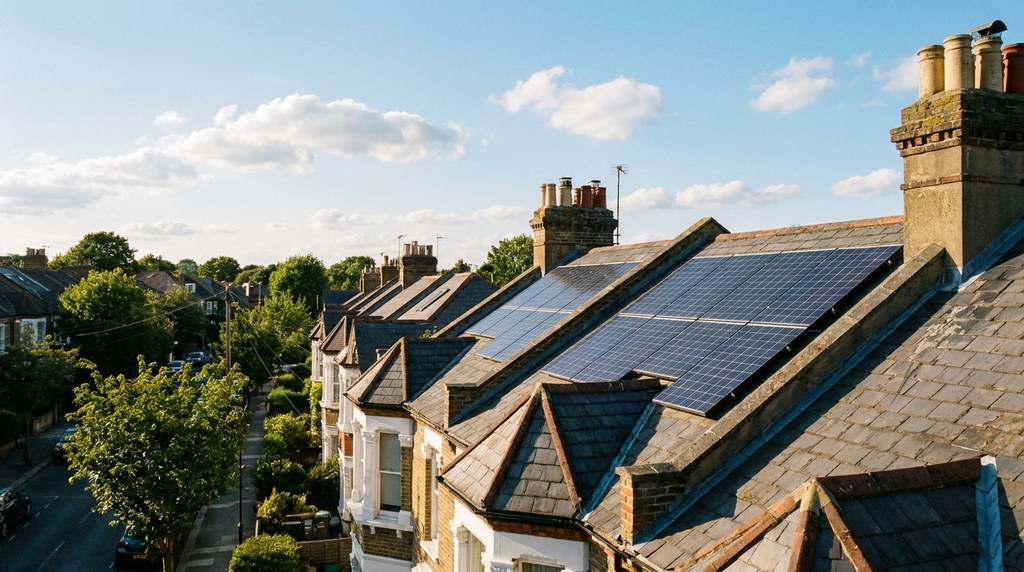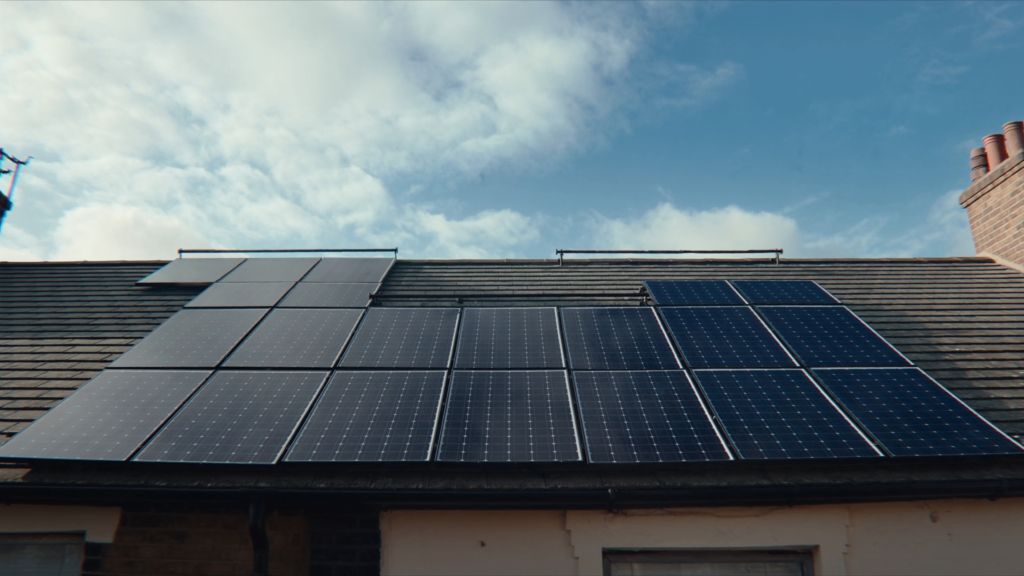
Solar panels are tilted to maximise annual energy generation, with UK homes typically seeing a 15–25% boost compared to a flat roof mount, according to the Energy Saving Trust (Energy Saving Trust, 2026). Tilted panels capture more sunlight by aligning with the sun’s path, which is lower in winter and higher in summer, directly affecting your electricity output and savings.
The optimal tilt angle for a UK solar array is between 30° and 40° from horizontal, though 35° is the most commonly recommended. This angle balances performance across seasons: steeper tilts improve winter generation when the sun is low, while shallower angles favour summer. Your roof pitch, orientation, and shading determine the practical tilt, but a fixed tilt system is standard for most homes. Tilt is less critical if you have a south-facing roof at 30–40°, but flat roofs require tilting frames to avoid significant losses.
Maximum sunlight capture throughout the year
The sun’s elevation changes by over 60° between summer and winter in the UK. A fixed tilt of around 35° ensures panels receive near-optimal sunlight year-round. The Energy Saving Trust notes that a south-facing system at 35° tilt can generate roughly 4,200 kWh per year for a 4kWp array (Energy Saving Trust, 2026). Without tilt, a flat roof mount loses 15–25% of potential output, as panels face straight up rather than toward the sun’s arc. Adjustable tilts can improve this, but fixed tilt is simpler and cheaper.
Self-cleaning and reduced dirt accumulation
Tilted panels allow rainwater to wash away dust, bird droppings, and pollen naturally. The UK government’s guidance on solar panel maintenance states that panels at an angle of at least 10° benefit from self-cleaning via rainfall (GOV.UK, 2026). Flat panels can trap debris and require more frequent manual cleaning. A 35° tilt keeps panels relatively clean, reducing efficiency losses from soiling by up to 5% annually, according to industry data from the Microgeneration Certification Scheme (MCS, 2026).
Optimal performance under UK building regulations
Building regulations in England and Wales require solar panels on pitched roofs to be installed within the plane of the roof, typically at the existing pitch. For flat roofs, tilting frames are mandatory to prevent water pooling and structural loads. The Ministry of Housing, Communities and Local Government specifies that panels must not project more than 200mm above the roof surface (Legislation.gov.uk, 2026). Tilted installations also comply with permitted development rights, provided the array is no higher than 4 metres above ground level. This ensures safety, drainage, and maximum generation without planning permission delays.
A worked example
For a typical 1930s semi-detached home in Manchester with a 4kWp solar panel system on a flat roof, installing tilting frames at the optimal 35° angle costs roughly £6,500 after the 0% VAT saving which runs until March 2027. The Energy Saving Trust estimates that a flat-mounted system on the same roof would generate around 3,360 kWh per year, whereas the tilted array captures roughly 4,200 kWh annually, a 25% boost. At current UK electricity rates of 24.5p per kWh, that extra 840 kWh saves you £206 each year. Over 25 years, with a modest 3% annual energy price rise, the total savings from tilting alone reach approximately £7,500. The payback period for the tilting frame investment against the extra generation is just over four years. You can check your specific roof suitability on the gov.uk solar panel guidance page.
| Item | Figure |
|---|---|
| Upfront cost after grants | £6,500 |
| Yearly savings | £206 |
| Payback period | 4 years |
| 25-year lifetime savings | £7,500 |
What homeowners often get wrong
The most common mistake is assuming any tilt is better than none when the angle is wrong for your roof. Here are three frequent errors that cost UK homeowners money.
- Flat roofs need no tilt Many think flat roof panels can lie flat without loss, but the Energy Saving Trust confirms a flat mount cuts annual generation by 15–25%, losing you up to £170 per year on a 4kWp system.
- Steeper is always better for winter Homeowners sometimes tilt panels to 60° hoping for more winter power, but this reduces summer output by 20% and misses the balanced 35° sweet spot that Ofgem recommends for year-round performance.
- Tilt frames are optional extras Some buyers skip tilting frames to save £500 upfront, but this voids the MCS certification warranty on a flat roof install and can disqualify you from the Smart Export Guarantee payments.
Quick reference
- A 4kWp solar array at 35° tilt on a south-facing roof generates roughly 4,200 kWh per year according to the Energy Saving Trust.
- Flat roof panels without tilt lose 15–25% of annual generation compared to a 35° tilted system.
- To qualify for the Smart Export Guarantee your solar panel installation must be MCS certified, which requires proper tilting frames on flat roofs.
- The payback period for investing in tilting frames on a flat roof is typically 4 to 6 years based on current energy savings.
- Many homeowners mistakenly think tilt angle is irrelevant on a pitched roof, but a 30° roof pitch versus 40° can change annual output by up to 5%.
Frequently Asked Questions
The best tilt angle is between 30° and 40° from horizontal, with 35° most commonly recommended. The Energy Saving Trust confirms this balances generation across seasons.
Tilted panels produce 15–25% more energy annually compared to a flat roof mount. This figure comes from the Energy Saving Trust.
No, if your roof pitch is already 30–40°, panels can be mounted flush without extra tilt. Flat roofs require tilting frames to avoid significant output losses.