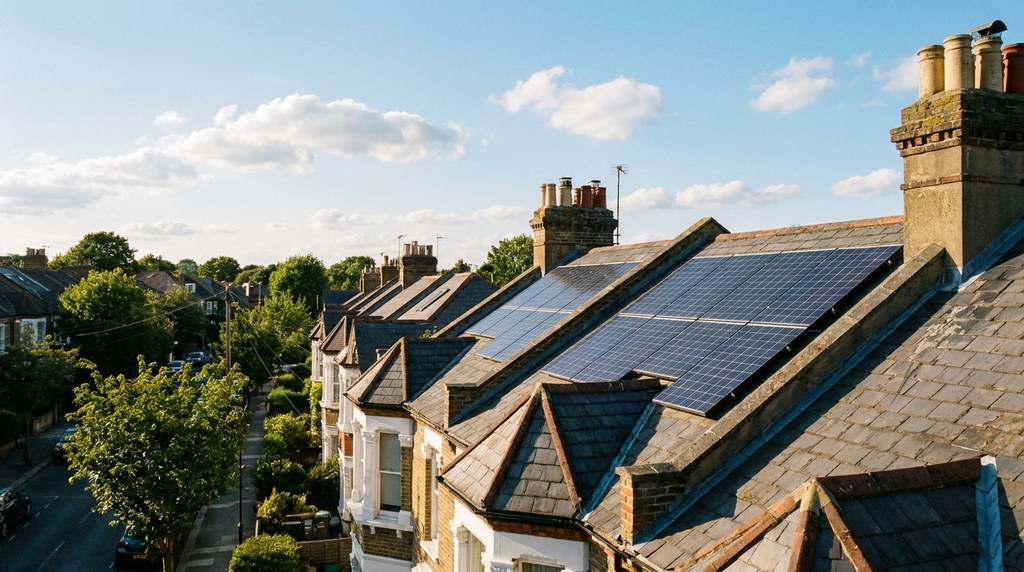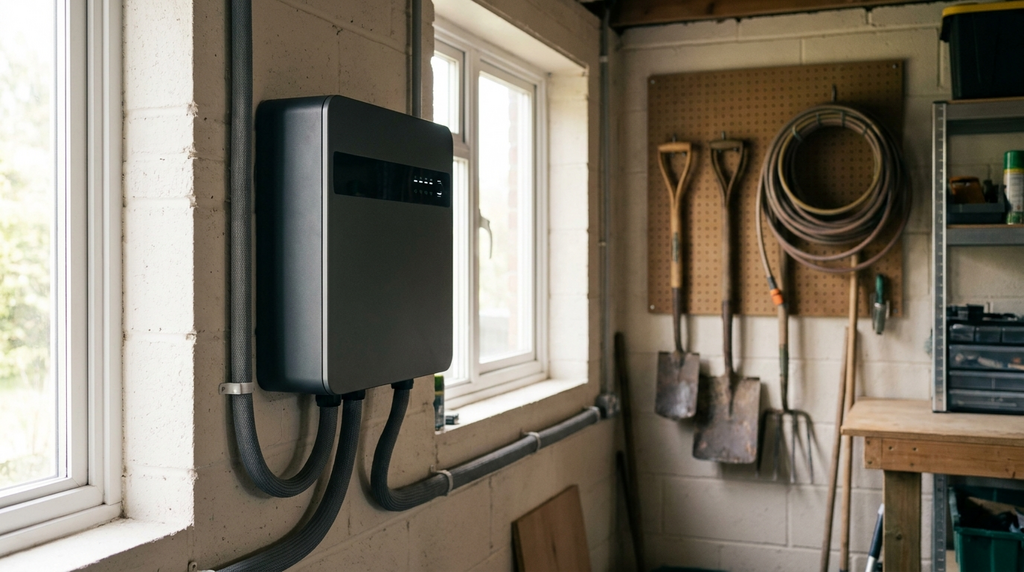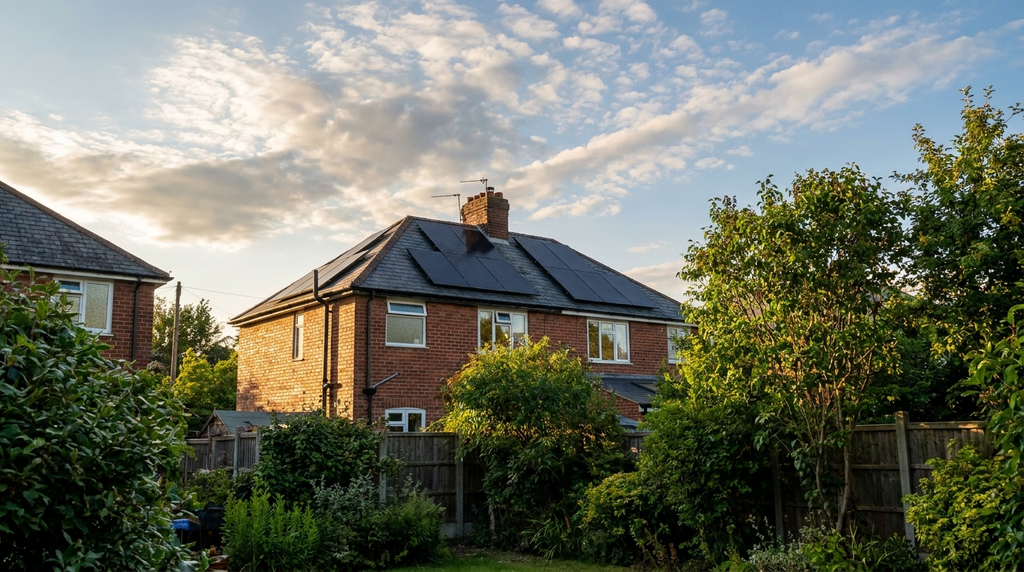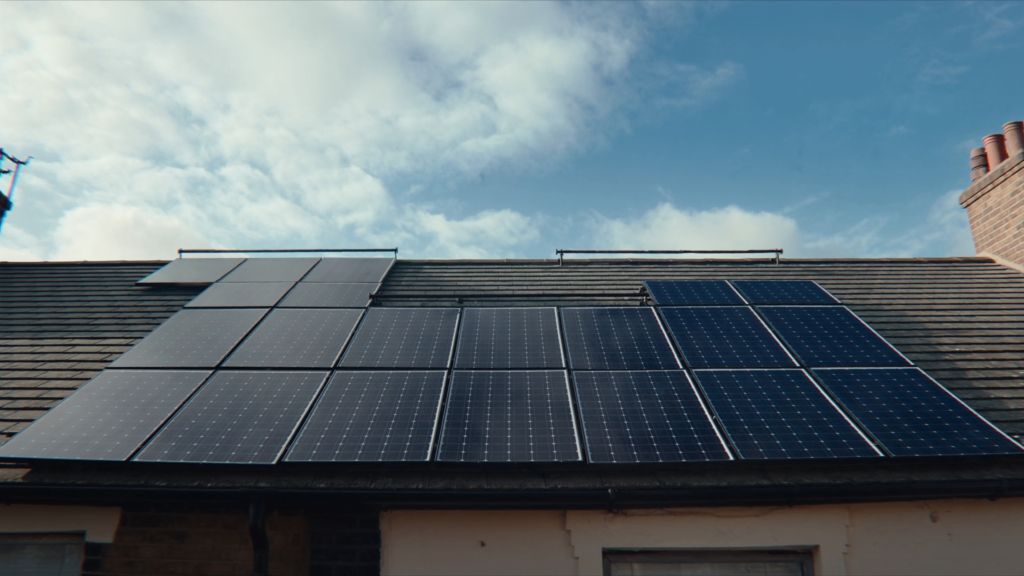
The number of solar panels you need depends on your annual electricity use, not the size of your house
Many homeowners assume the number of solar panels needed is determined by roof size or the number of bedrooms. In reality, the single most important factor is your household’s annual electricity consumption in kilowatt-hours (kWh).
Most homes need 6–10 solar panels, based on annual electricity use not house size. A medium household (2,700 kWh) requires 6–7 panels; a large household (4,100 kWh) needs 9–10. Calculate yours using the Energy Saving Trust formula.
- Base panel count on annual kWh, not house size or bedrooms
- Medium household (2,700 kWh) needs 6–7 panels at 400 Wp
- Large household (4,100 kWh) needs 9–10 panels
- Use EST formula: annual kWh ÷ 1,100 = kWp capacity needed
- South-facing roof gives best output; east/west needs more panels
- The number of solar panels you need depends on your annual electricity use, not the size of your house
- How to calculate the number of panels from your annual kWh usage
- Quick numbers panels needed by household size and system cost
- How many solar panels to run a house the direct answer
- What a solar panel system actually costs in 2026 and what you save
- How to check if an installer is certified and your system will qualify for grants
- How roof direction and shading change the panel count you actually need
Ofgem’s Typical Domestic Consumption Values (TDCVs) for 2026 show that a medium household (3–4 people) uses around 2,700 kWh per year, while a large household (5+ people) uses around 4,100 kWh (Ofgem, 2026). These figures are the starting point for any calculation.
A standard 2026 solar panel produces around 400–450 watts peak (Wp), which is the maximum output under ideal sunlight conditions (MCS, 2026). The size of your house matters only insofar as it affects your energy use, not the panel count directly.
How to calculate the number of panels from your annual kWh usage
The Energy Saving Trust (EST) uses a simple formula: divide your annual kWh by 1,100 to get the total kWp of solar capacity you need. This is based on the UK average annual output of 850–1,100 kWh per kWp installed (Energy Saving Trust, 2026).
For a medium household using 2,700 kWh per year, the calculation is: 2,700 kWh ÷ 1,100 = 2.5 kWp system. With 400 Wp panels, that is 6–7 panels (2,500 W ÷ 400 W = 6.25). For a large household using 4,100 kWh, you need 3.7 kWp, which is 9–10 panels.
This method assumes a south-facing roof with no shading. If your roof faces east or west, or has partial shading, you will need more panels to compensate for lower output.
Quick numbers panels needed by household size and system cost
| Household type | Annual kWh (Ofgem TDCV) | Panels needed (400 Wp) | System cost (2026, EST estimate) | Annual savings (EST, 2026) | Payback period |
|---|---|---|---|---|---|
| Small (1–2 people) | 1,800 | 4–5 | £5,500–£7,000 | £450–£550 | 12–15 years |
| Medium (3–4 people) | 2,700 | 6–7 | £7,000–£9,000 | £600–£750 | 12–14 years |
| Large (5+ people) | 4,100 | 9–10 | £9,500–£12,000 | £850–£1,050 | 11–13 years |
These figures are based on Ofgem TDCVs for 2026 (Ofgem, 2026), EST solar cost and savings data (Energy Saving Trust, 2026), and MCS panel specifications (MCS, 2026). Payback periods assume you use most of the electricity on site and export the surplus.
How many solar panels to run a house the direct answer
For a typical UK home, you need 6–10 solar panels (400 Wp each) to cover your annual electricity usage. This assumes a south-facing roof with no shading, and that you use the full output on site.
The exact number is your annual kWh divided by 440. That figure comes from 1,100 kWh per kWp divided by 400 Wp per panel, adjusted by a 0.9 efficiency factor to account for real-world conditions (Energy Saving Trust, 2026). For a medium household using 2,700 kWh: 2,700 ÷ 440 = 6.1 panels, so 6–7 panels.
If your roof is east or west facing, or partially shaded, you should add 1–2 extra panels to compensate for lower output.
What a solar panel system actually costs in 2026 and what you save
The Department for Energy Security and Net Zero (DESNZ) reports the average cost per kWp installed in 2026 is £2,500–£3,000 (DESNZ, 2026). A 2.5 kWp system (6–7 panels) costs £6,250–£7,500 fully installed. A 4.1 kWp system (9–10 panels) costs £10,250–£12,300.
Annual savings on electricity bills for a medium household are £600–£750 (Energy Saving Trust, 2026). The Smart Export Guarantee (SEG) adds £100–£180 per year for power you export to the grid (Ofgem, 2026).
For a medium household, total annual benefit is £700–£930. At a typical system cost of £7,000–£9,000, the payback period is 12–14 years. compare solar panel payback with battery storage costs
How to check if an installer is certified and your system will qualify for grants
All installers must be MCS-certified for your system to be eligible for the Smart Export Guarantee and any future grant schemes such as ECO+ or local authority programmes (MCS, 2026). Without MCS certification, you cannot export power to the grid under SEG and you lose the main financial benefit of solar panels.
TrustMark registration is also required for government-backed schemes (GOV.UK, 2026). Check the MCS database before hiring any installer. A non-MCS system will not qualify for SEG payments or any future grant funding.
How roof direction and shading change the panel count you actually need
A south-facing roof at a 30–40° tilt gives maximum output. East or west-facing roofs reduce output by 15–20% (Energy Saving Trust, 2026). Shading from trees, chimneys, or neighbouring buildings can cut output by 10–30%, requiring 1–2 extra panels to compensate (MCS, 2026).
The EST online solar calculator provides a free roof-specific estimate based on your postcode, roof orientation, and shading (Energy Saving Trust, 2026). Use this before buying any system to get a precise panel count for your home.
learn about solar panel maintenance and cleaning costs
Frequently Asked Questions
Most UK homes need 6–10 solar panels, based on your annual electricity use. Ofgem's 2026 TDCV figures show a medium household (2,700 kWh) requires 6–7 panels, while a large household (4,100 kWh) needs 9–10 panels.
A 3-bed semi typically uses 2,700–3,000 kWh per year, so you need 6–8 panels. The Energy Saving Trust recommends dividing your annual kWh by 1,100 to get the kWp capacity, then dividing by panel wattage (400 Wp).
A 4-bed house usually consumes 3,500–4,100 kWh annually, requiring 9–10 panels. This is based on Ofgem's 2026 TDCV for large households and assumes 400 Wp panels on a south-facing roof.
Off-grid homes typically need 12–16 panels to cover winter usage and battery charging. The MCS advises oversizing by 30–50% compared to grid-connected systems to account for seasonal variation and storage losses.
Use the Energy Saving Trust formula: annual kWh u00f7 1,100 = total kWp needed. Then divide by panel wattage (e.g., 400 Wp). For a 2,700 kWh home, that's 2.5 kWp u00f7 0.4 kW = 6.25 panels, so 7 panels.