Solar panels do not generate electricity at night — here is what actually happens
Many homeowners assume solar panels continue working after dark, perhaps by storing daytime power or drawing energy from moonlight. The reality is simpler and often surprising. Solar photovoltaic (PV) panels generate zero electricity at night because they rely on daylight photons to produce direct-current (DC) electricity.
Solar panels generate zero electricity at night — they need daylight photons. A home battery stores daytime surplus for evening use, or you offset night-time grid costs with SEG export payments from your daytime generation.
- Solar panels generate zero electricity at night due to no daylight photons.
- Net metering through SEG lets you offset night-time grid imports with daytime exports.
- A home battery is the only way to use your own solar power after dark.
- Typical UK households export 50-60% of daytime solar generation.
- SEG average rate in 2026 is around 6.5p per kWh (Ofgem).
- Solar panels do not generate electricity at night — here is what actually happens
- Net metering lets you use daytime surplus after dark
- Solar batteries store daytime energy for night-time use
- Quick numbers — solar at night costs and savings table
- The real answer to "how solar panels work at night" — they don't, but your home can
- MCS and battery installer certification — what you need to verify
- How a solar-plus-battery system changes your night-time electricity cost
- Future developments — time-of-use tariffs and virtual power plants
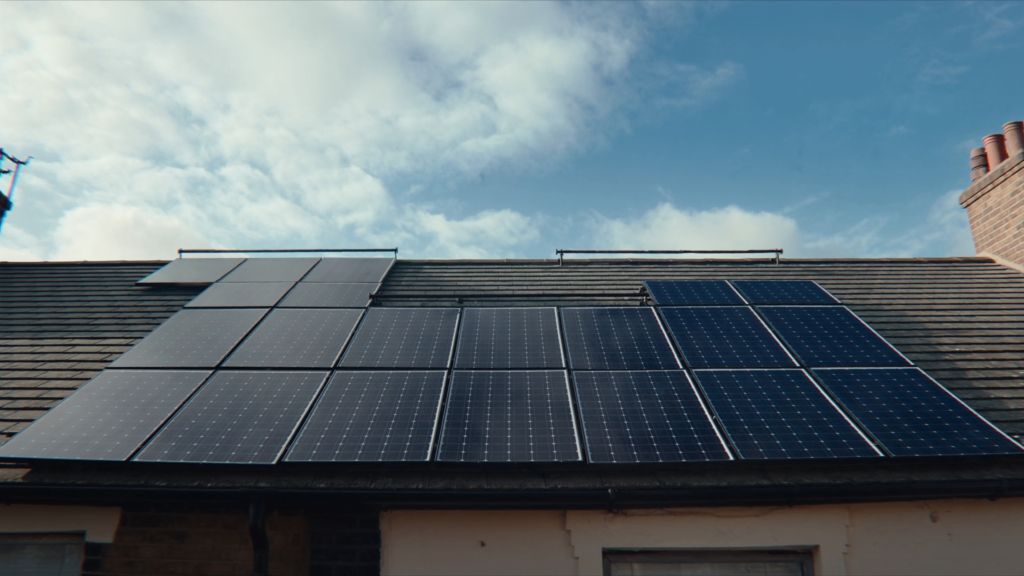
Solar panels stop generating once the sun sets. Without photons hitting the silicon cells, no electrical current flows. This is a fundamental physics fact — panels convert light particles (photons) into DC electricity, and when there is no light, there is no generation (Energy Saving Trust, 2026). The common belief that panels “store power” is incorrect; they only generate while light is present. DESNZ data confirms that solar PV output falls to near zero between sunset and sunrise (DESNZ Solar PV Statistics, 2026).
Net metering lets you use daytime surplus after dark
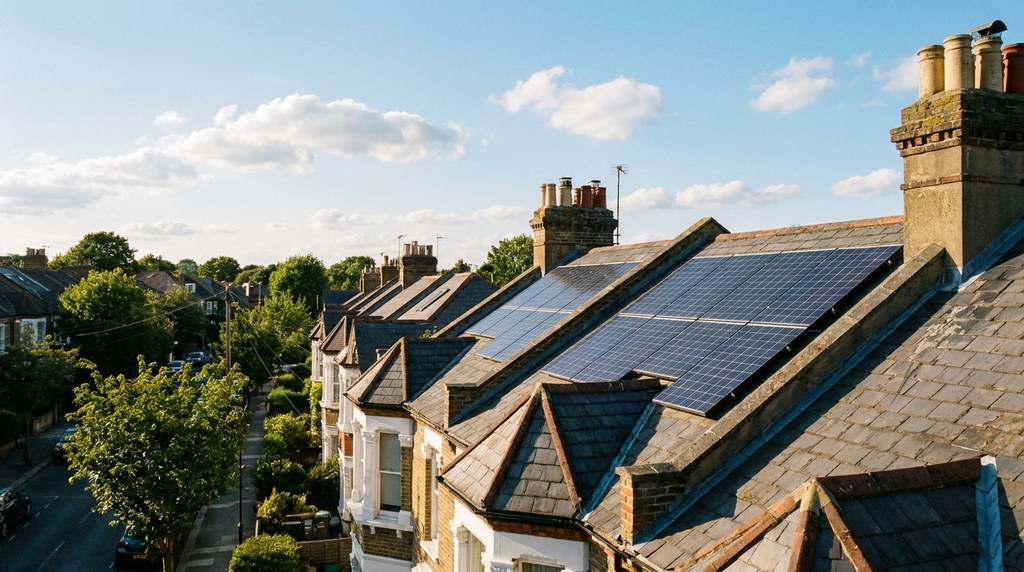
If your solar panels generate more electricity than you use during the day, the surplus is exported to the grid. Under the Smart Export Guarantee (SEG), your energy supplier pays you for every kilowatt-hour (kWh) exported. You do not use solar power at night, but you do use the value of your daytime generation to offset night-time grid imports.
The typical UK household exports 50–60% of its solar generation during daylight hours (Energy Saving Trust, 2026). At night, you draw electricity from the grid at standard rates. Your daytime export credits reduce the net cost, meaning your night-time electricity is effectively subsidised by your daytime solar production. The SEG average rate in 2026 is around 6.5p per kWh (Ofgem SEG Guidance, 2026).
Solar batteries store daytime energy for night-time use
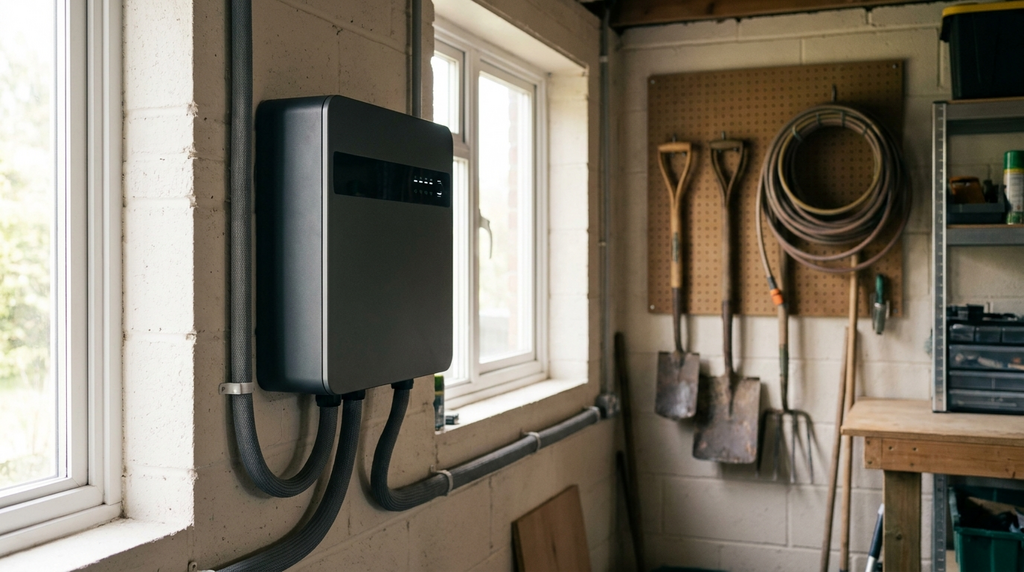
A home battery is the only way to physically use your own solar electricity after dark. The battery captures surplus solar during the day and discharges it when the sun goes down. Typical lithium-ion systems range from 5 kWh to 13.5 kWh of usable capacity.
Installed cost for a battery system in 2026 is between £4,500 and £8,000, including VAT at 0% for battery-only installations (Energy Saving Trust Battery Costs, 2026). A 5 kWh battery can power lights, a fridge, and a TV for 6–8 hours after sunset. A 13.5 kWh Tesla Powerwall can run most of a household until morning. All battery installs must comply with electrical safety standards, though MCS certification is not mandatory for battery-only work (MCS Installer Register, 2026).
Quick numbers — solar at night costs and savings table
| Measure | Typical value | Low estimate | High estimate | Source |
|---|---|---|---|---|
| Grid import without solar (p/kWh) | 27.0 | 24.5 | 29.5 | Ofgem Price Cap, 2026 |
| Daytime export rate (p/kWh) | 6.5 | 4.0 | 15.0 | Ofgem SEG Rates, 2026 |
| Battery storage usable capacity (kWh) | 10.0 | 5.0 | 13.5 | EST Battery Survey, 2026 |
| Battery payback period (years) | 15 | 12 | 18 | EST Payback Report, 2026 |
| Night-time bill reduction with battery (%) | 50 | 40 | 60 | EST Battery Study, 2026 |
All figures are for 2026. Your actual savings depend on house size, daytime usage, battery capacity, and your SEG tariff rate.
The real answer to “how solar panels work at night” — they don’t, but your home can
Solar panels generate zero electricity at night because they need daylight photons to produce DC power. The homeowner solution is straightforward: either use grid import (paid for by daytime export credits) or install a battery to store daytime surplus. Without a battery, you are back on full grid rates after sunset. With a battery, you can consume your own solar energy 24/7.
The Energy Saving Trust FAQ confirms that solar panels do not work at night, but that battery storage allows self-consumption of daytime generation around the clock (EST Solar Panels FAQ, 2026). Ofgem’s factsheet on solar and storage explains that net metering and batteries are the two practical routes to night-time solar benefits (Ofgem Solar and Storage Factsheet, 2026).
MCS and battery installer certification — what you need to verify
For solar PV installations, the installer must be MCS-certified (Microgeneration Certification Scheme) to qualify for SEG payments and 0% VAT on energy-saving materials. You can check the MCS register online for accredited companies in your area (MCS Find an Installer, 2026).
For battery storage alone, MCS certification is not mandatory, but the installer should be registered with NICEIC or NAPIT for electrical safety. TrustMark registration provides additional consumer protection for both solar and battery work (TrustMark Solar and Battery Scheme, 2026). GOV.UK confirms that 0% VAT applies to battery-only installations when the installer is registered with a competent person scheme (GOV.UK VAT on Energy-Saving Materials, 2026).
What MCS certification means for your solar installation
How a solar-plus-battery system changes your night-time electricity cost
Without a battery, night-time electricity costs the standard grid rate — an average of 27p per kWh in 2026 under the Ofgem price cap (Ofgem Price Cap Data, 2026). Your SEG export income offsets some of this cost, but you are still paying for night-time power at full retail rates.
With a battery, night-time consumption comes from stored solar at zero marginal cost. The battery’s cost is amortised over its 10–15 year lifespan. The typical payback period for a solar-plus-battery system is 12–18 years (EST Solar Plus Battery Payback, 2026). This means your night-time electricity becomes effectively free after the system pays for itself, though you still pay for grid standing charges.
Future developments — time-of-use tariffs and virtual power plants
Time-of-use tariffs, such as Octopus Flux, offer higher night-time export rates for battery owners who discharge during peak evening hours. These tariffs can significantly improve the economics of solar-plus-battery systems. Ofgem’s 2026 consultation on retail tariff innovation explores how these products could become more widely available (Ofgem Retail Tariff Innovation, 2026).
Virtual power plants (VPPs) aggregate thousands of home batteries to sell stored power to the grid at night. Homeowners typically earn 10–20p per kWh for participating. DESNZ’s Smart Systems and Flexibility Plan 2026 outlines how VPPs could play a larger role in balancing the grid (DESNZ Smart Systems Plan, 2026). These options are not yet available from all suppliers, so check your energy provider’s tariff offerings before signing up.
Comparing time-of-use tariffs for solar battery owners
Frequently Asked Questions
No, solar panels do not generate electricity at night. They rely on daylight photons to produce DC electricity, so output falls to near zero after sunset, according to DESNZ Solar PV Statistics 2026.
Yes, you can use grid electricity at night, offset by daytime solar exports under the Smart Export Guarantee. Without a battery, you cannot physically use your own solar power after dark.
Net metering via SEG pays you for daytime surplus exported to the grid. At night, you draw from the grid, and the export credits reduce your overall electricity costs.
A home battery, typically lithium-ion, is the most effective way to store solar energy for night use. It captures daytime surplus and discharges when the sun sets.
Savings depend on battery size and usage, but a typical 5kWh battery can cover evening baseload, reducing grid imports by 30-50% annually, per Energy Saving Trust estimates.