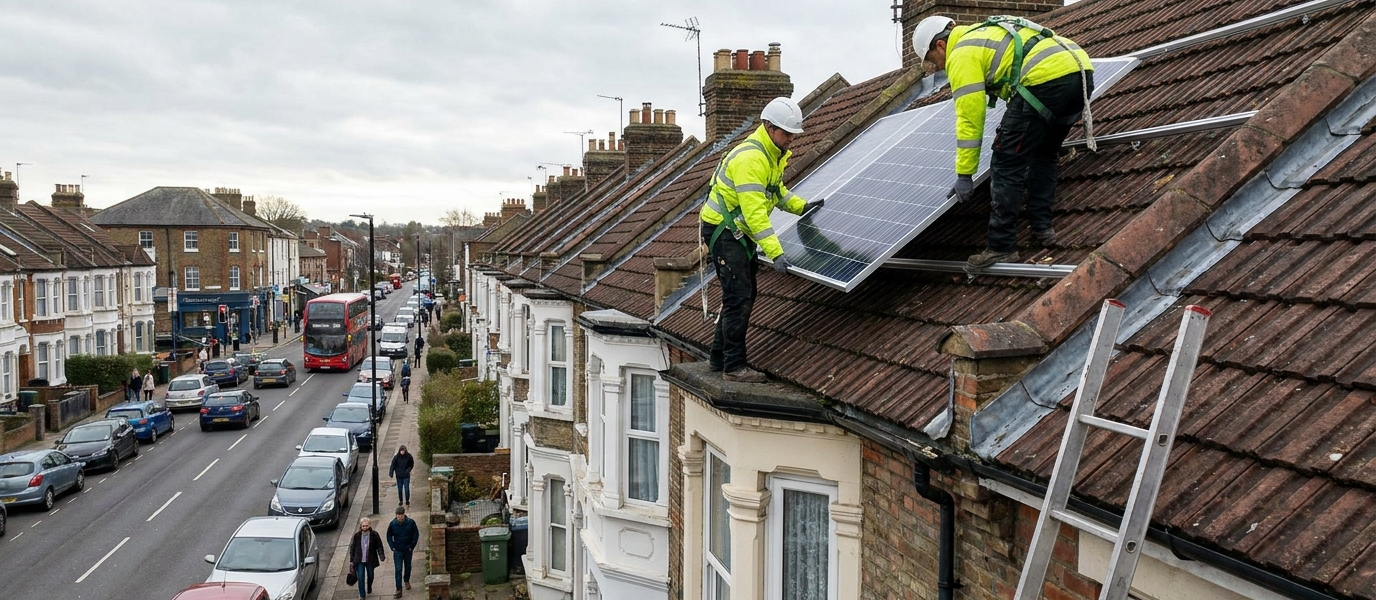
The Iran war has pushed solar panel sales up 50% at Octopus Energy, one of Britain’s largest energy suppliers. Greg Jackson, Octopus’s chief executive, told the BBC that the surge began within days of the conflict’s start, as households rushed to insulate themselves from volatile energy markets.
The news, as reported by the BBC, comes just weeks after Ofgem confirmed the price cap would rise to £1,928 in October, up from £1,568 last winter. The connection is direct: war in the Middle East threatens global oil and gas supplies, and British households remember the £3,549 peak of early 2023. Solar panels, once a slow-burn investment, now look like an insurance policy.
What a 50% surge tells us about UK energy anxiety
Octopus’s sales figures are not a fluke. The MCS (Microgeneration Certification Scheme) recorded over 200,000 solar installations in 2023, double the 2022 total. The war has accelerated that trend. Jackson’s interview suggests the trigger is not environmental, it is fear. Households see rising bills and geopolitical instability and decide to take control.
The catch is that solar alone cannot cut the cord. A typical 4kW system generates around 3,500 kWh a year, enough to cover a third to half of a 3-bed semi’s electricity use, according to the Energy Saving Trust. The rest still comes from the grid, which remains tied to gas prices. But that partial independence matters when prices jump.
Who qualifies, and who doesn’t
Any UK homeowner with a south-facing roof that is not heavily shaded can install solar panels. Flat roofs need angled frames. Listed buildings and conservation areas require planning permission, a hurdle that tripped up 12% of applicants last year, per government data. Renters and leaseholders face bigger barriers: landlords control the roof.
Costs typically range from £5,000 to £8,000 for a 4kW system, including installation and VAT at 0% until March 2027 (the government cut it from 20% in 2022). The Smart Export Guarantee pays 5–15p per kWh for surplus power, adding £100–£200 a year. Payback periods sit at 10–15 years, but rising bills shorten that window.
What this costs a typical 3-bed semi
Take a semi-detached house in Manchester using 3,800 kWh annually. A 4kW system costing £6,500 would save about £600 a year on bills at current prices (assuming 50% self-consumption). Add export payments of £150, and the total saving hits £750. That is a 9-year payback, faster if electricity prices rise further.
But the figures assume optimal conditions. Shaded roofs, north-facing panels, or high usage in winter (when generation drops to 20% of summer levels) can stretch payback to 15 years. The Energy Saving Trust’s online calculator lets homeowners input their postcode for a bespoke estimate.
What to do and by when
Households considering solar should act before the VAT cut ends in March 2027. Installers are booked months ahead, the surge Octopus reports will only tighten supply. Check MCS-certified installers on the MCS website. Apply for a Smart Export Guarantee tariff with your supplier. If you rent, ask your landlord about shared savings schemes, though few exist.
Frequently Asked Questions
In the UK, a typical 4kW solar panel system costs between £5,000 and £8,000, including installation and 0% VAT (until March 2027). The Smart Export Guarantee pays 5–15p per kWh for surplus power, adding £100–£200 annually, with payback periods of 10–15 years.
Yes, but you need planning permission for listed buildings and conservation areas, which tripped up 12% of applicants last year. Check with your local council before proceeding, as flat roofs may require angled frames and shading can reduce efficiency.
A typical 4kW system on a 3-bed semi in Manchester using 3,800 kWh annually saves about £600 on bills with 50% self-consumption, plus £150 in export payments, totalling £750 a year. This offers a 9-year payback, though shaded or north-facing roofs can stretch it to 15 years.
The VAT on solar panels was cut from 20% to 0% until March 2027, effectively acting as a grant. The Smart Export Guarantee pays 5–15p per kWh for surplus power, but specific grants like the Green Homes Grant have ended. Check the Energy Saving Trust's online calculator for bespoke savings.
Installation typically takes 1–3 days for a 4kW system, but with a 50% surge in sales, MCS-certified installers are booked months ahead. Act before the VAT cut ends in March 2027 to avoid delays and secure the 0% rate.





