What solar panels actually cost in the UK in 2026
A typical 4kWp solar panel system for a UK home costs between £5,000 and £8,000 fully installed in 2026. That is a wide range for what is, on most roofs, near-identical equipment, and the spread is the part worth understanding before you sign anything. The panels and inverter rarely differ much between quotes. What you are really paying for is scaffolding, the installer’s order book, roof complexity and how much margin they build in. Get three quotes and you will often see a £2,000-£3,000 gap on the same roof.
Prices have fallen roughly 30% since the 2022 peak, helped by cheaper panels and more competition. The Microgeneration Certification Scheme (MCS) now lists over 4,000 certified installers, and MCS certification matters for one practical reason: without it you cannot claim Smart Export Guarantee payments from your energy supplier.
Solar panel cost by system size
| System Size | Number of Panels | Installed Cost | Annual Generation | Annual Saving |
|---|---|---|---|---|
| 3kWp | 8-10 | £4,000-£6,000 | 2,600 kWh | £600-£800 |
| 4kWp | 10-13 | £5,000-£8,000 | 3,400 kWh | £800-£1,100 |
| 5kWp | 13-16 | £6,000-£9,500 | 4,200 kWh | £950-£1,300 |
| 6kWp | 16-19 | £7,000-£11,000 | 5,100 kWh | £1,100-£1,500 |
The cost per kWp drops as systems get bigger, because scaffolding and the day’s labour are largely fixed whether you fit 10 panels or 16. If your roof and budget allow it, a slightly larger system usually gives better value per pound than a small one. The limit for most homes is roof space and the 3.68kW grid-connection threshold above which your installer has to seek permission from the network operator.
What actually drives the price
When a quote looks high or suspiciously low, it is almost always one of these:
- Scaffolding (£500-£1,000): a fixed cost that hits small systems hardest. A three-storey townhouse or a complex roof costs more to access safely.
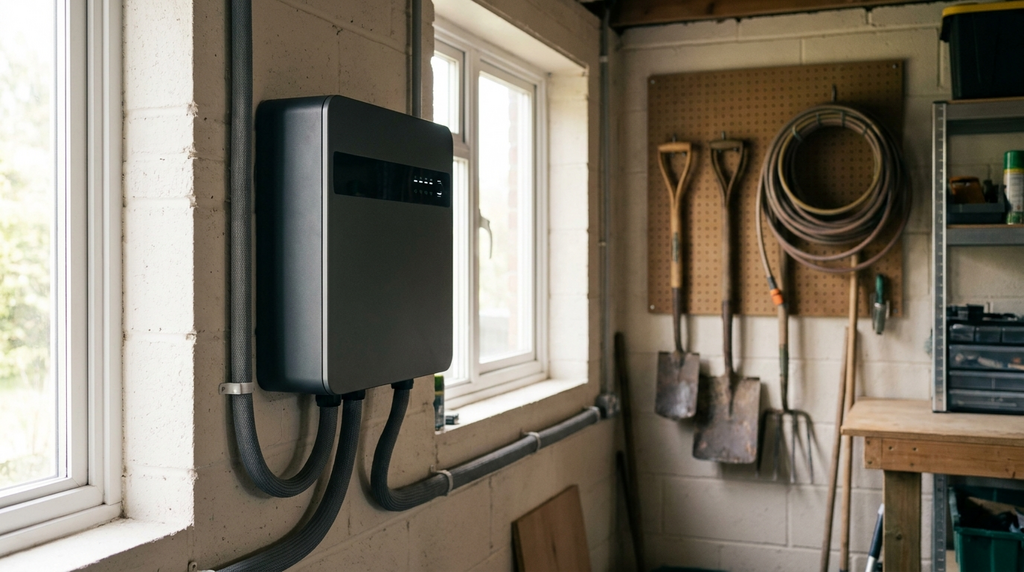
- The inverter: a budget string inverter is cheaper upfront; microinverters or optimisers (SolarEdge, Enphase) add £500-£1,500 but help if your roof is shaded or faces more than one direction.
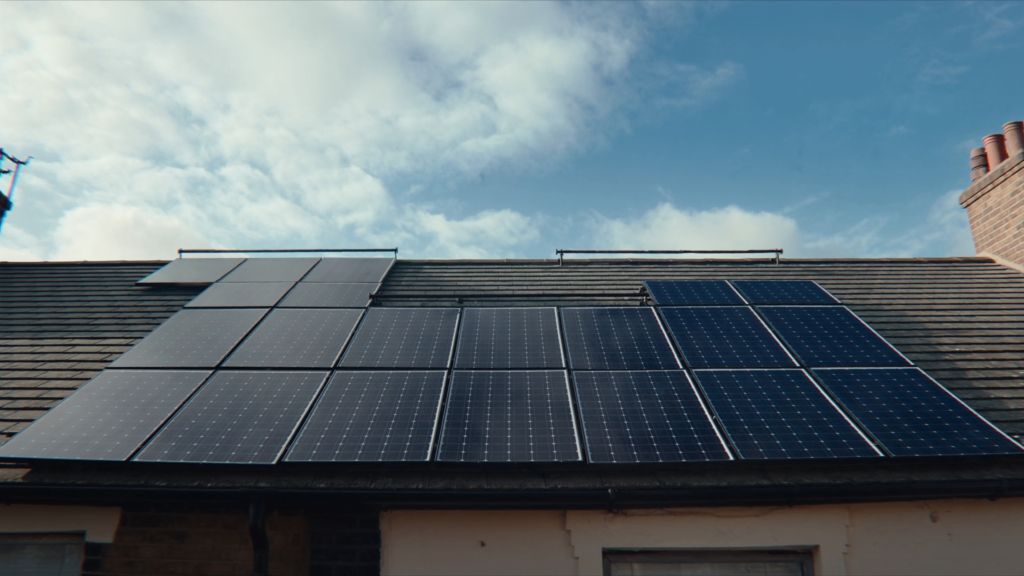
- Roof type: slate and clay tiles take longer to work with than concrete tiles. Flat roofs need ballasted mounting frames, which add cost.
- Panel tier: premium panels (REC, SunPower) cost more than mid-range (JA Solar, Trina) for a few extra percent of efficiency. On a space-limited roof that can be worth it; on a large roof it rarely is.
A rule of thumb after pricing dozens of these: if a 4kWp quote comes in under about £4,500, ask what has been left out (usually scaffolding or a cheap inverter). If it is over £9,000 for a standard install, you are paying a brand premium, not a quality one.
A worked example: a 3-bed semi in the Midlands
Take a south-east-facing roof, a 4kWp system at £6,500 installed, and a household that is home during parts of the day:
- Generation: about 3,400 kWh a year.
- Self-consumption without a battery: roughly 45%, so 1,530 kWh used directly. At the current price-cap rate of about 24.5p, that is around £375 saved on bills.
- Export: the remaining 1,870 kWh sold back. On a 15p Smart Export Guarantee tariff that is about £280.
- Total first-year benefit: roughly £655, giving a payback of just under 10 years on a £6,500 system, then 15+ years of near-free generation.
Change one variable and the maths moves a lot. Put that household on a smart tariff that pays more for export, or add a battery so they self-consume 75% instead of 45%, and payback shortens to 7-8 years.
Smart Export Guarantee: getting paid for what you export
The Smart Export Guarantee (SEG) requires licensed suppliers to pay you for electricity you send to the grid. Rates vary enormously, from around 3p to 15p per kWh, and they are not tied to who supplies your electricity, so you can shop around. Octopus and a handful of others sit at the top of the table; some legacy tariffs pay a token 1-3p. You will need an MCS certificate and a smart meter that records half-hourly export. For a 4kWp system exporting half its output, the difference between a 3p and a 15p tariff is roughly £55 versus £280 a year, so the tariff you choose matters as much as the panels.
Does adding a battery pay for itself?
A 5kWh home battery adds £2,500-£5,000 to the bill. Its job is to store your daytime surplus (or cheap overnight off-peak electricity) so you use it at peak times instead of exporting it cheaply or buying at 24.5p. That lifts self-consumption from 40-50% up to 70-80%.
On the numbers, a battery on its own usually pays back over 8-12 years, which is close to its warranty life, so it rarely transforms the economics through bill savings alone. Where it earns its place is when you pair it with a time-of-use tariff and charge it overnight at 7p, or if you value backup and using more of your own power. Treat it as an upgrade you add once the panels are working, not a day-one essential.
What makes payback faster or slower
- When you use power: a household home during the day captures far more value than one that is empty 9-5 and exporting everything cheaply.
- Roof direction and pitch: due south at about 35 degrees is ideal; east-west split roofs generate a bit less overall but spread output across the day, which can suit your usage better.
- Shading: even one chimney or tree shadow can knock out a string of panels unless you have optimisers or microinverters.
- Your tariff: the gap between a poor and a good export rate is hundreds of pounds a year.
When solar is not worth it
It is worth being honest about this. Solar makes less sense if your roof faces mostly north, is heavily shaded for much of the day, or is due for replacement within a few years (you do not want to pay to remove and refit panels). It also stacks up less well for a household that is out all day, exports nearly everything, and is on a low SEG rate. If you are planning to move within five years, you are unlikely to recoup the cost, though panels can modestly help a sale and the EPC.
The 2026 cost extras worth knowing
- 0% VAT: residential solar and battery installations carry zero VAT until 31 March 2027, which already shaves a chunk off the quotes above.
- Planning: most domestic roof-mounted solar is permitted development, so no planning application is needed unless you are in a conservation area or listed building.
- Warranties: panels typically carry 25-year performance warranties and degrade about 0.5% a year, so a system fitted now should still produce around 88% of its original output in year 25.
How to avoid overpaying
Get at least three MCS-certified quotes for the same system size and ask each to itemise scaffolding, the inverter make and model, and the panel make and model. Be wary of high-pressure “today only” discounts and of finance deals where the headline price hides a large interest cost. The cheapest quote is not automatically the best, but a quote that will not break down its costs is a reason to walk away.