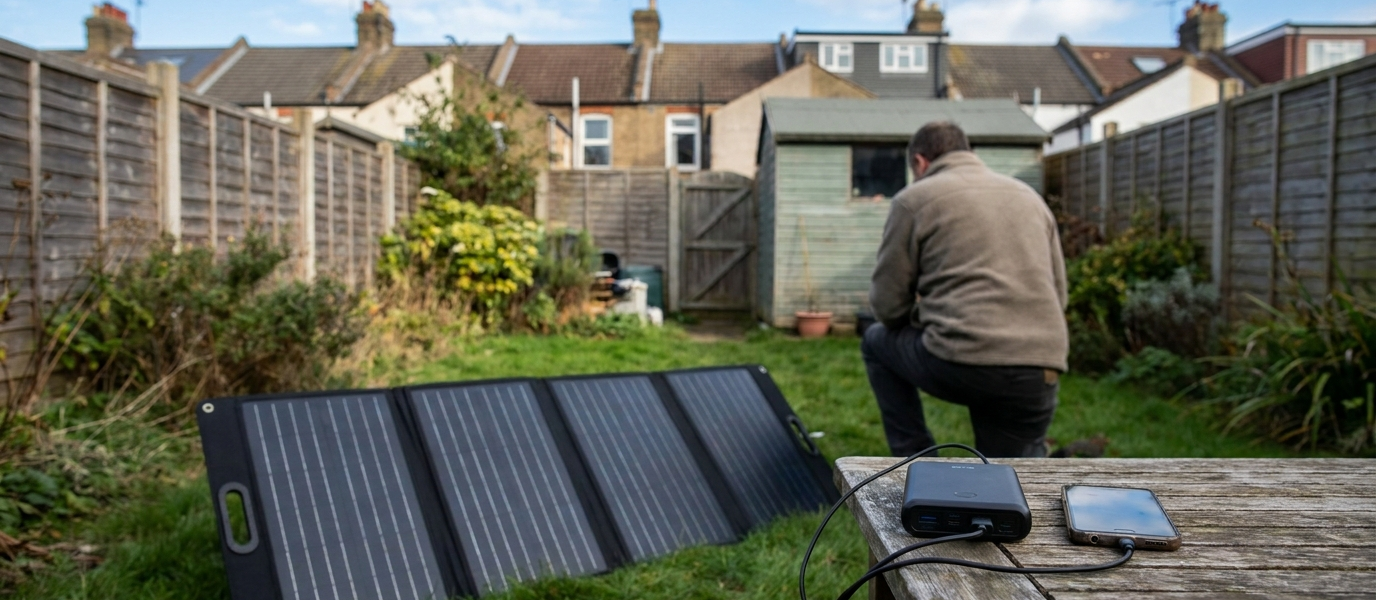
The government will legalise plug-in solar panels within months, a move that could open up solar generation to millions of UK households who cannot afford or fit a full rooftop array. The announcement, made by the Department for Energy Security and Net Zero, targets the estimated 60% of homes that currently lack solar panels, including renters, flat owners, and those with north-facing or shaded roofs.
As reported by GOV.UK, the change will allow households to plug a solar panel into a standard three-pin socket, bypassing the need for a qualified electrician, scaffolding, or planning permission. The panels, essentially scaled-down versions of rooftop systems, connect directly to the home’s ring main and feed power into the grid via a micro-inverter.
Who qualifies, and who doesn’t
The scheme is not for everyone. Plug-in solar panels typically generate between 200 and 400 watts per panel, enough to power a fridge, a laptop, or a few LED lights, but nowhere near the 3.5 kilowatts a typical 3-bed semi needs for its full daily load. The government estimates a single panel will save the average household about £100 a year on electricity, assuming the current price cap of 24.5p per kilowatt-hour.
Yet the real prize is accessibility. Renters, who cannot modify a landlord’s roof, and flat owners, who lack roof space, have been locked out of solar savings for years. The plug-in model removes both barriers. It also sidesteps the £5,000–£8,000 upfront cost of a full rooftop system, with individual plug-in panels costing between £500 and £1,000 each. A two-panel setup, for example, could cost £1,200 and save £200 a year, a payback period of six years, comparable to many rooftop installations.
What it costs a typical 3-bed semi
But the savings depend heavily on usage patterns. A household that runs appliances during daylight hours will benefit most, because plug-in panels store no electricity. Without a battery, any surplus generation is exported to the grid at a rate set by the supplier, typically 5–8p per kWh under the Smart Export Guarantee, far less than the 24.5p you pay to import power.
The EPC impact is also limited. Plug-in solar panels are not considered ‘fixed’ installations, so they do not automatically improve a property’s Energy Performance Certificate rating. The EPC calculation assumes a full, professionally installed system. That matters if you plan to sell or rent the property, because a higher EPC rating, C or above, is required for new tenancies from 2028.
The catch: safety and regulation
The government is still finalising safety standards. Plug-in panels must include a micro-inverter that isolates the panel from the grid during a power cut, preventing electrocution of line workers. The current ban was partly motivated by fire risk from cheap, uncertified imports. The new regulations will require all plug-in panels sold in the UK to carry a CE or UKCA mark and meet the IET Wiring Regulations (BS 7671).
Energy Saving Trust has warned that households should check their home insurance policy before installing. Some insurers exclude damage from unapproved electrical equipment, though the new legal framework should resolve that. Ofgem has not yet confirmed whether plug-in panels will be eligible for the Smart Export Guarantee, but officials expect to clarify this by autumn.
For now, the message is clear: plug-in solar is arriving, but it is a supplement, not a substitute, for a proper rooftop system. Households on standard variable tariffs can register their interest through gov.uk from this summer. The scheme is expected to launch in full by early 2026.
Frequently Asked Questions
Individual plug-in solar panels cost between £500 and £1,000 each in the UK. A two-panel setup, for example, would cost around £1,200, which is significantly less than the £5,000–£8,000 upfront cost of a full rooftop system.
Yes, when the new regulations take effect, you will be able to plug a solar panel into a standard three-pin socket yourself, bypassing the need for a qualified electrician, scaffolding, or planning permission. However, all panels must carry a CE or UKCA mark and meet IET Wiring Regulations (BS 7671) to ensure safety.
No, plug-in solar panels are not considered 'fixed' installations, so they do not automatically improve your Energy Performance Certificate (EPC) rating. The EPC calculation assumes a full, professionally installed system, which matters if you plan to sell or rent your property, as a C rating or above is required for new tenancies from 2028.
A single plug-in panel can save the average UK household about £100 a year on electricity, based on the current price cap of 24.5p per kilowatt-hour. A two-panel setup could save around £200 a year, giving a payback period of roughly six years.
Yes, plug-in solar panels are ideal for renters and flat owners who have been locked out of solar savings because they cannot modify a landlord's roof or lack roof space. The plug-in model removes both barriers. This allows these households to generate solar power without permanent installation.



