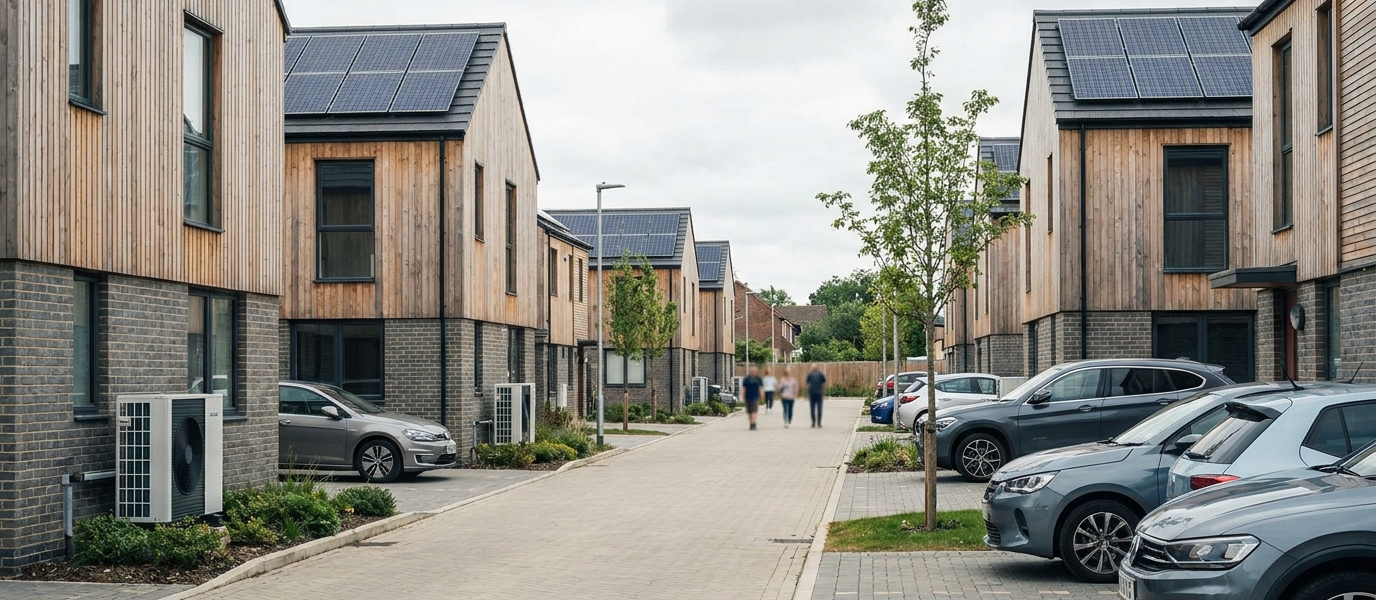
The UK government will mandate heat pumps in all new homes from 2025 and fast-track plug-in solar panel installations, a move that could reshape household energy costs for decades. The announcement, made by the Department for Energy Security and Net Zero on Tuesday, targets 600,000 heat pump installations per year by 2028, up from just 55,000 in 2023. As reported by BBC News, the plans also include plug-in solar panels that can be installed in under an hour, bypassing the need for scaffolding or roof alterations.
Who qualifies, and who doesn’t
The heat pump mandate applies only to new homes built after 2025. Existing homeowners are not required to swap their gas boilers, but the policy creates a clear signal: the gas network’s days are numbered. Ofgem’s latest data shows 23 million homes still use gas boilers, and the average replacement cost for a heat pump is £12,000 before grants. The Boiler Upgrade Scheme offers £7,500 off that cost, but only 50,000 installations are funded annually, a fraction of the 1.7 million gas boilers sold each year in the UK.
What it costs a typical 3-bed semi
Plug-in solar kits, which include panels and a microinverter that plugs into a standard socket, are expected to cost £2,000–£3,000 installed. That compares with £5,000–£8,000 for a traditional rooftop array. The Energy Saving Trust estimates a 3.5 kW plug-in system could save a typical semi-detached household £200–£300 per year on electricity bills, rising to £400 with battery storage. The catch is that plug-in panels generate less power than roof-integrated systems, about 2,500 kWh per year versus 3,500 kWh, and may not meet the full needs of a heat pump.
The ‘but’ pivot: what this misses
But the government’s plan overlooks a critical detail: grid capacity. National Grid’s own projections show that widespread heat pump adoption could increase peak electricity demand by 30% by 2035, requiring £40 billion in grid upgrades. Installing heat pumps without upgrading local substations risks blackouts in some areas, as seen in the 2022 winter when National Grid asked households to reduce usage. The government has not yet confirmed funding for these upgrades, and the Treasury has signalled it expects private investment.
EPC impact and real-world action
For existing homeowners, the policy accelerates the timeline for improving EPC ratings. A heat pump typically lifts an EPC from band D to C, while adding solar panels can push it to B. Homes rated below C will face higher mortgage costs under new lending rules from 2025, as banks adjust risk models for energy-inefficient properties. Households on standard variable tariffs can apply through gov.uk for the Boiler Upgrade Scheme from 4 November. Eligibility closes on 31 March 2027, and the grant is first-come, first-served.
Frequently Asked Questions
No. The 2025 mandate applies only to new homes. Existing homeowners can keep their gas boilers, but future boiler replacements may become more expensive as the market shifts. The Boiler Upgrade Scheme offers £7,500 off heat pump installations for existing homes until 2027.
A typical 3.5 kW plug-in system could save £200–£300 per year on electricity bills, depending on your usage and location. The system plugs into a standard socket and can be installed in under an hour, but generates about 30% less power than a traditional roof-mounted array.



