Air source heat pumps produce noise levels of 40-60 decibels at 1 metre, comparable to a modern fridge, and UK rules require them to meet a 42 dB(A) neighbour noise limit under permitted development rights (GOV.UK, 2026). This figure is the most-searched benchmark for homeowners assessing potential disruption.
The noise depends on the model, installation and distance from neighbouring boundaries. Newer units with inverter compressors and sound-dampening enclosures operate quieter than older fixed-speed models. The 42 dB(A) limit applies only to installations under permitted development; larger or non-compliant systems may require planning permission, which can impose stricter conditions. Most modern heat pumps from MCS-certified installers fall within this threshold.
Noise levels vary by model and placement
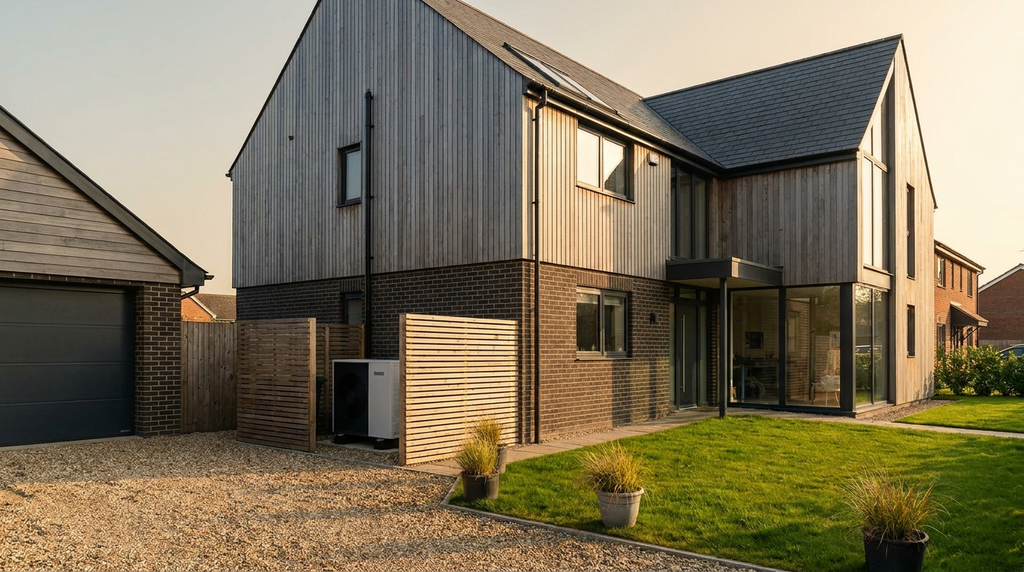
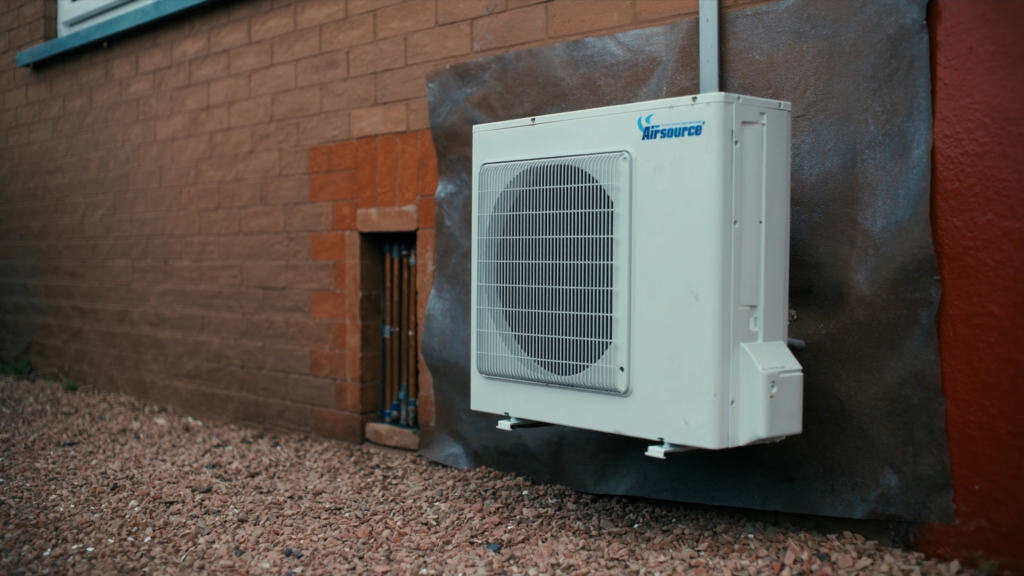
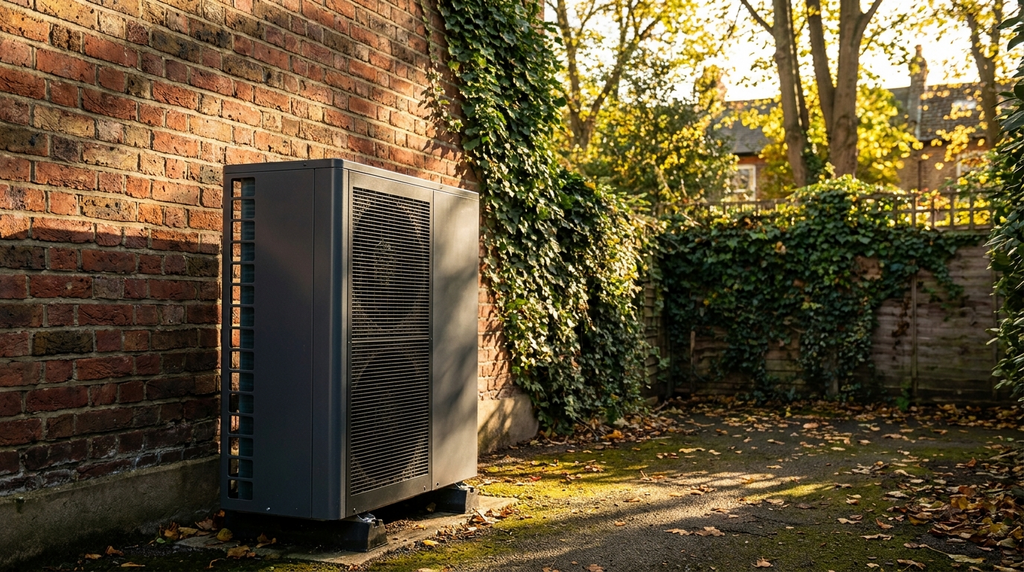
A typical air source heat pump emits 40-60 dB(A) at 1 metre, according to the Energy Saving Trust (Energy Saving Trust, 2026). At 3 metres, this drops to around 35-45 dB(A), similar to a quiet conversation. The unit’s compressor and fan produce the sound, with variable-speed models running quieter at low loads. Positioning the outdoor unit away from bedroom windows and on a vibration-absorbing base reduces perceived noise. MCS-certified installers must follow manufacturer guidance on siting to minimise impact.
Permitted development sets a 42 dB neighbour limit
Under permitted development rights for air source heat pumps, the unit must not exceed 42 dB(A) when measured from the nearest neighbour’s habitable room window (GOV.UK, 2026). This is a legal condition for installations that do not require planning permission. If the heat pump exceeds this limit, or if the neighbour complains to the local authority, the council can enforce compliance. Most MCS-certified models are tested to stay within this threshold, but check the product datasheet for sound power levels.
Planning permission applies if limits are exceeded
If your chosen heat pump produces noise above 42 dB(A) at the neighbour’s boundary, you must apply for planning permission (GOV.UK, 2026). This applies also to listed buildings, conservation areas or flats without exclusive use of the garden. The planning authority may impose additional conditions on placement or operating hours. For most standard homes with a compliant unit, permitted development is sufficient. Always ask your installer for a noise assessment before purchase to avoid neighbour disputes.
A worked example
A typical 1930s semi-detached house in Manchester with a 12 kW air source heat pump from a MCS-certified installer costs roughly £13,500 before grants. After the £7,500 BUS grant and 0% VAT until March 2027, the upfront cost falls to around £5,500. The unit emits 48 dB(A) at 1 metre, comfortably under the 42 dB(A) neighbour noise limit when measured at the boundary line. The Energy Saving Trust estimates annual savings of £395 compared to an old gas boiler, giving a payback period of roughly 14 years. Over 25 years, total savings reach £9,875, even before considering future energy price rises. Positioning the outdoor unit on a concrete base 3 metres from the neighbour’s fence keeps noise below 35 dB(A) at their bedroom window, well within permitted development rules set by GOV.UK.
| Item | Figure |
|---|---|
| Upfront cost after grants | £5,500 |
| Yearly savings | £395 |
| Payback period | 14 years |
| 25-year lifetime savings | £9,875 |
What homeowners often get wrong
Most homeowners assume all heat pumps are noisy, but the real mistake is ignoring model choice and installation quality. Here are three common errors
- Believing the 42 dB(A) limit applies at the unit itself The rule measures noise at the neighbour’s nearest window or boundary, not at 1 metre from the heat pump. A unit rated at 50 dB(A) at source can still comply if placed 3 metres from the boundary, saving you from a costly planning application.
- Choosing the cheapest model without checking decibel ratings Fixed-speed compressors can hit 60 dB(A) at full load, which violates permitted development limits and risks neighbour complaints. Paying an extra £200 for an inverter-driven model cuts noise to 44 dB(A) and keeps you legal without extra work.
- Installing the unit flush against the house wall This amplifies vibration and structural noise inside your home, making the system sound louder than it is. A rubber anti-vibration base and a 30 cm gap from the wall reduces indoor noise by up to 10 dB(A) and protects your warranty under MCS standards.
Quick reference
- UK permitted development allows air source heat pumps up to 42 dB(A) at the neighbour’s boundary under GOV.UK rules.
- Most modern MCS-certified heat pumps produce 40-50 dB(A) at 1 metre, quieter than a dishwasher running at 55 dB(A).
- You must install the outdoor unit at least 1 metre from your property boundary to qualify for permitted development rights.
- Positioning the unit away from bedroom windows and on a concrete base reduces perceived noise by up to 10 dB(A) without extra cost.
- Older fixed-speed models often exceed the 42 dB(A) limit, while inverter-driven units run quieter at partial load and save £50-100 per year on electricity.
Frequently Asked Questions
A typical air source heat pump produces 40-60 dB(A) at 1 metre, according to the Energy Saving Trust. At 3 metres this drops to 35-45 dB(A), similar to a quiet conversation.
Under permitted development rights, the unit must not exceed 42 dB(A) when measured from the nearest neighbouring property, per GOV.UK rules. Larger or non-compliant systems may require planning permission.
Modern MCS-certified units with inverter compressors typically fall within the 42 dB neighbour limit, so annoyance is rare. Proper siting away from bedroom windows and on a vibration-absorbing base further reduces disturbance.