How much space an outdoor heat pump unit needs in a garden
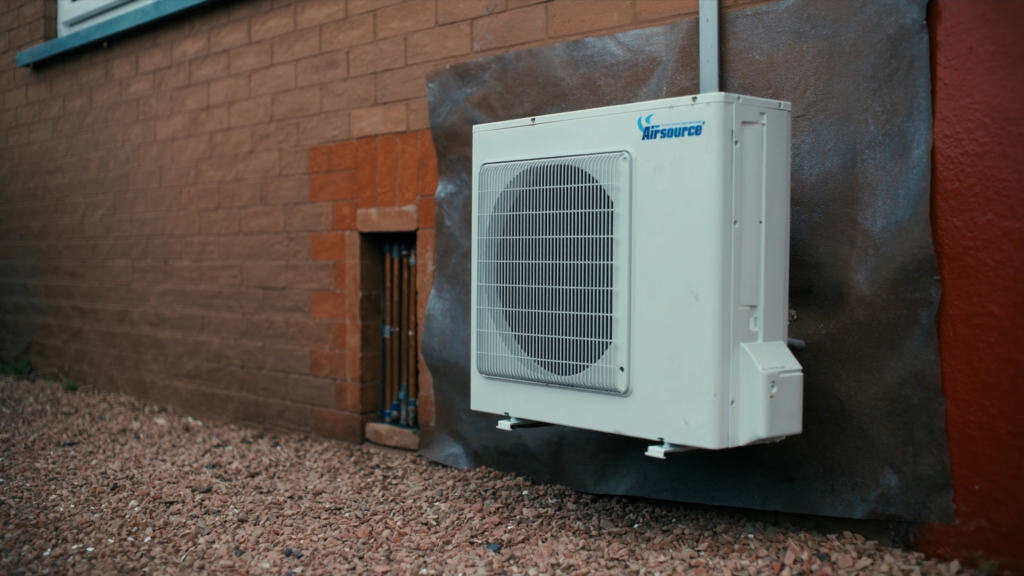
An air-source heat pump’s outdoor unit needs specific clearance distances to draw in enough air and run efficiently. The MCS installation standard 020 sets the minimums at 300 mm from walls, 1 metre in front of the fan, and 1.5 metres from neighbouring boundaries (MCS 020, 2026). A typical unit occupies roughly 1 m × 1 m up to 1.2 m × 1.5 m of ground, plus at least 1 m of accessible service space on one side.
An air-source heat pump needs about 1m x 1m of garden footprint plus 1m clearance in front. Place it on a stable base 100mm above ground and screen with a hedge or trellis at least 1m from the fan intake.
- Allow 1m x 1m minimum footprint for an air-source unit.
- Keep 1m clearance in front of the fan for airflow.
- Screen with boxwood or yew planted at least 1m from intake.
- Use a trellis with 50mm slat gaps, positioned no closer than 1m.
- Budget £200–£600 for DIY planting or £800–£1,500 for bespoke screening.
- How much space an outdoor heat pump unit needs in a garden
- Quick numbers, garden space, noise, and cost for heat pump placement
- The direct answer to “heat pump garden ideas”
- How to screen a heat pump without blocking airflow
- How to verify an installer for garden heat pump placement
- How landscaping choices affect heat pump efficiency
- What the Boiler Upgrade Scheme covers for garden integration
Ground-source heat pumps with outdoor split units need similar clearances. The ground loop trenches or boreholes require separate garden space, typically 50–100 m of trench for a horizontal loop or a 100–150 m borehole for a vertical loop (Ground Source Heat Pump Association, 2026). Planning your garden layout around these dimensions prevents costly retrofits later.
Quick numbers, garden space, noise, and cost for heat pump placement
| Item | Minimum or typical value | Larger or older variant |
|---|---|---|
| Minimum unit footprint (air-source) | 1 m × 1 m | 1.2 m × 1.5 m for larger models |
| Minimum clearance in front of fan | 1 m | 1.5 m for units >12 kW |
| Maximum noise at 1 m from unit | 40–45 dB(A) (newer models) | Up to 60 dB(A) for older units |
| Typical landscaping cost (screening/planting) | £200–£600 (DIY planting) | £800–£1,500 (bespoke trellis or wall) |
| Minimum distance from bedroom window | 2 m (MCS 020) | 3 m recommended for quieter operation |
Sources: MCS 020, 2026; Energy Saving Trust, 2026; DESNZ, “Heat pump installation cost survey,” 2026.
The direct answer to “heat pump garden ideas”
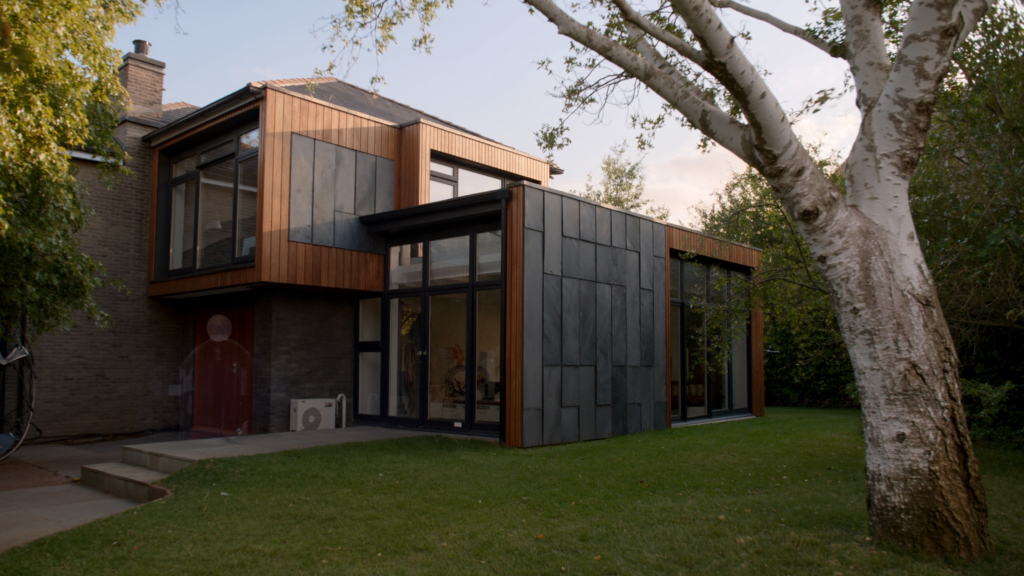
Place the unit on a stable, level base, concrete slab or paving stones, at least 100 mm above ground level to avoid frost, debris, and flooding (MCS 020, 2026). Screen it with a low-maintenance hedge such as boxwood, yew, or lavender, planted at least 1 m from the fan intake to avoid airflow obstruction (Energy Saving Trust, 2026).
Use a decorative timber or metal trellis with slats spaced at least 50 mm apart, positioned no closer than 1 m in front of the fan. Avoid solid walls, dense shrubs, or fences within 1 m of the fan face, these can reduce efficiency by up to 15% (Heat Pump Association, 2026).
How to screen a heat pump without blocking airflow
Open-slatted timber panels, metal mesh screens, or lattice trellis work best, all with gaps of at least 50 mm between slats to allow free air movement (Heat Pump Association, 2026). Keep the screen at least 1 m in front of the fan and 300 mm on sides and back (MCS 020, 2026).
For planting, choose deciduous hedges like beech or hornbeam that shed leaves in winter when the unit works hardest. Keep them at least 1 m from the fan face (Energy Saving Trust, 2026). How to choose the right heat pump for your garden layout
How to verify an installer for garden heat pump placement
The installer must hold MCS certification for heat pumps to qualify for the Boiler Upgrade Scheme grant (GOV.UK, 2026). Check their registration on the MCS Installer Database at mcscertified.com by postcode or company name.
For electrical work, the installer or sub-contractor should be registered with NICEIC or NAPIT under the Part P competent person scheme (GOV.UK, 2026). TrustMark registration is recommended for consumer protection on landscaping and building work around the unit (TrustMark, 2026).
How landscaping choices affect heat pump efficiency
Solid walls, fences, or dense planting within 1 m of the fan can reduce airflow and cause the unit to cycle less efficiently, increasing electricity use by 10–15% (Energy Saving Trust, 2026). Placing the unit in a frost pocket, a low-lying area where cold air collects, can force the defrost cycle to run more often, adding up to 8% to annual running costs (DESNZ, “Heat pump performance in cold climates,” 2026).
Reflective surfaces like white walls or light gravel can reduce heat absorption in winter, while dark surfaces can increase solar gain but may trap heat in summer (Energy Saving Trust, 2026). Heat pump efficiency tips for UK homes
What the Boiler Upgrade Scheme covers for garden integration
The 2026 Boiler Upgrade Scheme provides £7,500 for an air-source heat pump installation, but does not cover landscaping, screening, or decorative bases (GOV.UK, 2026). Eligible costs under BUS include the unit, installation, commissioning, and any necessary electrical or plumbing work within 1 m of the unit (GOV.UK, 2026).
Landscaping, planting, trellis, or paving beyond the base are homeowner-funded, typical costs range from £200 to £1,500 (DESNZ, “Heat pump installation cost survey,” 2026). Plan your garden budget separately from the heat pump grant to avoid surprises. Boiler Upgrade Scheme 2026, full eligibility guide
Frequently Asked Questions
An air-source heat pump requires roughly 1m x 1m of ground footprint plus at least 1m clearance in front of the fan, according to MCS 020 (2026). Ground-source systems need 50–100m of trench for horizontal loops or a 100–150m borehole.
Yes, but MCS 020 requires at least 1.5m from neighbouring boundaries. The unit also needs 300mm from walls and 1m in front of the fan to operate efficiently.
Newer models produce 40–45 dB(A) at 1m, while older units can reach 60 dB(A). MCS 020 recommends at least 2m from bedroom windows, and 3m is better for quieter operation.
A low-maintenance hedge like boxwood or yew planted 1m from the fan intake works well. A timber or metal trellis with slats spaced at least 50mm apart also provides effective screening without blocking airflow.
DIY planting costs £200–£600, while a bespoke trellis or wall runs £800–£1,500, according to the Energy Saving Trust (2026). Budget for a stable base at least 100mm above ground level too.