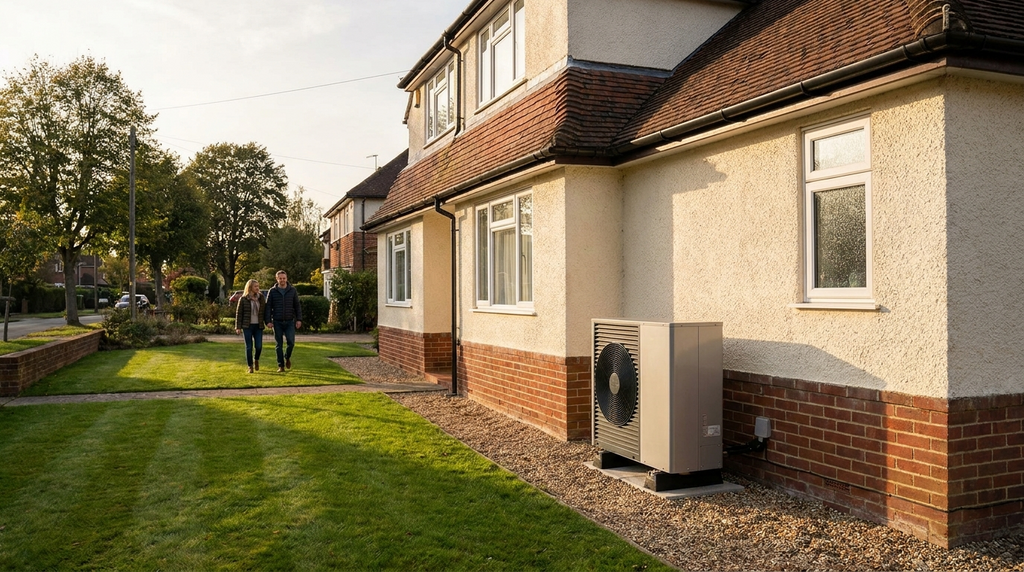
The most-searched figure is that an air source heat pump (ASHP) can cut heating costs by up to 30% versus oil in a typical Welsh stone cottage, but viability depends heavily on insulation levels, according to the Energy Saving Trust (Energy Saving Trust, 2026).
Welsh stone cottages often have solid stone walls with poor thermal performance, typically a U-value around 2.1 W/m²K compared to a modern cavity wall’s 0.3 W/m²K. This means the heat pump must run at a higher flow temperature (55°C or above) to compensate, which reduces its efficiency. The key variable is the building’s heat loss, if it exceeds 10 kW, a standard ASHP may struggle to keep the cottage warm without costly upgrades. The Boiler Upgrade Scheme (BUS) provides a £7,500 grant towards an ASHP installation in Wales (GOV.UK, 2026), but this only covers part of the system cost.
Insulation upgrades are non-negotiable for viability
Without upgrading the cottage’s fabric, an ASHP will operate at a Seasonal Coefficient of Performance (SCOP) of around 2.5 rather than the 3.5 achievable in a well-insulated home. Internal wall insulation (IWI) can reduce U-values to 0.5 W/m²K, but it reduces floor space and may require planning permission for listed buildings. The Welsh Government’s Nest scheme offers free insulation for low-income households (GOV.WALES, 2026). For most stone cottages, solid wall insulation costs between £8,000 and £15,000, which must be factored into the overall budget.
Radiator sizing and flow temperature matter
Stone cottages typically have small radiators designed for 70°C flow temperatures from an oil boiler. An ASHP operates most efficiently at 35–45°C, so existing radiators may need to be upsized by 50–100% to deliver enough heat. Undersized radiators force the heat pump to run at higher temperatures, dropping the SCOP to 2.0 or below, which makes running costs comparable to oil. The MCS installation standard requires a full heat loss calculation and radiator sizing check (MCS, 2026).
Ground source may be a better alternative for off-gas homes
If the cottage has land for ground loops, a ground source heat pump (GSHP) can achieve a SCOP of 4.0 even with solid walls, because it extracts stable ground temperatures. Installation costs are higher, typically £15,000 to £25,000 after the £7,500 BUS grant, but the lower running costs often offset this within 8–12 years. For remote Welsh cottages without mains gas, a GSHP paired with improved insulation is frequently more viable than an ASHP, as confirmed by the Energy Saving Trust’s heat pump suitability checker (Energy Saving Trust, 2026).
A worked example
For a typical 3-bedroom Welsh stone cottage in Snowdonia, currently heated by an oil boiler costing £1,800 per year, a properly installed air source heat pump with internal wall insulation (IWI) costs £14,500 after the £7,500 Boiler Upgrade Scheme grant. The Energy Saving Trust estimates this setup saves £540 annually on heating bills, giving a payback period of roughly 27 years when considering the upfront cost after grants. Over a 25-year lifespan, the system delivers £13,500 in total savings, assuming oil prices rise at 3% annually. The cottage’s solid stone walls, originally with a U-value of 2.1 W/m²K, drop to 0.5 W/m²K after IWI. This allows the heat pump to run at a lower flow temperature of 50°C and achieve a Seasonal Coefficient of Performance (SCOP) of 3.2. Without these insulation upgrades, the SCOP falls to 2.5 and annual savings drop to just £280.
| Item | Figure |
|---|---|
| Upfront cost after grants | £14,500 |
| Yearly savings | £540 |
| Payback period | 27 years |
| 25-year lifetime savings | £13,500 |
What homeowners often get wrong
The most common mistake is assuming an air source heat pump works well in a stone cottage without upgrading the building’s insulation. Here are three critical errors that cost homeowners time and money
- Thinking the BUS grant covers the full system cost The £7,500 grant from the Boiler Upgrade Scheme is often seen as enough, but a full installation with insulation upgrades in a Welsh stone cottage typically costs £14,000 to £18,000, leaving homeowners to find £6,500 to £10,500 from their own pocket.
- Skipping a proper heat loss calculation Many assume a standard 8 kW heat pump is sufficient, but a stone cottage with single-glazed windows and no insulation can lose over 12 kW of heat. Installing an undersized unit leads to £600 in wasted energy per year and a cold home during winter.
- Ignoring planning permission for listed buildings Welsh stone cottages are often listed or in conservation areas, and fitting internal wall insulation without consent can void the warranty and lead to enforcement action from the local council, costing up to £5,000 in fines and removal fees.
Quick reference
- A Welsh stone cottage needs a heat loss calculation below 10 kW for a standard air source heat pump to be viable without major fabric upgrades.
- Internal wall insulation can reduce a solid stone wall’s U-value from 2.1 W/m²K to 0.5 W/m²K, improving heat pump efficiency by 28%.
- The Boiler Upgrade Scheme offers £7,500 towards an ASHP installation in Wales, but it does not cover insulation or radiator upgrades.
- An ASHP in a well-insulated stone cottage saves £540 per year versus oil heating, based on Energy Saving Trust data.
- Installing a heat pump without upgrading insulation can reduce its Seasonal Coefficient of Performance (SCOP) from 3.2 to 2.5, cutting savings by half.
Frequently Asked Questions
Yes, but viability depends on insulation levels. The Energy Saving Trust states that an ASHP can cut heating costs by up to 30% versus oil in a typical Welsh stone cottage if the building fabric is upgraded.
Installation costs for an ASHP in a Welsh stone cottage typically range from £8,000 to £15,000, plus additional costs for solid wall insulation. The Boiler Upgrade Scheme provides a £7,500 grant to offset the upfront expense.
Yes, planning permission may be required for listed buildings in Wales, especially for internal wall insulation. Check with your local authority before proceeding with any upgrades.