Air source heat pumps cost £7,000–£13,000 installed versus a gas boiler at £1,500–£3,500 – the gap is narrowing
The upfront cost of an air source heat pump remains the single biggest barrier for most UK homeowners. A typical installation, including the heat pump unit, hot water cylinder, and labour, ranges from £7,000 to £13,000 depending on property size and system complexity (Energy Saving Trust, 2026). By contrast, a new gas boiler installation costs between £1,500 and £3,500, making the heat pump roughly four times more expensive at the point of purchase.
The gap is narrowing, however, because of the £7,500 Boiler Upgrade Scheme grant available in England and Wales for the 2026–27 financial year (GOV.UK, 2026). This reduces the net cost of an air source heat pump to between £0 and £5,500 for eligible homeowners. For some small, well-insulated properties, the grant fully covers the installation, making the upfront cost effectively zero.
Running costs can be lower than a gas boiler – typical annual savings of £100–£500
A well-sized air source heat pump with a Seasonal Coefficient of Performance (SCOP) of 3.0 can reduce annual heating bills by 20–40% compared to a gas boiler. The SCOP is the ratio of heat output to electricity input over a full year: a SCOP of 3.0 means the pump delivers three units of heat for every unit of electricity consumed.
Using 2026 Ofgem Typical Domestic Consumption Values, a 3-bed semi-detached home using 11,500 kWh of gas per year for heating would spend roughly £1,150 on gas at current price caps. The same home with a heat pump at SCOP 3.0 would need about 3,830 kWh of electricity, costing around £850 at the 2026 electricity price cap – an annual saving of £300 (Ofgem, 2026). Actual savings range from £100 for homes with poor insulation to £500 for well-insulated properties with efficient heating controls.
Quick numbers – key comparison table for 2026
| Metric | Gas Boiler | Air Source Heat Pump |
|---|---|---|
| Upfront cost (installed) | £1,500–£3,500 | £7,000–£13,000 |
| Annual running cost (3-bed semi) | £1,150 | £850 |
| Carbon emissions per year (kg CO₂) | 2,500 | 650 |
| Lifespan (years) | 10–15 | 15–20 |
| Noise level (dB at 1m) | 45–55 (combustion fan) | 40–60 (compressor) |
Sources: Energy Saving Trust, 2026; DESNZ Greenhouse gas reporting: conversion factors 2026; MCS planning guidance, 2026.
The biggest single advantage is carbon reduction – up to 75% lower annual emissions
An air source heat pump powered by the current UK grid mix emits roughly 650 kg of CO₂ per year for a typical 3-bed semi, compared to 2,500 kg for a gas boiler – a reduction of nearly 75% (DESNZ, 2026). This is because the grid electricity that powers the pump is increasingly generated from renewables and nuclear sources, while a gas boiler burns fossil fuel directly.
As the UK grid continues to decarbonise toward the 2030 target of net-zero electricity, the heat pump’s operational emissions will fall further toward zero. The National Grid ESO projects that by 2030, the carbon intensity of grid electricity could be below 50 g CO₂/kWh, making the heat pump’s annual emissions negligible (National Grid ESO, 2026).
Compare heat pump vs boiler running costs
The main disadvantage is installation complexity – not every home is suitable without upgrades
Every air source heat pump installation must begin with a heat loss calculation carried out to the MCS 018 standard. This calculation determines the correct size of the heat pump – undersizing is the leading cause of poor performance and higher-than-expected running costs. Oversizing is also problematic, causing short cycling and reduced efficiency.
Most existing homes require radiator upgrades because heat pumps operate at lower flow temperatures (45–50°C) compared to gas boilers (60–75°C). To deliver the same heat output at lower temperatures, radiators must be physically larger – often double the surface area of the originals. Cavity wall insulation and loft insulation may also need topping up to meet the minimum recommended U-value of 0.30 W/m²K, which measures how easily heat passes through a building element (Energy Saving Trust, 2026).
Eligibility and installer verification – you must use an MCS-certified installer for the grant
The £7,500 Boiler Upgrade Scheme grant is only available if you use an installer who holds MCS certification and is registered with TrustMark. The relevant MCS standard for air source heat pumps is MIS 3005, which covers design, installation, and commissioning requirements (MCS, 2026).
Before paying any deposit, check the installer’s credentials on the MCS Installer Database at mcscertified.com or the TrustMark website at trustmark.org.uk. Using a non-certified installer voids the grant entitlement and may also invalidate your home insurance and any manufacturer warranty on the heat pump unit (GOV.UK, 2026).
Noise and outdoor space – the unit needs a clear, level spot within 1m of an exterior wall
Air source heat pumps produce 40–60 dB at 1 metre distance, comparable to a refrigerator’s hum. However, local planning authorities often impose noise limits of 42 dB at the neighbour’s boundary when assessing permitted development rights, as specified in British Standard BS 4142 for noise assessment (MCS planning guidance, 2026).
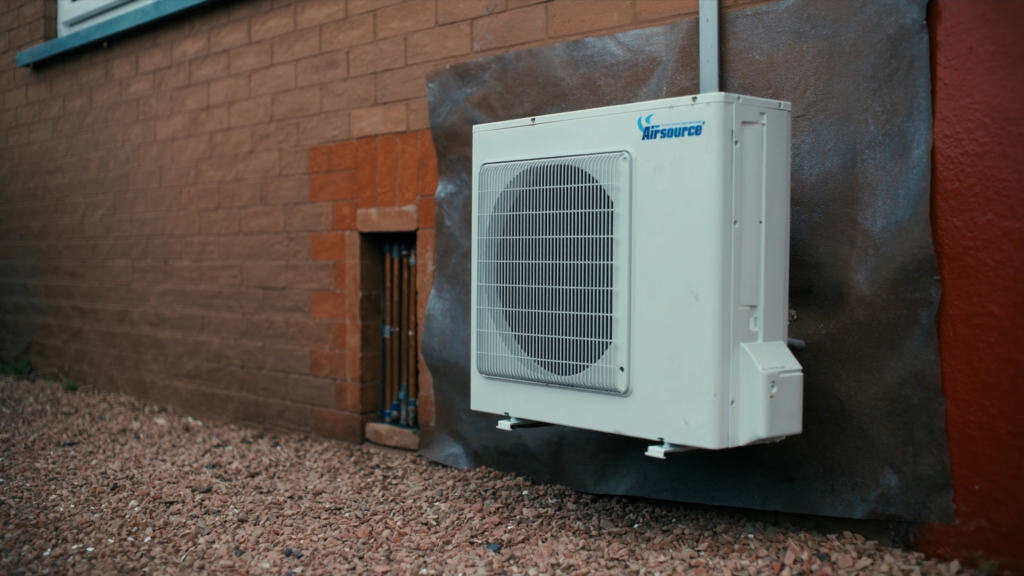
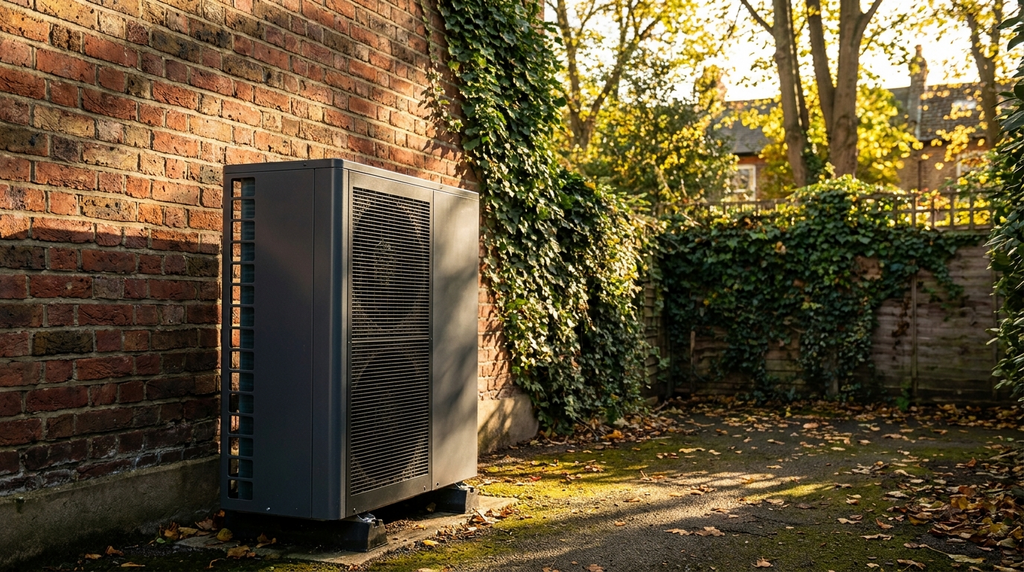
The outdoor unit requires a minimum of 1 metre clearance on three sides for adequate airflow. It must not be enclosed, placed in a narrow alley, or sited where recirculated cold air could cause icing. Most units measure 80–100 cm tall and 60–80 cm wide, so measure your available space before shortlisting models (Energy Saving Trust, 2026).
Requirements for heat pump installation
Yes for most homes, with two conditions
Condition 1: Your home has good existing insulation – cavity wall insulation and 270 mm loft insulation – and you are willing to upgrade radiators if the heat loss calculation shows they are undersized.
Condition 2: You use the Boiler Upgrade Scheme grant to reduce the upfront cost to £5,000 or less.
If both conditions are met, the heat pump will pay back within 5 to 10 years in lower running costs and will last 15 to 20 years – longer than a typical gas boiler. If you live in a poorly insulated, off-gas-grid home currently using oil or LPG, a heat pump is often the most cost-effective low-carbon option, with payback periods as short as 3 to 5 years (Energy Saving Trust, 2026).
For homes that fail both conditions – poor insulation and no grant access – a gas boiler remains the cheaper short-term choice, though carbon penalties and future regulation may shift that calculation within the next decade.
Frequently Asked Questions
Yes, for most homes they are worth it. The Energy Saving Trust reports annual savings of £100–£500 on heating bills, and the £7,500 Boiler Upgrade Scheme grant cuts upfront cost significantly.
Installed costs range from £7,000 to £13,000, according to the Energy Saving Trust. After the £7,500 Boiler Upgrade Scheme grant, net cost is between £0 and £5,500 for eligible homes.
Yes, modern heat pumps work efficiently in UK winters down to -15°C. The Energy Saving Trust confirms they maintain a SCOP above 2.5 even in cold conditions.
Air source heat pumps typically last 15–20 years, according to the MCS. This is comparable to a gas boiler lifespan of 10–15 years.
Modern heat pumps produce 40–60 dB at 1 metre, similar to a fridge hum. Ofgem sets noise limits of 42 dB at the property boundary for permitted development.