Air source heat pumps are now permitted development for most UK homes under 2026 rules
If you are considering an air source heat pump, the first question is often whether you need planning permission. In 2026, the answer for most homeowners is no, because the installation qualifies as permitted development under UK planning law. This means you can install the heat pump without submitting a full planning application, as long as you follow a few specific conditions set by the government.
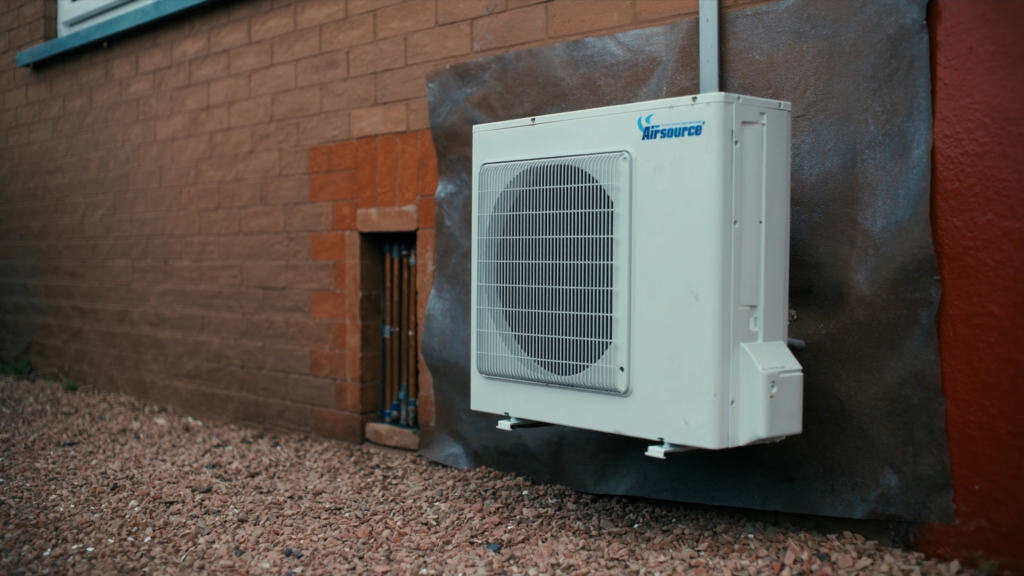
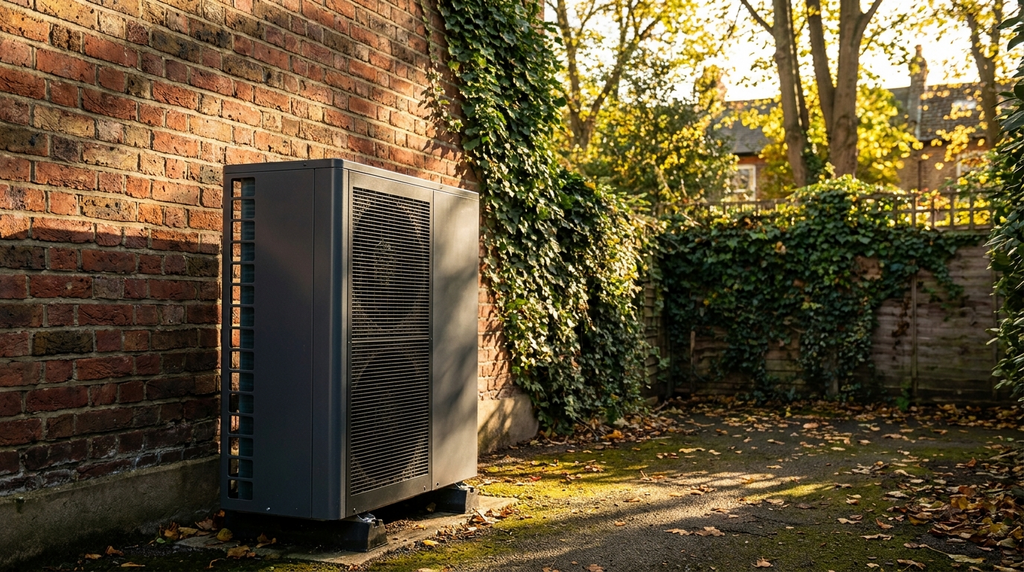
Permitted development rights for air source heat pumps apply in England, Scotland, and Wales, provided the installation meets size and noise limits. The key condition is that the outdoor unit must not be installed within 1 metre of the property boundary, unless your home is a listed building or in a conservation area, where different rules apply (UK Government Planning Portal, 2026). Also, the unit itself must not exceed 0.6 cubic metres in volume, which covers the outdoor fan unit and its casing (Ministry of Housing, Communities and Local Government, 2026).
The 2026 noise limit that determines whether you need planning permission
Even if your installation meets the size and boundary conditions, the noise level of the heat pump is a critical factor. Under permitted development rules, the outdoor unit must not produce a noise level exceeding 42 decibels (dBA) when measured at the nearest neighbour’s property boundary (UK Government Planning Portal, 2026). This limit applies only to the outdoor unit; indoor components are not subject to this condition.
If the heat pump generates noise above 42 dBA, you must apply for full planning permission, which is more costly and time-consuming. The noise limit is measured under normal operating conditions, and most modern MCS-certified heat pumps are built to stay within this threshold (DESNZ, 2026). If you are unsure, ask your installer for the manufacturer’s noise data sheet before purchasing.
When planning permission is definitely required for an air source heat pump in 2026
Planning permission is mandatory for air source heat pumps in several specific situations. If your property is a listed building, located in a conservation area, a National Park, an Area of Outstanding Natural Beauty (AONB), or the Broads, you must submit a full planning application (UK Government Planning Portal, 2026). Also, if the heat pump is to be installed on a flat roof, on a roof that faces a public highway, or on a wall that fronts a public highway, planning permission is also needed (Ministry of Housing, Communities and Local Government, 2026).
In Scotland, the rules are slightly different. Planning permission is required if the heat pump is within 1 metre of a road, or if the installation would exceed the permitted development limits set by the Scottish Government (Scottish Government Planning Portal, 2026). For homes in Wales, the same general conditions apply as in England, but you should always check with your local planning authority if your property is in a sensitive area.
Quick numbers – cost, grant, and payback for a permitted-development heat pump
The table below compares typical installation costs, available grants, running cost savings, payback periods, and planning permission fees across England, Scotland, and Wales. These figures are based on 2026 data for a standard 3-bedroom semi-detached home.
| Metric | England | Scotland | Wales |
|---|---|---|---|
| Installation cost (typical) | £12,000 – £15,000 | £11,000 – £14,000 | £12,000 – £15,000 |
| Boiler Upgrade Scheme grant (2026) | £7,500 | £7,500 | £7,500 |
| Annual running cost saving vs gas boiler | £300 – £500 | £250 – £450 | £300 – £500 |
| Payback period (years) | 8 – 12 | 9 – 13 | 8 – 12 |
| Planning permission fee (if required) | £463 | £302 | £463 |
Sources: Energy Saving Trust, 2026; Ofgem, 2026; DESNZ, 2026; Energy Saving Trust, 2026.
compare heat pump running costs vs gas boiler
The direct answer do you need planning permission for an air source heat pump in 2026?
In most cases, no. Air source heat pumps are permitted development in England, Scotland, and Wales as of 2026, provided the unit is under 0.6 cubic metres in volume and produces noise below 42 dBA at the nearest neighbour’s boundary (UK Government Planning Portal, 2026). However, you must check local authority rules if your property is in a conservation area, listed building, or AONB – in those situations, planning permission is required (Ministry of Housing, Communities and Local Government, 2026).
For the vast majority of homeowners, the process is straightforward. You can proceed with installation as long as your chosen unit and installer meet the permitted development conditions. If you are uncertain, contact your local planning department for a quick pre-application check – this is often free and can save you time later.
How to verify your installer and avoid planning pitfalls – MCS certification
To qualify for the Boiler Upgrade Scheme grant and to meet permitted development conditions, your installer must be MCS (Microgeneration Certification Scheme) certified (Ofgem, 2026). MCS certification ensures the installer follows noise and size standards that match permitted development rules, so using an MCS-certified installer is the safest way to avoid planning issues.
Always check the MCS register before hiring – unregistered installers may void your planning permission status if the installation does not comply with the size and noise limits (MCS Service Company, 2026). TrustMark registration is also recommended but not mandatory for planning permission; it provides additional consumer protection and is required for some government schemes (TrustMark, 2026). By hiring an MCS-certified installer, you minimise the risk of needing retrospective planning permission later.
find an MCS certified heat pump installer
What the planning permission application costs if you need one in 2026
If you do require full planning permission, the fees are set by law and vary by nation. In England, a full planning application for an air source heat pump costs £463 in 2026 (UK Government Planning Portal, 2026). In Scotland, the fee is £302 for a householder application (Scottish Government, 2026). In Wales, the fee matches England at £463 (Welsh Government, 2026).
Additional costs may apply if you need listed building consent, which typically costs £463 in England, £302 in Scotland, and £463 in Wales (UK Government Planning Portal, 2026). These fees are non-refundable even if your application is refused, so it is worth confirming your permitted development status before applying. For most homeowners, the cost of a full application is avoidable by ensuring your installation meets the size and noise conditions from the start.
Frequently Asked Questions
No, for most UK homes it qualifies as permitted development. You must follow conditions set by the UK Government Planning Portal, including size, noise, and boundary rules.
The outdoor unit must not exceed 42 dBA at the nearest neighbour's boundary under normal operation. This is a condition of permitted development per the UK Government Planning Portal (2026).
No, conservation areas and listed buildings require full planning permission. Permitted development rights do not apply in these locations, as stated by the UK Government Planning Portal (2026).
The outdoor unit volume must not exceed 0.6 cubic metres. This is set by the Ministry of Housing, Communities and Local Government (2026) as a condition of permitted development.
MCS certification is not a legal requirement for permitted development, but most modern heat pumps are MCS-certified and built to meet noise limits. Check with your installer for the manufacturer's noise data.