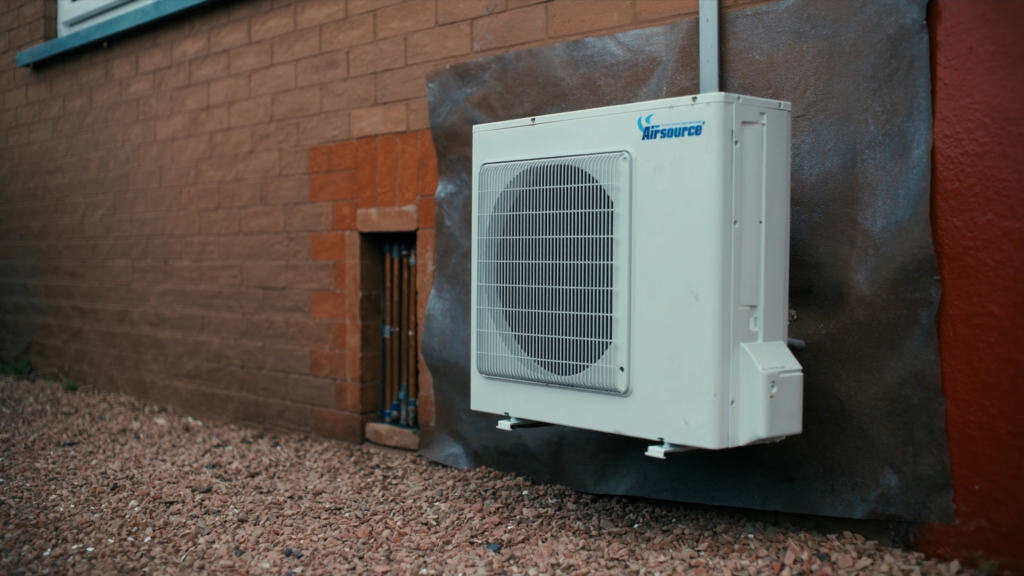
Air source heat pump noise is measured in decibels and regulated by permitted development rules
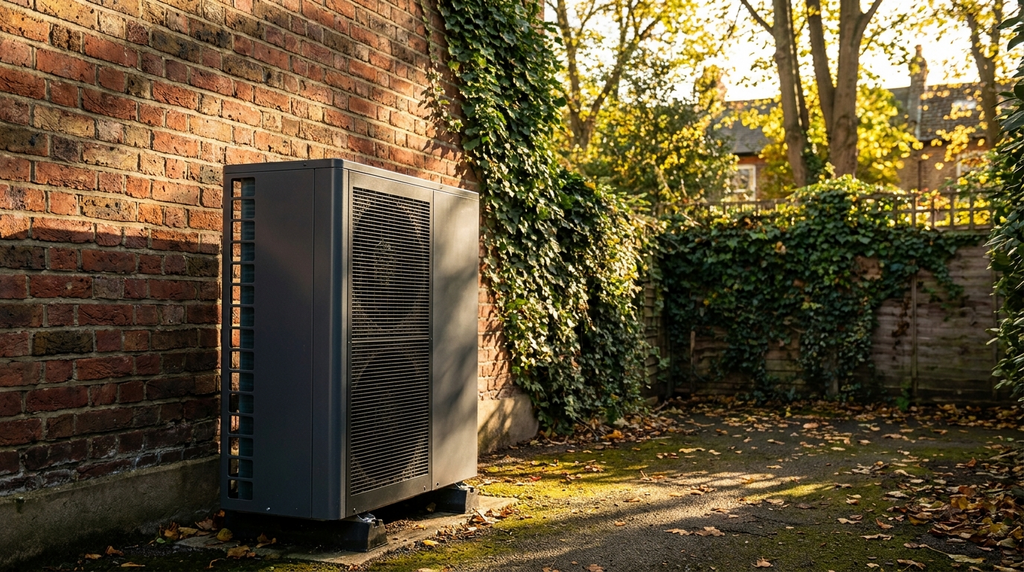
Homeowners considering an air source heat pump often ask about noise. The outdoor unit does make a sound, similar to a fridge or quiet conversation. UK planning rules set a clear limit on that noise.
In 2026, the UK’s permitted development rights allow an air source heat pump to be installed without planning permission only if the outdoor unit’s noise level does not exceed 42 dB(A) when measured 1 metre from the nearest neighbour’s window or door (GOV.UK Planning Portal, 2026). The 42 dB(A) limit applies to the sound power level of the unit itself, not the sound pressure at the boundary. Units with a sound power level above 60 dB(A) at the source are unlikely to meet the 42 dB(A) limit at the neighbour’s property unless placed very far from boundaries.
Typical noise levels of domestic air source heat pumps range from 40 dB to 60 dB
Most modern air source heat pumps sold in the UK have a sound power level of 50–60 dB(A) at full load, according to manufacturer datasheets registered with the Microgeneration Certification Scheme (MCS) (MCS Heat Pump Database, 2026). Sound power level is the total noise emitted by the unit. Sound pressure, which is what you actually hear at a given distance, is typically lower.
At 1 metre from the unit, sound pressure usually measures 40–50 dB(A). That is comparable to a quiet conversation or a refrigerator hum. Older or poorly maintained units can exceed 65 dB(A), which may breach permitted development rules. If you are buying a new unit, check the MCS database for the exact sound power level before installation.
Quick numbers – decibel limits, distances, and compliance thresholds
| Measurement type | Typical value | Rule limit | Source |
|---|---|---|---|
| Sound power level of unit (source) | 50–60 dB(A) | No direct limit | MCS database, 2026 |
| Sound pressure at neighbour’s window (1 m) | 40–50 dB(A) | 42 dB(A) max | Planning Portal, 2026 |
| Minimum distance from neighbour’s window (to meet 42 dB(A)) | 2–5 metres (varies) | No fixed rule | Energy Saving Trust guidance, 2026 |
| Noise level of quiet household appliance (fridge) | 35–40 dB(A) | N/A | Ofgem consumer advice, 2026 |
Who qualifies for permitted development noise exemption
Permitted development for air source heat pumps applies to single-dwelling houses and flats. It does not apply to listed buildings or sites of special scientific interest (GOV.UK, 2026).
Properties within a conservation area, national park, or Area of Outstanding Natural Beauty (AONB) must apply for full planning permission regardless of noise level. If the unit is within 1 metre of the property boundary, or if the total installed capacity exceeds 45 kW, permitted development does not apply. In those cases, you will need a full planning application, which may be refused on noise grounds.
How to check if your heat pump model meets the 42 dB noise rule
The sound power level (LwA) is stated on the MCS certificate or product specification sheet for every MCS-registered heat pump. You can search by model on the MCS Installer Database to find the LwA (MCS Installer Database, 2026).
Measure or estimate the distance from the proposed unit location to the nearest neighbour’s window or door. Use the Energy Saving Trust’s online noise calculator (2026) to check whether the unit’s LwA at that distance falls under 42 dB(A) (Energy Saving Trust, 2026). If the calculated sound pressure exceeds 42 dB(A), the unit may require planning permission or a different placement. Moving the unit further from the boundary or adding a sound barrier can sometimes bring it into compliance.
Verifying your installer’s certification for noise-compliant installation
Only MCS-certified installers can sign off an air source heat pump installation under the Clean Heat Grant (2026). The installer must also hold TrustMark registration for consumer protection (TrustMark, 2026).
The installer must provide a noise assessment as part of the MCS commissioning checklist. Ask for a copy before work begins. If the installer cannot produce a noise calculation, the installation may not be compliant with permitted development. You can find MCS-certified installers via the MCS website (MCS, 2026).
Check our guide on choosing an MCS-certified heat pump installer for a full checklist of questions to ask before signing a contract.
The 42 dB neighbour limit
The maximum permitted noise level for an air source heat pump installed under permitted development in the UK is 42 dB(A) measured 1 metre from the nearest neighbour’s window or door (Town and Country Planning (General Permitted Development) (England) Order 2015, Part 1, Class G (as amended 2026)). This limit applies to all new installations in England. Scotland, Wales, and Northern Ireland have similar but slightly different limits, typically 40–45 dB(A). If the unit exceeds this limit, the homeowner must apply for full planning permission, which may be refused on noise grounds.
Read our article on planning permission for heat pumps in Scotland, Wales, and Northern Ireland for the specific decibel limits in each nation.
Frequently Asked Questions
The noise limit is 42 dB(A) measured 1 metre from the nearest neighbour's window or door. This is set by permitted development rules on the GOV.UK Planning Portal.
Most modern air source heat pumps have a sound power level of 50-60 dB(A) at full load. At 1 metre from the unit, sound pressure typically measures 40-50 dB(A).
Yes, planning permission may be needed if the unit exceeds 42 dB(A) at the neighbour's window. Permitted development rights only apply when noise limits are met.
Yes, if the noise exceeds 42 dB(A) at their window or door, they can report it to the local planning authority. The MCS database lists compliant units.
There is no set distance, but you must ensure noise at 1 metre from the neighbour's window stays below 42 dB(A). Placing the unit further away helps.