An air source heat pump installation typically costs between £7,000 and £13,000 fully installed, though the final price depends on your property and system size.
The standard cost for a full air source heat pump installation in the UK in 2026 ranges from £7,000 to £13,000 before any grants. Energy Saving Trust data shows that a typical 5kW unit for a three-bedroom semi-detached house costs around £7,000 to £9,000, while a larger 12kW unit for a bigger property can reach £13,000 (Energy Saving Trust, 2026).
The final price varies based on three main factors: the size of your property and its heating demand, the level of existing insulation, and the specific heat pump model you choose. A smaller 5kW unit suits a well-insulated two-bedroom home, while a 12kW unit is needed for a larger, older property with higher heat loss. The cost before any grant is what you see quoted, but most homeowners pay less after the Boiler Upgrade Scheme (BUS) grant is applied.
The Boiler Upgrade Scheme cuts the upfront cost by £7,500 for most homeowners in 2026.
The Boiler Upgrade Scheme provides a fixed grant of £7,500 for air source heat pump installations in England and Wales in 2026. This amount is deducted directly from the installer’s quote, so you pay the net cost after the grant is applied (GOV.UK – Boiler Upgrade Scheme, 2026).
To be eligible, your property must have a valid Energy Performance Certificate (EPC) with no outstanding recommendations for loft or cavity wall insulation. If your EPC recommends these insulation measures, you must install them before applying for the grant. The scheme is administered by Ofgem and is available to homeowners and small landlords in England and Wales. The grant is not means-tested, but you must use an MCS-certified installer to qualify.
Planning permission is rarely needed
Most air source heat pump installations in the UK are classed as permitted development, meaning you do not need a planning application. The government’s Planning Portal confirms that heat pumps installed under permitted development rules must meet specific conditions, including a noise limit of 42 dB(A) measured at 1 metre from the outdoor unit (GOV.UK – Planning Portal, 2026).
There are exceptions. You must check with your local planning authority if you live in a listed building, a conservation area, a World Heritage Site, or an Area of Outstanding Natural Beauty. Flats and maisonettes do not have permitted development rights for heat pumps, so you will need a full planning application. Historic England advises that listed building consent may also be required for installations on or near a listed structure.
You must use an MCS-certified installer to qualify for the Boiler Upgrade Scheme and for best warranty cover.
Only installations carried out by a Microgeneration Certification Scheme (MCS) certified installer are eligible for the Boiler Upgrade Scheme grant. MCS certification ensures the system is designed and installed to industry standards, which is a requirement for most manufacturer warranties (MCS website, 2026).
Before signing a contract, check the installer’s MCS registration number on the MCS website. You can search by company name or registration number to confirm they are currently certified. The installer must also be registered with TrustMark for additional consumer protection. If the installer connects the heat pump to an existing gas boiler in a hybrid system, they must also be Gas Safe Registered.
The installation process itself takes 2 to 5 days
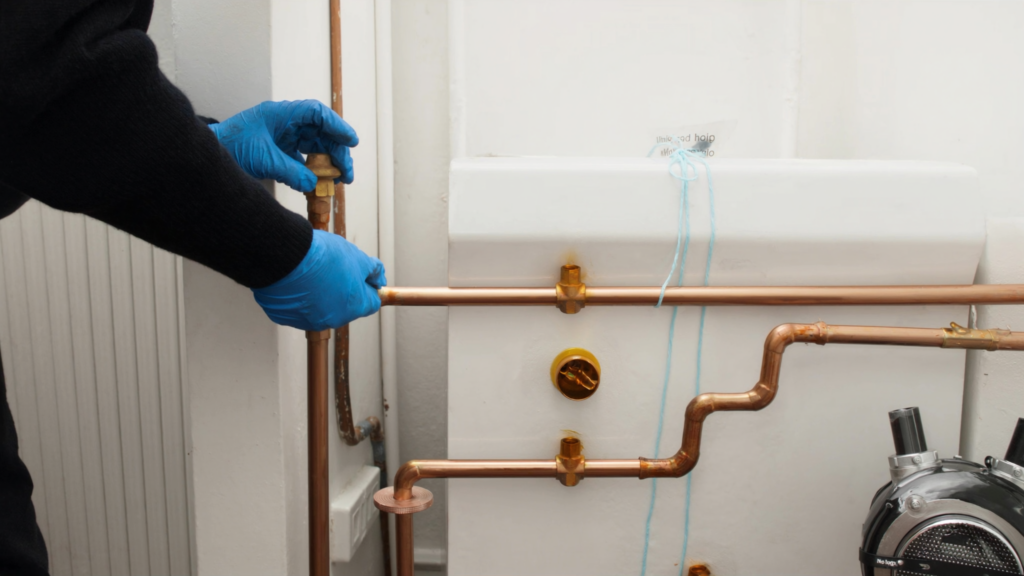
A standard air source heat pump installation follows a clear timeline. The site survey takes one day, during which the installer measures your property and checks the existing heating system. The indoor unit and pipework installation takes one to two days, followed by the outdoor unit installation on day three. Commissioning and testing takes one day at the end (Energy Saving Trust, 2026).
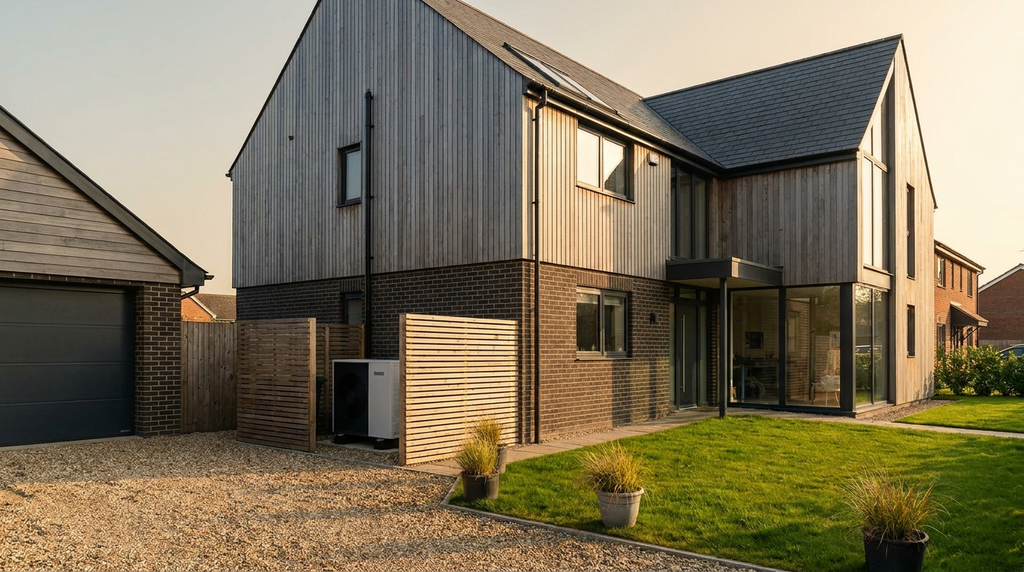
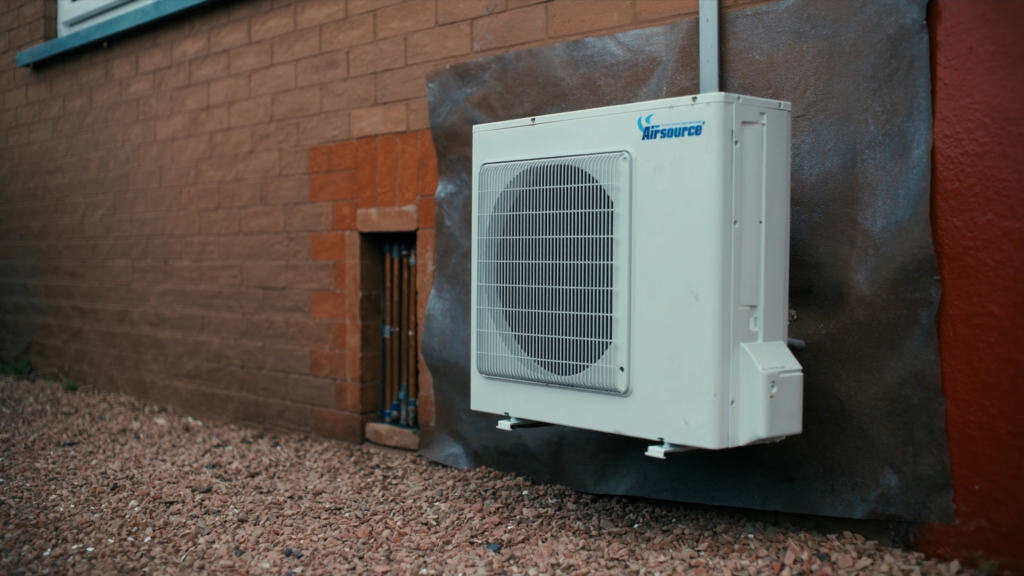
The outdoor unit is placed on a pre-prepared concrete base or wall-mounted brackets, at least 1 metre from any boundary. The indoor work involves connecting the heat pump to your existing heating system. If your home does not have a hot water cylinder, the installer will need to install one. A buffer tank may also be added if your heating system requires it to prevent short cycling.
Quick numbers – key figures for an air source heat pump installation in the UK.
| Figure | Value | Source |
|---|---|---|
| Typical installed cost (before grant) | £7,000–£13,000 | Energy Saving Trust |
| Boiler Upgrade Scheme grant (2026) | £7,500 | GOV.UK |
| Average annual running cost saving vs. gas boiler | £300–£500 | Energy Saving Trust |
| Typical heat pump lifespan | 15–20 years | MCS |
| Minimum EPC rating required for BUS | C or above | GOV.UK |
| Outdoor unit noise limit (permitted development) | 42 dB(A) at 1m | GOV.UK |
The simple answer to “can I install an air source heat pump in my UK home?” is yes, if you have space, good insulation, and a suitable heating system.
Most UK homes with a garden or external wall space for the outdoor unit, and with cavity wall and loft insulation, can have an air source heat pump. Energy Saving Trust states that heat pumps work best in well-insulated homes with a heat loss calculation below a certain threshold (Energy Saving Trust, 2026).
Properties with poor insulation, such as no loft insulation or single-glazed windows, will need to upgrade insulation first to meet BUS eligibility. Homes with existing radiators may need larger radiators or underfloor heating to work efficiently with the lower flow temperatures of a heat pump. If your home has a combi boiler, you will need a hot water cylinder installed, which requires additional space.
To verify your installer, check their MCS registration, TrustMark accreditation, and Gas Safe Register if they work on gas systems.
MCS certification is the primary check for heat pump installers. You can verify an installer’s MCS registration number on the MCS website. TrustMark accreditation provides additional consumer protection, including access to a dispute resolution service if something goes wrong (TrustMark website, 2026).
If the installer is connecting the heat pump to an existing gas boiler in a hybrid system, they must be Gas Safe Registered. You can check an engineer’s Gas Safe Register ID on the Gas Safe Register website. Before paying the final balance, ask for a written quote, a site survey report, and a commissioning certificate from the installer. Compare heat pump running costs vs gas boiler Check if your home qualifies for the Boiler Upgrade Scheme
Frequently Asked Questions
The typical cost is £7,000–£13,000 fully installed before grants, according to the Energy Saving Trust (2026). After the £7,500 Boiler Upgrade Scheme grant, you pay £0–£5,500.
Most installations are permitted development, so you do not need planning permission in England. Check with your local authority if you live in a listed building or conservation area, as exceptions apply.
A typical installation takes 2–5 days, depending on property size and system complexity. Outdoor unit placement, indoor pipework, and electrical connections are the main steps.
The Boiler Upgrade Scheme provides a fixed £7,500 grant for air source heat pumps in England and Wales in 2026, deducted from your installer’s quote. You need an MCS-certified installer and a valid EPC with no outstanding insulation recommendations (GOV.UK, 2026).
Often yes, because heat pumps operate at lower flow temperatures. Installers typically recommend larger radiators or underfloor heating to ensure efficient heating, though this is included in many installation quotes.