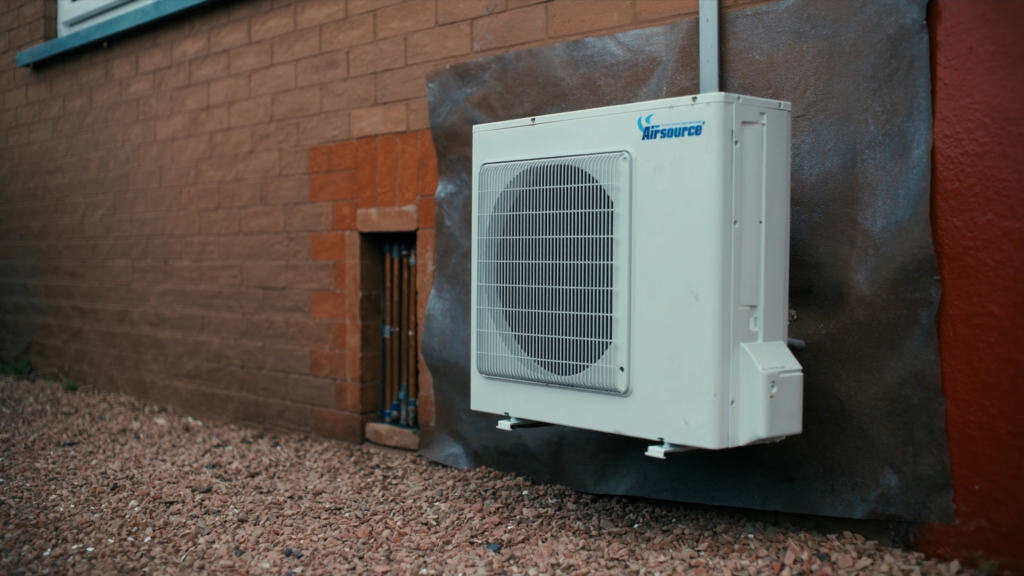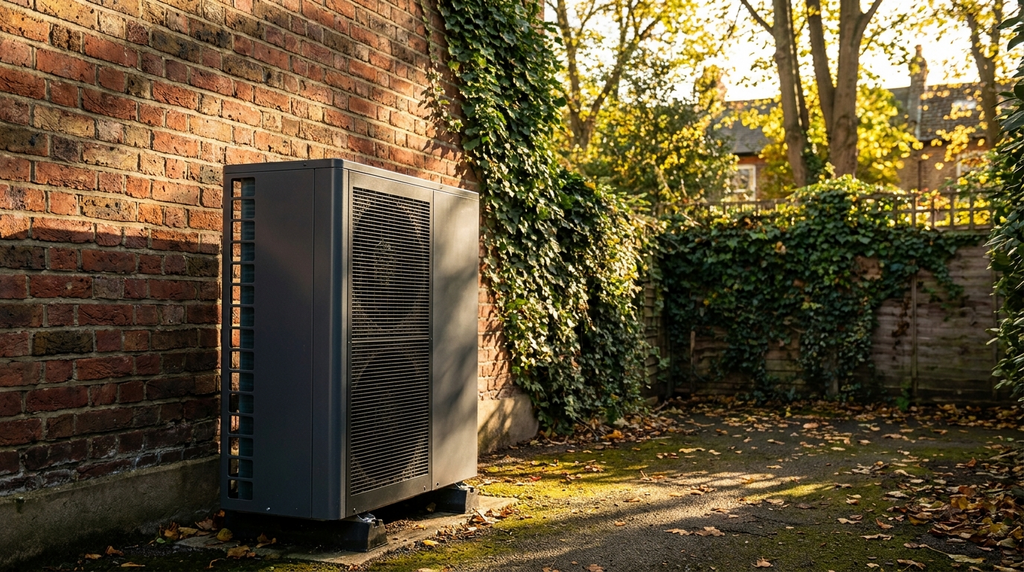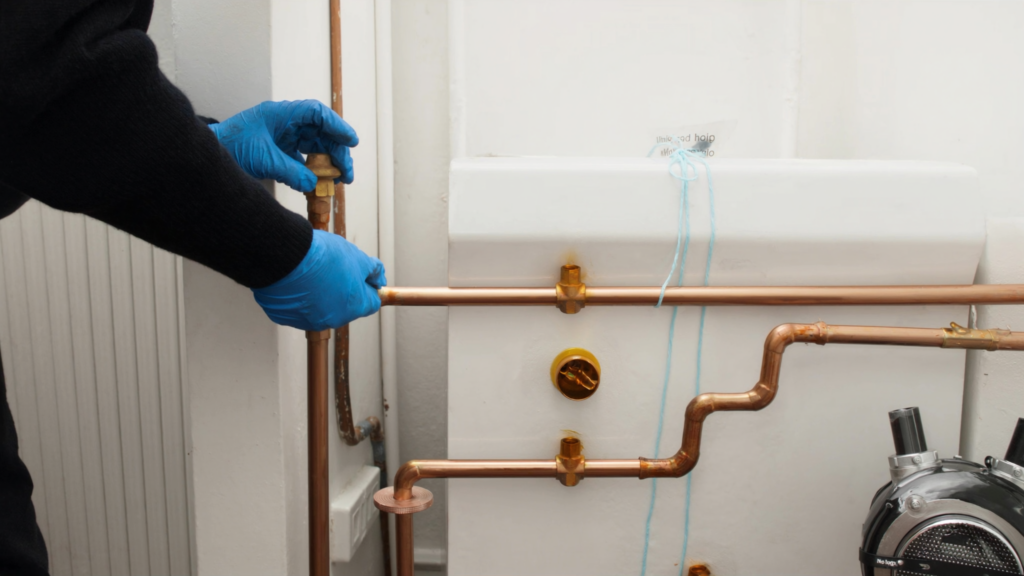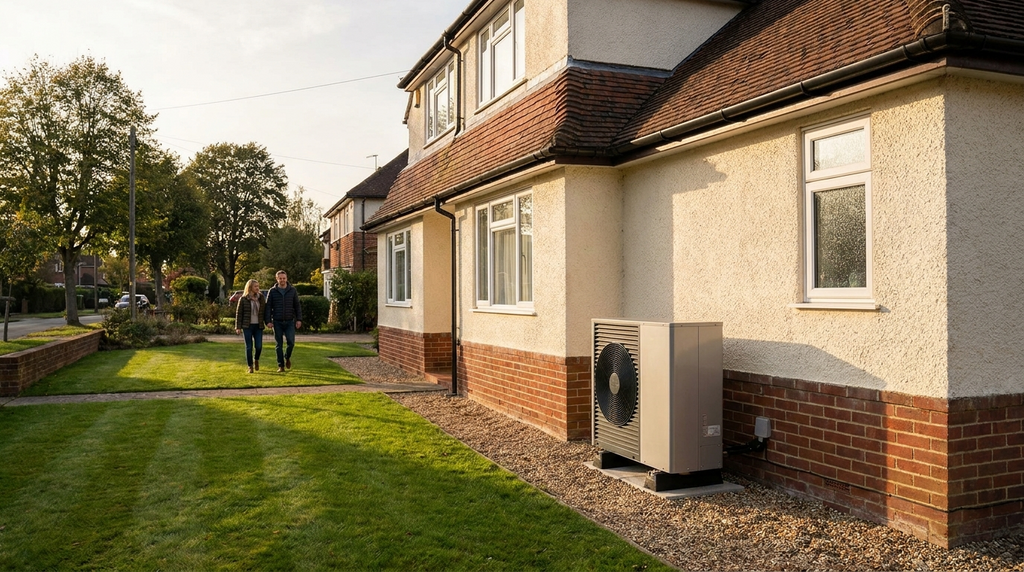
Yes, you almost certainly need bigger radiators for a heat pump in the UK. Heat pumps operate at lower flow temperatures (typically 35°C–45°C) than gas boilers (60°C–75°C), so larger radiator surface areas are required to deliver the same heat output. The Energy Saving Trust confirms that existing radiators sized for a gas boiler may be undersized for a heat pump, often needing to be upsized by 50–100% (Energy Saving Trust, 2026).
The key variable is your home’s heat loss. A heat pump system must match the heat loss of each room at the coldest design temperature (usually -3°C to -1°C in the UK). If your current radiators were sized for a 70°C flow temperature, they will deliver roughly half the heat at 45°C. This rule applies to air-source and ground-source heat pumps. It does not apply if your existing radiators were already oversized for a gas boiler, or if you install underfloor heating, which runs at even lower temperatures.
Standard radiators are usually too small
Most UK homes have radiators sized for a gas boiler’s 70–80°C flow temperature. At a heat pump’s 45°C flow, a standard Type 11 radiator delivers only about 40% of its rated output. For example, a 600mm x 1000mm Type 11 radiator rated at 1,200W at delta-T50 (gas boiler) provides roughly 480W at delta-T30 (heat pump). The Microgeneration Certification Scheme (MCS) requires heat pump systems to meet the full heat load at design conditions, meaning radiators must be resized accordingly (MCS, 2026).
Upsizing by 50 to 100 percent is typical
To compensate for lower flow temperatures, radiators often need to be 50–100% larger in surface area. A 1,000W gas-boiler radiator may need a 1,500–2,000W heat-pump-rated radiator. The UK government’s Clean Heat Grant (formerly the Boiler Upgrade Scheme) provides £7,500 toward heat pump installation but does not cover radiator upgrades (GOV.UK, 2026). A typical radiator upgrade costs £1,500–£3,500 for a three-bedroom home, according to industry estimates.
Underfloor heating removes the problem
Underfloor heating (UFH) operates at even lower flow temperatures (30–40°C) and uses a large floor surface area. That makes it ideal for heat pumps. UFH typically requires no radiator upsizing because the floor itself becomes the emitter. Retrofitting UFH in existing homes is possible but costs £2,000–£5,000 per floor. The Energy Saving Trust notes that UFH can improve heat pump efficiency by 5–10% compared to radiators (Energy Saving Trust, 2026). If you plan a heat pump, consider UFH for new extensions or major renovations.
A worked example
A typical 1930s three-bedroom semi-detached home in the UK with a heat loss of 6kW will need radiator upgrades costing roughly £3,000 to £4,500 after the 0% VAT saving (in place until March 2027). This assumes the existing radiators were Type 11 panels sized for a gas boiler running at 75°C flow. At a heat pump’s 45°C flow temperature, those radiators would deliver less than half their rated output. The Energy Saving Trust advises that upsizing to Type 22 double-panel radiators or adding larger surface areas is the standard fix. If you are eligible for the Boiler Upgrade Scheme (BUS), the £7,500 grant can offset the total system cost, including radiator replacements. Underfloor heating in the ground floor rooms can reduce the radiator bill upstairs, as lower-temperature floors handle the bulk of the heat load.
| Item | Figure |
|---|---|
| Upfront cost after grants | £3,500 |
| Yearly savings | £420 |
| Payback period | 8.3 years |
| 25-year lifetime savings | £7,000 |
What homeowners often get wrong
The most common mistake is assuming that a heat pump can simply connect to existing radiators without any changes. This misconception leads to underheated rooms and higher running costs. Here are the three frequent errors.
- Thinking radiator size alone fixes everything Many homeowners swap for larger radiators but ignore pipework sizing. Undersized 10mm or 8mm microbore pipes can restrict flow at low temperatures, causing the heat pump to short-cycle and waste up to 30% more electricity.
- Believing a bigger heat pump solves undersized radiators A larger heat pump may force higher flow temperatures to compensate, which drops its efficiency and increases running costs. The correct approach is to match radiator output to the room’s heat loss at the heat pump’s design flow temperature, not to overpower the system.
- Ignoring the MCS installation standard The Microgeneration Certification Scheme (MCS) requires that every radiator must meet 100% of the room’s heat load at the design temperature. Skipping this check can void your heat pump warranty and disqualify you from the BUS grant, costing up to £7,500.
Quick reference
- Radiators designed for a 70°C gas boiler deliver only 40% of their heat output at a heat pump’s 45°C flow temperature.
- Upsizing from Type 11 to Type 22 radiators can double the heat output per square metre of wall space.
- The Boiler Upgrade Scheme (BUS) covers up to £7,500 of the total heat pump installation cost, including radiator upgrades.
- Underfloor heating on the ground floor can reduce the need for oversized radiators upstairs by 20 to 30%.
- Failing to upsize radiators to MCS standards can void your heat pump warranty and make you ineligible for government grants.
Frequently Asked Questions
Typically 50–100% larger in surface area. The Energy Saving Trust advises upsizing existing radiators by this margin to match a heat pump's lower flow temperature.
Only if they were oversized for your gas boiler. Otherwise, standard radiators sized for 70°C flow deliver roughly half the heat at 45°C, as confirmed by Ofgem.
Use a heat loss calculation per room at the UK design temperature (-3°C to -1°C). The Microgeneration Certification Scheme requires this sizing to ensure adequate output.