The legal noise limit for a heat pump in the UK is 42 dB(A) at the neighbour’s boundary
The question of whether a heat pump will disturb your neighbours comes down to one number: 42 dB(A). This is the legal noise limit for an air source heat pump installed under permitted development rights in England, and it is the standard required by the Microgeneration Certification Scheme (MCS) for all installations that qualify for government grants.
The legal noise limit for a heat pump at your neighbour's boundary is 42 dB(A). This is set by MCS standard MIS 3005 and measured using the BS 4142 method, which accounts for tonal or impulsive noises. It's roughly as loud as a fridge, not a conversation.
- Legal noise limit is 42 dB(A) at the neighbour's boundary or window.
- MCS standard MIS 3005 requires BS 4142 noise assessment for all installations.
- 42 dB(A) is comparable to a quiet fridge or library, not a loud appliance.
- Tonal or impulsive noises like whining trigger a penalty that increases the rating level.
- Place the unit away from boundaries and use a quieter model to stay compliant.
- The legal noise limit for a heat pump in the UK is 42 dB(A) at the neighbour’s boundary
- How heat pump noise is measured and what 42 dB(A) actually sounds like
- The upfront cost of meeting noise regulations and avoiding complaints
- The potential cost of a noise complaint or enforcement action
- Quick numbers key costs, savings, and noise thresholds
- The direct answer will a heat pump annoy your neighbours?
- How to verify your installer is competent for noise compliance
- What the Boiler Upgrade Scheme (BUS) grant covers and its noise condition
The 42 dB(A) limit is measured as a “night-time rating level” at the nearest neighbour’s habitable-room window or boundary. It is not the noise the heat pump makes at its own casing. The limit accounts for the unit’s sound power level (SWL) and its distance from the property line, plus a penalty if the noise has a tonal or impulsive character such as a whine or clicking. This methodology is set out in British Standard BS 4142, which is referenced in the MCS installation standard MIS 3005 (MCS MIS 3005, Issue 6.0) and the GOV.UK Planning Portal guidance for permitted development rights for air source heat pumps (GOV.UK, 2026).
How heat pump noise is measured and what 42 dB(A) actually sounds like
The dB(A) scale is A-weighted, meaning it is adjusted to reflect how the human ear perceives sound. A quiet bedroom at night registers around 20–30 dB(A). A modern refrigerator hums at roughly 40 dB(A). A normal conversation is about 60 dB(A) (UK Health Security Agency environmental noise overview, 2026). So 42 dB(A) is comparable to a fridge or a quiet library, not a loud appliance.
The measurement is taken as a “rating level” under BS 4142. This means the raw sound level from the heat pump is adjusted upward if the noise has a tonal or impulsive character. If the unit produces a steady hum with no whine, the rating level may be the same as the raw level. If it whines, the rating level is higher, and the installer must place the unit further away or use a quieter model to stay within the 42 dB(A) limit (Energy Saving Trust heat pump noise guidance, 2026).
The upfront cost of meeting noise regulations and avoiding complaints
A standard MCS-certified air source heat pump installation for a typical semi-detached house in 2026 costs between £7,000 and £13,000. This includes the unit, installation, and a buffer tank, and it assumes the installer places the unit far enough from the boundary to meet the 42 dB(A) limit (Energy Saving Trust air source heat pump cost guide, 2025 update).
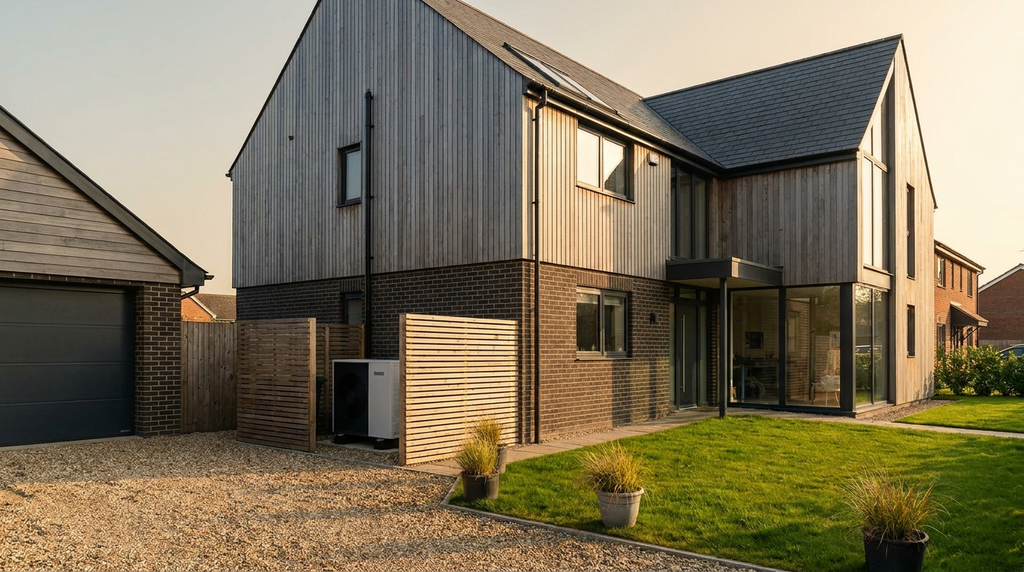
If your property layout forces the heat pump closer to the neighbour’s boundary than the standard setback allows, you may need a noise-mitigation package. This could be an acoustic enclosure, a more expensive low-noise unit, or a switch to a ground-source system. Adding these options raises the total cost by £1,500 to £4,000 (MCS Installer Database average cost data, 2025–26).
The potential cost of a noise complaint or enforcement action
If a neighbour complains to the local authority’s environmental health department, the council can investigate under the Environmental Protection Act 1990. If the heat pump noise is judged to be a statutory nuisance, the council can issue a “noise abatement notice” requiring you to reduce the noise or remove the unit. Failure to comply can lead to a fine of up to £5,000 for a domestic property, plus court costs (GOV.UK guidance on noise nuisance, Environmental Protection Act 1990, Part III).
The average cost of retrofitting a noise barrier or relocating a heat pump after installation is £1,200 to £3,000. This cost falls on you if the original installer did not meet the MCS standards or if you chose a non-MCS model that exceeds the noise limit (Local Government Association data on noise complaints, 2026).
Quick numbers key costs, savings, and noise thresholds
| Item | Figure | Source |
|---|---|---|
| Legal noise limit (night-time) | 42 dB(A) at neighbour’s boundary | MCS MIS 3005, GOV.UK Permitted Development |
| Typical heat pump sound power level (unit itself) | 55–65 dB(A) | MCS product database |
| Cost to replace a gas boiler with a heat pump (standard) | £7,000–£13,000 | EST cost guide, MCS installer averages |
| Cost of acoustic enclosure or relocation (retrofit) | £1,200–£3,000 | EST guidance, MCS installer quotes |
| Potential fine for noise abatement breach | Up to £5,000 | Environmental Protection Act 1990 |
| Annual heating cost saving (heat pump vs gas boiler, 3-bed semi) | £200–£400 | DESNZ “Heat Pump vs Gas Boiler Cost Analysis” (2025 release) |
The direct answer will a heat pump annoy your neighbours?
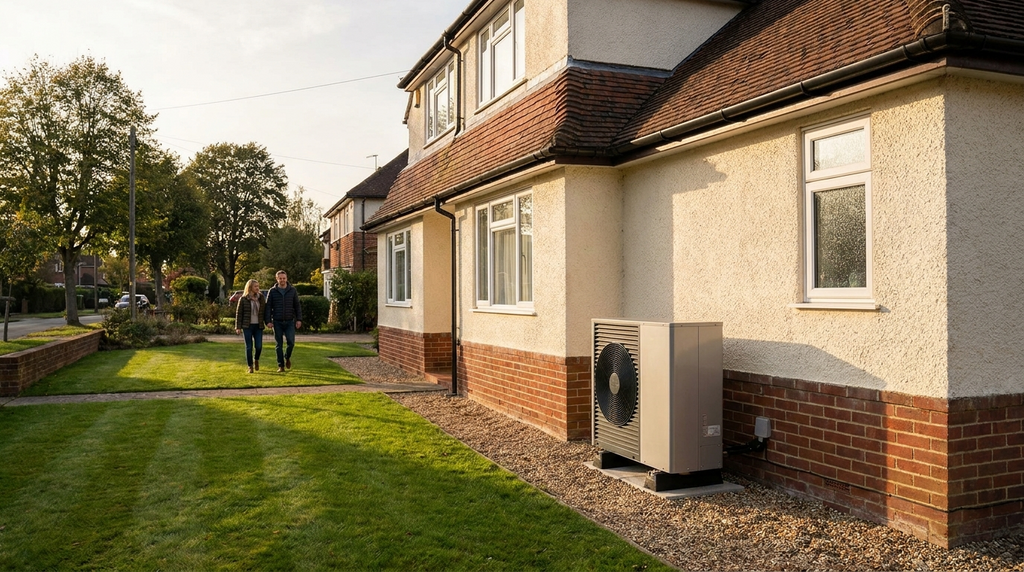
In nearly all cases, a modern MCS-certified heat pump installed to the manufacturer’s acoustic guidelines will not annoy neighbours because the 42 dB(A) limit is quieter than a typical conversation and similar to background street noise. The risk arises only if the unit is placed directly under a neighbour’s bedroom window, on a flimsy wall bracket, or if a non-MCS installer uses a loud, unregulated model. The MCS installation standard and permitted development rules are built to prevent this (MCS MIS 3005, GOV.UK Permitted Development, Energy Saving Trust heat pump noise FAQ).
How to verify your installer is competent for noise compliance
Use the MCS Installer Database at mcscertified.com to find an installer who holds MCS certification for heat pumps. Only MCS-certified installations are eligible for the Boiler Upgrade Scheme grant and are automatically deemed compliant with permitted development noise limits. Ask the installer for a pre-installation noise assessment based on BS 4142, which calculates the likely noise level at your neighbour’s property. They must provide a written report if you request it (MCS website). Check the installer holds TrustMark registration for consumer protection and, for electrical work, NICEIC or NAPIT registration (TrustMark website, GOV.UK “Find an MCS-certified installer” page). how to choose a heat pump installer
What the Boiler Upgrade Scheme (BUS) grant covers and its noise condition
The Boiler Upgrade Scheme grant in 2026 is £7,500 for an air source heat pump, applied directly to the installation cost. The grant does not cover retrofitting noise barriers or relocating a unit after installation. To qualify for the grant, the installation must be MCS-certified, which implicitly requires meeting the 42 dB(A) noise limit. The installer must also provide a “MCS certificate” confirming compliance (GOV.UK “Boiler Upgrade Scheme” page, 2026 update, DESNZ “BUS guidance for homeowners”, 2025). Boiler Upgrade Scheme eligibility checklist
Frequently Asked Questions
The legal noise limit is 42 dB(A) at the nearest neighbour's habitable-room window or boundary. This is set by the Microgeneration Certification Scheme (MCS) standard MIS 3005 and the GOV.UK Planning Portal for permitted development rights.
Heat pump noise is measured using the BS 4142 method, which calculates a rating level. The raw sound level is adjusted upward if the noise is tonal or impulsive, such as a whine or clicking, as explained by the Energy Saving Trust.
Yes, if the noise exceeds 42 dB(A) at their property boundary or window, or if it causes a statutory nuisance under the Environmental Protection Act 1990. The local council can investigate and issue an abatement notice.
42 dB(A) is about as loud as a modern refrigerator humming or a quiet library. A normal conversation is around 60 dB(A), so 42 dB(A) is generally unobtrusive, according to the UK Health Security Agency.
If the noise exceeds 42 dB(A) at the neighbour's boundary, the installation may breach permitted development rights and MCS standards. You may need to relocate the unit, add soundproofing, or install a quieter model to comply.