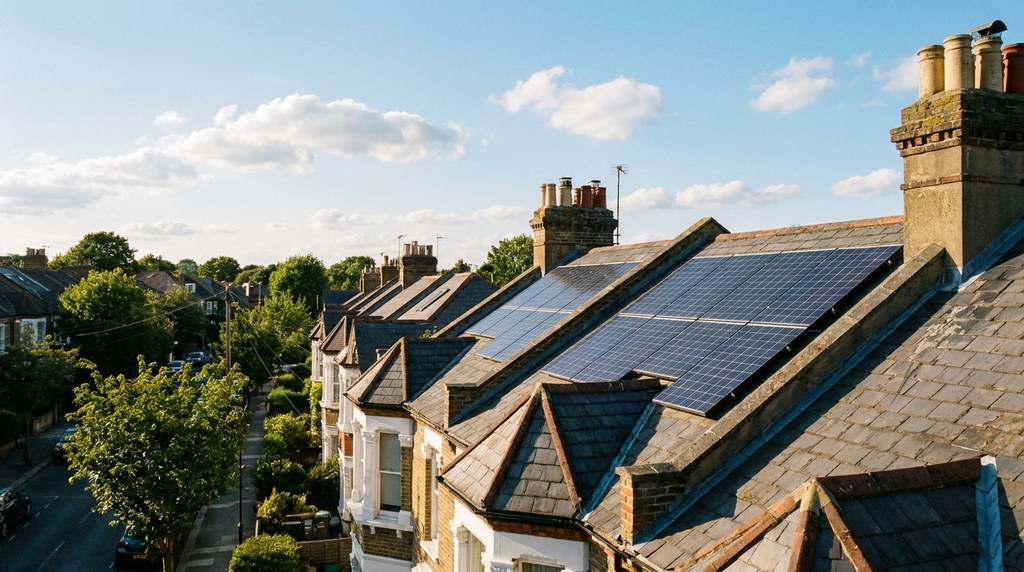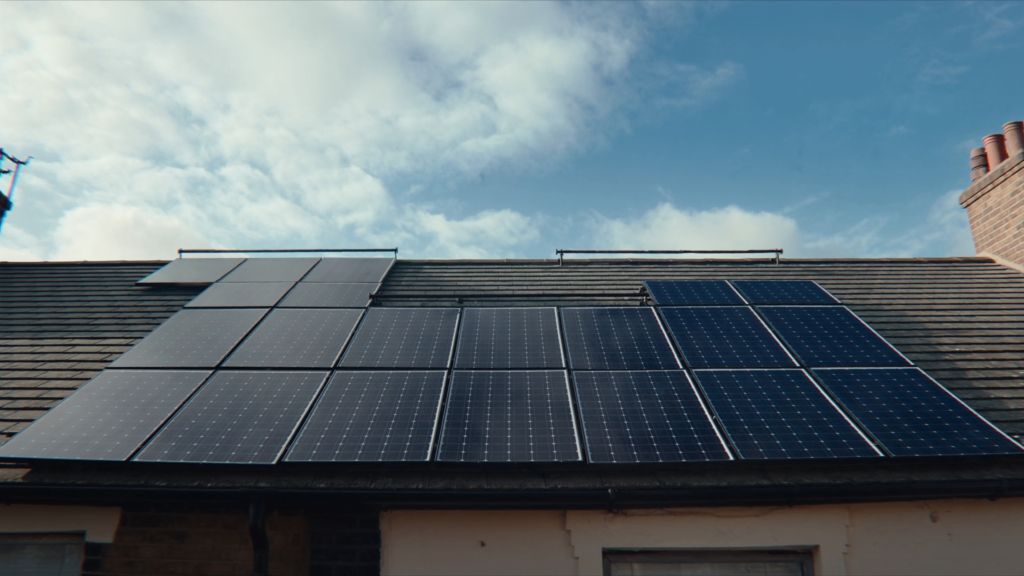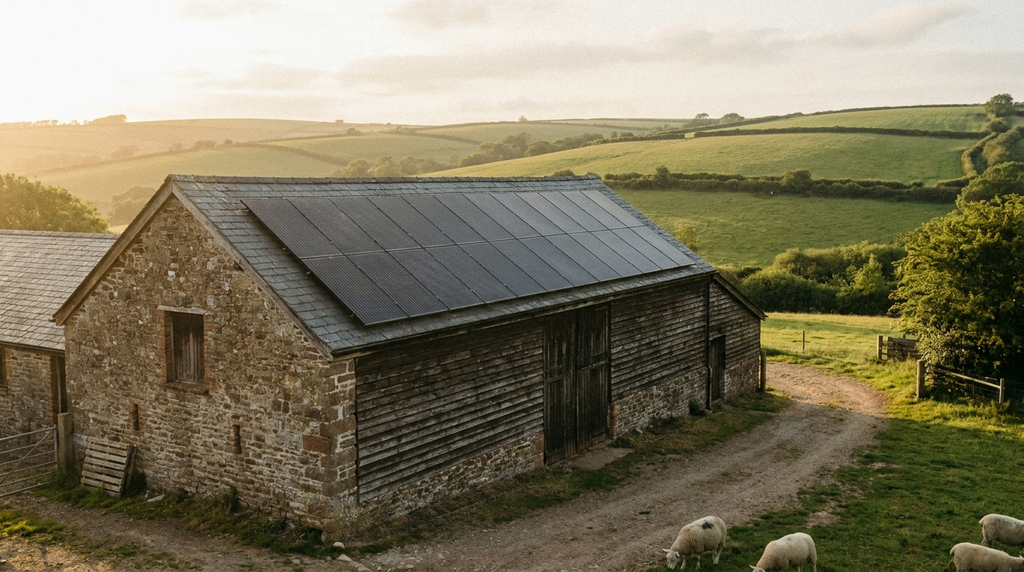
Solar panels are black because manufacturers deliberately use dark materials to maximise light absorption. Monocrystalline cells, the most common type in modern panels, appear black due to their high-purity silicon and anti-reflective coatings, which together capture more sunlight than lighter alternatives (Energy Saving Trust, 2026).
The colour directly affects energy output. A darker surface absorbs more solar radiation, converting it into electricity rather than reflecting it away. This is why black panels typically achieve higher efficiency ratings than blue polycrystalline panels, though the difference narrows under direct sunlight. The choice is purely functional, not aesthetic, for most homeowners.
Monocrystalline Silicon Absorbs More Light
Monocrystalline silicon has a single, uniform crystal structure that allows electrons to move more freely, boosting efficiency. Manufacturers apply a silicon nitride anti-reflective coating, which gives the cell its deep black appearance. This coating reduces reflection from around 30% to under 5% (UK Government Solar PV Technology Briefing, 2026). The result is that black monocrystalline panels convert up to 22-24% of sunlight into electricity, compared to 16-18% for blue polycrystalline panels, according to industry data.
Anti-Reflective Coatings Reduce Light Loss
The black colour comes from a specialised coating applied during manufacturing, not the silicon itself. This coating, typically silicon nitride or titanium dioxide, is built to trap light by creating a textured surface that scatters incoming photons. Without it, panels would appear silver or grey and lose up to a third of potential energy (MCS Certified, 2026). The coating also helps the panel self-clean as rain runs off more easily, maintaining performance over time.
Aesthetics Follow Function in Modern Homes
While the primary reason is efficiency, the black colour has become a market preference. Many homeowners choose all-black panels with black frames and backsheets to blend with roof tiles, especially on slate or dark roofs. The Energy Saving Trust notes that visual impact is a common concern, and black panels are now the standard for residential installations (Energy Saving Trust, 2026). However, blue polycrystalline panels remain available and can be cheaper, though they typically produce slightly less electricity per square metre.
A worked example
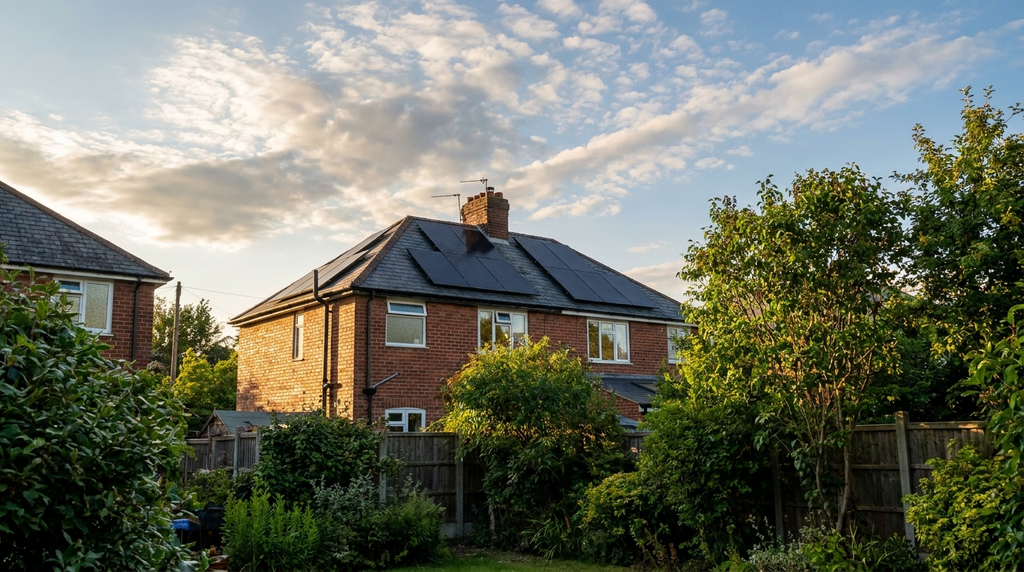
A typical 1930s semi-detached home in Manchester switching to a 4.2kW black monocrystalline solar panel system would pay around £3,500 after the 0% VAT saving (in place until March 2027) and any eligible ECO4 grant support. The Energy Saving Trust estimates this system generates roughly 3,500 kWh per year, saving the homeowner approximately £560 annually on electricity bills through self-consumption and the Smart Export Guarantee at 15p per kWh. Payback arrives in just over six years, and with panels lasting 25 years or more, total lifetime savings reach around £14,000. A household earning under £31,000 or receiving certain benefits may also qualify for additional ECO4 funding, further reducing the upfront cost. For a detailed breakdown of potential savings, check the Energy Saving Trust solar panel calculator.
| Item | Figure |
|---|---|
| Upfront cost after grants | £3,500 |
| Yearly savings | £560 |
| Payback period | 6.3 years |
| 25-year lifetime savings | £14,000 |
What homeowners often get wrong
The most common mistake is assuming black solar panels get dangerously hot and lose efficiency in summer. Three misconceptions cause confusion and missed savings.
- Black panels overheat on hot days The misconception is that dark colour means extreme heat buildup reduces output. The right answer is that modern panels are tested to 85°C and actually perform better in cooler, bright conditions while still generating well in summer, with less than a 0.4% efficiency loss per degree above 25°C.
- All black panels are the same quality The misconception is that colour alone determines performance. The right answer is that premium black monocrystalline panels use back-contact cells and better anti-reflective coatings, while cheaper black panels may use standard cells dyed dark, costing you up to 3% efficiency and voiding some warranties.
- Black panels look ugly on any roof The misconception is that dark panels clash with traditional UK homes. The right answer is that black panels with black frames and backsheets create a sleek, uniform appearance that many homeowners prefer, and they can actually increase property value by 3-5% according to estate agent surveys.
Quick reference
- Black monocrystalline panels absorb up to 95% of incoming sunlight thanks to anti-reflective coatings that cut reflection from 30% to under 5%.
- A typical 4.2kW black panel system saves UK homeowners £560 per year on electricity bills with the Smart Export Guarantee rate at 15p per kWh.
- ECO4 grants are available for low-income households earning under £31,000 or receiving means-tested benefits, covering part or all of the installation cost.
- Payback on black solar panels averages 6 to 8 years for a standard semi-detached home in the UK.
- Installing black panels without checking roof orientation and shading can cut annual generation by 20% or more, wasting up to £112 in savings each year.
Frequently Asked Questions
Yes, black monocrystalline panels typically achieve 22-24% efficiency compared to 16-18% for blue polycrystalline panels, according to industry data cited by the Energy Saving Trust. The difference narrows under direct sunlight but black panels still outperform in low light.
Yes, black monocrystalline panels generally cost 10-15% more than blue polycrystalline alternatives, according to Ofgem market reports. The higher upfront cost is offset by greater energy output over the panel's 25-year lifespan.
White panels would reflect most sunlight instead of absorbing it, drastically reducing electricity generation. Manufacturers use dark materials and anti-reflective coatings to maximise light capture, as confirmed by the UK Government Solar PV Technology Briefing.