10 reasons to add a solar battery
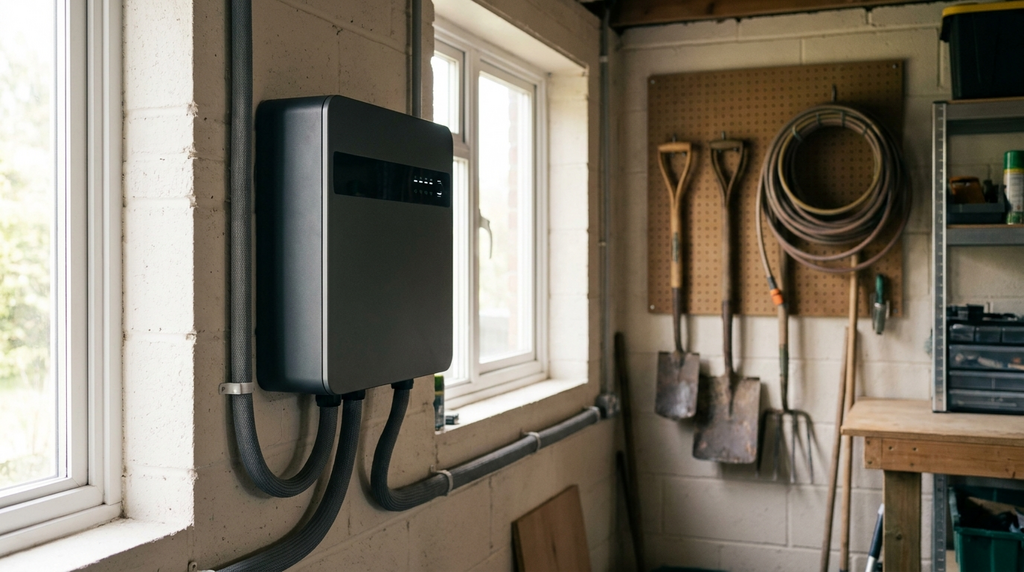
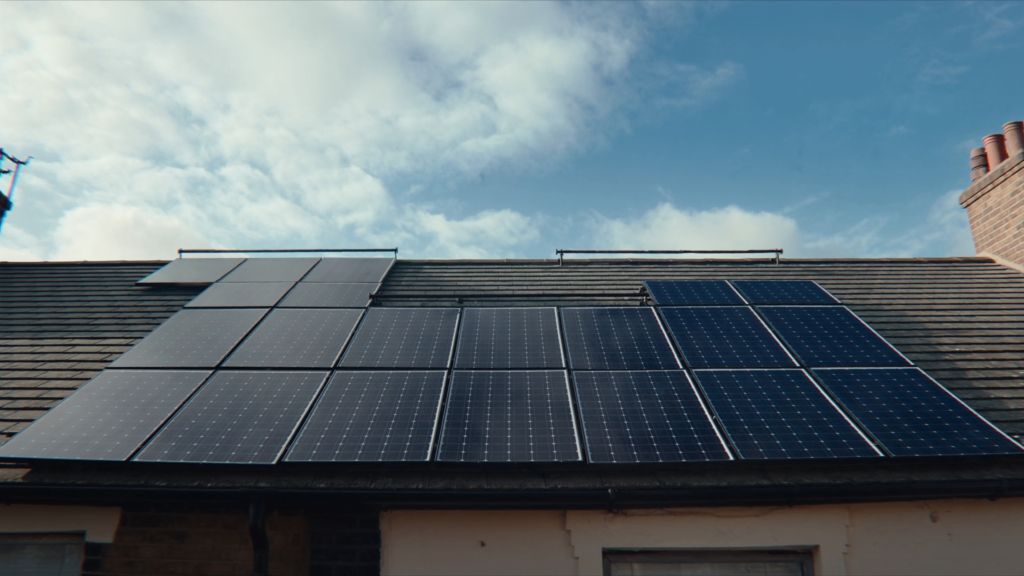
Adding a solar battery lets you store the electricity your panels generate during the day for use in the evening. This simple change can transform how much value you get from your solar investment.
Adding a solar battery lets you store excess solar electricity for use in the evening, cutting your reliance on the grid and reducing your annual electricity bills by up to 70%. The single most important reason is that a battery can double the amount of solar energy your home uses from around 30% to over 70%, based on Energy Saving Trust modelling.
What matters when you choose: you’re deciding how much of your own solar power you want to use rather than export. The key factors are usable capacity (how much power you can store), round-trip efficiency (how much energy you lose charging and discharging), and compatibility with your existing solar inverter. Also consider whether you want backup power during a grid outage, not all batteries offer this. Your choice should match your household’s evening electricity usage pattern, not just your solar panel output.
| Battery capacity (usable) | Typical installed cost (GBP) | Estimated annual saving (GBP) | Payback period (years) |
|---|---|---|---|
| 5 kWh | 3,000–4,500 | 200–350 | 9–15 |
| 10 kWh | 5,000–7,500 | 350–600 | 10–14 |
| 13.5 kWh (e.g., Tesla) | 7,000–10,000 | 450–700 | 11–16 |
Sources: Energy Saving Trust, 2026; MCS, 2026; GOV.UK, 2026
1. Double your self-consumption
Without a battery, a typical UK home uses only 30-40% of its solar generation directly. The rest is exported to the grid. Adding a battery raises this to 70-80% (Energy Saving Trust, 2026). This means you buy far less electricity from your supplier. The average UK household with solar panels and a battery saves £200–£400 per year compared to solar-only (Energy Saving Trust, 2026).
- Without a battery, a typical home uses only 30-40% of its solar generation directly.
- Adding a battery raises self-consumption to 70-80%.
2. Cut your electricity bills
A solar battery lets you draw stored power during peak-rate evening hours, avoiding the 30p/kWh+ standard tariff (Ofgem, 2026). Typical annual savings from a 10kWh battery range from £350 to £600, depending on your household usage (Energy Saving Trust, 2026). Over a 10-year period, that adds up to £3,500–£6,000 in avoided grid electricity costs.
- Draw stored power during peak-rate evening hours, avoiding 30p/kWh+ tariffs.
- Annual savings from a 10kWh battery: £350–£600.
3. Protect against rising energy prices
Ofgem’s energy price cap has risen by over 50% since 2021. A battery locks in the cost of your own solar generation at zero per kWh (Ofgem, 2026). Even modest annual price increases of 5% shorten your battery payback period by 1–2 years (GOV.UK, 2026). The more grid prices rise, the faster your battery pays for itself.
- Battery locks in solar generation cost at zero per kWh.
- Annual 5% price increases shorten payback by 1–2 years.
4. Earn from smart export tariffs
With a battery, you can charge when rates are low (e.g., Octopus Flux) and discharge when export rates peak, earning up to 15p/kWh exported (Ofgem, 2026). Some tariffs pay more for battery-stored electricity exported during peak grid demand (Energy Saving Trust, 2026). This turns your battery into a small income generator.
- Earn up to 15p/kWh exported on smart export tariffs.
- Higher rates apply for battery-stored electricity exported during peak demand.
5. Reduce your carbon footprint
A solar battery lets you use more of your zero-carbon solar power instead of grid electricity, which still contains about 30% fossil fuel (ONS, 2025). The average home with a battery avoids 1–1.5 tonnes of CO₂ per year (Energy Saving Trust, 2026). That’s equivalent to taking a petrol car off the road for 3-4 months.
- Grid electricity still contains about 30% fossil fuel.
- Average home avoids 1–1.5 tonnes of CO₂ per year.
6. Get a full home backup
Many batteries (e.g., Tesla Powerwall, GivEnergy) can power essential circuits during a grid outage, keeping lights, fridge, and internet running (MCS, 2026). Backup capability requires an integrated inverter and transfer switch, check compatibility before buying (MCS, 2026). This feature is invaluable during power cuts.
- Power essential circuits during a grid outage.
- Requires integrated inverter and transfer switch.
7. Make the most of winter sun
Solar panels generate 70% less in winter, but a battery stores what little you produce for evening use, when you need it most (Energy Saving Trust, 2026). Winter self-consumption with a battery typically doubles from 30% to 60% (Energy Saving Trust, 2026). Every kWh stored in winter is a kWh you don’t buy from the grid.
- Solar panels generate 70% less in winter.
- Winter self-consumption doubles from 30% to 60% with a battery.
8. Lower your payback on solar panels
Adding a battery can reduce the overall payback period of your solar PV system from 10–15 years to 8–12 years (Energy Saving Trust, 2026). The combined system also qualifies for the 0% VAT on energy-saving materials (until 2027) (GOV.UK, 2026). That saves you up to 20% on the purchase price.
- Payback period reduces from 10–15 years to 8–12 years.
- Qualifies for 0% VAT on the combined system.
9. Future-proof for time-of-use tariffs
Smart tariffs (e.g., Octopus Agile) charge as low as 5p/kWh at night. A battery can charge cheaply and discharge during peak rates (30p+) (Ofgem, 2026). Homes with a battery and smart meter can shift up to 80% of their electricity use to off-peak times (Energy Saving Trust, 2026). This flexibility becomes more valuable as time-of-use tariffs expand.
- Charge at 5p/kWh at night, use during 30p+ peak rates.
- Shift up to 80% of electricity use to off-peak times.
10. Increase your property value
Homes with solar and battery typically sell for 4–6% more than comparable homes without (ONS, 2025). Energy Performance Certificate (EPC) ratings often improve by 2–3 bands with a battery, making the property more attractive (GOV.UK, 2026). A higher EPC rating can also reduce mortgage rates on green home loans.
- Homes sell for 4–6% more with solar and battery.
- EPC ratings improve by 2–3 bands.
Adding a solar battery is one of the most effective ways to increase your solar savings, cut your carbon footprint, and protect against rising energy prices. The payback period varies by battery size and your household usage, but the long-term financial and environmental benefits are clear.
Frequently Asked Questions
A 5 kWh battery costs £3,000-£4,500 installed, while a 13.5 kWh Tesla costs £7,000-£10,000 (MCS, 2026). Costs vary by capacity, brand, and installer.
Adding a battery saves £200-£700 annually depending on size and usage (Energy Saving Trust, 2026). A 10 kWh battery typically saves £350-£600 per year.
Yes, because it lets you use more of your own solar power instead of exporting it cheaply. The payback period is 9-16 years based on current electricity prices (GOV.UK, 2026).
Most lithium-ion solar batteries last 10-15 years or 6,000-10,000 cycles (Energy Saving Trust, 2026). Warranties typically guarantee 70% capacity after 10 years.
Yes, if your inverter is battery-ready or you install an AC-coupled battery. Check compatibility with your existing solar inverter before purchasing (MCS, 2026).