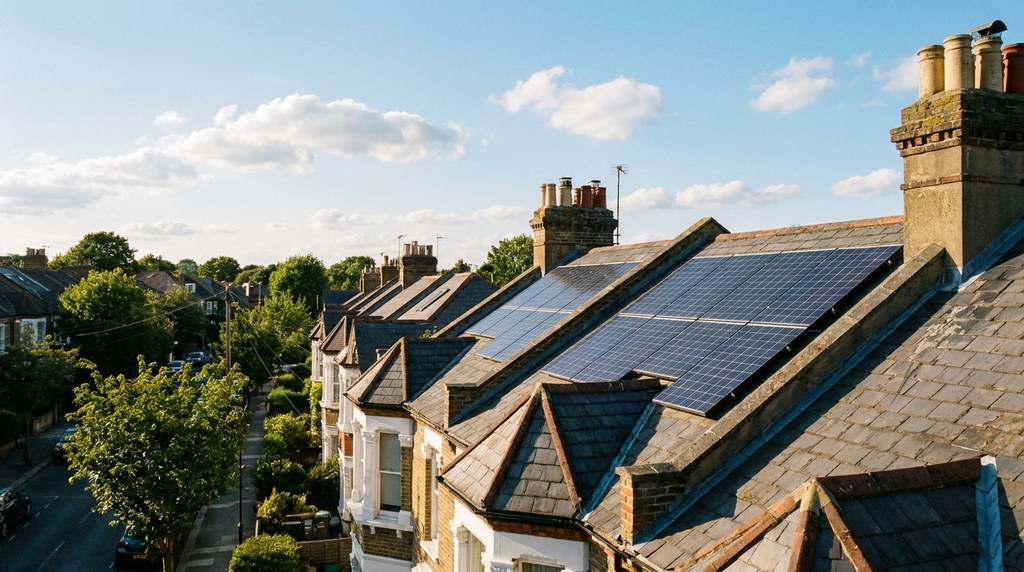
Solar panels can power farm operations by generating electricity for buildings, water pumps, and machinery, reducing reliance on grid energy and cutting operational costs. The UK government reports that agricultural businesses can save up to 60% on electricity bills with on-site solar generation (GOV.UK, 2026).
The specific application depends on farm type, land availability, and energy demand. Dairy farms with high cooling needs benefit most, while arable farms may use solar for irrigation. Systems range from small rooftop arrays to ground-mounted installations covering multiple acres. Grants and tax incentives are available for eligible agricultural businesses.
Powering farm buildings and equipment
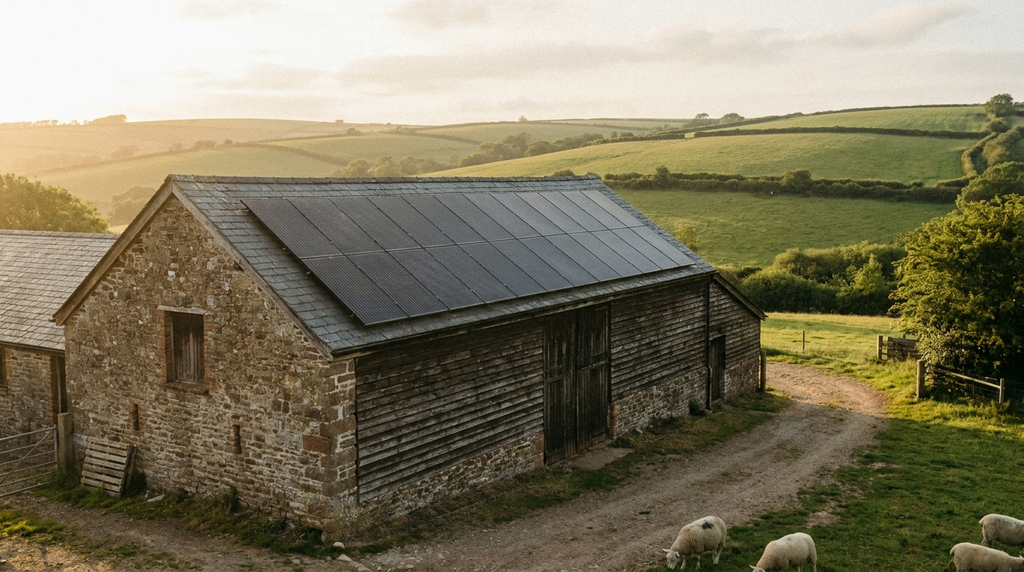
Solar panels directly supply electricity to farm buildings such as barns, milking parlours, and storage sheds. A typical 10kWp system can generate around 9,000 kWh per year, enough to run lighting, ventilation, and refrigeration for a medium-sized dairy unit (Energy Saving Trust, 2026). This reduces peak-time grid demand and lowers running costs. Electric fencing, automatic feeders, and water heaters can also be powered. Any surplus energy can be exported to the grid under the Smart Export Guarantee (SEG), which pays around 5–10p per kWh (Ofgem, 2026).
Irrigation and water pumping
Solar-powered water pumps are ideal for remote fields where grid connection is expensive or impractical. A 2kWp solar array paired with a submersible pump can deliver up to 10,000 litres of water per day in sunny conditions (Energy Saving Trust, 2026). This supports livestock watering, crop irrigation, and reservoir filling. Systems can include battery storage for overnight or cloudy-day operation. The UK government offers grants under the Farming Equipment and Technology Fund for solar irrigation installations (GOV.UK, 2026).
Agrivoltaics combining crops and solar
Agrivoltaics involves mounting solar panels above crops on raised structures. This allows dual land use. Sheep grazing beneath panels is common, but fruit and vegetable production can also continue. Research by the BRE shows that shading from panels can reduce water loss by up to 30% and boost crop yields in hot summers (BRE, 2026). Panels are typically spaced to allow 70% light penetration. This approach maximises land value without displacing food production, and grants are available through the Sustainable Farming Incentive for agrivoltaic systems (GOV.UK, 2026).
A worked example
A 50kWp ground-mounted solar array for a 200-acre arable farm in East Anglia costs £37,500 after the 0% VAT saving and a typical £15,000 grant from the Farming Investment Fund. This system generates around 45,000 kWh per year, covering 80% of the farm’s irrigation and grain-drying electricity demand. The Energy Saving Trust estimates yearly savings of £7,200 on grid electricity at current rates, with a further £1,200 from exporting surplus via the Smart Export Guarantee. Payback on the net investment of £37,500 takes just over four years. Over a 25-year panel lifespan, total savings reach £210,000, assuming a 3% annual rise in electricity costs. The system occupies roughly 0.25 acres of less productive field margin, preserving prime cropping land for cereals and oilseed rape.
| Item | Figure |
|---|---|
| Upfront cost after grants | £37,500 |
| Yearly savings | £8,400 |
| Payback period | 4.5 years |
| 25-year lifetime savings | £210,000 |
What homeowners often get wrong
The most common mistake is assuming solar panels only work on south-facing roofs, which is not true for modern agricultural installations. Here are three frequent errors that cost farmers time and money.
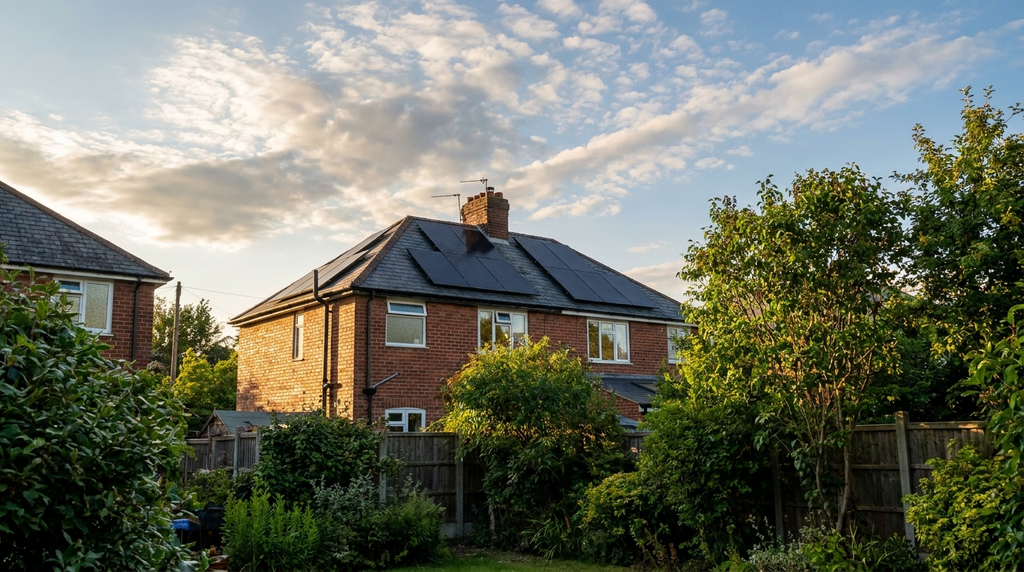
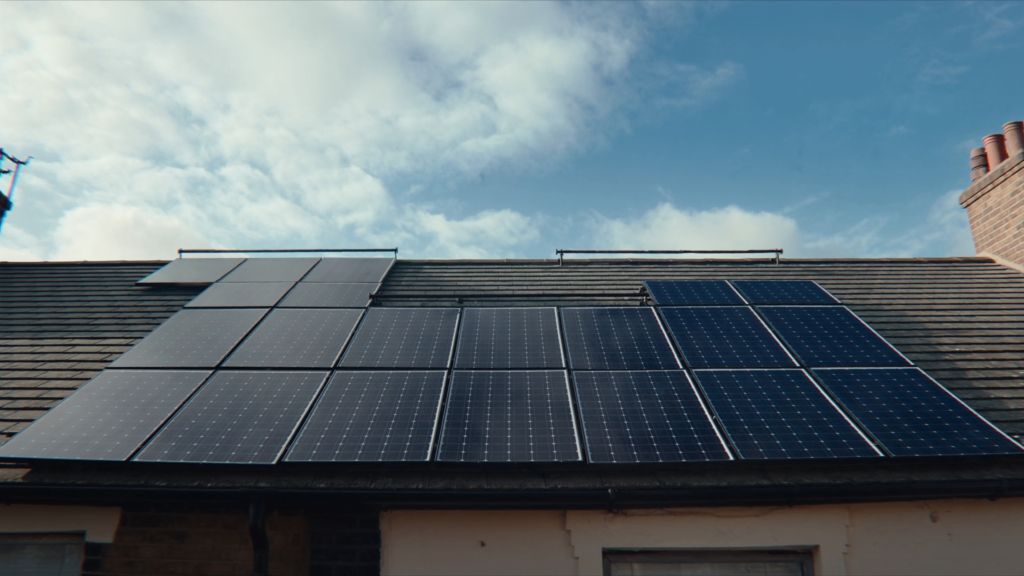
- Ignoring east-west roof orientation Many farmers think panels must face south to be worthwhile. East and west-facing arrays on a north-south barn roof can still generate 85–90% of the output of a south-facing system, and they produce power earlier and later in the day, matching dairy milking schedules better.
- Overlooking ground-mount planning rules Some assume any field can host solar without permission. In England, ground-mounted arrays over 1MW or on more than 5% of the farm’s land require planning permission, and failing to check this can lead to enforcement action and removal costs above £20,000.
- Misunderstanding the 0% VAT deadline Several farmers delay installation thinking the 0% VAT on solar panels is permanent. It expires on 31 March 2027, so waiting past that date adds 20% to the total cost, wiping out thousands in savings on a typical 50kWp system.
Quick reference
- A 50kWp ground-mounted solar array can save a typical arable farm £8,400 per year on electricity and export payments (Energy Saving Trust, 2026).
- Solar panels on a dairy unit can reduce peak-time grid demand by up to 70%, cutting the need for expensive variable-rate tariffs.
- To qualify for the Farming Investment Fund solar grant, the system must be installed by an MCS-certified installer and the farm must be registered with the Rural Payments Agency.
- Payback on a solar installation for a 200-acre farm is typically 4 to 6 years, with panels lasting 25 years or more under standard warranty.
- Failing to register a ground-mounted solar array with the local planning authority can void future grant eligibility and trigger a full removal order.
Frequently Asked Questions
Yes. A 2kWp solar array with a submersible pump can deliver up to 10,000 litres of water per day. The Energy Saving Trust confirms solar irrigation cuts grid reliance for remote fields.
The Smart Export Guarantee (SEG) pays farms around 5–10p per kWh for surplus solar electricity exported to the grid. Ofgem administers the scheme for eligible UK agricultural businesses.
Yes. Grants and tax incentives are available through schemes like the Farming Investment Fund (GOV.UK, 2026). Eligibility depends on farm type, system size, and energy use.