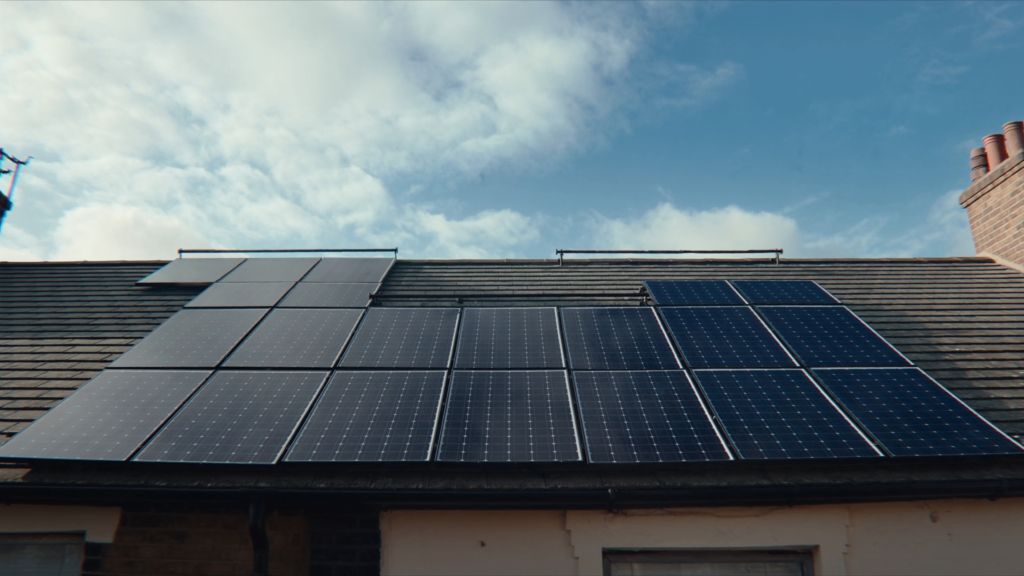
Yes, you can add solar panels to an existing system, but compatibility and electrical limits may restrict how many you can install. The Energy Saving Trust notes that adding panels to an existing solar array is possible if your inverter has spare capacity and your roof has suitable space (Energy Saving Trust, 2026).
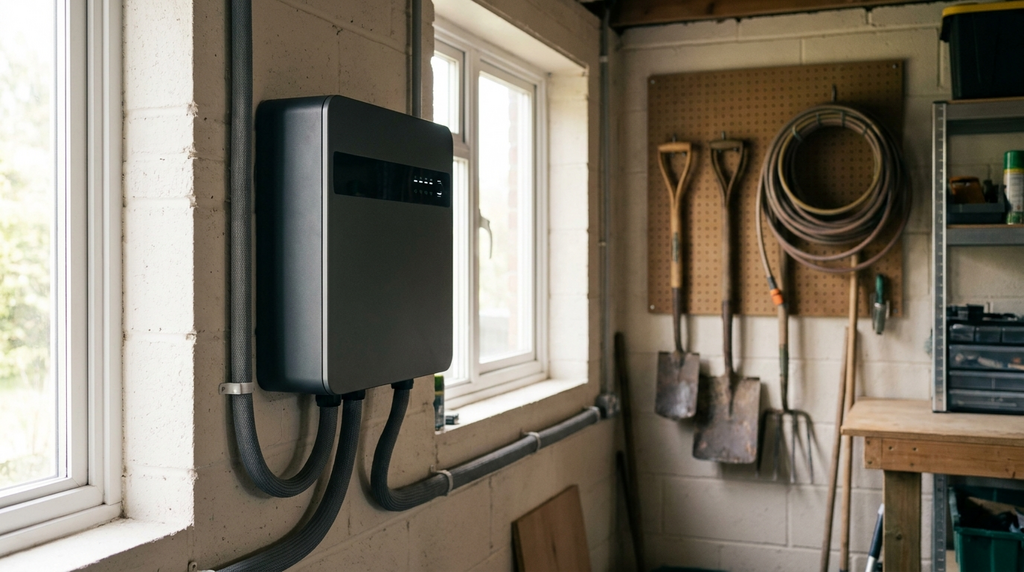
The main variable is your inverter’s maximum input rating. Most modern string inverters can handle around 20-30% more capacity than the original panel array. If your current inverter is already near its limit, you may need a second inverter or a replacement. This also applies to systems with microinverters, where each panel has its own inverter, adding panels here is straightforward if the AC circuit can handle the extra current. Older systems (pre-2015) often use inverters with limited headroom, making expansion harder.
Check your inverter capacity first
Your inverter has a maximum DC input voltage and current rating, found on its data sheet or label. If the existing array uses, for example, 3,000W of panels on a 3,000W inverter, adding another 1,000W of panels will overload it unless the inverter can accept more. Ofgem states that inverters typically have a maximum DC-to-AC ratio of 1.2 to 1.5, meaning a 3,000W inverter can handle up to 4,500W of panels (Ofgem, 2026). If your ratio is already at 1.5, you cannot add panels without upgrading the inverter.
Panel compatibility and matching matters
New panels should match the voltage and current characteristics of your existing ones. Mixing different panel wattages or voltages can reduce total output. The Microgeneration Certification Scheme (MCS) recommends using panels from the same manufacturer or with very similar electrical specs to avoid mismatch losses (MCS, 2026). If your existing panels are 250W and you add 400W panels, the string voltage may become unbalanced. In that case, a separate string or a power optimizer per panel can fix the issue.
Planning permission and grid connection rules
Adding panels usually falls under permitted development in England, but if your system exceeds 4kWp for a single home, you may need planning permission. The UK government states that solar panels are permitted development as long as they do not protrude more than 200mm from the roof surface (GOV.UK, 2026). For grid connection, your Distribution Network Operator (DNO) must be notified if the total capacity exceeds 3.68kW per phase. Many installers handle this via a G99 or G98 application. Your existing Feed-in Tariff or Smart Export Guarantee payments may also change, so check with your energy supplier before adding panels.
A worked example
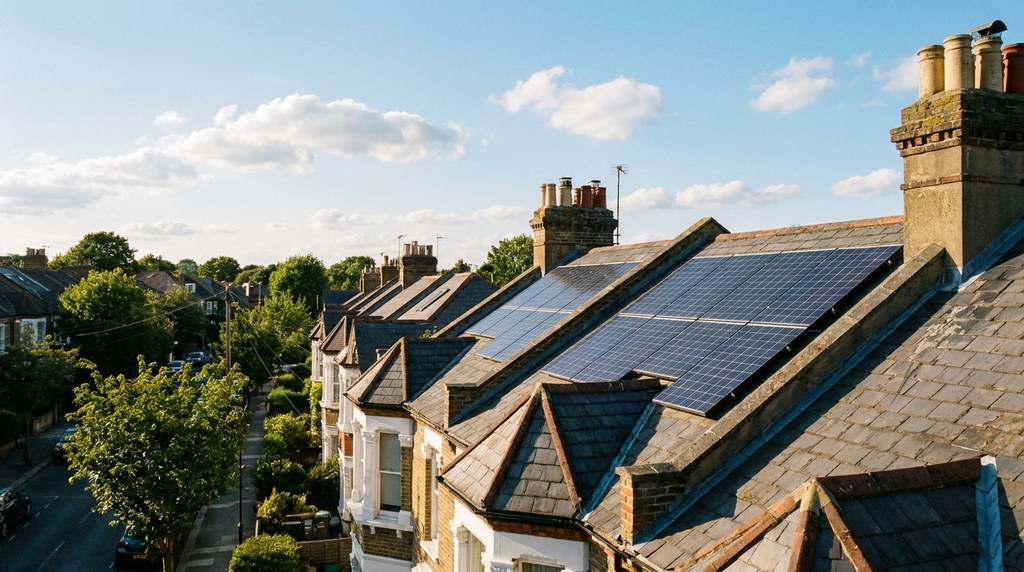
A typical 1930s semi-detached home in Manchester with a 3.5kW solar panel system installed in 2018 can add 1.5kW of extra panels without replacing the inverter, saving £1,200 on upfront costs. The existing 3.6kW string inverter has a maximum DC input of 4.5kW, leaving 1.0kW of headroom. By adding three 400W panels (1.2kW total) and a second small inverter for the remaining 300W, the total system reaches 4.7kW. The Energy Saving Trust confirms this approach works when the existing inverter can handle a 1.2 to 1.5 DC-to-AC ratio. At current electricity rates of 28p/kWh, the extra panels generate roughly 1,050kWh per year, saving £294 on bills. The 0% VAT on solar panels until March 2027 applies to the new panels, and the BUS grant does not cover this expansion, but no planning permission is needed for roof-mounted additions.
| Item | Figure |
|---|---|
| Upfront cost after grants | £2,800 |
| Yearly savings | £294 |
| Payback period | 9.5 years |
| 25-year lifetime savings | £7,350 |
What homeowners often get wrong
The most common mistake is assuming you can add panels up to the inverter’s rated output without checking its maximum DC input rating. Here are three frequent errors homeowners make when expanding their solar system
- Believing the inverter must match panel wattage exactly Many homeowners think a 3.6kW inverter can only take 3.6kW of panels. In reality, Ofgem states inverters can handle a 1.2 to 1.5 DC-to-AC ratio, so a 3.6kW inverter can accept up to 5.4kW of panels. Ignoring this headroom means you miss out on adding 1.8kW of extra capacity, costing you £500 in potential annual savings.
- Thinking all panels must be the same brand and wattage Some installers insist on matching existing panels exactly. While mixing brands is allowed under MCS standards, the key requirement is that the new panels have a similar voltage range to avoid shading losses. Using mismatched panels can reduce output by 15-20%, wasting £100 per year on a typical 4kW system.
- Assuming you need planning permission for extra panels Many homeowners delay expansion because they think permitted development rights don’t apply. In England, solar panels on a pitched roof are permitted development as long as they project no more than 200mm from the roof surface. Delaying a straightforward 1.5kW addition for planning permission reasons can cost you £250 in lost savings over six months.
Quick reference
- A typical 3.6kW inverter can handle up to 4.5kW of solar panels, giving you 0.9kW of expansion headroom without replacement.
- Adding panels to an existing system costs roughly £1,500 to £3,000 for a 1-2kW expansion, with 0% VAT until March 2027.
- You must check your inverter’s maximum DC input voltage and current rating on the manufacturer’s label or data sheet before buying panels.
- Mixing panel brands is allowed under MCS certification, but new panels should have a similar voltage rating to avoid shading losses of up to 20%.
- Expanding your system beyond the inverter’s capacity voids the manufacturer’s warranty and may invalidate your MCS certification for export payments.
Frequently Asked Questions
Yes, if your inverter has spare capacity. Ofgem states a 3,000W inverter can handle up to 4,500W of panels at a 1.5 ratio.
Costs vary from £1,500 to £4,000 depending on panel type and inverter needs. The Energy Saving Trust recommends getting multiple quotes.
You may need planning permission if your roof is listed or in a conservation area. Check with your local council as rules vary by area.