Around 85% of UK homes rely on a gas boiler as their primary heating system, yet the landscape of domestic heating is undergoing its most significant transformation in a generation. New regulations, rising energy costs, and ambitious net-zero targets are reshaping what heating systems are available, what they cost, and what homeowners need to know before making a decision. If you’re replacing an ageing boiler, building a new home, or simply trying to reduce your energy bills, understanding the full range of heating options available in 2026 is the essential starting point.
What Is a Heating System and How It Works
A domestic heating system is the combination of components that generate heat and distribute it throughout your home. At its most basic, every heating system has three elements: a heat source, a distribution method, and a control system.
The heat source is where energy is converted into usable heat. In a gas boiler, this happens through combustion. In a heat pump, refrigerant cycles absorb ambient heat from air or ground and amplify it. In an electric resistance heater, electricity is converted directly into heat at 100% efficiency, although that energy is more expensive per unit than heat pump alternatives.
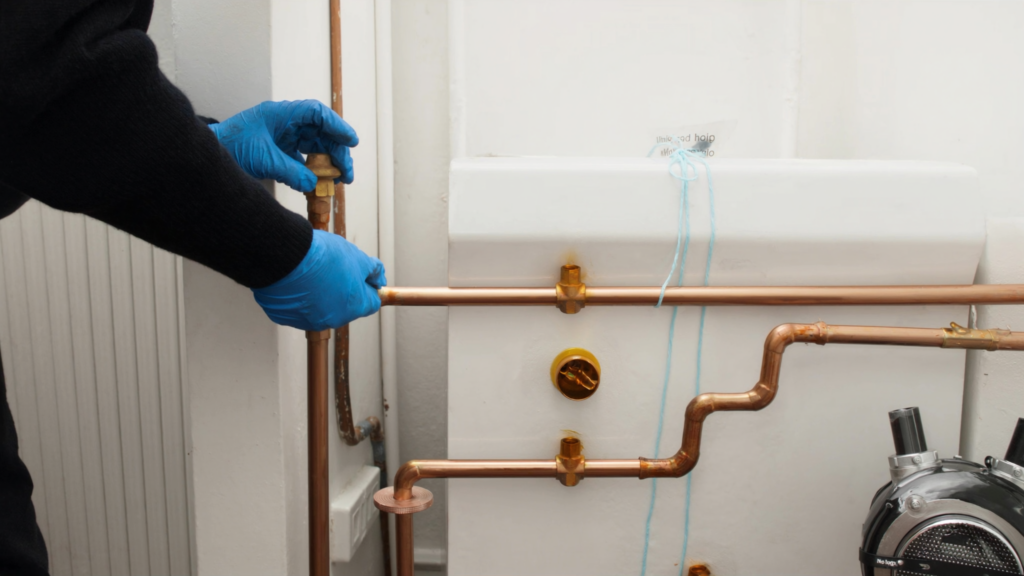
The distribution system carries heat around your home. The most common method in the UK is wet central heating, a network of pipes and radiators through which hot water circulates. Underfloor heating systems use the same water-based principle but distribute heat through pipes embedded in the floor rather than wall-mounted radiators. Some systems, particularly in older or off-gas-grid properties, use air distribution or direct electric panels instead.
The control system governs when and how your heating runs. Traditional programmers and thermostats are increasingly being replaced by smart thermostats that learn your patterns, respond to occupancy, and can be controlled remotely, reducing energy waste significantly. Google Nest’s published field trials measured savings of 10–12% on heating, and UK results vary with how well the schedule is set up.
Types of Heating Systems Available in the UK
The UK heating market in 2026 offers more choice than at any previous point in history. The right system for your home depends on your property type, existing infrastructure, budget, and long-term energy goals. Here is an overview of the main options available, each of which is explored in depth through the dedicated guides linked below.
Air Source Heat Pumps
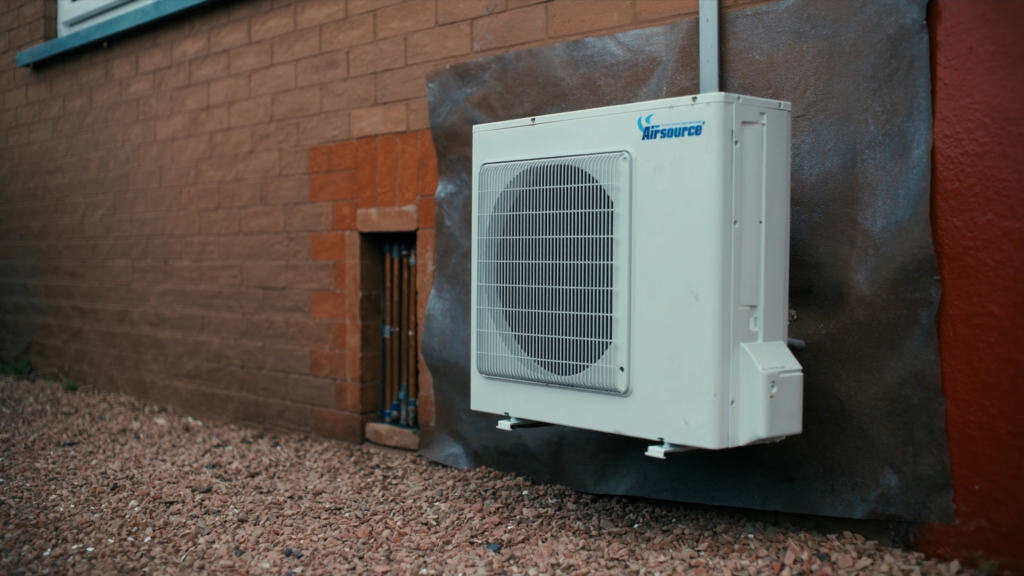
Air source heat pumps (ASHPs) extract heat from outdoor air and use it to warm your home and hot water. They operate efficiently even at temperatures as low as -15°C and can achieve a Coefficient of Performance (COP) of 2.5–4, meaning they produce 2.5 to 4 units of heat for every unit of electricity consumed. The UK government has set a target of 600,000 heat pump installations per year by 2028.
Ground Source Heat Pumps
Ground source heat pumps (GSHPs) extract heat from the ground via buried pipe loops or boreholes, where temperatures remain a stable 8–12°C year-round. They tend to be more efficient than air source alternatives, achieving COPs of 3.5–5, but have higher upfront installation costs and require sufficient outdoor land area. They are particularly well-suited to rural properties and new builds.
Combi Boilers
Combination boilers, or combi boilers, remain the UK’s most popular heating appliance, installed in over 50% of homes. They provide both central heating and instant hot water from a single compact unit, without the need for a separate hot water cylinder or cold water storage tank. Modern condensing combi boilers operate at efficiency ratings above 90%.
System Boilers
System boilers work with a sealed hot water cylinder to provide central heating and stored hot water. Unlike combi boilers, they can supply multiple bathrooms simultaneously and are better suited to larger homes with higher hot water demand. They work well with solar thermal panels, as the cylinder can be pre-heated by solar energy before the boiler tops up the temperature.
Underfloor Heating
Underfloor heating (UFH) distributes heat evenly across the entire floor surface, creating a more comfortable heat profile than radiators. Wet underfloor heating systems run at lower flow temperatures (typically 35–45°C) than radiator systems. That makes them an ideal partner for heat pumps. Electric underfloor heating is simpler to retrofit and better suited to smaller areas such as bathrooms.
Smart Thermostats
Smart thermostats replace standard programmers and thermostats with internet-connected controls that enable remote management, learning algorithms, and integration with broader smart home systems. Leading products in 2026 include the Nest Learning Thermostat, Hive Active Heating, and Honeywell Home T6R. Research from the Energy Saving Trust indicates that upgrading to a smart thermostat can save an average household £75–£150 per year on heating bills.
Hydrogen-Ready Boilers
Hydrogen-ready boilers are gas boilers designed and certified to run on either natural gas or a hydrogen blend of up to 20% hydrogen (H2-blend ready) or, in some models, 100% hydrogen. From 2026, new gas boilers sold in the UK must be hydrogen-blend ready as a minimum standard. While the timeline for hydrogen grid rollout remains subject to government review, these boilers offer a degree of future-proofing if you are replacing a gas boiler today.
How Much Does a Heating System Cost in 2026
Heating system costs vary enormously depending on the technology, the size of your property, and the complexity of the installation. The table below provides typical installed costs for a mid-sized three-bedroom UK home as a realistic planning benchmark. All figures include VAT at the applicable rate and typical labour costs but exclude any grant funding.
| Heating System Type | Small Home (1–2 bed) | Medium Home (3 bed) | Large Home (4–5 bed) | Typical Lifespan |
|---|---|---|---|---|
| Combi Boiler (gas) | £1,800 – £2,800 | £2,200 – £3,500 | £2,800 – £4,500 | 10–15 years |
| System Boiler (gas) | £2,000 – £3,200 | £2,500 – £4,000 | £3,200 – £5,500 | 10–15 years |
| Hydrogen-Ready Boiler | £2,200 – £3,500 | £2,800 – £4,200 | £3,500 – £5,800 | 10–15 years |
| Air Source Heat Pump | £7,000 – £10,000 | £9,000 – £13,000 | £12,000 – £18,000 | 20–25 years |
| Ground Source Heat Pump | £14,000 – £20,000 | £18,000 – £28,000 | £25,000 – £40,000 | 20–25 years |
| Wet Underfloor Heating (retrofit) | £4,000 – £7,000 | £6,000 – £12,000 | £10,000 – £18,000 | 25+ years |
| Electric UFH (bathroom only) | £500 – £900 | £500 – £900 | £500 – £900 | 20–25 years |
Running costs add another dimension to this analysis. The table below illustrates estimated annual heating costs for a typical 3-bedroom semi-detached home with average insulation, based on 2026 energy tariff projections.
| Heating System | Fuel Type | Estimated Annual Running Cost | Approx. Annual Carbon Emissions |
|---|---|---|---|
| Gas Combi Boiler (A-rated) | Natural gas | £900 – £1,400 | 2,700 – 3,500 kg CO₂ |
| Air Source Heat Pump | Electricity | £700 – £1,200 | 700 – 1,200 kg CO₂ |
| Ground Source Heat Pump | Electricity | £600 – £1,000 | 600 – 1,000 kg CO₂ |
| Oil Boiler | Heating oil | £1,200 – £1,900 | 3,200 – 4,500 kg CO₂ |
| Direct Electric Heating | Electricity | £1,800 – £2,800 | 1,400 – 2,200 kg CO₂ |
Key Benefits of Modern Heating Systems
Upgrading or installing an efficient heating system delivers benefits beyond simply keeping your home warm. The most significant advantages include the following.
- Lower energy bills: A modern condensing boiler operating at 92% efficiency consumes roughly 30% less gas than a boiler installed before 2005. Heat pumps can reduce heating energy costs by 40–60% compared to direct electric systems.
- Reduced carbon emissions: Replacing a G-rated boiler with an air source heat pump in an average UK home can cut heating-related carbon emissions by up to 70%, depending on the electricity grid carbon intensity.
- Improved home comfort: Modern systems offer more even heat distribution, better temperature control, and reduced hot and cold spots. Underfloor heating in particular provides consistent warmth across an entire room.
- Increased property value: Research from the Nationwide Building Society found that moving from an EPC rating of D to C can add approximately 5% to a property’s sale value. A new, high-efficiency heating system is one of the most direct routes to improving an EPC rating.
- Future-proofing: Heat pumps and hydrogen-ready boilers are both compatible with a decarbonised energy grid. Investing in these technologies now reduces the risk of being required to retrofit again in the coming decade.
- Smart controls and convenience: Integration with smart home systems means you can manage your heating remotely, set schedules based on occupancy, and receive alerts if something goes wrong, all from your phone.
Grants and Funding for Heating Systems in the UK
The UK government offers several financial incentives built to reduce the upfront cost of upgrading to low-carbon heating systems. Understanding which schemes apply to your situation is critical before committing to a purchase.
Boiler Upgrade Scheme
The Boiler Upgrade Scheme (BUS) provides grants of £7,500 for air source heat pumps and ground source heat pumps installed in England and Wales. The scheme is administered by Ofgem and requires installation by an MCS-certified installer. Applications are made by the installer on the homeowner’s behalf at the point of installation. The scheme has been extended to run until at least March 2028, giving homeowners a meaningful window to take advantage of the funding.
Great British Insulation Scheme and ECO4
The Great British Insulation Scheme closed on 31 March 2026. It funded insulation measures only and never covered windows or glazing. Improving insulation is often a prerequisite for maximising the performance of any new heating system, particularly heat pumps, so these schemes can form a complementary part of a broader home improvement project.
Home Upgrade Grant
The Home Upgrade Grant (HUG2) provides funding for off-gas-grid households on low incomes to install low-carbon heating systems and insulation improvements. Funding covers up to 100% of costs in some cases. Eligibility is assessed by local authorities, and availability varies by region.
VAT
Heat pumps, solar panels, and associated insulation measures installed in residential properties benefit from 0% VAT, reduced from the standard 20% rate. This is a meaningful saving: on a £12,000 heat pump installation, 0% VAT saves £2,400 compared to the standard rate. This relief is currently confirmed until 2027.
Warm Home Discount
The Warm Home Discount is a £150 payment applied directly to eligible households’ energy bills each winter. While it is not a heating system installation grant, it reduces annual energy costs for households receiving pension credit or other qualifying means-tested benefits.
How to Choose the Right Heating System for Your Home
Choosing a heating system is one of the largest single home improvement decisions most homeowners make. The following framework will help you navigate the decision systematically rather than being led purely by marketing or installer preference.
- Assess your gas connection status. If your property is connected to the mains gas grid, a gas boiler replacement or hydrogen-ready boiler is often the lowest-cost short-term option. Off-gas-grid homes, approximately 4 million in the UK, should prioritise heat pumps as the most cost-effective long-term solution.
- Review your property’s insulation. Heat pumps operate most efficiently in well-insulated homes. Before investing in a heat pump, assess loft insulation (minimum 270mm recommended), wall insulation, and double or triple glazing. If your home leaks heat, any heating system will be expensive to run.
- Consider your hot water demand. Households with high simultaneous hot water demand, multiple bathrooms, large families, are better served by system or regular boilers with a cylinder, or heat pumps with an integrated hot water cylinder, rather than a combi boiler alone.
- Factor in your heating distribution system. Heat pumps work best with underfloor heating or larger-format radiators that can operate efficiently at lower flow temperatures. If your home has small, older radiators designed for high-temperature boiler output, you may need to upgrade them as part of a heat pump installation.
- Think about your timeline and budget. If your boiler has failed and you need an emergency replacement, a hydrogen-ready boiler is a practical choice that preserves future flexibility. If you have time to plan and can access BUS grant funding, a heat pump should be seriously evaluated.
- Get multiple quotes. For any heating system installation over £3,000, obtain at least three quotes from MCS-certified or Gas Safe registered installers. Quotes should detail equipment brand and model, the scope of work, warranty terms, and projected running costs.
Heating System Installation, What to Expect
The installation process varies significantly between system types, but understanding the general stages helps you plan disruption, timelines, and costs more accurately.
Boiler Replacement
A like-for-like combi boiler replacement in a standard property typically takes one to two days. The installer will isolate gas and water supplies, remove the old boiler, mount and connect the new unit, flush the heating system, test and commission the boiler, and register the installation with Gas Safe and the manufacturer for warranty purposes. You should receive a Building Regulations Compliance Certificate (or CORGI certificate equivalent) on completion.
Heat Pump Installation
Heat pump installations are more complex and typically take two to four days for an air source system, and five to ten days for a ground source system including ground works. Key stages include a full heat loss survey of your property (essential for correct sizing), planning permission checks, though most domestic ASHPs are permitted development, delivery and positioning of the outdoor unit, installation of the hot water cylinder if required, connection to the heating distribution system, and system commissioning. You should also expect an MCS certificate on completion, which is required to access BUS grant funding and the Smart Export Guarantee for any coupled solar PV.
Underfloor Heating
Wet underfloor heating retrofit installations involve lifting floor surfaces, installing pipe manifolds and insulation boards, laying pipe circuits, screed or board installation, and connection to the heat source. This is disruptive work that typically requires rooms to be cleared and can take one to three weeks depending on property size. Electric underfloor heating in a single bathroom, by contrast, can be completed in one day.
Common Problems and Maintenance for Heating Systems
Even the best heating systems require regular maintenance and can develop faults over time. Knowing what to watch for and how to maintain your system extends its lifespan and protects your warranty.
Annual Servicing
Gas and oil boilers should be serviced annually by a Gas Safe registered engineer. This is a warranty requirement for most manufacturers and a legal obligation under landlord gas safety regulations. A typical boiler service costs £70–£120 and includes cleaning heat exchangers, checking combustion efficiency, inspecting seals and safety devices, and topping up inhibitor levels.
Heat pumps should be serviced every one to two years by a qualified F-Gas registered engineer. Annual servicing costs are typically £150–£250 for an air source heat pump.
System Pressure and Bleeding Radiators
Wet central heating systems rely on maintaining the correct water pressure, typically between 1 and 1.5 bar when cold. If pressure drops below 0.8 bar, you will often see a fault code and the heating will not function. Re-pressurising a system via the filling loop is a task most homeowners can learn to do safely. Cold spots at the top of radiators indicate trapped air, which is resolved by bleeding the radiator with a radiator key, a simple two-minute job that meaningfully improves heat output.
Common Boiler Faults
- No hot water or heating: Often caused by low pressure, a failed diverter valve, or a faulty thermostat. Check pressure and thermostat settings before calling an engineer.
- Boiler lockout (fault codes): Modern boilers display fault codes that identify the issue. Consult your boiler’s manual or the manufacturer’s website before assuming the worst, many lockouts are triggered by simple issues such as a frozen condensate pipe in winter.
- Kettling sounds: A rumbling or banging noise from the boiler typically indicates limescale build-up on the heat exchanger, particularly in hard water areas. A descaling treatment or power flush can resolve this, though in severe cases heat exchanger replacement may be required.
- Radiators not heating evenly: This often points to a system balance issue rather than a boiler fault. A heating engineer can balance the system by adjusting lockshield valves to ensure equal heat distribution.
Heat Pump Specific Maintenance
Air source heat pump outdoor units require clear airflow to function correctly. Ensure the unit is free from leaves, debris, and vegetation within at least 300mm of all air inlets and outlets. Refrigerant levels should be checked during annual servicing, low refrigerant causes a reduction in efficiency and, if unchecked, can lead to compressor failure. Modern heat pumps include monitoring systems that can alert you to performance drops before they become serious faults.
Heating System Efficiency Ratings Explained
Understanding efficiency ratings helps you compare systems objectively and evaluate manufacturer claims with confidence.
Gas boilers are rated using SEDBUK (Seasonal Efficiency of Domestic Boilers in the UK) values, expressed as a percentage. A-rated boilers achieve 90% or above, meaning 90p of every £1 spent on gas produces useful heat. Older G-rated boilers may operate at just 60–65% efficiency.
Heat pumps are rated by their Coefficient of Performance (COP), a ratio of heat output to electrical energy input. A COP of 3.5 means 3.5 kWh of heat is produced per kWh of electricity consumed. In real-world conditions, heat pumps are measured by their Seasonal Coefficient of Performance (SCOP), which averages performance across a full heating season. MCS standards require ASHPs to achieve a minimum SCOP of 2.5 to qualify for BUS grant funding.
The ErP (Energy-related Products) rating is the European-derived label you will see on new heating products, running from A+++ down to G. Most A-rated boilers and all heat pumps comfortably achieve A++ or above on this scale, though the rating system is under review as UK standards diverge from EU frameworks post-Brexit.
The Future of Heating in UK Homes
The direction of travel for UK heating policy is clear, even if the precise timeline remains subject to revision. The government’s Future Homes Standard, which mandates that all new homes built from 2025 must be ready for low-carbon heating, has effectively ended gas boiler installation in new builds. For existing homes, the Clean Heat Market Mechanism, under which boiler manufacturers will be required to sell a proportion of heat pumps alongside gas boilers, is expected to accelerate the shift away from gas over the coming decade.
Hydrogen as a heating fuel remains a contested area. A 2023 government consultation concluded that hydrogen would not be used for widespread domestic heating in the near term, but hydrogen-blend ready boilers remain a regulatory requirement for new installations as a hedge against future network developments. The most likely scenario for the majority of UK homes is a gradual transition to heat pumps, driven by cost reduction in both equipment and installation, and supported by continued government incentive schemes.
For homeowners making decisions today, the practical implication is straightforward: if your boiler needs replacing imminently, a hydrogen-ready condensing gas boiler is a reasonable short-term choice. If you have time and budget to plan a more significant upgrade, particularly if your home has reasonable insulation, a heat pump is increasingly the financially and environmentally superior long-term investment, especially when BUS grant funding reduces the upfront gap.
More on heating systems
- Heating controls ranked by what they actually save
- Smart Thermostats That Actually Reduce Your Heating Bills
- Hydrogen ready boiler worth it (2026)
- How Much Does a New Boiler Cost to Install in 2026?
- Boiler Upgrade Scheme how to apply (2026)
- Nest Learning Thermostat UK 2026
- Conventional (Heat-Only) Boiler, Explained (UK, 2026)
- Worcester Bosch Boiler Error Codes UK 2026