Replacing a boiler is one of the most significant home improvement decisions a UK homeowner will make, and the emergence of hydrogen-ready boilers has added a genuinely confusing new dimension to what was already a complicated choice. These products are now widely stocked by installers across the country, with major brands including Worcester Bosch, Baxi, and Viessmann all offering hydrogen-ready models as standard or premium options within their ranges. The question is whether the hydrogen-ready label represents genuine future value or whether it is, in practice, a marketing distinction that makes very little difference to most homeowners today.
A hydrogen-ready boiler is a gas boiler engineered to switch to 100% hydrogen in the future with minor component changes, and in 2026 it costs roughly £100 to £300 more than a standard condensing boiler. There are no running cost savings today, as the boiler operates on natural gas at standard rates of around 6.5p per kWh. The most important thing to know is that the UK Government has not committed to a hydrogen heating rollout, so this premium is a hedge against an uncertain future rather than a guaranteed investment, for most homeowners replacing a failed or ageing boiler, the modest extra cost is a reasonable precaution, but it should not take priority over insulation upgrades or heat pump planning.
- A hydrogen-ready boiler costs roughly £100 to £300 more than a comparable standard gas boiler. That makes it a low-cost hedge rather than a major investment decision
- Choose a hydrogen-ready model only if you are replacing a boiler that has failed or is near end of life — do not delay replacement waiting for hydrogen technology to mature
- Hydrogen-readiness offers zero running cost savings today, as the boiler runs on natural gas exactly like any standard condensing boiler
- Prioritise loft and wall insulation improvements before factoring hydrogen-readiness into your boiler decision, as insulation delivers immediate, measurable energy savings
- Get at least three quotes from Gas Safe registered installers and ask each to confirm whether the hydrogen-ready premium is included or charged separately
- If your home is a strong candidate for a heat pump in the next five to ten years, a hydrogen-ready boiler may offer less long-term value than its premium suggests
- Check whether your current or prospective insurer and mortgage lender treat hydrogen-ready boilers differently before committing, as industry standards are still evolving
- Understanding Hydrogen-Ready Boilers and What the Term Actually Means
- Where the UK Hydrogen Heating Strategy Actually Stands in 2026
- How Hydrogen-Ready Boilers Differ From Standard Gas Boilers
- What Hydrogen-Ready Boilers Cost in 2026
- Grants and Funding Available for Boiler Replacements in 2026
- The Honest Case For Buying a Hydrogen-Ready Boiler Now
- The Honest Case Against Prioritising Hydrogen-Readiness
- How to Choose the Right Boiler for Your Home Right Now
A hydrogen-ready boiler is a gas boiler that runs on natural gas today but has been designed and certified to switch to 100% hydrogen fuel in the future, requiring only minor component changes rather than full replacement. In 2026, the honest assessment is that hydrogen-readiness carries a modest upfront premium of roughly £100 to £300 over a comparable standard boiler, offers no running cost advantage today, and hedges against a hydrogen heating future that remains genuinely uncertain. For most homeowners replacing a boiler that has already failed or is near the end of its life, choosing a hydrogen-ready model is a low-cost insurance policy, but it should not delay or replace more impactful decisions about insulation or heat pump planning.
Understanding Hydrogen-Ready Boilers and What the Term Actually Means
A hydrogen-ready boiler is a gas boiler manufactured to operate on natural gas now but engineered and certified to run on 100% hydrogen in the future, with only a relatively simple component swap required to make the transition. This is a meaningfully different product category from a standard condensing boiler, but the difference lives almost entirely inside the casing, to look at, to install, and to operate on a day-to-day basis, a hydrogen-ready boiler is indistinguishable from any other modern gas boiler.
One of the most important distinctions homeowners rarely encounter is the difference between a 20% hydrogen blend and a 100% hydrogen-ready boiler. The UK gas network already carries a small proportion of hydrogen, blended into the natural gas supply, and most existing modern boilers can handle this without modification. However, this low-level blending is very different from running a boiler on pure hydrogen, which burns at a higher temperature, produces different combustion byproducts, and places different demands on seals, valves, and heat exchanger materials. A boiler described as 20% blend-compatible is not the same as one certified as 100% hydrogen-ready.
The relevant technical benchmark in the UK is PAS 4444, the publicly available specification developed by the British Standards Institution that sets the certification requirements for hydrogen-ready gas appliances. When comparing products, homeowners should check whether a boiler is certified to PAS 4444, this is the specification that actually defines what “hydrogen-ready” means in a rigorous, standardised way, rather than it being a loosely applied marketing term. Not every boiler described as hydrogen-ready has been independently certified to this standard, so it is worth asking your installer or checking the manufacturer’s documentation directly.
Practical tip, when requesting quotes, ask each installer to confirm whether the hydrogen-ready boiler they are proposing is certified to PAS 4444, and request the model’s product specification sheet so you can verify this yourself.
Where the UK Hydrogen Heating Strategy Actually Stands in 2026
In 2026, the UK government has not confirmed a national strategy for hydrogen domestic heating, and no firm timetable exists for converting the gas grid to hydrogen. This is the most important contextual fact any homeowner should understand before making a purchasing decision based on hydrogen-readiness.
The government’s Heat and Buildings Strategy made clear that decisions on hydrogen’s role in domestic heating would depend significantly on the outcomes of real-world hydrogen village trials. The most prominent of these, originally proposed for Redcar in the Tees Valley, faced substantial delays, community opposition, and political scrutiny before the programme could generate meaningful data. As of 2026, large-scale residential hydrogen heating trials have not progressed to the point where a confident national rollout decision can be made.
Neither Ofgem nor the Department for Energy Security and Net Zero (DESNZ) has committed to a hydrogen heating grid conversion timetable. The widely discussed 2035 phase-out date applies to the sale of new fossil-fuel-only boilers, it is not a date by which hydrogen will become available through the grid. These are two entirely separate policy mechanisms, and conflating them leads many homeowners to assume that buying a hydrogen-ready boiler today means they will automatically have access to hydrogen fuel within a decade. That assumption is not currently supported by confirmed government policy.
The Climate Change Committee, which provides independent advice to the UK government on meeting its net zero targets, has consistently highlighted significant uncertainty about whether green hydrogen can be produced at sufficient scale and low enough cost to make domestic heating viable. Several of its reports have suggested that hydrogen is likely to play a larger role in industrial decarbonisation and heavy transport than in home heating.
In 2026, buying a hydrogen-ready boiler does not guarantee access to hydrogen fuel within the boiler’s working life. Homeowners should treat hydrogen-readiness as a potential future benefit, a modest hedge, rather than a near-term operational advantage.
Practical tip, check the Energy Saving Trust website for the most current summary of UK hydrogen heating policy before making any boiler decision that is heavily weighted towards a hydrogen future.
How Hydrogen-Ready Boilers Differ From Standard Gas Boilers
The engineering differences between a hydrogen-ready boiler and a standard condensing boiler are real but contained to specific internal components. Understanding these differences helps homeowners assess what they are actually paying a modest premium for.
Hydrogen burns hotter than natural gas and produces different combustion byproducts, most notably water vapour rather than carbon dioxide when pure hydrogen is burned. This places different stresses on the boiler’s internal components. Hydrogen-ready boilers typically use stainless steel heat exchangers rather than aluminium alternatives, use seals and gaskets rated to withstand hydrogen exposure without degrading over time, and incorporate valve components and ignition systems suited to hydrogen’s different combustion characteristics. These are not cosmetic changes, they are the engineering basis on which a future hydrogen conversion would be possible.
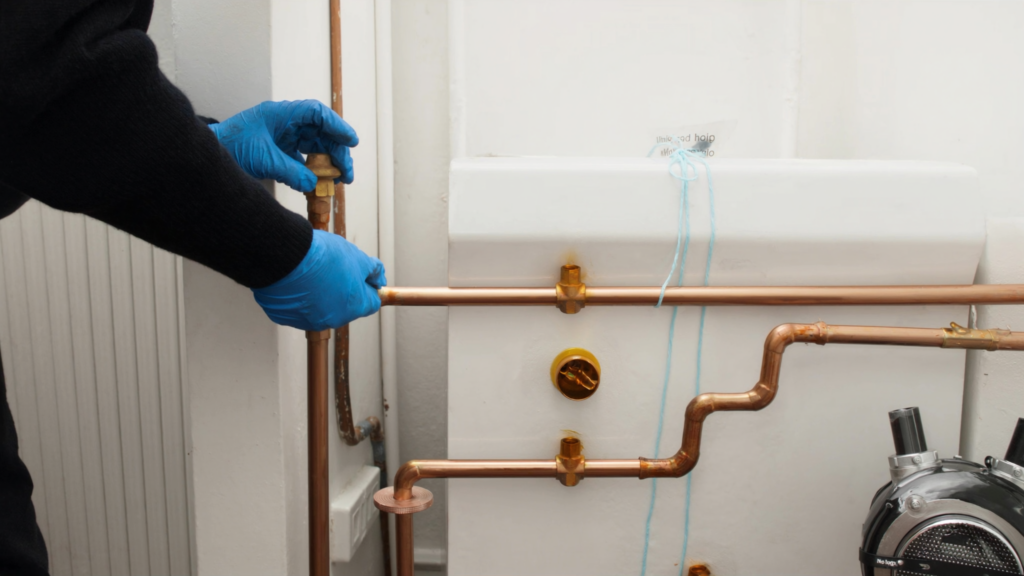
The anticipated conversion process, when and if hydrogen becomes available through the gas network, has been described by Worcester Bosch, Baxi, and Viessmann as a relatively straightforward engineer visit. The expectation from manufacturers is that switching a certified hydrogen-ready boiler to run on 100% hydrogen would involve swapping a small number of internal components, the gas valve, burner, and associated fittings, in a visit lasting a few hours rather than a full boiler replacement. This is the core of the value proposition for hydrogen-readiness.
What hydrogen-ready boilers cannot do is important to state plainly. They do not currently run on hydrogen. They do not improve your energy efficiency beyond a standard A-rated condensing boiler of equivalent specification. They offer no reduction in gas bills today. And they do not require any changes to your existing radiators, pipework, thermostats, or smart controls, the wider heating system remains entirely unaffected by the choice of a hydrogen-ready model over a standard one.
Practical tip, if an installer suggests you need to upgrade your radiators or controls specifically because of a hydrogen-ready boiler, this is not accurate. The boiler connects to your existing system in exactly the same way as a standard replacement.
What Hydrogen-Ready Boilers Cost in 2026
The cost of a hydrogen-ready boiler in 2026 is reassuringly close to that of an equivalent standard condensing boiler, which significantly changes the nature of the purchasing decision. This is not a case of paying a large premium for an uncertain future benefit, the price gap is modest enough that most homeowners will not find it the decisive factor in their choice.
For a typical three-bedroom semi-detached property requiring a mid-range combi boiler, a hydrogen-ready model from a reputable brand will typically cost between £1,800 and £3,500 installed, including the boiler unit, labour, and standard parts. The equivalent standard high-efficiency condensing boiler in the same output range typically costs between £1,500 and £3,000 installed. The hydrogen-ready premium is therefore often in the region of £100 to £300, though this varies by brand, output (measured in kilowatts), and the complexity of the installation.
Labour costs for a straightforward boiler swap, replacing a like-for-like combi boiler with no system modifications, typically run between £300 and £600, and this figure is the same whether the new boiler is hydrogen-ready or standard. The additional cost of hydrogen-readiness is almost entirely in the unit price rather than installation.
Running costs in 2026 are identical for both boiler types, as both burn natural gas at comparable efficiency ratings. Choosing a hydrogen-ready model will not reduce your energy bills.
| Boiler Type | Typical Installed Cost | Current Fuel | Efficiency Rating | Hydrogen Conversion Required | Future-Proof Status |
|---|---|---|---|---|---|
| Standard condensing combi boiler | £1,500 – £3,000 | Natural gas | ErP A-rated | Full replacement needed | Limited, may require early replacement if grid converts |
| Hydrogen-ready combi boiler (PAS 4444 certified) | £1,800 – £3,500 | Natural gas | ErP A-rated | Minor component swap estimated at a few hours | Higher, built to convert without full replacement |
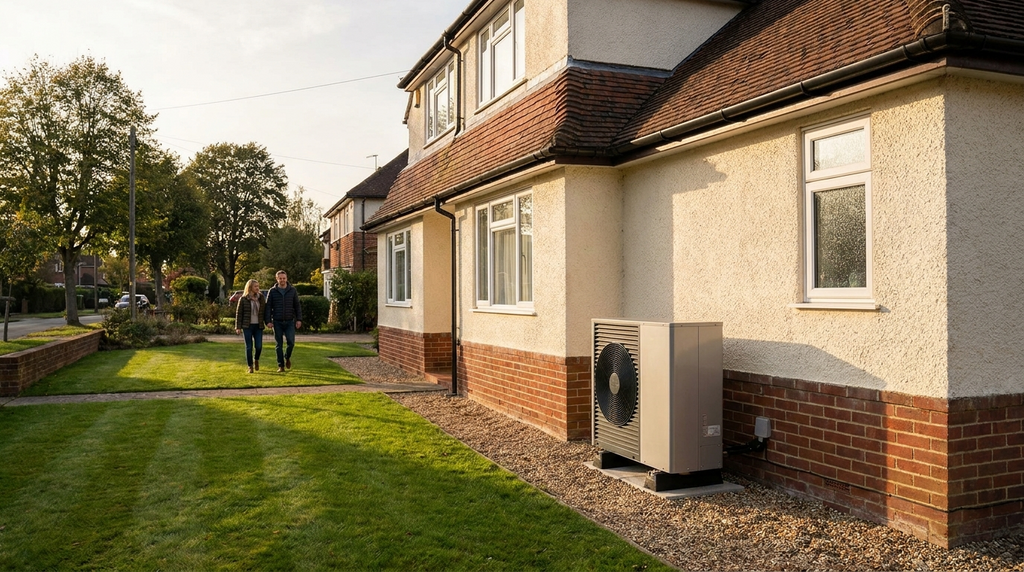
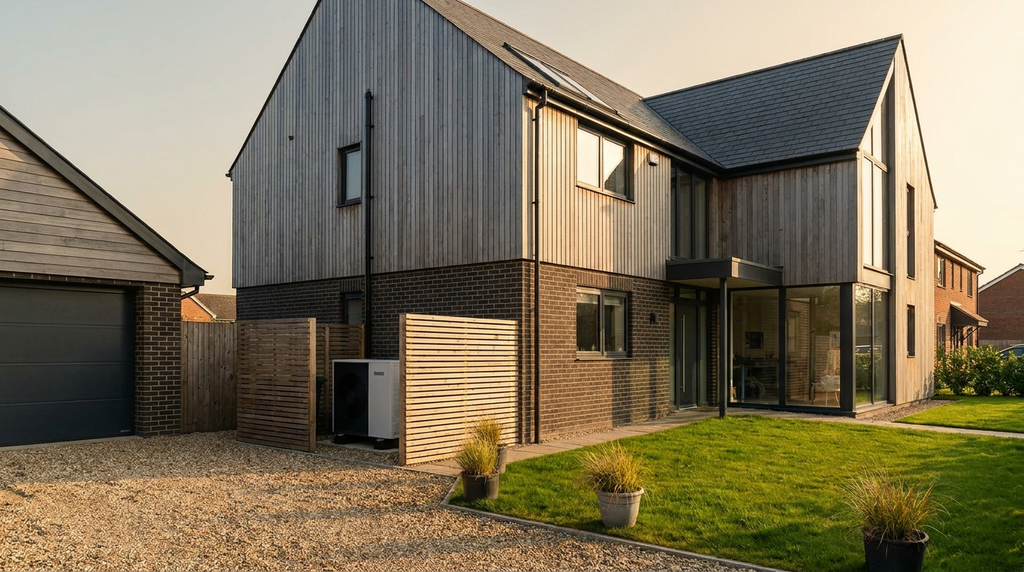
| Air source heat pump (for comparison) | £8,000 – £15,000 (after BUS grant) | Electricity | 300–400% efficiency (COP 3–4) | Not applicable | Highest, confirmed low-carbon technology under current policy |
Practical tip, always get at least three quotes from Gas Safe registered installers, and ask each one to provide a written breakdown separating the unit cost from the labour cost so you can compare like for like.
Grants and Funding Available for Boiler Replacements in 2026
Hydrogen-ready boilers do not attract any specific additional grant funding in 2026 and are treated identically to standard gas boilers under current UK government support schemes. Understanding what is and is not available will help you plan your budget realistically.
The ECO4 scheme (Energy Company Obligation, currently in its fourth phase) is the primary government-funded support mechanism for boiler replacements for eligible households. ECO4 is available to low-income and vulnerable households and is delivered through energy suppliers. It prioritises properties with poor insulation and lower Energy Performance Certificate (EPC) ratings, and can fund boiler replacement as part of a broader package of energy efficiency improvements. Eligibility is means-tested and property-assessed, the Energy Saving Trust and Simple Energy Advice websites both offer free eligibility checks. A hydrogen-ready boiler could theoretically be funded under ECO4, but eligibility is determined by household circumstances and property condition, not by boiler type.
The Great British Insulation Scheme (GBIS) focuses specifically on fabric insulation measures, cavity wall insulation, loft insulation, and solid wall insulation, rather than boiler replacement. It is unlikely to contribute directly to the cost of a new boiler. However, improving your home’s insulation through GBIS can reduce the heat demand of your property, which in turn affects the output size of boiler you need. A lower-output boiler is generally less expensive, so pursuing insulation improvements before or alongside a boiler replacement can reduce your overall heating costs. The Great British Insulation Scheme closed on 31 March 2026. It funded insulation measures only and never covered windows or glazing.
The Boiler Upgrade Scheme (BUS) provides grants of up to £7,500 for the installation of an air source heat pump (a device that extracts heat from outdoor air and transfers it indoors using electricity, achieving efficiencies of 300% or more). BUS also covers ground source heat pumps and biomass boilers in certain circumstances. It does not apply to gas boilers of any kind, including hydrogen-ready models. There is currently no direct government grant that offsets the cost of choosing a hydrogen-ready boiler over a standard gas boiler. boiler upgrade scheme how to claim
Practical tip, use the Simple Energy Advice service (simpleenergyadvice.org.uk) to check whether your household qualifies for ECO4 support before committing to a fully self-funded boiler replacement.
The Honest Case For Buying a Hydrogen-Ready Boiler Now
If your boiler needs replacing, there is a reasonable and defensible case for choosing a hydrogen-ready model, and it rests primarily on the modest nature of the additional cost rather than on certainty about hydrogen’s future.
The strongest argument is straightforward. When a boiler fails or reaches the end of its reliable working life, the practical choice narrows to what type of replacement makes the most sense now. In that situation, paying an additional £100 to £300 for a hydrogen-ready model is a genuinely low-cost hedge. You are not making a large speculative investment in an uncertain technology, you are making a marginal additional spend that removes a potential future complication.
Homeowners in parts of northern England, the Humber region, and other areas with existing or planned hydrogen infrastructure projects may be better positioned to benefit if gas grid conversion does eventually happen in their area. The geography of any hydrogen rollout, if it occurs, will not be uniform across the UK, and some regions have more developed hydrogen industrial clusters that could accelerate local heating network decisions.
Warranty length is also a practical consideration. Many hydrogen-ready boilers from established brands carry warranties of between seven and twelve years. A boiler installed in 2026 with a ten-year warranty would still be within its guaranteed operational lifespan in the mid-2030s, which is the earliest realistic window in which any significant hydrogen grid conversion could begin. Choosing a non-hydrogen-ready boiler today means that if hydrogen does arrive before that boiler reaches end of life, you face a forced early replacement, an outcome the modest hydrogen-ready premium today could help you avoid.
There is also a practical psychological benefit worth acknowledging honestly. If hydrogen-ready costs roughly the same and you are already spending thousands of pounds on a boiler replacement, the decision to future-proof where possible, at minimal additional cost, removes a potential source of future regret. This is not an irrational consideration when the price difference is genuinely small.
Practical tip, if you are leaning towards hydrogen-ready, prioritise models from established brands with strong UK parts availability and a proven track record of honouring warranty claims, as this will matter far more in practice than the hydrogen-ready status itself during the boiler’s current working life on natural gas.
The Honest Case Against Prioritising Hydrogen-Readiness
The case against prioritising hydrogen-readiness is also grounded in evidence, and it deserves equal weight in any balanced assessment of this decision.
The UK government’s confirmed, funded, and operational low-carbon heating pathway is the heat pump, not hydrogen. The Boiler Upgrade Scheme, with its £7,500 grant for air source heat pump installations, represents the most significant financial signal the government has sent about where it expects domestic heating to go. There is no equivalent grant for hydrogen-ready boilers. When government money follows a specific technology, that is a meaningful policy signal, and heat pumps are receiving it whilst hydrogen heating is not. air source heat pump costs and installation guide
Several credible independent voices have raised serious doubts about the economic and logistical viability of mass hydrogen heating. The Climate Change Committee has noted in its advice to government that producing green hydrogen, hydrogen generated using renewable electricity rather than fossil fuels, at the volumes required for domestic heating would be enormously resource-intensive. Green hydrogen produced by electrolysis uses roughly three times as much electricity as a heat pump would use to deliver the same amount of heat to a home. From an energy efficiency standpoint, using green electricity to heat homes directly via heat pumps is significantly more efficient than using it to produce hydrogen and then burning that hydrogen in a boiler.
The working life argument also runs in both directions. A high-quality standard condensing boiler installed in 2026 with a ten-year warranty will likely reach end of life around 2036 at the earliest. Based on current policy trajectories and the delays already seen in hydrogen trials, a functioning residential hydrogen grid conversion before 2036 appears unlikely in most parts of the UK. This means hydrogen-readiness may simply never be activated during the boiler’s practical lifespan. That makes it a premium that delivers no functional benefit whatsoever.
Perhaps most importantly, hydrogen-readiness should not distract from higher-impact decisions that deliver measurable improvements today. Improving your home’s insulation reduces heat demand and lowers bills regardless of what fuel your boiler burns. Upgrading to a smart thermostat and heating controls can deliver meaningful savings with a relatively small outlay. Planning properly for a heat pump transition, including assessing your insulation levels and radiator sizing, is a far more productive use of time and attention than debating whether to pay £200 extra for hydrogen-readiness. smart thermostat installation and savings guide
Practical tip, before spending any time researching hydrogen-ready boiler models, book a free or low-cost home energy assessment to understand your property’s insulation levels. The savings available from fabric improvements almost always exceed anything a different boiler specification can deliver.
How to Choose the Right Boiler for Your Home Right Now
Making a good boiler decision in 2026 means working through a clear process rather than being led primarily by marketing claims about future technologies. The following steps apply whether you are considering hydrogen-ready or standard models.
- Assess whether replacement is genuinely necessary, if your current boiler is under ten years old and still within its warranty period, get a qualified Gas Safe registered engineer to assess whether repair is more cost-effective than replacement. A boiler that is failing but repairable for a few hundred pounds may not justify a full replacement spend of two thousand or more, particularly if you are considering a heat pump transition within the next decade.
- Size the boiler correctly for your property, use an accredited Gas Safe registered engineer to calculate the appropriate output in kilowatts for your home’s actual heat demand. An oversized boiler runs inefficiently, costs more to buy, and does not heat your home any better than a correctly sized model. This calculation should account for your current insulation levels and the number of bathrooms and radiators in the property.
- Decide on your long-term heating direction, if you are seriously considering an air source heat pump within the next five to ten years, a standard high-efficiency condensing boiler may be the more pragmatic bridge technology, particularly if you plan to invest in insulation improvements in the interim. If you intend to remain on gas for the long term and the property is unlikely to suit a heat pump, hydrogen-readiness adds a sensible low-cost hedge. Be honest with yourself about which scenario actually applies to your home and circumstances.
- Compare hydrogen-ready models on overall quality, not just hydrogen status, look at the ErP efficiency rating (all modern replacements should be A-rated), the warranty length offered by the manufacturer, the brand’s reputation for parts availability and customer service, and independent reliability data. A hydrogen-ready boiler from a brand with poor after-sales support is a worse choice than a standard model from a manufacturer with strong warranty backing.
- Get at least three written quotes from Gas Safe registered installers, Gas Safe registration is the legal requirement for anyone working on gas appliances in the UK, and you can verify any engineer’s registration on the official Gas Safe Register at gassaferegister.co.uk. For any green home improvement work, also look for TrustMark accreditation, which provides an additional layer of consumer protection. Written quotes allow you to compare the unit cost, labour cost, and any additional parts or system work separately, rather than accepting a single all-in figure that is difficult to assess.
- Consider the insulation first, whichever boiler you choose, its efficiency and your bills will be significantly influenced by how well your home retains heat. The Great British Insulation Scheme closed on 31 March 2026. It funded insulation measures only and never covered windows or glazing. loft and cavity wall insulation costs and options
| Decision Factor | Favours Hydrogen-Ready Boiler | Favours Standard Condensing Boiler | Favours Heat Pump Planning |
|---|---|---|---|
| Budget available | Modest premium acceptable (under £300 extra) | Tightest budget, every pound matters | £7,500 BUS grant available and property suitable |
| Location and infrastructure | Northern England, near hydrogen cluster areas | Any UK region with no specific hydrogen plans | Well-insulated property with space for outdoor unit |
| Intended time in property | Planning to stay 10 or more years | Likely to move within 5–7 years | Long-term occupancy with net zero ambitions |
| Current boiler situation | Boiler has failed and replacement is urgent | Boiler has failed and cost is primary concern | Current boiler still functional, time to plan properly |
| Long-term heating preference | Intending to remain on gas long-term | Undecided or planning to sell before grid changes | Committed to low-carbon heating and willing to invest |
The honest conclusion is that hydrogen-readiness is neither the transformative future-proof purchase some marketing materials suggest nor the irrelevant distraction that its most sceptical critics imply. It is a modest engineering upgrade at a modest price premium, hedging against a future that may or may not arrive within your boiler’s working life. For most homeowners in 2026, the hydrogen-ready label should be one consideration among several, weighted alongside efficiency ratings, warranty length, brand reliability, installer quality, and the far more impactful question of whether your home’s insulation and heating system as a whole are fit for purpose.
What hydrogen-readiness cannot do is substitute for the harder thinking about where UK domestic heating is genuinely heading. The government’s confirmed and funded pathway runs through heat pumps, and the most financially and environmentally productive actions available to most homeowners in 2026, improving insulation, installing smart controls, and assessing heat pump suitability, remain the same regardless of which boiler sits in the cupboard under the stairs. heat pump readiness checklist for UK homes
Practical tip, if you are genuinely unsure whether a heat pump could work for your property, contact a TrustMark-accredited and MCS-certified heat pump installer for an initial assessment before committing to any gas boiler replacement. MCS (Microgeneration Certification Scheme) is the accreditation required for heat pump installers in the UK, and you can verify any installer’s credentials at mcscertified.com.
Frequently Asked Questions
In 2026, hydrogen-ready boilers typically carry a upfront premium of around £100 to £300 over a directly comparable standard condensing gas boiler from the same manufacturer. Worcester Bosch, Baxi, and Viessmann all offer hydrogen-ready models within this price band above their standard equivalents. Installation costs are broadly the same, so the total additional outlay for hydrogen-readiness alone is unlikely to exceed £300 in most cases.
The UK Government has not committed to a hydrogen heating rollout for domestic properties as of 2026, and trials such as the H100 Fife project remain small scale. The Climate Change Committee has cast doubt on hydrogen as a viable mass-market home heating solution, favouring heat pumps instead. This means hydrogen-readiness is a genuine hedge against an uncertain future rather than a reliable forecast of what will happen.
No — a hydrogen-ready boiler burns natural gas at the same efficiency rating as a comparable standard condensing boiler, so there is no difference in running costs today. Both types are subject to the same gas unit rates, currently averaging around 6.5p per kWh in the UK. Any future running cost difference would only materialise if and when 100% hydrogen gas becomes available through the grid, which has no confirmed timeline.
Any Gas Safe registered engineer can install a hydrogen-ready boiler today, as the installation process is identical to fitting a standard gas boiler. You do not need a specialist hydrogen-qualified engineer for current natural gas operation. When and if hydrogen becomes available in your area in the future, a certified engineer would carry out the relatively minor component swap required to convert the boiler.
If your home is well insulated and you can access the Boiler Upgrade Scheme grant of £7,500 for an air source heat pump, a heat pump is likely the more future-proof choice aligned with current UK government policy. A hydrogen-ready boiler is the more practical option if your home needs significant insulation work first, your budget cannot stretch to a heat pump, or your boiler has failed and you need an immediate replacement. The two options serve different circumstances rather than being direct like-for-like alternatives.