How a conventional boiler differs from a combi or system boiler
A conventional boiler, also called a heat-only or regular boiler, heats water in a sealed circuit and then stores it in a separate hot water cylinder. This is fundamentally different from a combi boiler, which heats water instantly on demand and has no storage tank. A system boiler sits between the two: it uses a cylinder like a conventional boiler but has the pump and expansion vessel built into the unit itself.
Conventional systems require two tanks in the loft: a cold water feed tank that supplies the cylinder, and an expansion tank that allows water to expand safely when heated. This makes them less space-efficient than combi boilers, which need no loft tanks or cylinder cupboard. However, the stored hot water in a conventional system can supply multiple taps and showers at the same time without losing pressure, which is why they remain popular in larger homes with two or more bathrooms (Energy Saving Trust, 2026).
Modern condensing conventional boilers can achieve high ErP ratings, typically A-rated at 92% efficiency or above. But they do suffer from standing heat losses from the cylinder, which older or poorly insulated cylinders can make significant. A well-insulated modern cylinder loses around 1–2 kWh per day, compared to 3–5 kWh for an older one (Energy Saving Trust, 2026).
Quick numbers typical costs and performance for a conventional boiler in 2026
| Item | Typical cost/rating | Notes |
|---|---|---|
| Gas boiler unit (condensing, A-rated) | £800–£1,500 | Wall-hung or floor-standing; includes heat exchanger and burner (GOV.UK Building Regulations, 2026) |
| Oil boiler unit (condensing, A-rated) | £1,200–£2,200 | Typically floor-standing; requires external oil tank (OFTEC installation data, 2026) |
| Installation labour (gas) | £1,200–£2,000 | Includes pipework, commissioning, and removal of old system |
| Hot water cylinder (120–250 litres) | £400–£800 | Unvented stainless steel costs more than vented copper (Energy Saving Trust, 2026) |
| Annual running cost (gas, 3-bed semi) | £900–£1,200 | Based on 12,000 kWh heating + 3,000 kWh hot water (Ofgem price cap typical use, January 2026) |
| Annual running cost (oil, 3-bed semi) | £1,200–£1,600 | Based on similar usage; oil prices vary seasonally (Sutherland Tables, 2026) |
| ErP efficiency rating (new boiler) | A (92%+) | Minimum 92% SEDBUK required for new gas installations (GOV.UK Building Regulations, 2026) |
| Average lifespan | 12–15 years | With annual servicing; oil boilers may last slightly longer |
The three main components of a conventional boiler system
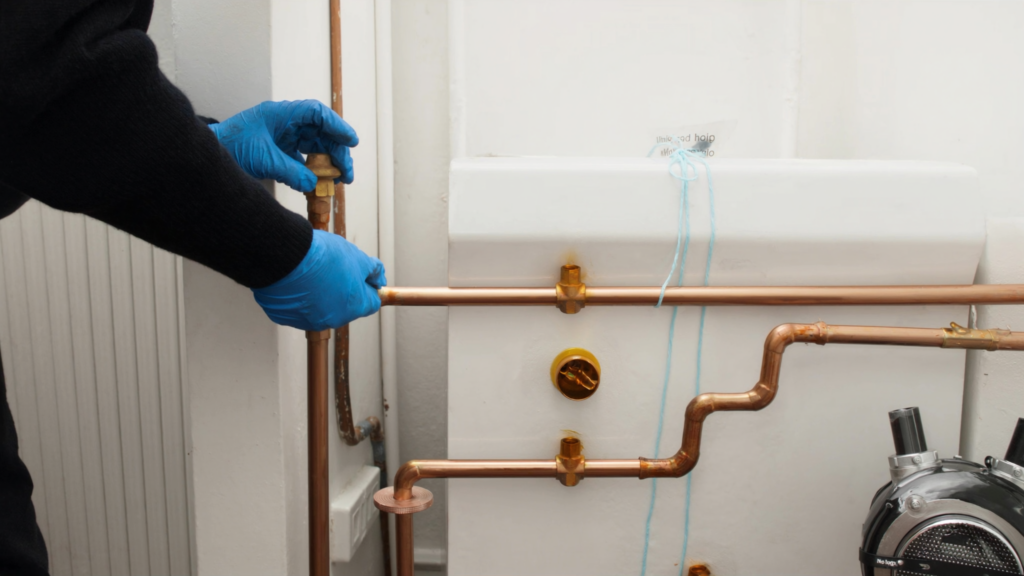
A conventional boiler system has three distinct parts that work together. The boiler unit itself is the heat source, either gas or oil-fired, and can be wall-hung or floor-standing. It heats water and circulates it through radiators and the hot water cylinder via a pump. Modern condensing units recover heat from flue gases to achieve higher efficiency.
The hot water cylinder stores pre-heated water for taps and showers. Cylinders vary from 120 litres for a small household up to 250 litres for larger homes with multiple bathrooms. Unvented stainless steel cylinders are more expensive but offer better pressure and insulation than traditional vented copper ones. The cold water feed tank in the loft supplies the cylinder by gravity, while a separate expansion tank allows water to expand safely when heated. All three components must be correctly sized for the property and installed by a Gas Safe registered engineer for gas systems or an OFTEC registered technician for oil (Gas Safe Register, 2026; OFTEC, 2026).
What a conventional boiler costs to install and run in 2026 (with sources)
Installing a gas conventional boiler in 2026 typically costs between £2,500 and £4,000. This includes the boiler unit, a new hot water cylinder, loft tanks, pipework, and labour. The higher end applies if you need to replace an old cylinder or upgrade pipework for a modern condensing system (Energy Saving Trust, 2026). For oil systems, the range is £3,000 to £5,000, partly because oil boilers are usually floor-standing and require an external oil storage tank (OFTEC installation cost data, 2026).
Annual running costs depend on fuel prices and usage. For a typical 3-bed semi with a gas conventional boiler, using 12,000 kWh for heating and 3,000 kWh for hot water, the cost is approximately £900 to £1,200 based on the January 2026 Ofgem price cap (Ofgem, 2026). For oil, the same property would cost £1,200 to £1,600, though oil prices fluctuate more than gas (Sutherland Tables, 2026). Replacing just the cylinder adds £400 to £800 to the installation cost (Energy Saving Trust, 2026).
Converting a home from a conventional to a combi system can cost £1,000 to £2,000 more than a like-for-like replacement because of the additional pipework and removal of tanks and cylinder. compare combi boiler installation costs vs conventional
Eligibility and installer verification for a conventional boiler in 2026
For gas boilers, the installer must be on the Gas Safe Register. You can check their registration at gassaferegister.co.uk. For oil boilers, the installer must be OFTEC registered, verifiable at oftec.org. These are legal requirements, not optional recommendations.
The hot water cylinder also requires a competent installer. Unvented cylinders, which are pressurised and more efficient, must be installed by someone holding a G3 qualification, which covers safety for unvented hot water storage systems. Your installer should provide evidence of this, or you can check with your local building control department (GOV.UK Building Regulations, 2026).
MCS certification is not needed for conventional boilers unless you are adding solar thermal panels or a heat pump as a secondary heat source. The Boiler Plus 2026 regulations, which are part of Part L of the Building Regulations, require all gas boiler replacements to have a minimum ErP efficiency of 92% and time and temperature controls fitted (GOV.UK Building Regulations, 2026).
The direct answer what is a conventional boiler and is it right for your home in 2026?
A conventional boiler is a heat-only system that uses a separate hot water cylinder and two loft tanks. It is best suited to larger homes with existing pipework for this setup and with multiple bathrooms or high simultaneous hot water demand. Because it stores hot water, it can deliver high flow rates to several taps and showers at once without pressure drops.
It is not the most space-efficient option. You need a cupboard for the cylinder and loft space for the two tanks. If your home has neither, a combi or system boiler is more practical. However, for homes already fitted with a conventional system, replacing like-for-like is often cheaper and less disruptive than converting to a combi boiler, which requires removing tanks, rerunning pipework, and potentially upgrading gas supply (Energy Saving Trust, 2026).
If you are building a new home or undertaking a major renovation, a system boiler with an unvented cylinder may offer better pressure and efficiency than a conventional system without the loft tanks. compare system boiler vs conventional boiler for new builds
How conventional boiler efficiency is measured and what to look for in 2026
The Seasonal Efficiency of Domestic Boilers in the UK (SEDBUK) rating system measures boiler efficiency as a percentage. An A-rated condensing boiler must achieve at least 92% efficiency under standard test conditions (GOV.UK SEDBUK database, 2026). The ErP label, which applies across the UK, shows efficiency classes from A+++ down to G. Most new conventional boilers sold in 2026 are A-rated, meaning they meet the 92% threshold.
The hot water cylinder’s heat loss is equally important. Modern cylinders with good insulation have a standing heat loss of 1–2 kWh per day, meaning they lose very little heat when not in use. Older cylinders can lose 3–5 kWh per day, which adds significantly to annual running costs (Energy Saving Trust, 2026). When buying a new cylinder, look for one with a heat loss figure of 2 kWh/day or less.
For further efficiency gains, choose a boiler with a modulating burner, which adjusts its output to match demand, and weather compensation controls, which adjust flow temperature based on outside temperature. These features can reduce fuel use by 10–15% compared to a simple on-off thermostat (Energy Saving Trust, 2026). how heating controls affect boiler efficiency
Frequently Asked Questions
A conventional boiler, also called a heat-only boiler, heats water in a sealed circuit and stores it in a separate hot water cylinder. It requires two loft tanks for cold water feed and expansion, as explained by the Energy Saving Trust.
A gas conventional boiler unit costs £800-£1,500, with installation labour adding £1,200-£2,000. An oil boiler unit costs £1,200-£2,200, according to GOV.UK Building Regulations and OFTEC data.
Yes, for larger homes with multiple bathrooms. A conventional boiler supplies hot water to several taps and showers at once without losing pressure, unlike a combi boiler. However, it takes up more space with loft tanks and a cylinder (Energy Saving Trust, 2026).
Modern condensing conventional boilers are typically A-rated at 92% efficiency or above. Standing heat losses from the cylinder add 1-2 kWh per day for a well-insulated modern cylinder (Energy Saving Trust, 2026).
Yes, a conventional boiler requires a separate hot water cylinder, costing £400-£800 for 120-250 litres. Unvented stainless steel cylinders cost more than vented copper ones (Energy Saving Trust, 2026).