Switching from oil to a heat pump is a major home energy decision. The upfront cost is higher, but running costs are often lower and the system produces no direct carbon emissions.
A heat pump replacing an oil boiler typically costs £7,000–£14,000 more upfront than a new oil boiler, but cuts annual heating bills by £400–£900 for an average 3-bedroom semi-detached home (Energy Saving Trust, 2026). Over ten years, the total cost of a heat pump including installation, running costs, and maintenance is often lower than staying with oil.
How a heat pump’s efficiency (SPF) determines your oil-for-heat-pump savings
The Seasonal Performance Factor (SPF) is the key metric. An SPF of 3.0 means the heat pump delivers 3 kWh of heat for every 1 kWh of electricity it uses (Ofgem, 2026). A modern oil boiler typically operates at 85–92% efficiency, meaning it wastes 8–15% of the fuel’s energy (Energy Saving Trust, 2026).
To compare costs, you need the kWh-to-cost conversion. One litre of heating oil produces roughly 10 kWh of heat. The Q1 2026 Ofgem price cap sets electricity at about 24p/kWh. Heating oil costs around 9p/kWh on average. Here is a worked example for a home using 12,000 kWh of heat per year.
- Oil boiler (90% efficient): 12,000 kWh ÷ 0.90 = 13,333 kWh of oil needed. At 9p/kWh, that is £1,200 per year. Add oil delivery charges (typically £50–£100 per year), and the total is about £1,280.
- Heat pump (SPF 3.0): 12,000 kWh ÷ 3.0 = 4,000 kWh of electricity needed. At 24p/kWh, that is £960 per year.
- Net annual saving: £1,280 – £960 = £320, before considering the heat pump’s higher maintenance costs (roughly £150–£200 per year versus £100 for an oil boiler).
The actual saving depends on your home’s heat demand, electricity tariff, and oil price. Homes with higher heat demand or poor insulation will see smaller savings.
The three main heat pump types for replacing an oil boiler (air source, ground source, hybrid)
There are three common heat pump types for oil-to-heat-pump conversions. Each has different costs, efficiencies, and space requirements.
Air-source heat pump (ASHP)
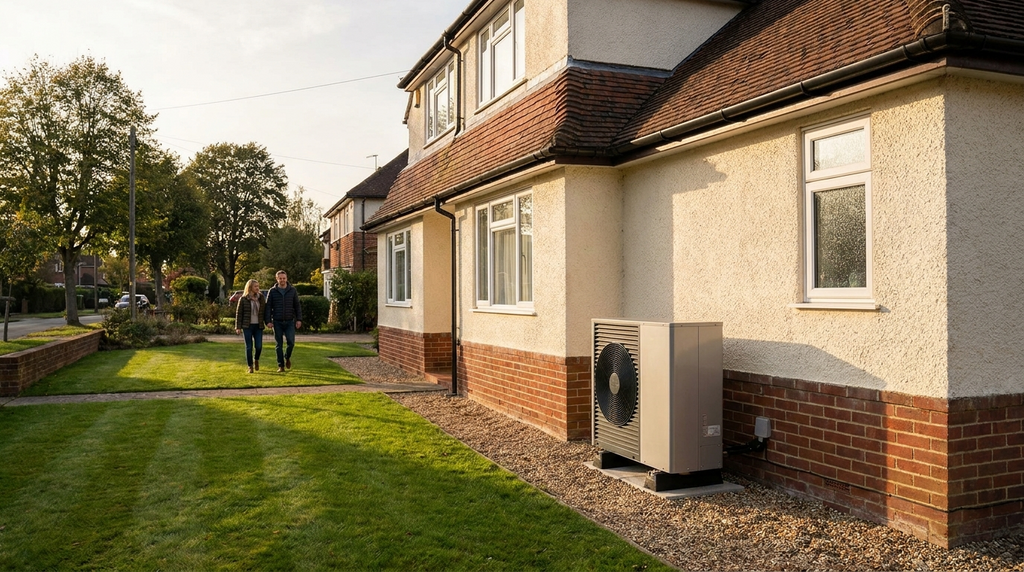
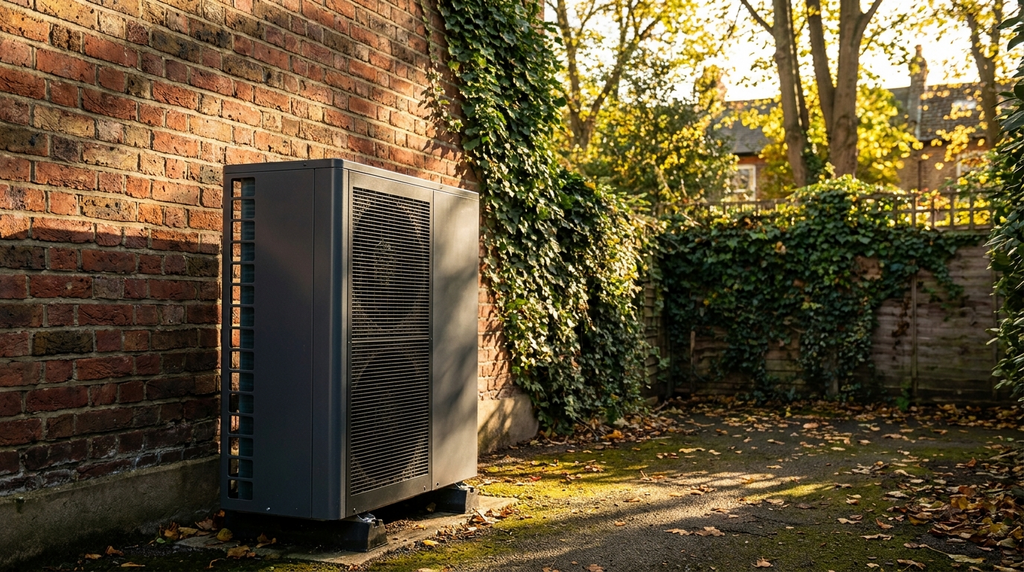
This is the most common choice. An ASHP extracts heat from outside air and transfers it indoors. Installed costs range from £7,000 to £13,000 after the £7,500 Boiler Upgrade Scheme (BUS) grant (MCS installer database, 2026). It suits most homes with good insulation and does not need garden space for underground pipes.
Ground-source heat pump (GSHP)
A GSHP extracts heat from the ground via buried pipes (horizontal loops or vertical boreholes). It is more efficient, with an SPF of 3.5–4.5, but costs £14,000–£19,000 after the BUS grant (DESNZ Boiler Upgrade Scheme, 2026). You need enough garden space for loops (typically 50–100 metres of trench) or a borehole.
Hybrid heat pump
A hybrid system pairs a small heat pump with your existing oil boiler. The heat pump covers 60–80% of the heating load, and the boiler kicks in during very cold weather. Installed costs are £5,000–£9,000 after the BUS grant (DESNZ Boiler Upgrade Scheme, 2026). However, the BUS grant is not available for hybrids unless the oil boiler is removed entirely. Hybrids can be a stepping-stone to full heat pump adoption.
Quick numbers, cost, payback, and savings table
| Heat pump type | Upfront cost (after BUS grant) | Annual oil bill saved | Annual electricity cost added | Net annual saving | Simple payback (years) |
|---|---|---|---|---|---|
| Air source (3-bed semi) | £7,000–£13,000 | £1,280 | £960 | £320 | 22–41 |
| Ground source (3-bed semi) | £14,000–£19,000 | £1,280 | £800 | £480 | 29–40 |
| Hybrid (3-bed semi) | £5,000–£9,000 | £1,024 (80% saving) | £768 | £256 | 20–35 |
Data sources: Energy Saving Trust typical bill calculations, 2026; Ofgem price cap Q1 2026; MCS average installation cost data, 2026. Payback times are long because the upfront cost is high. These figures assume a 3-bed semi with 12,000 kWh heat demand and an oil boiler efficiency of 90%. Your actual savings will vary.
The Boiler Upgrade Scheme grant is £7,500, this is the single biggest subsidy for oil-to-heat-pump conversions
The Boiler Upgrade Scheme (BUS) provides a £7,500 grant off the installation cost of an air-source or ground-source heat pump for homeowners in England and Wales (GOV.UK Boiler Upgrade Scheme, 2026). This is the single largest subsidy available for oil-to-heat-pump conversions.
Eligibility rules are clear. The property must have an existing oil, LPG, or electric heating system. The installer must be MCS-certified. The grant is applied directly by the installer, not paid to the homeowner, you only pay the reduced price. The grant is not available for hybrid systems unless the oil boiler is removed entirely.
The BUS grant is a fixed amount per installation, not a percentage of the cost. If your installation costs £14,000, you pay £6,500 after the grant. If it costs £10,000, you pay £2,500. The grant does not cover additional work like upgrading radiators or installing a new hot water cylinder.
Eligibility, certification, and how to verify an MCS-approved installer
MCS (Microgeneration Certification Scheme) is the mandatory certification for heat pump installers to qualify for the BUS grant. You can search the MCS register by postcode to find certified installers in your area (MCS installer search, 2026).
Homeowners should also check that the installer holds TrustMark registration for consumer protection and, for electrical work, NICEIC or NAPIT certification. The installer must provide a full heat loss calculation (room-by-room) and a system design before installation. This is a legal requirement under Part L of the Building Regulations (2025 update, effective from June 2025) (GOV.UK Part L, 2025).
Here is a step-by-step checklist.
- Check the MCS register for certified installers in your area.
- Request three quotes from different MCS-certified installers.
- Confirm the installer will apply for the BUS grant on your behalf.
- Verify warranty terms, typically 5–10 years for the heat pump and 2–5 years for labour.
- Ask for a written heat loss calculation and system design before agreeing to any work.
How to choose a heat pump installer in the UK
The direct answer a heat pump can fully replace an oil boiler, but requires a well-insulated home and a larger hot water cylinder
A heat pump can fully replace an oil boiler in most homes. However, the system operates at lower flow temperatures (35–45°C) than an oil boiler (60–80°C). This means radiators may need upgrading to larger or more efficient models to deliver the same heat output (Energy Saving Trust, 2026).
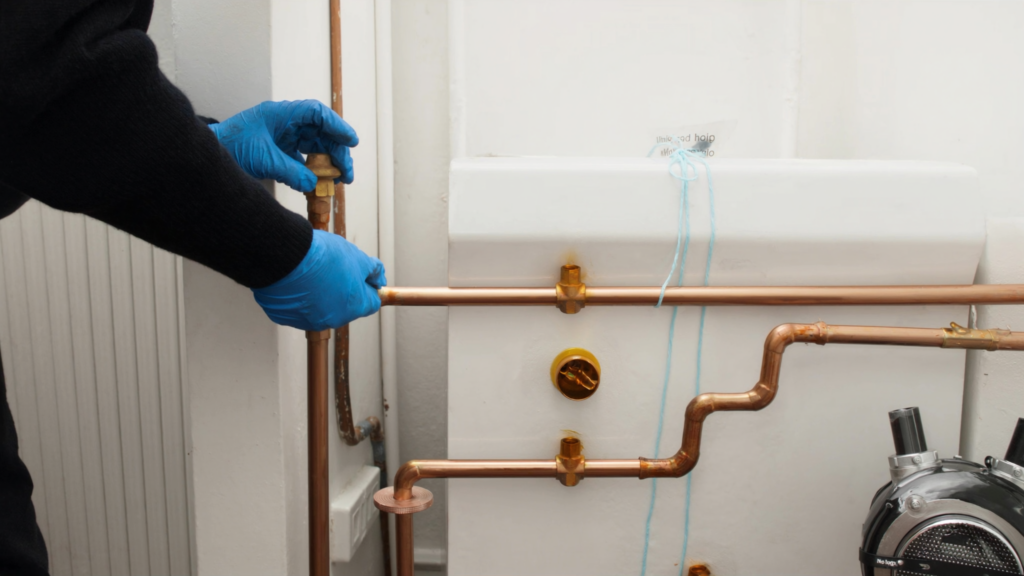
A 200–300 litre hot water cylinder is standard for a heat pump system. This replaces the oil boiler’s tank and may require new pipework. The cylinder stores hot water at a lower temperature (around 45–50°C) than an oil boiler (60°C+), so you may need a larger cylinder to meet demand. The MCS 020 standard sets out the design requirements for heat pump installations (MCS 020, 2026).
The oil boiler must be physically removed and disconnected from the fuel supply. The oil tank should be decommissioned, either filled with water or sand to prevent future use, or removed entirely. This is a separate cost of £200–£400, not covered by the BUS grant. The heat pump’s outdoor unit needs clear space (minimum 1 metre from walls) and should not be placed near bedroom windows due to noise (typically 40–55 dB at 1 metre) (GOV.UK noise guidance, 2026).
Heat pump noise levels and planning permission
Frequently Asked Questions
A heat pump replacing an oil boiler costs £7,000–£14,000 more upfront than a new oil boiler, according to the Energy Saving Trust. The total cost including installation ranges from £10,000 to £18,000 for an average home.
Yes, a heat pump is typically cheaper to run than oil. For a 12,000 kWh home, annual heating bills drop from £1,280 with oil to £960 with a heat pump at SPF 3.0, saving £320 per year (Ofgem data).
A heat pump with SPF 3.0 is 300% efficient, while a modern oil boiler operates at 85–92% efficiency (Energy Saving Trust). The heat pump delivers 3 kWh of heat per 1 kWh of electricity.
Yes, a heat pump can work with existing radiators and pipework, but older systems may need upgrades. MCS recommends checking radiator sizing and insulation for optimal performance.
The Boiler Upgrade Scheme (BUS) offers £7,500 off an air source heat pump installation in England and Wales. The Energy Saving Trust also lists regional grants for oil-to-heat pump conversions.