Average UK homeowner spends £1,200–£2,800 installing a new gas boiler versus £7,000–£14,000 for an air-source heat pump
The upfront cost difference between a gas boiler and a heat pump is the first fact most homeowners search for. A new gas boiler installation in 2026 typically costs between £1,200 and £2,800, including the boiler unit, labour, and basic controls (Energy Saving Trust, 2026). An air-source heat pump installation costs between £7,000 and £14,000, which includes the heat pump unit, a hot water cylinder, labour, and often upgraded radiators (DESNZ Electrification of Heat Demonstration Project, 2026).
The boiler cost range typically excludes smart heating controls, which add £200–£400. The heat pump cost range already includes the necessary cylinder and radiator upgrades. The gap in upfront cost is roughly £5,000–£11,000, though the Boiler Upgrade Scheme grant reduces the heat pump cost by £7,500 (see section below).
Quick numbers boiler vs heat pump running costs, efficiency, and lifetime savings
The table below compares annual running costs, efficiency, carbon emissions, and 10-year total costs for a typical 3-bed semi-detached home. All figures use 2026 energy price projections from DESNZ and Ofgem.
| Fuel type | Annual running cost | Efficiency rating | CO₂ per year (kg) | Lifetime (years) | 10-year total cost (incl. install & servicing) |
|---|---|---|---|---|---|
| Gas boiler (A-rated) | £600–£1,000 | 90–94% | 2,100 | 10–15 | £8,200–£14,000 |
| LPG boiler | £1,100–£1,800 | 90–94% | 2,400 | 10–15 | £13,000–£22,000 |
| Oil boiler | £1,000–£1,600 | 88–93% | 2,800 | 10–15 | £12,000–£20,000 |
| Air-source heat pump (high temp) | £900–£1,400 | SCOP 3.0–3.5 | 700 | 15–20 | £16,000–£25,000 |
| Ground-source heat pump | £700–£1,100 | SCOP 3.5–4.5 | 500 | 20–25 | £28,000–£38,000 |
Source: DESNZ 2026 energy price projections, Ofgem typical domestic consumption values 2026, Energy Saving Trust heat pump performance data 2026.
The gas boiler has the lowest 10-year total cost. The air-source heat pump has a higher total cost but lower carbon emissions and a longer lifespan. guide to heat pump running costs
A gas boiler costs roughly £600–£1,000 per year to run in a typical 3-bed semi, while a heat pump costs £900–£1,400
Ofgem’s 2026 typical domestic consumption values show a 3-bed semi uses 12,000 kWh of gas for heating and hot water, and 4,800 kWh of electricity for other uses (Ofgem, 2026). A modern A-rated gas boiler operates at 90–94% efficiency, meaning it converts nearly all the gas energy into heat. A heat pump has a Seasonal Coefficient of Performance (SCOP) of 3.0–3.5, meaning it produces 3.0 to 3.5 units of heat for every unit of electricity used (DESNZ SCOP data, 2026).
The 2026 electricity-to-gas price ratio is roughly 3.5:1, based on the April 2026 price cap. Gas costs about 6p per kWh, and electricity costs about 21p per kWh (Ofgem tariff cap, 2026). This ratio means that even with a SCOP of 3.5, a heat pump’s running cost per kWh of heat is roughly the same as a gas boiler’s. The Energy Saving Trust’s 2026 running cost calculator confirms that a heat pump in a typical 3-bed semi costs £900–£1,400 per year, compared to £600–£1,000 for gas (Energy Saving Trust, 2026).
Heat pumps require a properly insulated home, a hot water cylinder, and outdoor space for the external unit
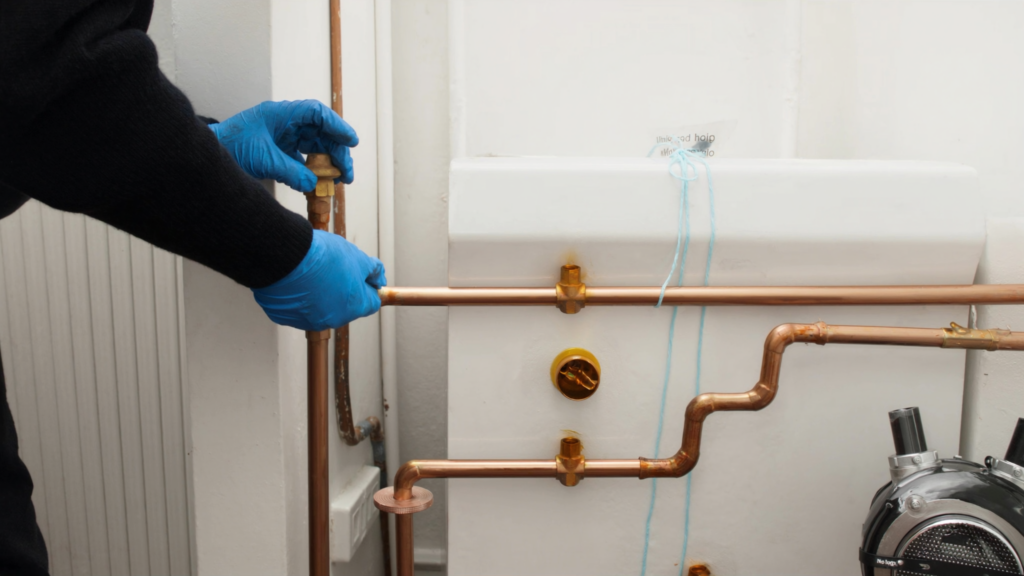
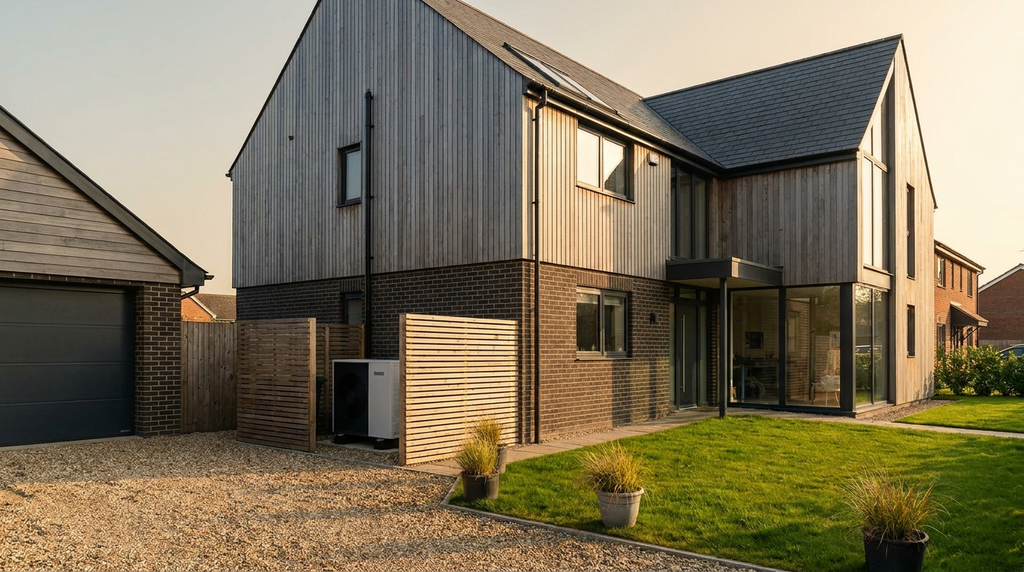
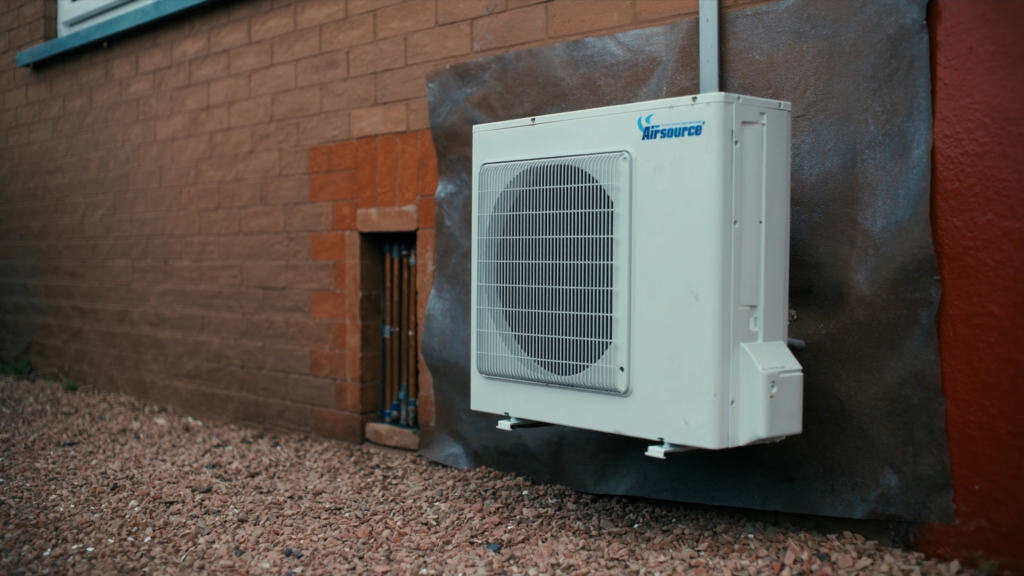
Heat pumps have three non-negotiable requirements. First, the home must have cavity wall or solid wall insulation with a minimum thickness of 75mm to keep heat inside (MCS heat pump installation standards, 2026). Second, a hot water cylinder is needed because heat pumps heat water slowly and store it for later use. This means a combi boiler cannot be replaced directly with a heat pump without installing a cylinder. Third, the external unit needs at least 1 metre of clearance on all sides for airflow (EST heat pump suitability checklist, 2026).
Heat pumps deliver lower flow temperatures of 35–50°C, compared to a gas boiler’s 60–80°C. This means radiators may need to be upsized to release enough heat at lower temperatures. A gas boiler has no such constraints. It works with any insulation level and can be a combi model, saving the space needed for a cylinder.
The Boiler Upgrade Scheme (BUS) grants £7,500 for a heat pump, but the boiler has no equivalent grant in 2026
The Boiler Upgrade Scheme provides a grant of £7,500 for an air-source or ground-source heat pump in 2026 (GOV.UK Boiler Upgrade Scheme, 2026). Eligibility requires that you are a homeowner or landlord, the property was built before December 2024, and the installation is carried out by an MCS-certified installer. The grant is applied as a discount by the installer, not as a cashback payment to you.
There is no equivalent government grant for a gas, LPG, or oil boiler in 2026. The only support for boiler replacements is the Energy Company Obligation (ECO4), which is limited to low-income households receiving certain benefits (DESNZ ECO4 guidance, 2026). If you are not eligible for ECO4, you pay the full cost of a new boiler.
Choose a gas boiler if you want the lowest upfront cost and fastest heating, or a heat pump if you prioritise lower emissions and future fuel savings
The decision between a boiler and a heat pump depends on three factors: your upfront budget, your property’s insulation level, and your long-term expectations for energy prices. A gas boiler is the cheaper option to install and provides fast, high-temperature heating. It works with any insulation level and does not require a hot water cylinder or outdoor space. Heat pumps have higher upfront costs but lower carbon emissions, especially if you are on a green electricity tariff. If electricity prices fall relative to gas in future years, running costs could become lower than gas (EST heat pump vs boiler decision tool, 2026).
Heat pumps remain uncommon in UK homes. DESNZ data for 2026 shows that fewer than 1% of heating systems are heat pumps (DESNZ heat pump adoption statistics, 2026). This means local installer competition may be limited in some areas, potentially affecting installation costs and waiting times.
Only an MCS-certified installer can fit a heat pump for BUS grant eligibility, while a Gas Safe registered engineer must fit a gas boiler
To receive the Boiler Upgrade Scheme grant, a heat pump must be installed by a company certified under the Microgeneration Certification Scheme (MCS). You can check the MCS register at mcscertified.com to find local installers (MCS installer directory, 2026). A gas boiler must be installed by a Gas Safe registered engineer, which is a legal requirement in England, Wales, Scotland, and Northern Ireland (Gas Safe Register public register, 2026).
Oil boilers require an OFTEC registered technician (OFTEC oil installer register, 2026). LPG boilers require a Gas Safe registered engineer with a specific LPG endorsement. TrustMark is a voluntary quality mark that covers customer service and warranties for both boiler and heat pump installers. guide to finding a trusted heating installer
Frequently Asked Questions
No, a heat pump is not cheaper to run than a gas boiler in 2026. Annual running costs for an air-source heat pump are £900-£1,400, while a gas boiler costs £600-£1,000 per year, according to DESNZ energy price projections.
A new gas boiler installation costs between £1,200 and £2,800 in 2026, including the boiler, labour and basic controls. Smart heating controls add £200-£400, according to the Energy Saving Trust.
An air-source heat pump installation costs between £7,000 and £14,000 in 2026, including the unit, hot water cylinder, labour and upgraded radiators. The Boiler Upgrade Scheme can reduce this by £7,500, as reported by DESNZ.
A heat pump has significantly lower carbon emissions than a gas boiler. An air-source heat pump produces about 700kg of CO₂ per year, while a gas boiler emits 2,100kg per year, based on DESNZ 2026 data.
The 10-year total cost for a gas boiler is £8,200-£14,000, including installation and servicing. An air-source heat pump costs £16,000-£25,000 over the same period, according to Ofgem and DESNZ 2026 figures.