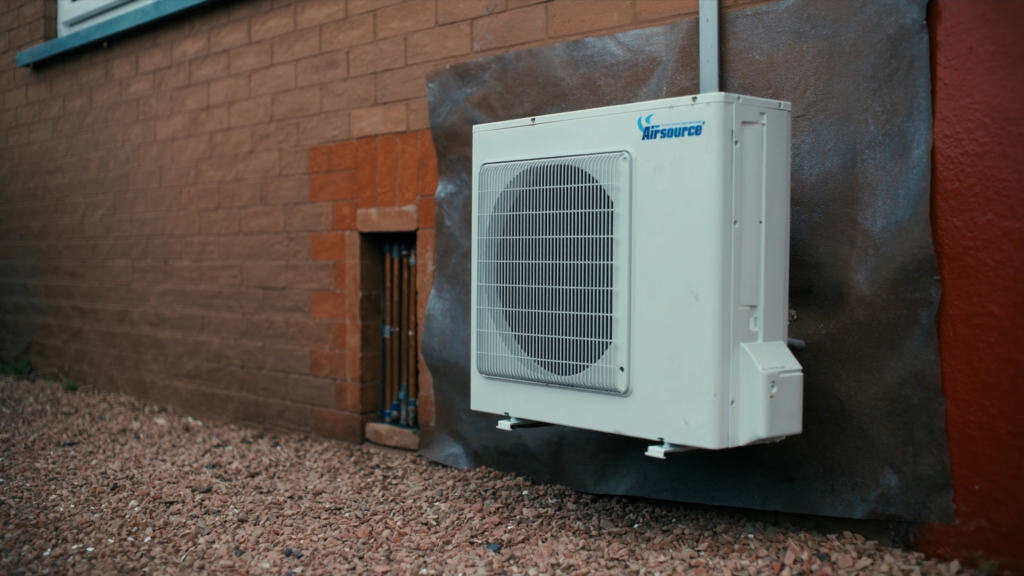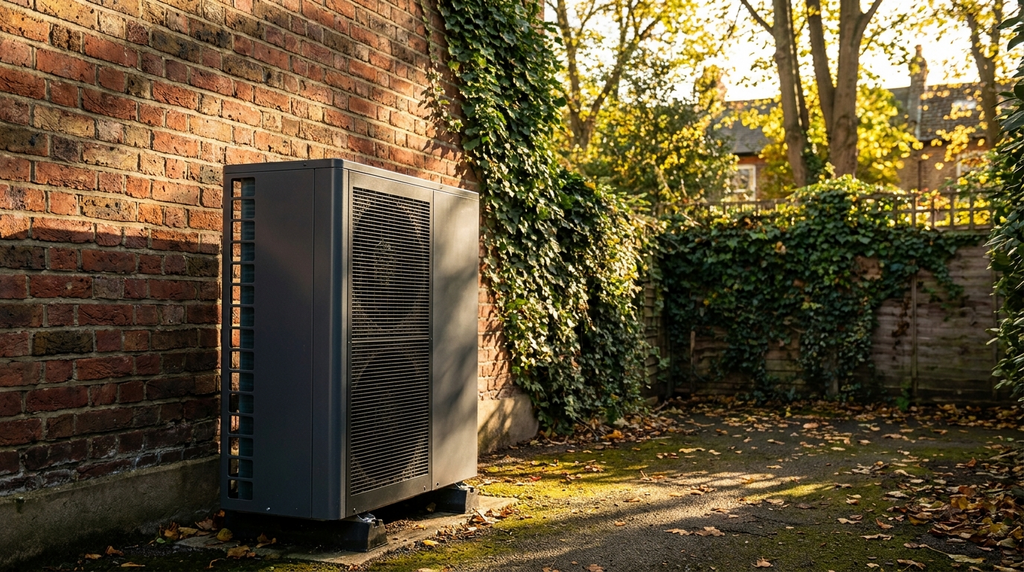
A park home heat pump costs roughly half the annual heating bill of an LPG boiler, saving the average owner over £600 per year.
If you live in a park home, your heating costs are likely a major monthly expense, especially if you rely on LPG or electric storage heaters. A heat pump uses electricity but extracts heat from the outside air. That makes it far more efficient than burning fuel directly.
In 2026, a typical park home uses 12,000 to 15,000 kWh annually for heating and hot water. A heat pump with a Seasonal Coefficient of Performance (SCOP) of 3.0 reduces that purchased energy to 4,000 to 5,000 kWh of electricity. At October 2026 electricity prices under the Ofgem price cap, this translates to a saving of £600 to £800 per year compared to an LPG boiler at roughly 10p/kWh (Ofgem, 2026; DESNZ, 2026).
The Boiler Upgrade Scheme (BUS) in 2026 covers park homes with a £7,500 grant.
The Boiler Upgrade Scheme is the main government grant for heat pumps in England and Wales. It applies to all domestic properties, including park homes, as long as the property meets certain insulation conditions.
The grant is £7,500 in 2026 and is deducted directly from the installer’s invoice. You pay the remaining balance to the MCS-certified installer. To qualify, your park home must have an Energy Performance Certificate (EPC) with no outstanding recommendations for loft or cavity-wall insulation (GOV.UK, 2026).
Your park home must meet minimum insulation standards to qualify for a heat pump grant.
The BUS requires the property to have an EPC rating of D or better, or you must demonstrate that loft and cavity-wall insulation are already installed and up to standard. Park homes typically have solid walls and no cavity, so the installer must confirm the property has adequate floor, roof, and wall insulation.
The specific standards are a U-value of 0.35 W/m²K or lower for walls and floors, and 0.16 W/m²K or lower for roofs. U-value measures how quickly heat passes through a material; lower numbers mean better insulation (Energy Saving Trust, 2026).
Quick numbers heat pump costs, savings, and grant eligibility for park homes.
| Metric | Value (2026) | Notes |
|---|---|---|
| Average annual heat pump running cost | £420–£525 | Based on 4,000–5,000 kWh at 10.5p/kWh (Oct 2026 cap) |
| Average annual LPG boiler running cost | £1,200–£1,500 | Based on 12,000–15,000 kWh at 10p/kWh |
| BUS grant amount | £7,500 | Deducted from installer invoice |
| Typical heat pump installation cost | £9,000–£14,000 | After grant: £1,500–£6,500 |
| Minimum EPC rating required | D or better | Or proof of loft and cavity-wall insulation |
All figures are estimates for a typical park home. Actual costs depend on your home size, insulation, and local installer rates (GOV.UK BUS statistics, 2026).
You can install a heat pump in a park home even without mains gas, but you must check the electrical supply.
Park homes often have a 60-amp or 80-amp single-phase electrical supply. A typical 6kW heat pump requires a dedicated 32-amp circuit. This may exceed your current supply capacity, especially if the park’s distribution network is older.
Your installer must check the incoming supply capacity. If an upgrade is needed, they will arrange for the park owner or the Distribution Network Operator (DNO) to increase the supply. This is a standard part of the installation process and not a barrier for most homes (MCS, 2026).
The only way to confirm your park home qualifies for a heat pump grant is to get an MCS-certified installer survey.
Online calculators can give you a rough idea, but only a site survey by an MCS-certified installer can confirm eligibility. The survey will assess the property’s heat loss, existing insulation, electrical supply, and space for the outdoor unit.
The installer will provide a written quote that includes the BUS grant deduction and a confirmation of eligibility. Do not proceed with any installation without this survey and written quote (GOV.UK BUS eligibility checklist, 2026).
You must use an MCS-certified installer to claim the BUS grant; TrustMark registration is also required.
Only MCS-certified installers can issue the paperwork needed to claim the BUS grant. TrustMark registration is also required, which ensures the installer meets consumer protection standards, including clear contracts and complaints procedures.
Before signing any contract, check the MCS installer database or the TrustMark website. Both are free to use and will confirm the installer is registered (MCS, 2026; TrustMark, 2026).
Park homes with electric radiators or storage heaters benefit most from a heat pump because the running cost is roughly one-third lower.
If you currently use electric storage heaters, your heating costs are high. At 28p per kWh, running 12,000 kWh of heat through storage heaters costs about £1,120 per year. A heat pump with a SCOP of 3.0 costs about £420 per year for the same heat.
The payback period, after the BUS grant, is typically 3 to 5 years for a park home with electric heating. For LPG homes, the payback is longer, usually 5 to 8 years, because the annual savings are smaller (Energy Saving Trust, 2026).
Compare heat pump running costs with electric storage heaters How to check your park home EPC rating online
Frequently Asked Questions
A heat pump saves £600-£800 per year compared to an LPG boiler in a typical park home, based on Ofgem October 2026 electricity prices and an LPG cost of 10p/kWh.
Yes, the Boiler Upgrade Scheme provides a £7,500 grant for park homes in England and Wales in 2026, as confirmed by GOV.UK.
Your park home needs wall and floor U-values of 0.35 W/m²K or lower, and roof U-values of 0.16 W/m²K or lower, as required by the BUS.
Yes, you need an EPC rating of D or better, or proof that loft and cavity-wall insulation are installed, according to the Energy Saving Trust.
A heat pump with a SCOP of 3.0 uses 4,000-5,000 kWh of electricity per year for a park home needing 12,000-15,000 kWh of heat, based on DESNZ data.