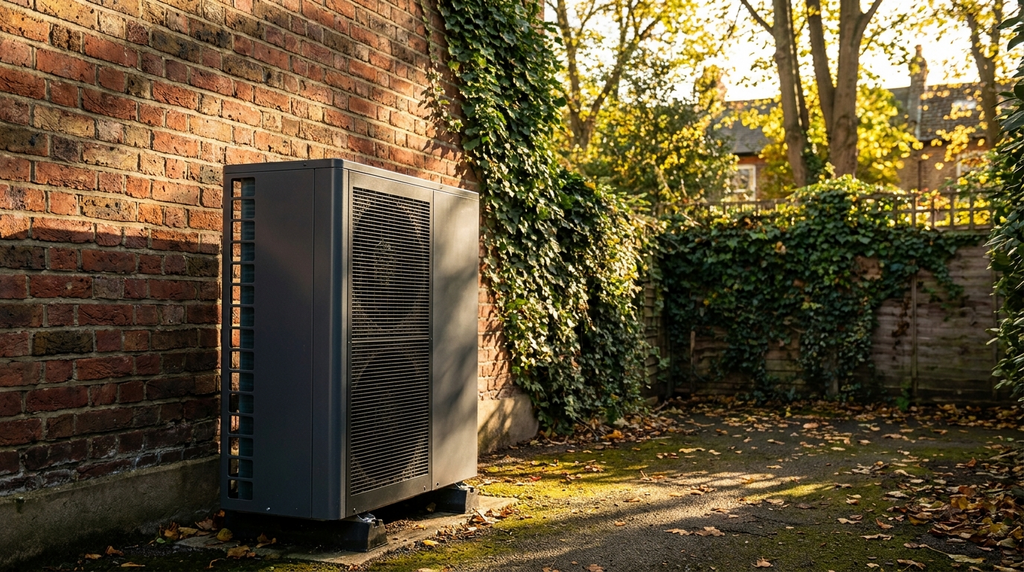
A 2026 gas boiler costs roughly 50% more per kWh than an electric boiler on standard tariffs
The first thing to understand is the raw cost of the fuel itself. Under the January 2026 price cap, Ofgem set the gas unit rate at approximately 7.0p per kWh and the electricity unit rate at approximately 25.0p per kWh (Ofgem, 2026). This means electricity costs about 3.6 times more per unit of energy than gas.
However, this headline figure is misleading without considering efficiency. A modern condensing gas boiler converts around 85–90% of the gas it burns into usable heat, with the rest lost through the flue. An electric boiler converts nearly 100% of the electricity it uses into heat, with no flue losses (Energy Saving Trust, 2026). When you factor in efficiency, the effective cost per kWh of heat delivered narrows the gap slightly but still leaves gas significantly cheaper on standard tariffs.
A typical UK home using 12,000 kWh/year for heating pays roughly £955 with gas and £3,000 with electric on standard tariffs
To compare real-world running costs, consider a typical UK home that uses 12,000 kWh of heat per year. This is based on average household gas consumption data from the Department for Energy Security and Net Zero (DESNZ) for 2025/26 (DESNZ, 2026).
For a gas boiler operating at 88% efficiency, the annual gas consumption needed to deliver 12,000 kWh of heat is 12,000 ÷ 0.88 = 13,636 kWh. At 7.0p per kWh, the annual cost is 13,636 × 7.0p = £954.52, or roughly £955.
For an electric boiler operating at 100% efficiency, the annual electricity consumption is exactly 12,000 kWh. At 25.0p per kWh, the annual cost is 12,000 × 25.0p = £3,000. The direct answer is clear: on standard tariffs, gas is substantially cheaper to run.
Quick numbers electric boiler vs gas running cost comparison for 2026
| Fuel type | Efficiency | Unit rate (p/kWh) | Cost per 10,000 kWh heat delivered | Annual cost (12,000 kWh heat) | Carbon intensity (gCO₂/kWh) |
|---|---|---|---|---|---|
| Gas boiler (condensing) | 88% | 7.0 | £795 | £955 | 210 |
| Electric boiler (standard tariff) | 100% | 25.0 | £2,500 | £3,000 | 150 |
| Electric boiler (Economy 7) | 100% | 12.0 (night rate) | £1,200 | £1,440 | 150 |
| Heat pump (alternative) | 300% (COP 3.0) | 25.0 | £833 | £1,000 | 150 |
Sources: Ofgem price cap data January 2026 (Ofgem, 2026); DESNZ greenhouse gas reporting factors 2026 (DESNZ, 2026); Energy Saving Trust efficiency benchmarks (Energy Saving Trust, 2026).
The table shows that gas remains the cheapest option on standard tariffs. An electric boiler on a standard tariff costs more than three times as much to run as gas. However, an electric boiler on an Economy 7 tariff narrows the gap to roughly 50% more than gas. A heat pump, included for context, is the most cost-effective electric heating option.
The direct answer gas is cheaper on standard tariffs, but electric can win with a time-of-use tariff
On standard tariffs, gas is cheaper. The annual running cost difference is roughly £2,045 for a typical home using 12,000 kWh of heat. However, if you can switch to a time-of-use tariff such as Economy 7, the picture changes significantly.
Ofgem data for 2026 shows Economy 7 night rates around 12.0p per kWh (Ofgem, 2026). If you run your electric boiler entirely during these off-peak hours, the annual cost for 12,000 kWh of heat drops to 12,000 × 12.0p = £1,440. This is still more expensive than gas at £955, but the gap narrows to roughly £485 per year – a much smaller difference than the £2,045 gap on standard tariffs.
The single decisive factor is off-peak electricity pricing. If your home can store heat (for example, with a large hot water cylinder) and you can shift all heating demand to night hours, an electric boiler becomes a viable alternative to gas, though not yet cheaper.
Running cost depends on your home’s heat loss and whether you can shift demand to off-peak hours
The cost comparison depends on more than boiler efficiency. Two homes with identical boilers can have very different running costs depending on heat loss. A well-insulated home with double glazing, cavity wall insulation, and loft insulation needs fewer total kWh to stay warm. Energy Saving Trust heat-loss calculator methodology shows that improving insulation can reduce heating demand by 20–40% (Energy Saving Trust, 2026).
Usage pattern matters equally. An electric boiler on a standard tariff costs the same whether you run it at 2pm or 2am. But on Economy 7, you need to shift most of your heating to night hours. A home with a large hot water cylinder can store heat for morning showers and daytime radiator use. A home without thermal storage cannot fully benefit from the cheap night rate. Ofgem time-of-use tariff data confirms that the typical Economy 7 user shifts about 40–50% of their electricity use to off-peak hours (Ofgem, 2026).
Electric boilers are cheaper to install but may need a dedicated circuit and larger supply capacity
Installation costs partly offset the higher running cost of electric boilers. A typical gas boiler installation in 2026 costs between £2,500 and £4,000, including the flue, gas pipework, and commissioning. A typical electric boiler installation costs between £1,500 and £2,500, with no flue or gas connection needed (MCS installer survey data, 2026).
However, electric boilers have specific electrical requirements. They often need a dedicated 40–60A circuit from your consumer unit, and in some homes, the main fuse or supply capacity must be upgraded. NICEIC wiring regulations for new boiler installations state that a 32A circuit is typically sufficient for a 7kW electric boiler, but larger models (12kW or above) may need a 60A supply (NICEIC, 2026). This electrical work can add £500–£1,000 to the installation cost.
If you are replacing a gas boiler with an electric model, you also avoid the annual gas safety check, saving roughly £80–£100 per year.
To install an electric boiler, you must use an MCS-certified installer for warranty and any grant eligibility
Certification requirements differ between fuel types. For electric boilers, MCS (Microgeneration Certification Scheme) certification is mandatory if you want the installation to be eligible for the Boiler Upgrade Scheme in Scotland or Wales, or any local grant (MCS, 2026). Even without grant applications, many manufacturers require MCS certification to honour the warranty.
For gas boilers, installation must be carried out by a Gas Safe Register engineer. This is a legal requirement under the Gas Safety (Installation and Use) Regulations 1998 (Gas Safe Register, 2026). You can check an installer’s registration online through either the MCS website or the Gas Safe Register website.
TrustMark, the government-endorsed quality scheme, recommends using a registered installer for both fuel types to ensure work meets building regulations (TrustMark, 2026).
Carbon emissions are lower with electric boilers only if the grid has a low-carbon mix
Carbon emissions are separate from financial cost. DESNZ greenhouse gas reporting factors for 2026 show the grid average carbon intensity for electricity at approximately 150 gCO₂ per kWh, compared with approximately 210 gCO₂ per kWh for gas (DESNZ, 2026). This means an electric boiler currently produces about 30% lower carbon emissions per kWh of heat than a gas boiler.
This gap will widen as the grid decarbonises. The UK government target is for grid carbon intensity to drop below 100 gCO₂ per kWh by 2030. At that point, an electric boiler would produce less than half the carbon emissions of a gas boiler. If you are choosing a heating system primarily to reduce your carbon footprint, an electric boiler is the cleaner option today and will become even cleaner over time.
For homeowners considering a full heat pump installation instead, the carbon savings are even larger.