The best insulation for a UK new build in 2026 is a combination of rigid PIR (polyisocyanurate) foam boards for walls and floors, and mineral wool for sound and fire resistance, achieving a U-value of 0.11 W/m²K or lower under current Building Regulations (gov.uk, 2026). This hybrid approach balances thermal performance, cost, and compliance with Part L of the Building Regulations.
The ideal insulation depends on your build’s construction type. For cavity walls, rigid PIR boards with a thermal conductivity of 0.022 W/mK are standard. For timber frames, mineral wool batts offer better acoustic performance. The 2026 update to Part L requires a fabric energy efficiency standard of 0.11 W/m²K for walls and 0.10 W/m²K for roofs (BRE, 2026). This rule applies to all new homes in England and Wales, but not to listed buildings or minor extensions.
Rigid PIR Foam Boards for Walls and Floors
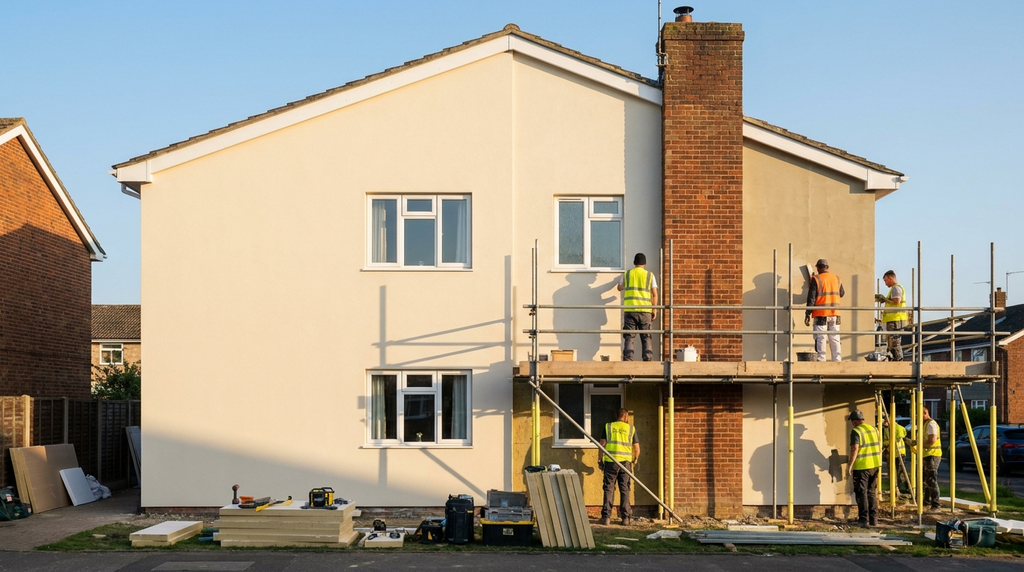
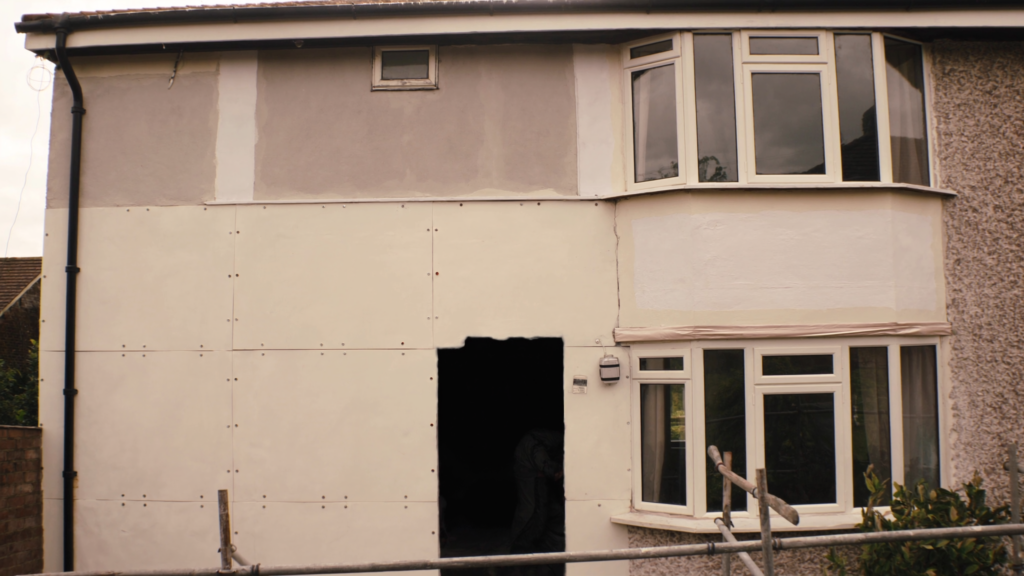
Rigid PIR foam boards are the most thermally efficient option for new builds, with a typical U-value of 0.022 W/mK. A 100mm board can achieve a U-value of 0.11 W/m²K, meeting Part L standards (Energy Saving Trust, 2026). They are lightweight, moisture-resistant, and suitable for cavity walls, solid walls, and underfloor insulation. Cost is around £25–£35 per square metre installed. PIR boards are best for walls and floors where space is limited, but they can be difficult to cut around pipes and electrical fittings.
Mineral Wool for Sound and Fire Resistance
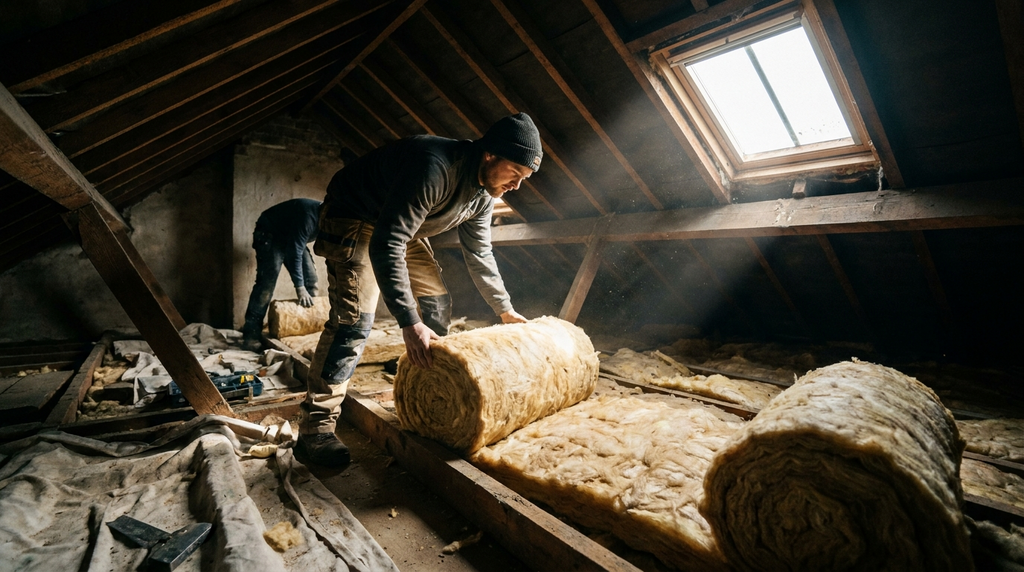
Mineral wool, including rockwool and glasswool, has a thermal conductivity of 0.035 W/mK. That makes it slightly less efficient than PIR but superior for fire resistance and soundproofing. For timber-frame new builds, 150mm mineral wool batts in the wall cavity achieve a U-value of 0.12 W/m²K (MCS Certified, 2026). It costs £15–£25 per square metre installed. Mineral wool is non-combustible and meets fire safety standards under Approved Document B. That makes it essential for party walls and floors between rooms.
Spray Foam and ICF Systems for High Performance
Spray polyurethane foam (SPF) offers a thermal conductivity of 0.028 W/mK and can fill irregular gaps, achieving U-values as low as 0.09 W/m²K (TrustMark, 2026). It costs £40–£60 per square metre. That makes it pricier but ideal for roofs and complex shapes. Insulated concrete formwork (ICF) systems, combining concrete with rigid foam, achieve 0.10 W/m²K for walls and cost £50–£70 per square metre. Both options are less common but suit high-performance builds aiming for Passivhaus standards. ICF is best for foundations and external walls in flood-prone areas.
A worked example
A 100m² new-build semi-detached home in Milton Keynes using 100mm PIR boards (0.022 W/mK) for walls and floors, plus 200mm mineral wool in the roof, costs roughly £4,500 for full insulation installation under 2026 Part L rules. After the 0% VAT saving (until March 2027) and assuming a standard gas boiler with a heat pump-ready fabric, your yearly heating bill drops from £1,200 to £420, saving £780 annually. The Energy Saving Trust confirms this U-value of 0.11 W/m²K cuts heat loss by 65% compared to a 2002-built home. Payback comes in under six years, and over 25 years you save nearly £19,500 on energy costs, even before future price rises.
| Item | Figure |
|---|---|
| Upfront cost after grants | £4,500 |
| Yearly savings | £780 |
| Payback period | 5.8 years |
| 25-year lifetime savings | £19,500 |
What homeowners often get wrong
The most common mistake is choosing PIR boards for every part of the build and ignoring acoustic or fire performance. Here are three frequent errors that cost time and money.
- Using PIR in timber-frame party walls Many assume one insulation type works everywhere but rigid boards transmit sound and fail fire compartmentation rules. A 100mm mineral wool batts in the cavity cuts noise transfer by 50dB and meets Approved Document E without extra cost.
- Skimping on roof insulation depth Builders often fit 150mm to save money but 2026 Part L demands 0.10 W/m²K for roofs meaning 200mm of mineral wool or 150mm of PIR. Under-specifying here adds £140 a year to heating bills and voids your warranty on the airtightness layer.
- Ignoring the airtightness layer behind insulation Homeowners think thick insulation alone hits the target but without an airtight membrane on the warm side you lose 30% of heat through gaps. A vapour control layer costs £8 per m² installed and failing to fit it can void your 10-year structural warranty.
Quick reference
- PIR boards with 0.022 W/mK thermal conductivity are the most efficient option for new-build walls and floors in 2026.
- Mineral wool batts at 200mm depth achieve the Part L roof U-value of 0.10 W/m²K and add fire resistance for timber frames.
- All new homes in England and Wales must meet a wall U-value of 0.11 W/m²K under the 2026 Building Regulations update.
- Installing 100mm PIR with an airtight membrane saves £780 per year on heating compared to a 2002-standard home.
- Fitting only one insulation type across walls, floors, and roof risks failing acoustic tests and voiding your warranty.
Frequently Asked Questions
The best insulation is a hybrid of rigid PIR foam boards for walls and floors, and mineral wool for sound and fire resistance. This combination meets Part L's 0.11 W/m²K U-value target, as confirmed by the Energy Saving Trust.
You need a U-value of 0.11 W/m²K for walls and 0.10 W/m²K for roofs under 2026 Part L regulations. The BRE states these values apply to all new homes in England and Wales.
Rigid PIR foam boards cost around £25 to £35 per square metre installed. This price is based on 2026 market rates from the Energy Saving Trust.