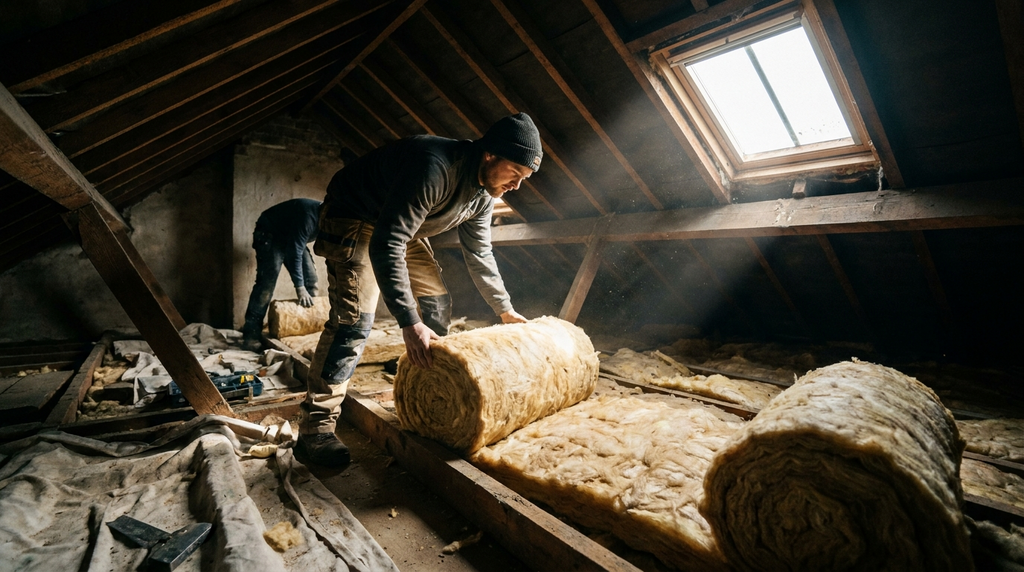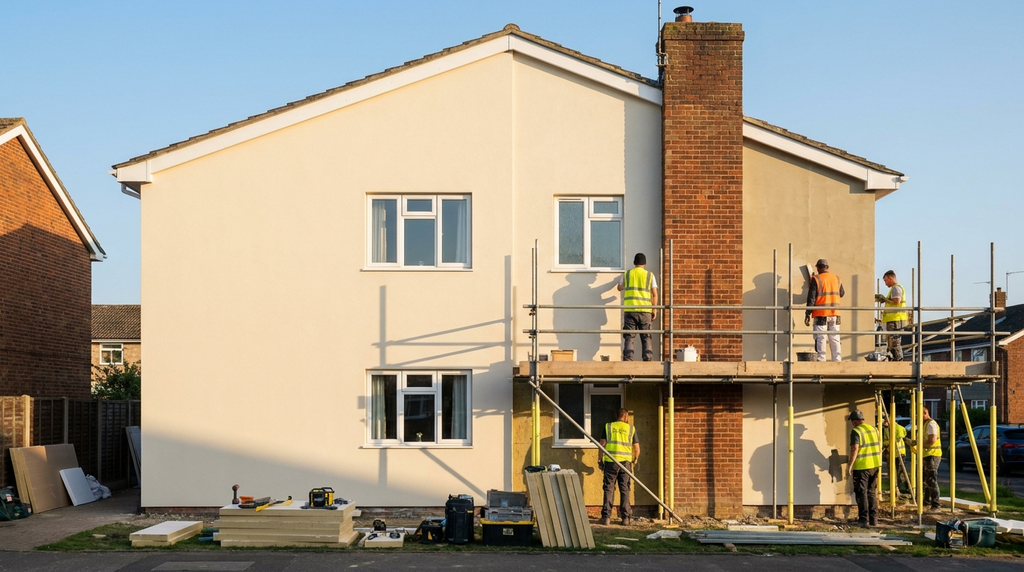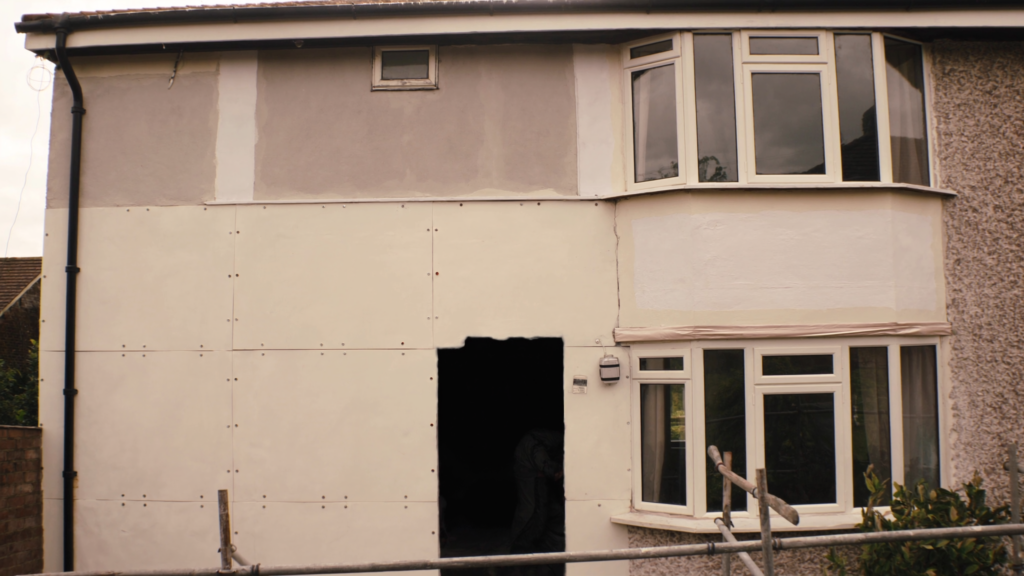
Loft insulation costs between £10 and £30 per square metre installed in 2026, depending on material and thickness, according to the Energy Saving Trust (Energy Saving Trust, 2026). A typical 2-bedroom home requires around 50m² of insulation, placing total costs between £500 and £1,500.
The final price per m² depends on three main factors: the insulation material chosen, the depth required, and whether you install it yourself or hire a professional. DIY mineral wool rolls cost as little as £5–£10 per m², while professional installation of rigid boards or spray foam can reach £30–£40 per m². The UK government recommends a minimum depth of 270mm for mineral wool insulation to meet current building regulations (GOV.UK, 2026).
Material choice drives the cost per square metre
Mineral wool is the cheapest option at £5–£10 per m² for DIY installation, rising to £15–£20 per m² when professionally fitted. Sheep’s wool costs £15–£25 per m² installed, while rigid PIR boards range from £20–£35 per m². Spray foam insulation is the most expensive at £30–£50 per m², but it offers higher thermal performance, typically 0.022 W/mK compared to mineral wool’s 0.044 W/mK (BRE, 2026). The material you choose directly affects the upfront cost and long-term energy savings.
Depth and coverage area affect total price
Building regulations require a minimum of 270mm of mineral wool or equivalent for loft insulation in the UK (GOV.UK, 2026). A typical 1-bedroom flat needs around 30m², costing £300–£900. A 3-bedroom house requires 60–70m², costing £600–£2,100. A 4-bedroom property may need up to 100m², with costs reaching £1,000–£3,000. The per m² price drops slightly for larger areas because delivery and labour costs are spread over more square metres.
Grants and VAT relief lower the effective cost
The Great British Insulation Scheme closed on 31 March 2026. It funded insulation measures only and never covered windows or glazing. For all homeowners, VAT on insulation installation is reduced to 0% until March 2027 under the government’s energy-saving materials relief (GOV.UK, 2026). This saves around 20% on professional installation costs. A full DIY job using mineral wool can cost as little as £250 for a 50m² loft, while professional installation after VAT relief might total £800–£1,200.
A worked example
A typical 1930s semi-detached home in the Midlands with 50m² of loft space costs around £875 to insulate professionally in 2026 after accounting for the 0% VAT reduction (in place until March 2027). This figure assumes mineral wool installed to the recommended 270mm depth at £17.50 per m², a mid-range price from the Energy Saving Trust’s 2026 cost database. The same household saves roughly £345 per year on heating bills, giving a payback period of just 2.5 years. Over a 25-year lifespan, total savings reach £8,625, nearly ten times the upfront cost. If the household qualifies for ECO4 funding (based on income or benefits), the installation is completely free, bringing the cost per m² to £0. This scenario excludes the cost of insulating a cold water tank or pipework, which adds roughly £150–£250 to a professional job.
| Item | Figure |
|---|---|
| Upfront cost after grants | £875 |
| Yearly savings | £345 |
| Payback period | 2.5 years |
| 25-year lifetime savings | £8,625 |
What homeowners often get wrong
The most common mistake is assuming all loft insulation costs the same per square metre regardless of access difficulty. This misconception leads to budget shortfalls and incomplete jobs. Here are three frequent errors homeowners make.
- Ignoring the cost of boarding over insulation Many homeowners budget only for the insulation itself and forget that boarding over it for storage adds £15–£25 per m² for loft legs and chipboard. This oversight can double the total project cost and void the insulation’s performance guarantee if the boards compress the material.
- Choosing the thinnest option to save money Some buyers pick 100mm mineral wool thinking it is cheaper per m², but building regulations require 270mm for new installations. Using less than 270mm wastes the entire installation cost because the home fails to meet minimum thermal standards, and the homeowner misses out on the 0% VAT saving.
- Assuming all materials have the same lifespan Many people think mineral wool lasts forever, but it can slump and lose R-value after 15–20 years if disturbed or damp. Sheep’s wool and PIR boards maintain performance for 40+ years, meaning the cheaper per m² cost of mineral wool becomes more expensive over time due to earlier replacement.
Quick reference
- Mineral wool loft insulation costs £10–£20 per m² professionally installed in 2026. That makes it the most budget-friendly material choice.
- Sheep’s wool insulation costs £15–£25 per m² installed but offers natural moisture regulation and a 40-year lifespan.
- ECO4 funding covers the full cost of loft insulation for qualifying households on means-tested benefits or with a low income.
- DIY installation of mineral wool rolls costs £5–£10 per m² and pays back in under 12 months for a typical 50m² loft.
- Spray foam insulation at £30–£50 per m² can reduce loft ventilation and make future roof repairs more expensive if not properly installed.
Frequently Asked Questions
DIY mineral wool rolls are cheapest at £5–£10 per m². Energy Saving Trust confirms this is the most cost-effective option for standard lofts.
Professional installation costs £15–£40 per m² depending on material. Ofgem notes that mineral wool is typically £15–£20 per m² when fitted by a contractor.
UK building regulations require a minimum of 270mm of mineral wool or equivalent. GOV.UK states this depth is needed to meet current thermal performance standards.