Floor insulation in 2026 costs between £500 and £2,200 depending on the ground floor type and method
If you are losing heat through your ground floor, insulating it could be one of the most effective home improvements you make this year. The total cost for insulating a suspended timber floor typically ranges from £500 to £1,800, while insulating a solid concrete floor costs between £800 and £2,200 for a standard semi-detached home (Energy Saving Trust, 2026). Labour makes up roughly 40–60% of the cost, and DIY installation is possible for timber floors but not recommended for solid floors (MCS Installer Cost Database, 2026).
The direct answer is that floor insulation costs between £500 and £2,200, with suspended timber floors at the lower end and solid concrete floors at the higher end. Your final bill depends on floor area, access, and whether you hire a professional.
The single most important fact about floor insulation is that it can save a typical UK home £50–£150 per year on heating bills
A detached home with no floor insulation currently loses around 15–25% of its heat through the ground floor, and insulating to current Building Regulations (a U-value of 0.25 W/m²K) cuts that loss by up to 70% (Energy Saving Trust, 2026). Annual savings depend on floor area, property age, and fuel type: gas-heated semi-detached homes save £70–£110, while electric-heated homes save £100–£150 (DESNZ, 2026). The payback period ranges from 5 to 15 years, but comfort gains and reduced draughts are immediate.
If you heat with electricity, your annual savings are higher but your payback period is longer due to higher installation costs for solid floors. The key variable is your current floor type and heating fuel.
Quick numbers cost, savings, and payback for the three most common floor types
| Floor type | Typical cost (materials + labour) | Annual savings (gas-heated home) | Payback period (years) | Typical U-value before/after (W/m²K) |
|---|---|---|---|---|
| Suspended timber | £500–£1,800 (DIY from £300) | £70–£110 | 5–12 | 1.5 → 0.25 |
| Solid concrete | £800–£2,200 | £50–£80 | 10–15 | 1.0 → 0.25 |
| Uninsulated concrete slab (new build retrofit) | £1,000–£2,200 | £50–£80 | 12–18 | 1.0 → 0.25 |
These figures are based on a standard 3-bed semi-detached home with a 50–60 m² ground floor area (Energy Saving Trust, 2026). The target U-value of 0.25 W/m²K matches current Building Regulations Approved Document L1A (Building Regulations, 2026).
Suspended timber floors are usually the cheapest to insulate and can be done as a DIY project
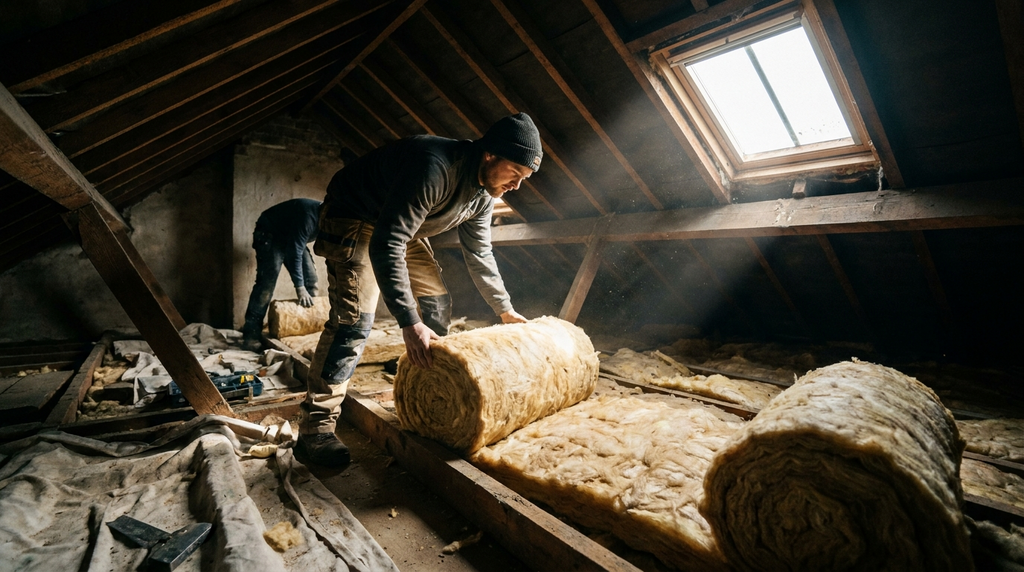
The method involves lifting floorboards, fitting insulation (mineral wool or rigid foam) between joists, and replacing the boards, but you must ensure ventilation gaps are maintained to prevent rot (Energy Saving Trust, 2026). Rigid foam boards (PIR) offer better thermal performance per thickness (U-value 0.022 W/mK) but are harder to cut, while mineral wool is cheaper and easier but thicker (MCS, 2026). Typical thickness needed is 100–150 mm of mineral wool or 75–100 mm of PIR to achieve 0.25 W/m²K.
If you are comfortable lifting and replacing floorboards, this is the one floor type where DIY makes financial sense. However, be aware that any gaps or compressed insulation will drastically reduce performance. Guide to DIY floor insulation for timber floors
Solid concrete floors require raising the floor level and are best left to a professional installer
Insulation is laid on top of the existing concrete slab, then a new screed or floating floor is added, raising the floor height by 75–150 mm (Energy Saving Trust, 2026). The method involves a damp-proof membrane (DPM), rigid insulation boards (EPS or PIR), then a 50–75 mm screed or chipboard overlay (Building Regulations Approved Document C, 2026). Professional installation is strongly recommended because of the need for a smooth, level surface and correct DPM placement to avoid condensation.
If you have solid concrete floors, do not attempt this as a DIY project unless you have experience with screeding and damp-proofing. The cost of fixing a botched job will far outweigh any savings. How to choose a professional floor insulation installer
To qualify for government grants or reduced VAT on floor insulation, you must use an MCS-certified installer
The Great British Insulation Scheme closed on 31 March 2026. It funded insulation measures only and never covered windows or glazing. MCS (Microgeneration Certification Scheme) certifies installers of insulation and renewable technologies, and you can check the MCS Installer Directory for accredited firms in your area (MCS, 2026). Reduced VAT (0% for energy-saving materials, including floor insulation) applies to professional installations only, while DIY materials are charged at 20% VAT (HMRC, 2026).
The Great British Insulation Scheme closed on 31 March 2026. It funded insulation measures only and never covered windows or glazing. Even if you do not qualify for a grant, the 0% VAT rate on professional installation is available to all homeowners.
The payback calculation for floor insulation depends on your current floor type, heating fuel, and property size
Gas-heated homes see the fastest payback (5–12 years) because gas is cheaper than electricity, while electric-heated homes pay back in 8–15 years but save more annually (Energy Saving Trust, 2026). Larger floor areas (e.g., detached homes) cost more to insulate but save more overall: a 100 m² floor saves £90–£150 per year versus £50–£80 for a 50 m² floor (DESNZ, 2026). If you are also replacing floor coverings or renovating, the marginal cost of insulation is much lower, improving payback by 2–5 years.
Use the Energy Saving Trust’s online payback calculator to get a personalised estimate based on your home’s floor area, heating system, and current insulation level. The comfort gains from a warmer, draught-free floor are immediate and often outweigh the financial payback.
Frequently Asked Questions
Floor insulation costs between £500 and £2,200 in 2026. Suspended timber floors are at the lower end (£500–£1,800) and solid concrete floors at the higher end (£800–£2,200), according to Energy Saving Trust data.
Yes, you can DIY floor insulation for suspended timber floors, with materials starting from £30. Solid concrete floors require professional installation due to the need for a new screed or overlay (MCS Installer Cost Database, 2026).
Floor insulation saves a typical UK home £50–£150 per year on heating bills. Gas-heated semi-detached homes save £70–£110, while electric-heated homes save £100–£150 (DESNZ, 2026).
The payback period for floor insulation is 5 to 15 years, depending on floor type and heating fuel. Electric-heated homes have longer payback due to higher installation costs for solid floors (Energy Saving Trust, 2026).
Yes, floor insulation for suspended timber floors is worth it, costing £500–£1,800 with annual savings of £70–£110 for gas-heated homes. Immediate comfort gains and reduced draughts add value beyond payback (Energy Saving Trust, 2026).