The Specific Insulation Challenges of a 1930s Home
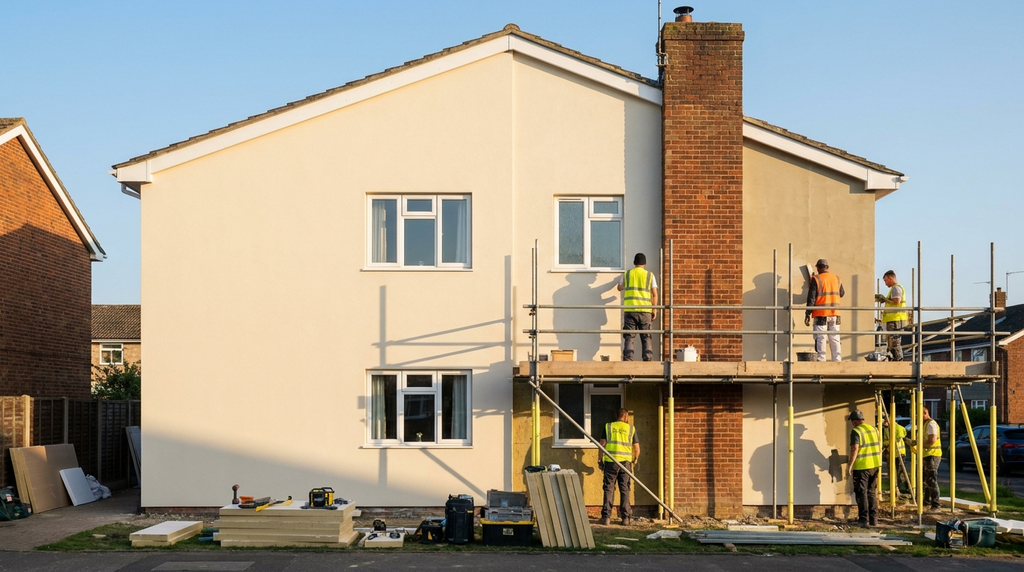
Homes built in the 1930s present a distinct set of insulation problems that differ significantly from post-war or modern properties. The most critical issue is that the vast majority of these homes have solid brick walls, meaning there is no cavity to fill with standard insulation material. Energy Saving Trust data shows solid walls lose heat at roughly twice the rate of a modern cavity wall (Energy Saving Trust, 2026).
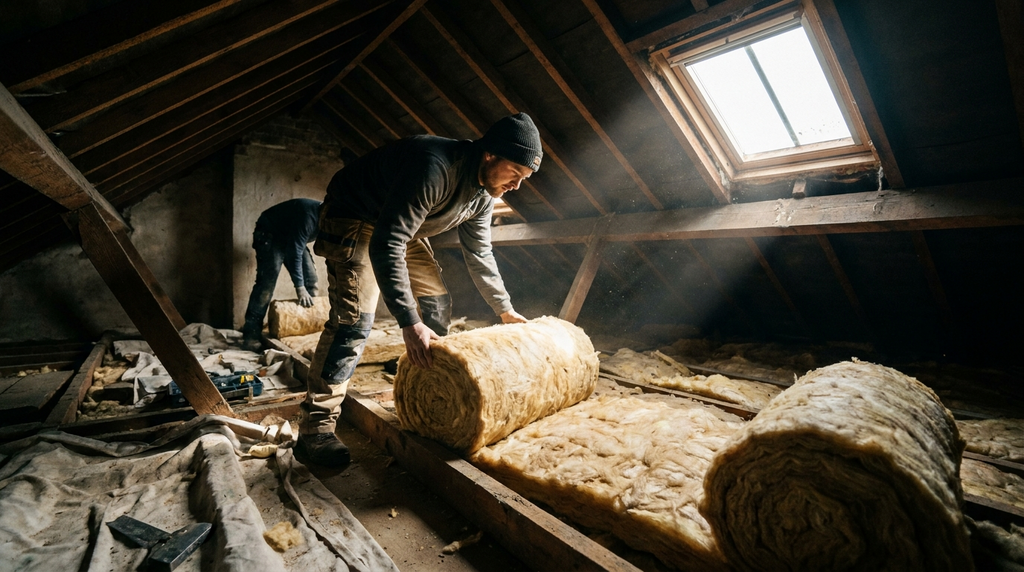
The original construction typically includes uninsulated suspended timber floors with a ventilated sub-floor void, making floor insulation more complex and less eligible for standard grants than in newer homes. Loft insulation in a 1930s home is often less than 100 mm thick, far below the current recommended minimum of 270 mm. Many properties also retain original single-glazed timber sash windows, which are a separate but related heat-loss issue that affects overall building performance and grant eligibility for whole-house measures. DESNZ housing stock data confirms these characteristics are typical of the era (DESNZ, 2026).
Grant Eligibility Depends on Your Home’s Construction and Your Benefits Status
The primary eligibility split is between households receiving qualifying means-tested benefits and those in the able-to-pay market. The Great British Insulation Scheme closed on 31 March 2026. It funded insulation measures only and never covered windows or glazing. The Great British Insulation Scheme closed on 31 March 2026. It funded insulation measures only and never covered windows or glazing.
The Energy Company Obligation (ECO4) scheme can fund solid wall insulation, either internal or external, for 1930s homes. However, this is only available if the household is on qualifying benefits or has a low income. The home must also have an Energy Performance Certificate (EPC) rating of D, E, F, or G. For off-gas-grid homes, common in rural 1930s properties, ECO4 offers a flex route where local authorities can refer households not on benefits but with a low income (Ofgem, 2026).
Quick Numbers, Key Figures for 1930s Home Insulation Grants in 2026
| Scheme | Measure Covered | Homeowner Cost (Fully Eligible) | EPC Requirement | Benefit Requirement |
|---|---|---|---|---|
| GBIS | Loft insulation, cavity wall insulation | £0 | None | None for loft top-up; benefits check for cavity |
| ECO4 | Solid wall, floor, loft insulation | £0 | D, E, F, or G | Yes (or low-income flex) |
| Local Authority Flex | Solid wall, floor, loft insulation | £0 | D, E, F, or G | Low income (no benefits) |
| Self-fund | External wall insulation | £8,000–£22,000 | N/A | N/A |
Minimum loft insulation thickness required for any grant is 270 mm (Energy Saving Trust, 2026). ECO4 requires an EPC of D or below for solid wall measures.
How to Confirm Your 1930s Home’s Construction for Grant Purposes
Before applying for any grant, you must confirm whether your walls are solid or cavity. Check your home’s original building plans through local council archives or property deeds. A visual check is also reliable: a cavity wall will have a uniform brick pattern, while a solid wall shows bricks laid end-on, called headers, every few rows (Energy Saving Trust, 2026).
Look in the loft. The Great British Insulation Scheme closed on 31 March 2026. It funded insulation measures only and never covered windows or glazing. For floor insulation, 1930s suspended timber floors often have a 150–200 mm void below. Grant eligibility for floor insulation is rare. Only ECO4 covers it, and only if the home has an EPC of E or below and the household meets the benefits test (MCS, 2026).
The Direct Answer Who Does and Does Not Qualify for a 1930s Home Insulation Grant in 2026
You qualify if you are on qualifying benefits such as Pension Credit or Universal Credit and your 1930s home has an EPC of D or below. In this case, you can get solid wall insulation, floor insulation, and loft insulation fully funded under ECO4. You also qualify if you are not on benefits but your 1930s home has a cavity wall, which is rare, or needs a loft top-up. Those measures are free under GBIS with no income check (GOV.UK, 2026).
You do not qualify if you are not on benefits and your 1930s home has solid walls. No government grant covers solid wall insulation for able-to-pay households in 2026. You would have to self-fund at a cost of £8,000 to £22,000 for external wall insulation. You also do not qualify if your 1930s home already has an EPC of C or above, unless you are on benefits and the EPC is due to other factors such as poor heating (DESNZ, 2026).
How to Verify an Insulation Installer, MCS and TrustMark Certification
The Great British Insulation Scheme closed on 31 March 2026. It funded insulation measures only and never covered windows or glazing. For solid wall insulation, the relevant standard is MCS 023. For cavity wall insulation, it is MCS 020. You can check an installer’s certification on the MCS website (MCS, 2026).
For non-grant-funded work, you should still use an installer registered with TrustMark, the government-endorsed quality scheme. Check the installer’s number on the TrustMark website. For any gas-related work, the installer must be Gas Safe Register certified. For electrical insulation work such as underfloor heating, use NICEIC or NAPIT registered electricians. For loft insulation, the installer should hold a valid MCS certificate or be a member of the National Insulation Association (TrustMark, 2026).
What to Do If You Are Ineligible for a Grant, The Self-Fund Route
If you are an able-to-pay homeowner with a solid-walled 1930s home, the only option is self-funding. External wall insulation (EWI) costs £100 to £150 per square metre, or £8,000 to £22,000 for a typical semi-detached house. Internal wall insulation (IWI) costs £50 to £80 per square metre but reduces room size and requires redecoration. It is less disruptive to the exterior appearance, which is important for conservation areas or listed buildings (Energy Saving Trust, 2026).
Loft insulation is the cheapest and most cost-effective measure. It costs £300 to £600 for a 1930s semi if you do it yourself, or £500 to £1,000 professionally installed. It pays back in two to four years. Draught-proofing windows, doors, and floorboards costs £100 to £300 and can reduce heat loss by 10 to 20 percent. That makes it the single best first step for any 1930s home (Which?, 2026). how to draught-proof a 1930s home external wall insulation costs and options
Frequently Asked Questions
Costs range from £2,000 for loft insulation to £13,000 for external solid wall insulation. Energy Saving Trust data confirms solid wall insulation typically costs £8,000-£13,000 for a semi-detached 1930s property.
Yes, if you qualify for ECO4 through means-tested benefits or low income. GOV.UK confirms ECO4 covers solid wall insulation for 1930s homes with an EPC rating of D, E, F, or G.
GOV.UK states it specifically excludes solid wall measures, making most 1930s homes ineligible.
External solid wall insulation is most effective, costing £8,000-£13,000. Internal insulation is cheaper at £4,000-£8,000 but reduces floor space. MCS certified installers are recommended for both options.
No, the vast majority of 1930s homes have solid brick walls with no cavity. Energy Saving Trust data confirms this is the primary insulation challenge for the era.